Circles & Groups
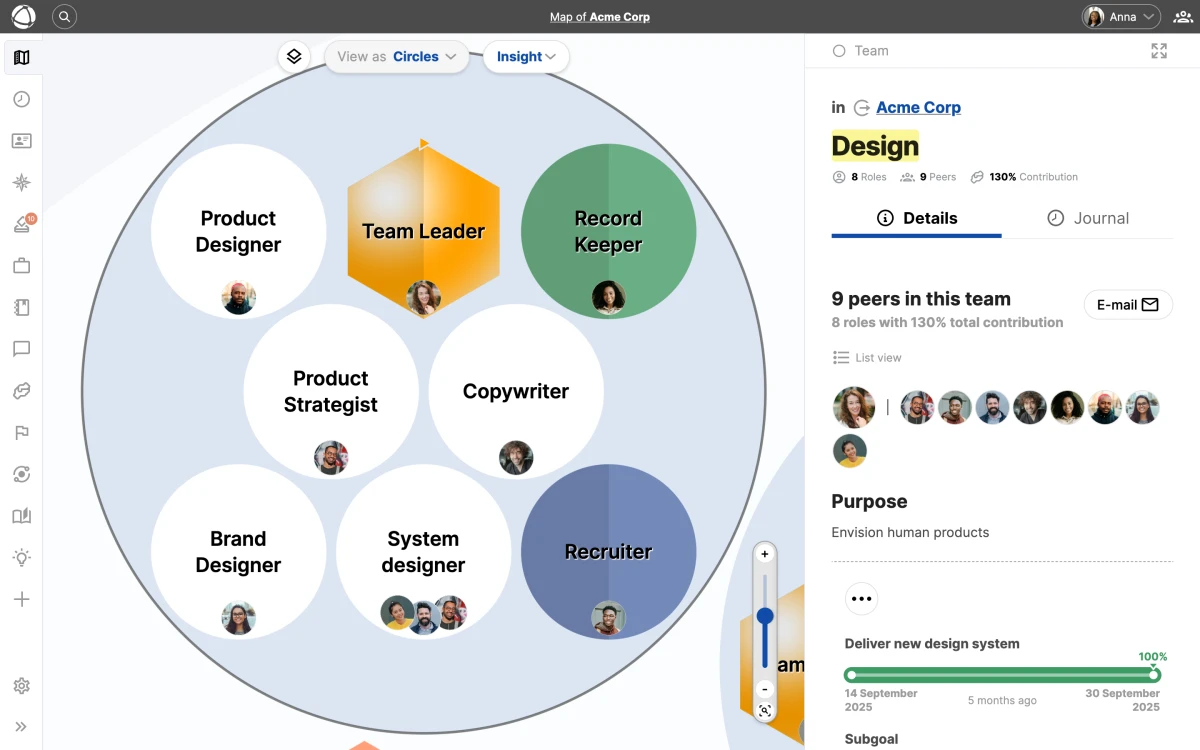
Circles are the building blocks of your organizational structure. A circle is a container that holds roles, other circles, or both. You can nest them as deeply as you need, as there is no limit.
Your organization might call these teams, pods, departments, domains, or something else entirely. Peerdom lets you customize the vocabulary in Settings to match your culture.
What circles contain
A circle can hold:
- Roles: sets of responsibilities held by people
- Sub-circles: smaller groups nested inside
- Both: any combination of roles and sub-circles at any depth
Empty circles appear with a dashed outline on the map, making them easy to spot.
Create a circle
From the toolbar:
- Click + Add in the top navigation
- Select New Group
- Enter a name (required) and any additional details
- Save
From the map:
- Right-click on the map or inside an existing circle
- Select New Group
- The new circle appears at that location
Circle properties
Every circle has a set of properties you can fill in:
- Name (required): a clear, descriptive label
- Purpose: a one-sentence explanation of why this circle exists
- Accountabilities: what this circle is responsible for
- Notes: additional context, links, or documentation
You can also add custom fields to capture additional data specific to your organization’s needs.
Organize with nesting
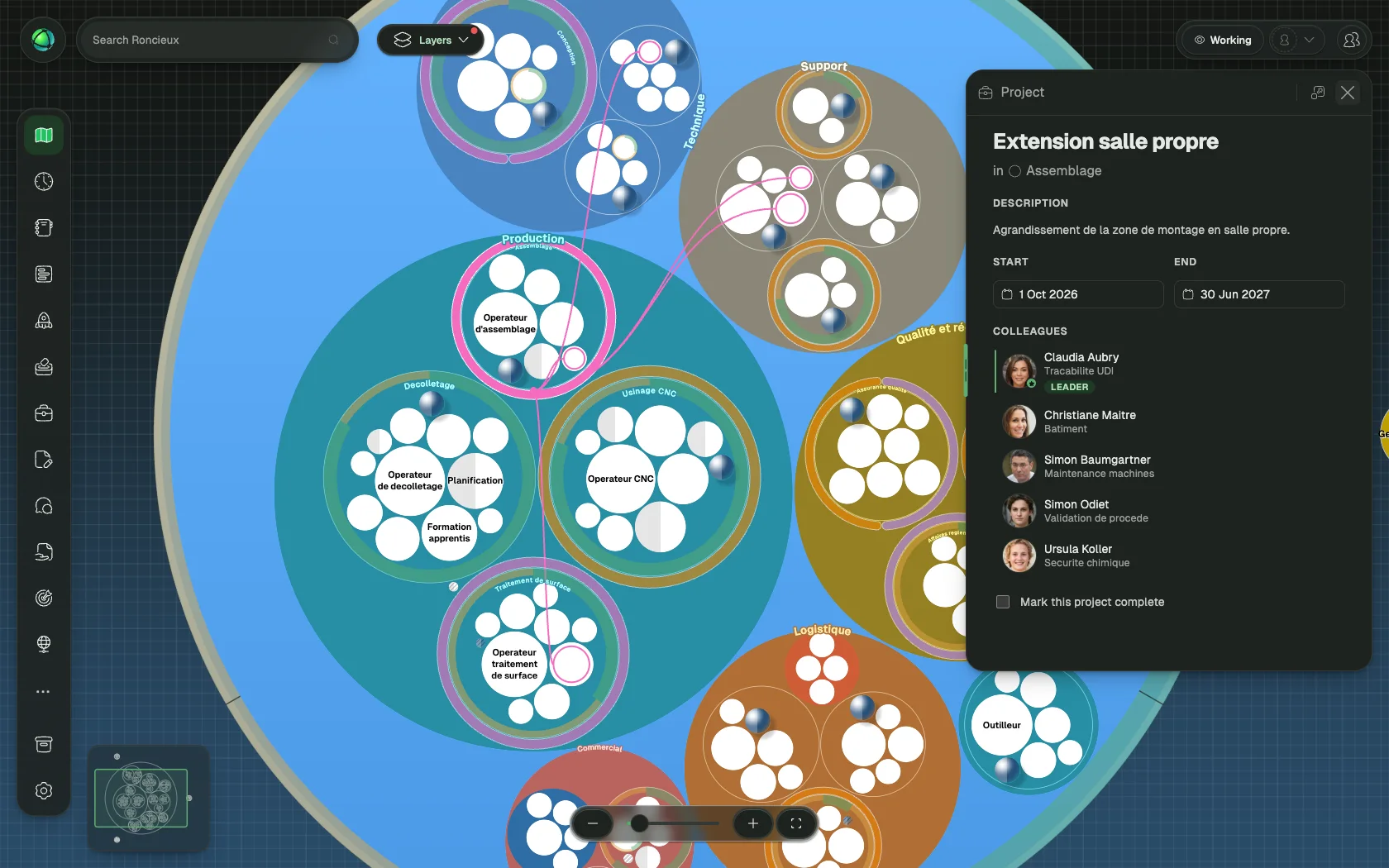
Nesting circles inside other circles creates your organizational hierarchy. For example, a “Product” circle might contain “Design”, “Engineering”, and “Research” sub-circles, each with their own roles.
There is no practical limit to nesting depth, but keeping your structure readable matters more than making it comprehensive. Start with two or three levels and add depth only where it clarifies how work gets done.
Related
- Roles - define work with roles inside your circles
- Circle View & Layouts - visualize your nested structure
- Custom Fields - add custom data to your circles and roles
- Custom Terms - rename labels to match your vocabulary
- Drafts - prepare structural changes before publishing