Hypergrowth and Scaling Made Easy .
Use our data-driven, interactive org chart to reorganize your growing organization in real-time. Keep teams aligned, engaged, and productive as you rapidly scale.
Get started Free forever, No credit card needed





How to scale with Peerdom
Shown with Quokka Labs, on its way from 22 to 80 people. A fictional company.
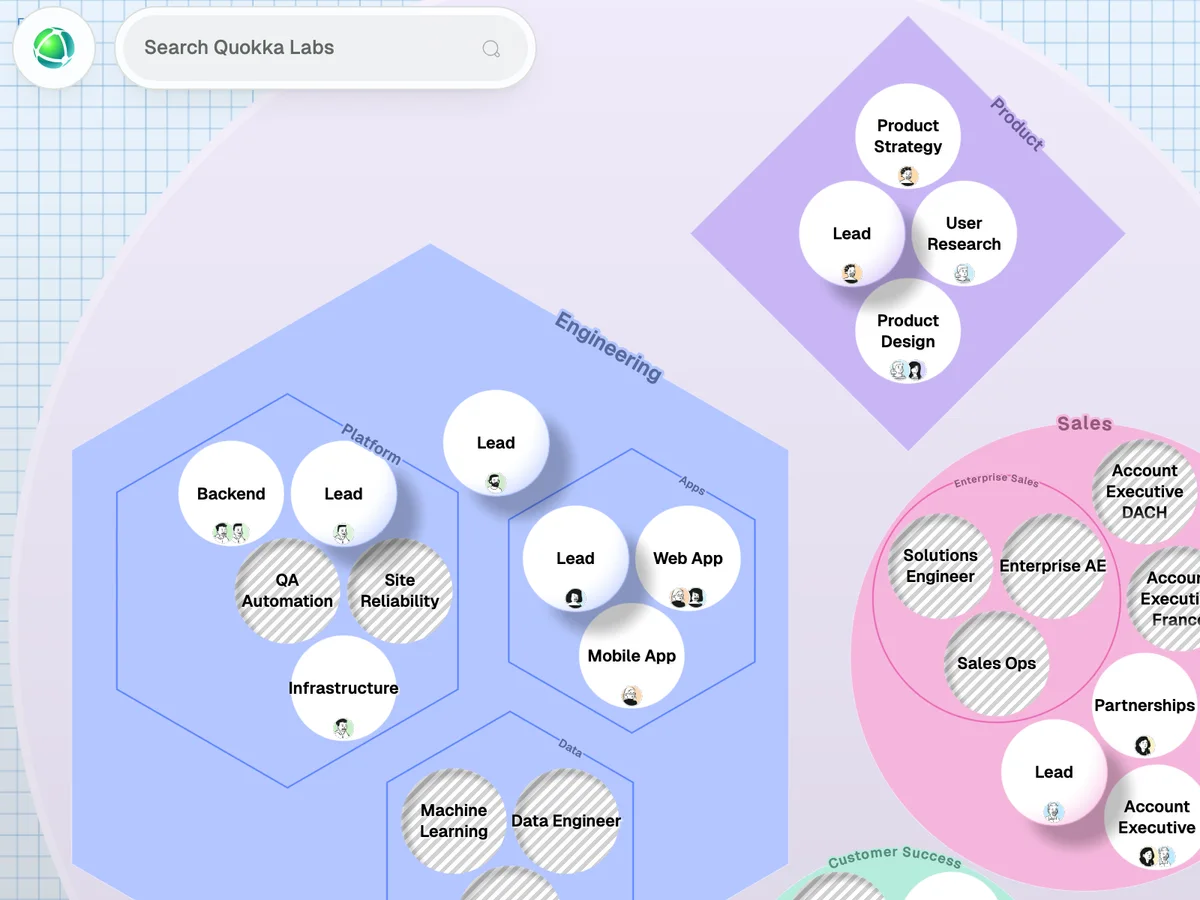
Plan
Map your teams and define clear roles. Draft how responsibilities will change as you scale.
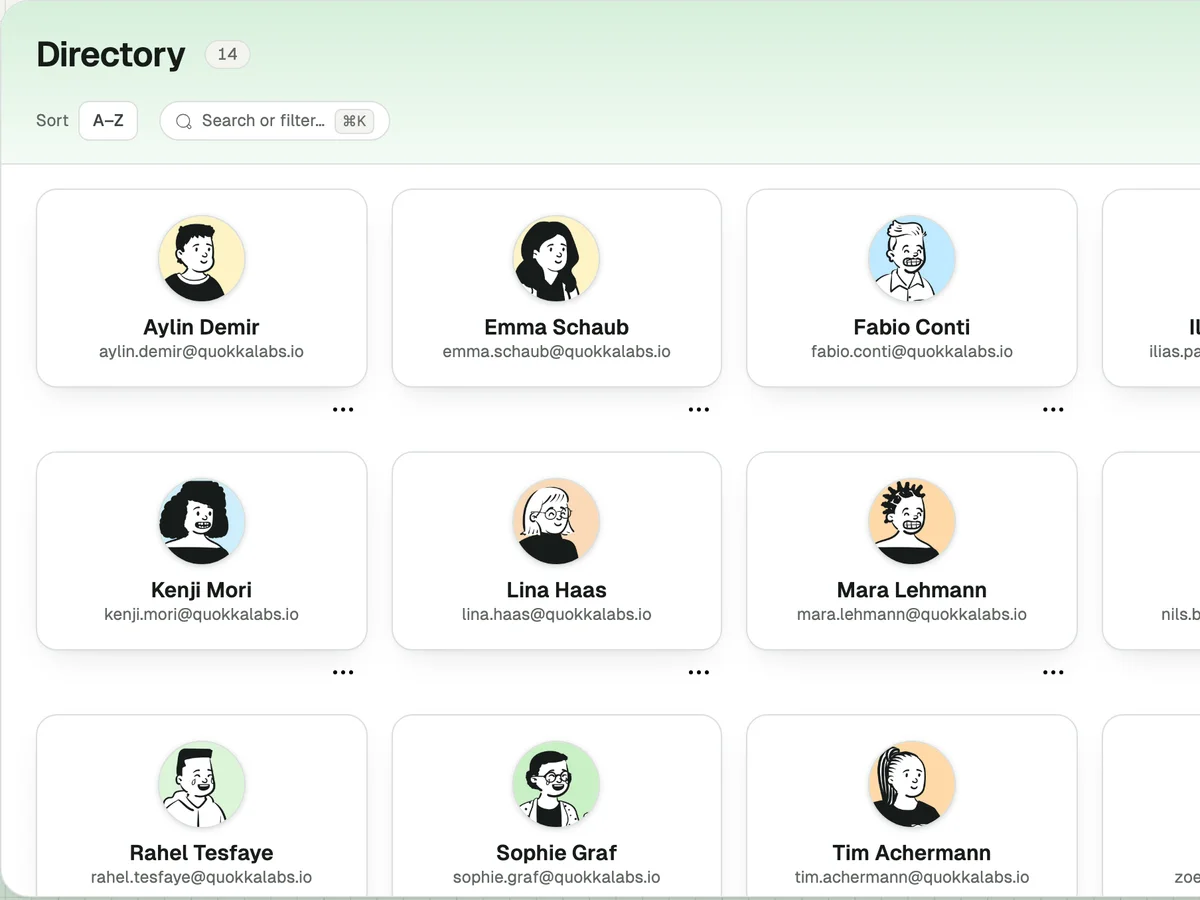
Grow
Share your map to onboard new hires fast. Adjust roles and teams dynamically to remain aligned.
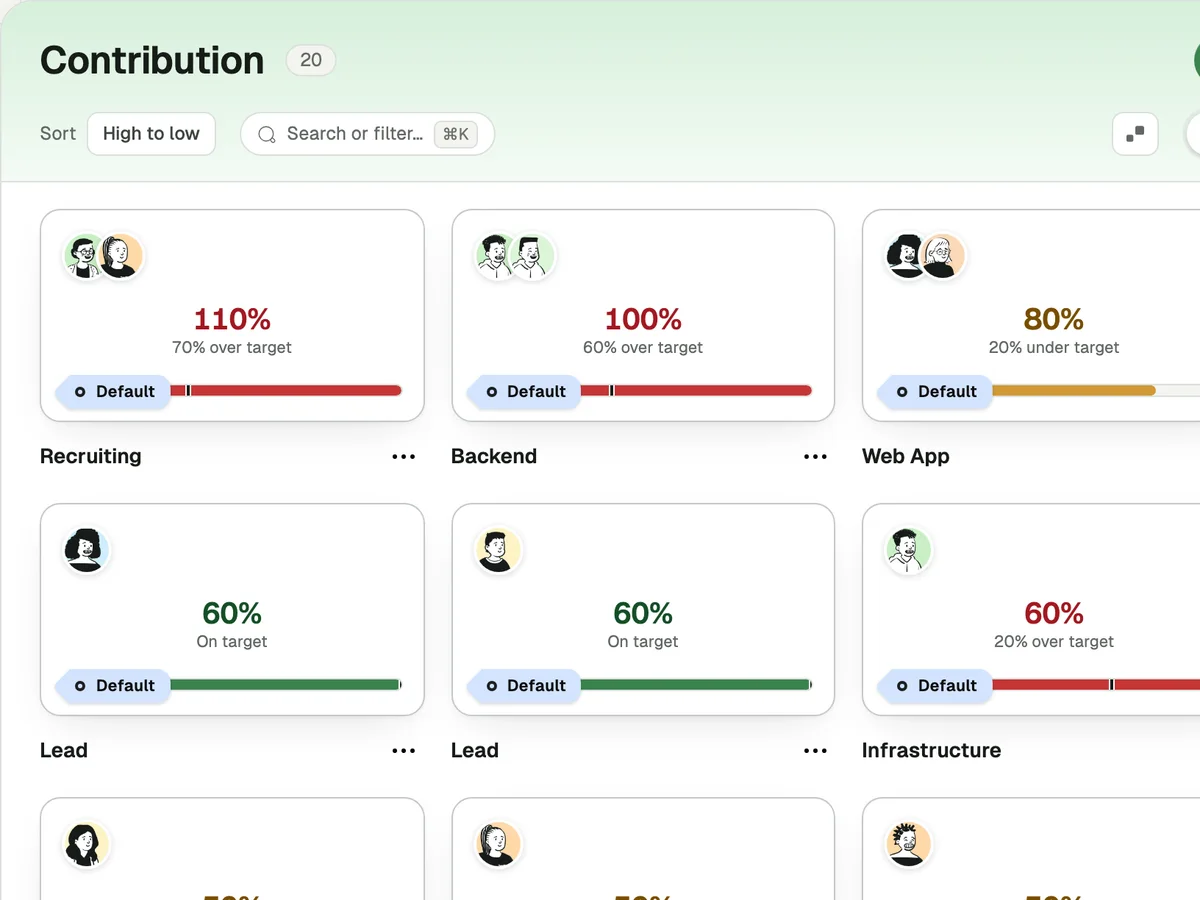
Evolve
Enrich your map with live data layers to make informed decisions at scale.
Accelerate growth and stay lean
Chart your future
Spot vacant roles, identify work needs and opportunities, distribute workloads, and draft multiple growth scenarios in an interactive, visual workspace.
Onboard rapidly
Introduce new talent with peer profiles, search in-house expertise, communicate with peers across the organization, and keep up-to-date as roles and teams evolve.
Connect your teams
Keep everyone aligned with live updates and layers of additional context that include goal progress, cross-functional projects, contributions, documentation, and more.
The real-time digital work map not only enables Loyco to operate in a transparent, flat, efficient way, but also shows Loyco’s customers that the new style of working is supported by tangible, effective technologies. It’s important for us to show the outside world how our time is spent.
 Simon Givre Loyco
Peerdom helps build a culture of continuous feedback and learning, where teams hold each other accountable, celebrate collective wins, and work together to refine practices over time.
 Thea Bramming Peerdom Companion
Peerdom perfectly meets our needs: lightweight and very easy to use, it allows us to see our organizations as we have never seen them before.
 Bernard DuPasquier HEKS
A closer look, when fast growth overloads your best people
A short, concrete example of what growth quietly breaks, and how to catch it.
Picture a company called Collimate. It builds camera systems for factory lines, and it grew from forty people to nearly one hundred and eighty in eighteen months. Nothing failed loudly. But somewhere in that growth, a few people quietly ended up holding five jobs each, one team was run by a lead who was already running another team, and one team had no lead at all.
None of it showed on the usual org chart. All of it showed the moment the work was put on a living map of who actually does what. Here is how to spot the same strain in your own company, before it costs you good people.