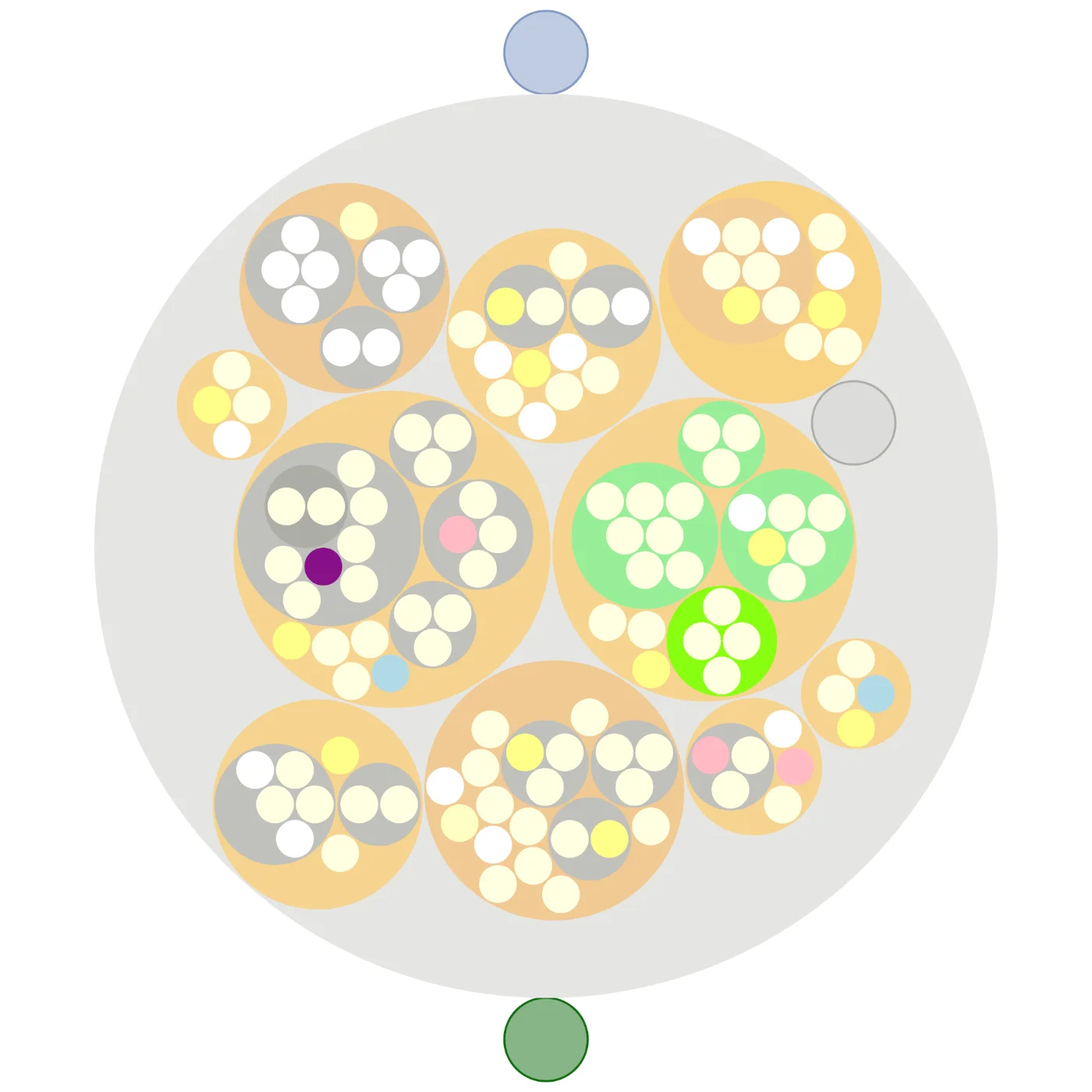
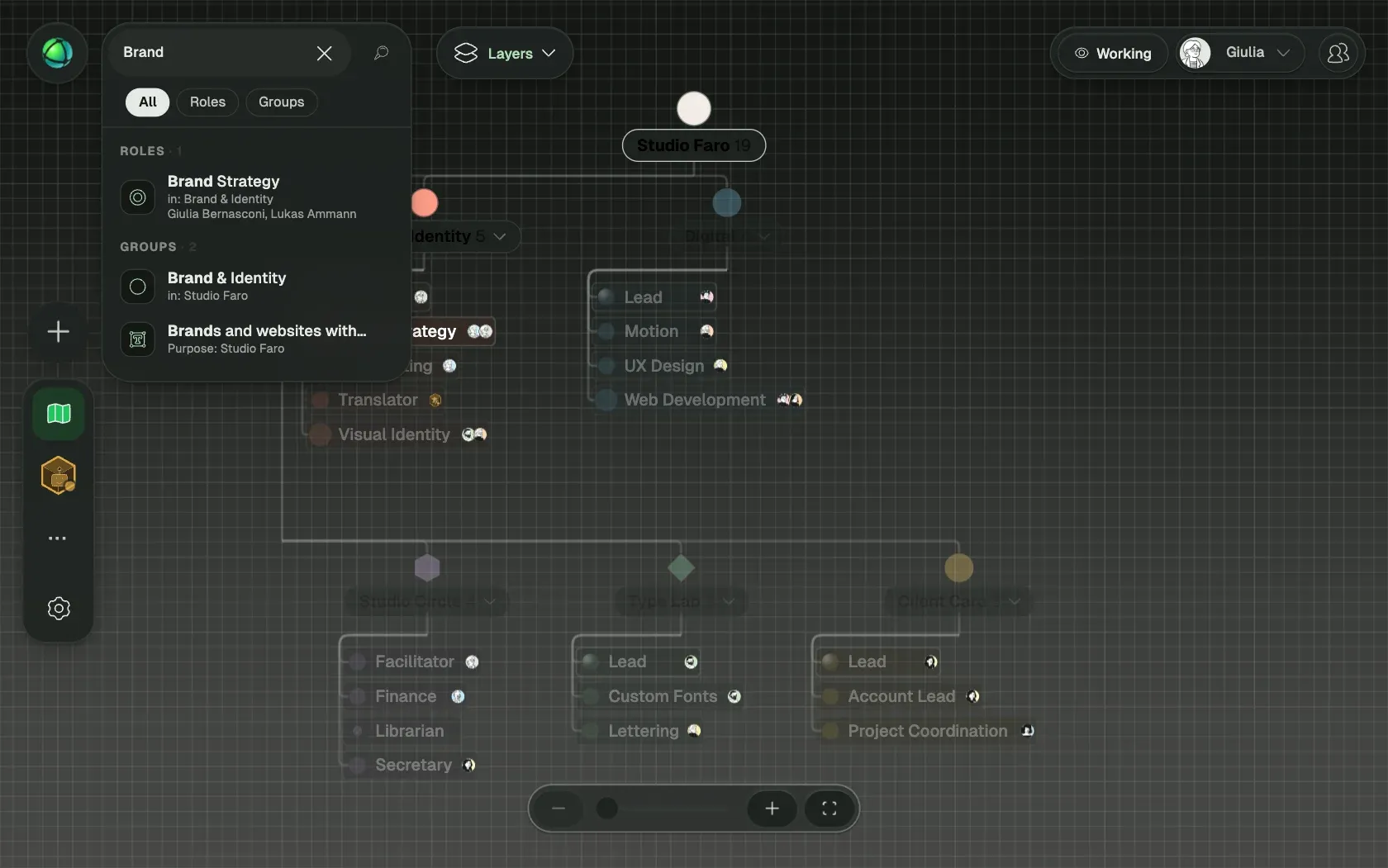
New to a role? See who does what from day one.
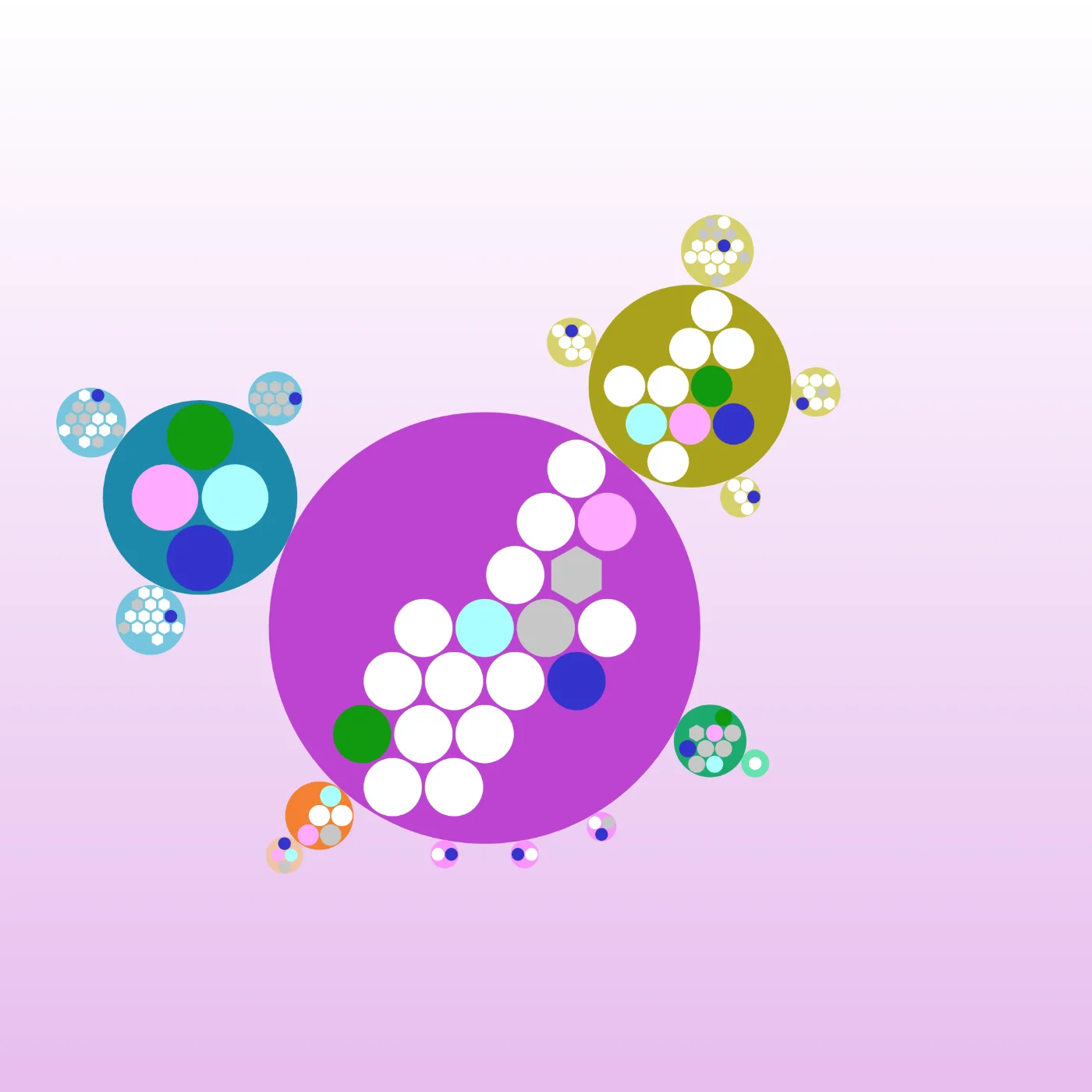
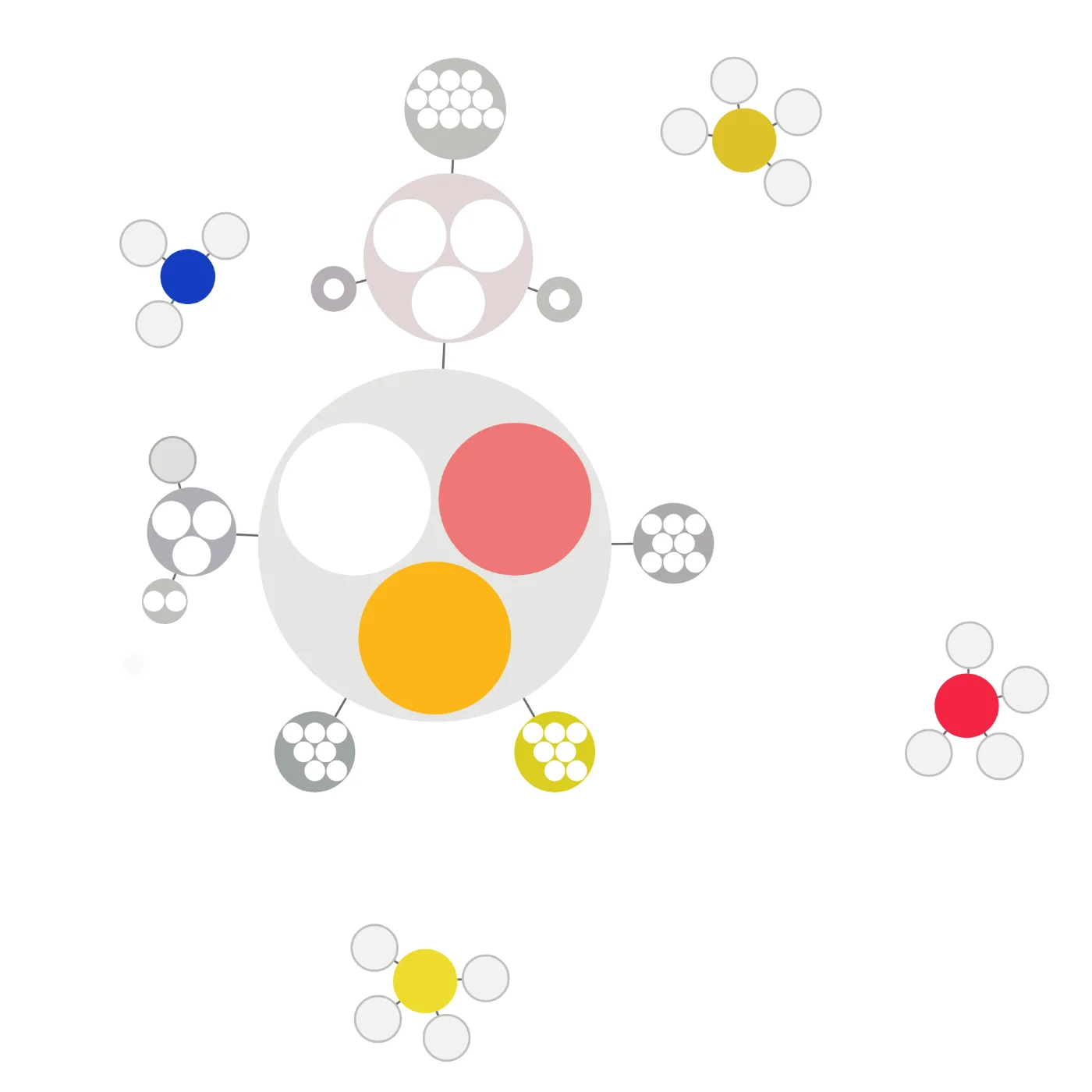
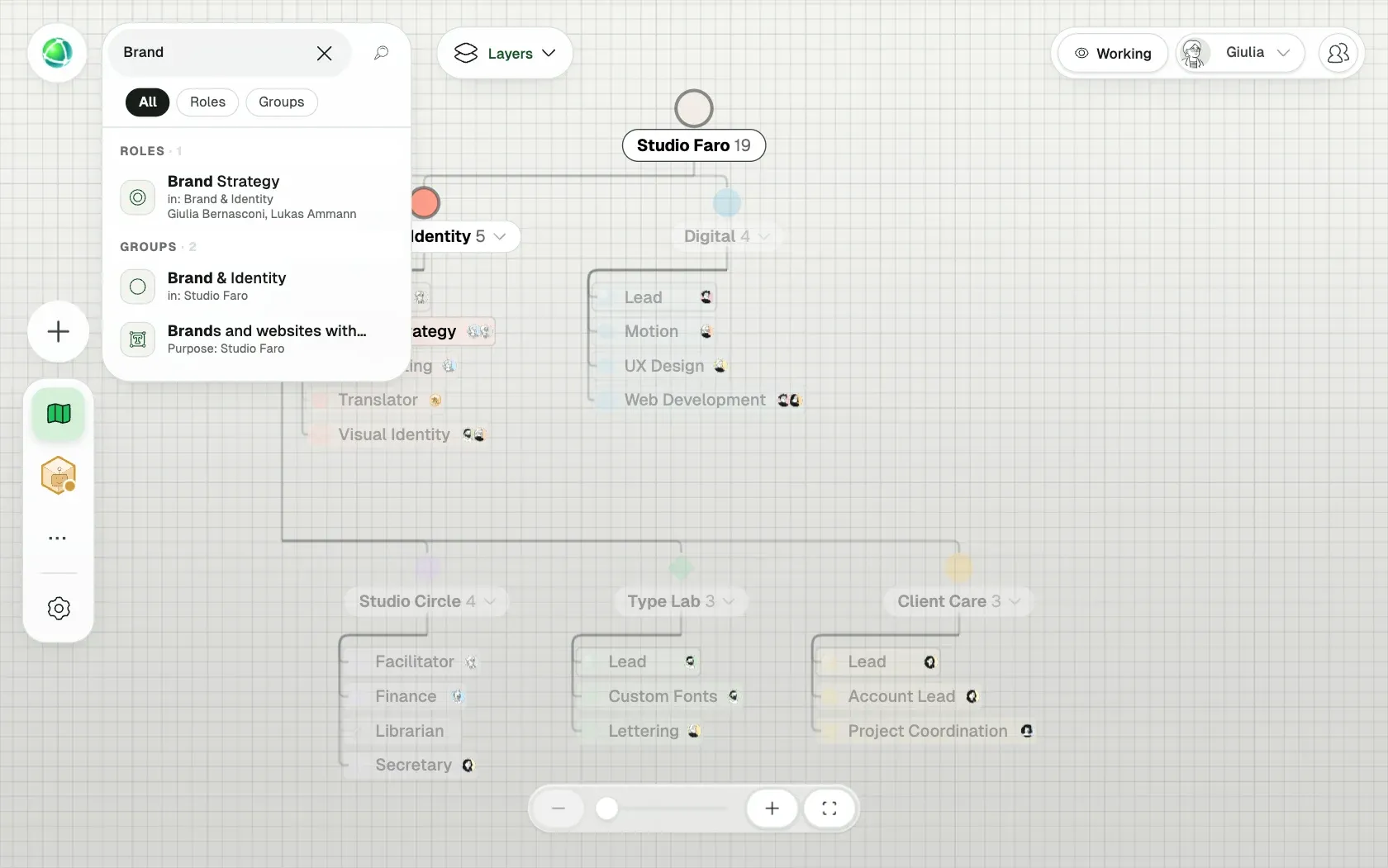
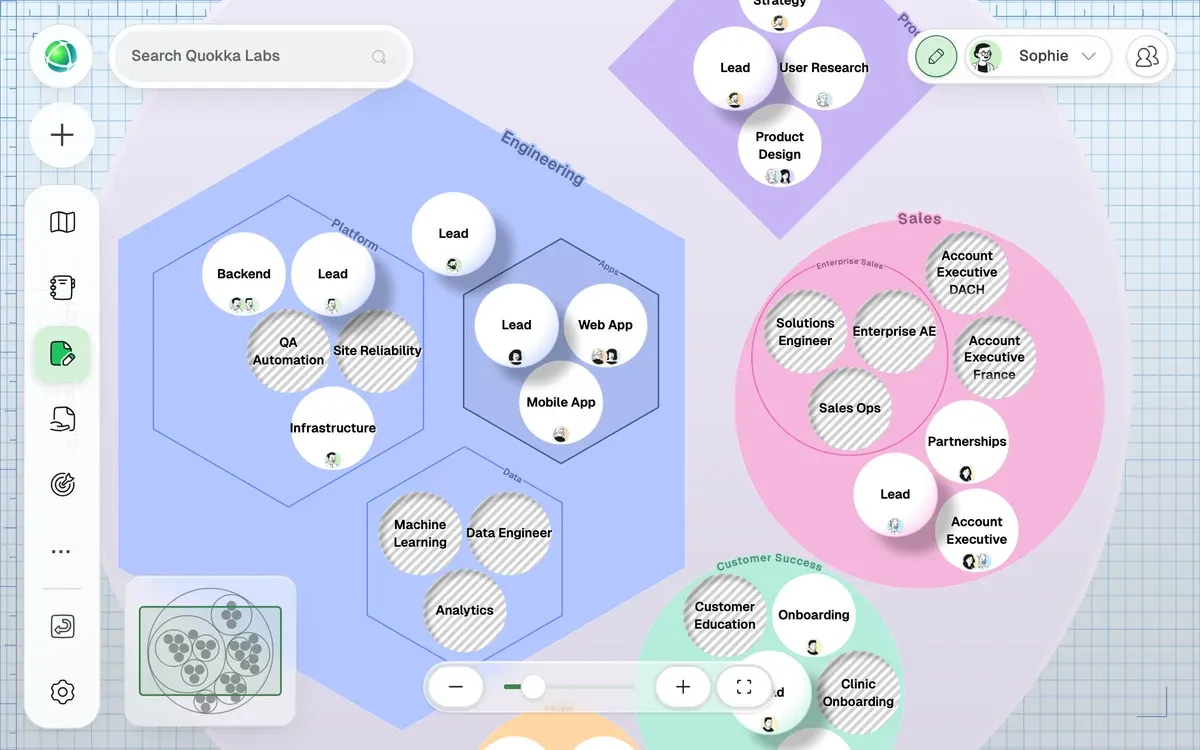
They search for a role and see its team and the people who hold it.
Loyco: “New employees say they are immediately oriented, in contrast to what took them years in their previous organizations.”
The living org chart your people and AI agents coordinate from. For teams of 10 to 10,000, whatever their shape.
Free for up to 10 people. No credit card. Hosted in Switzerland. Demos with one of the co-founders.
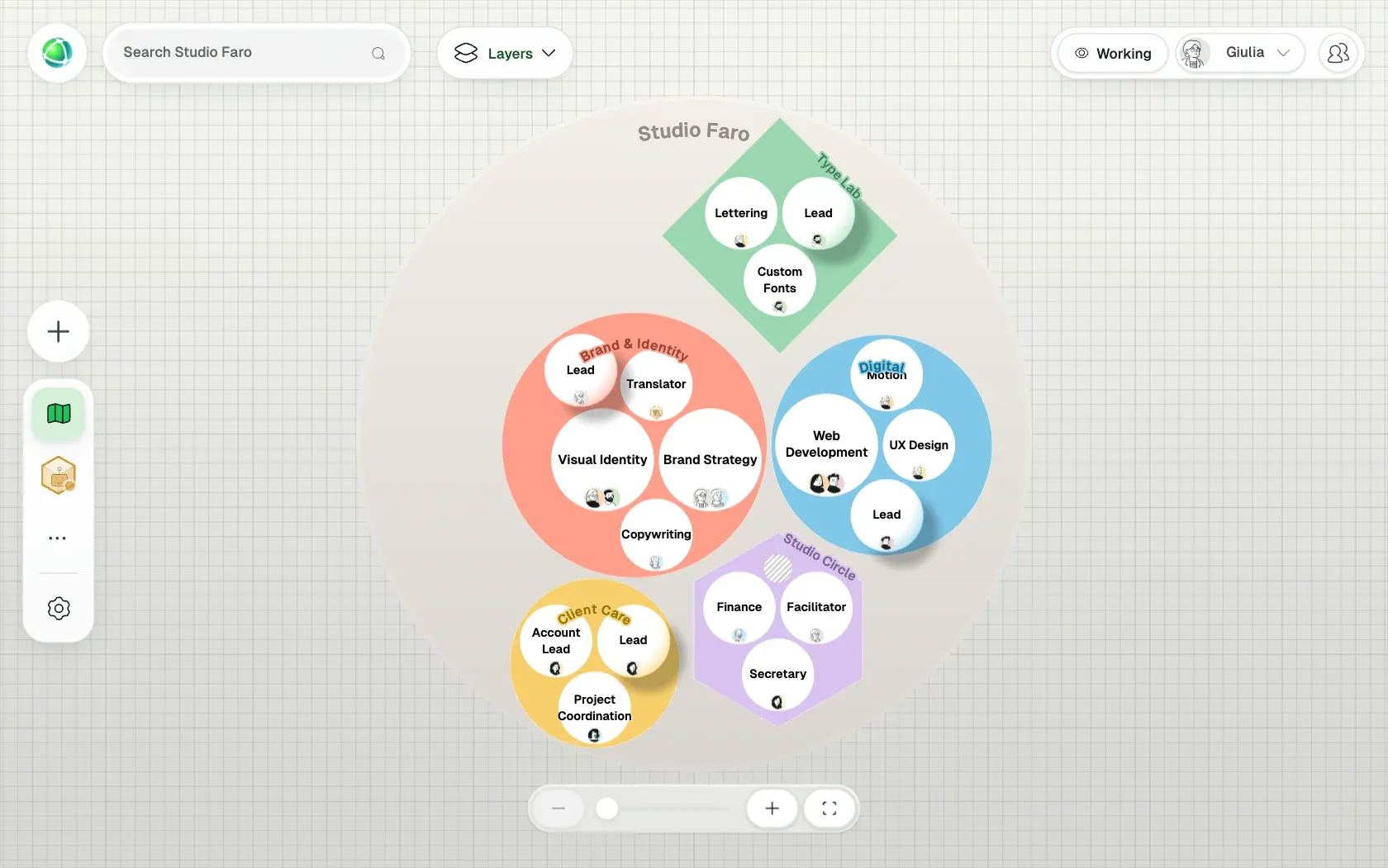
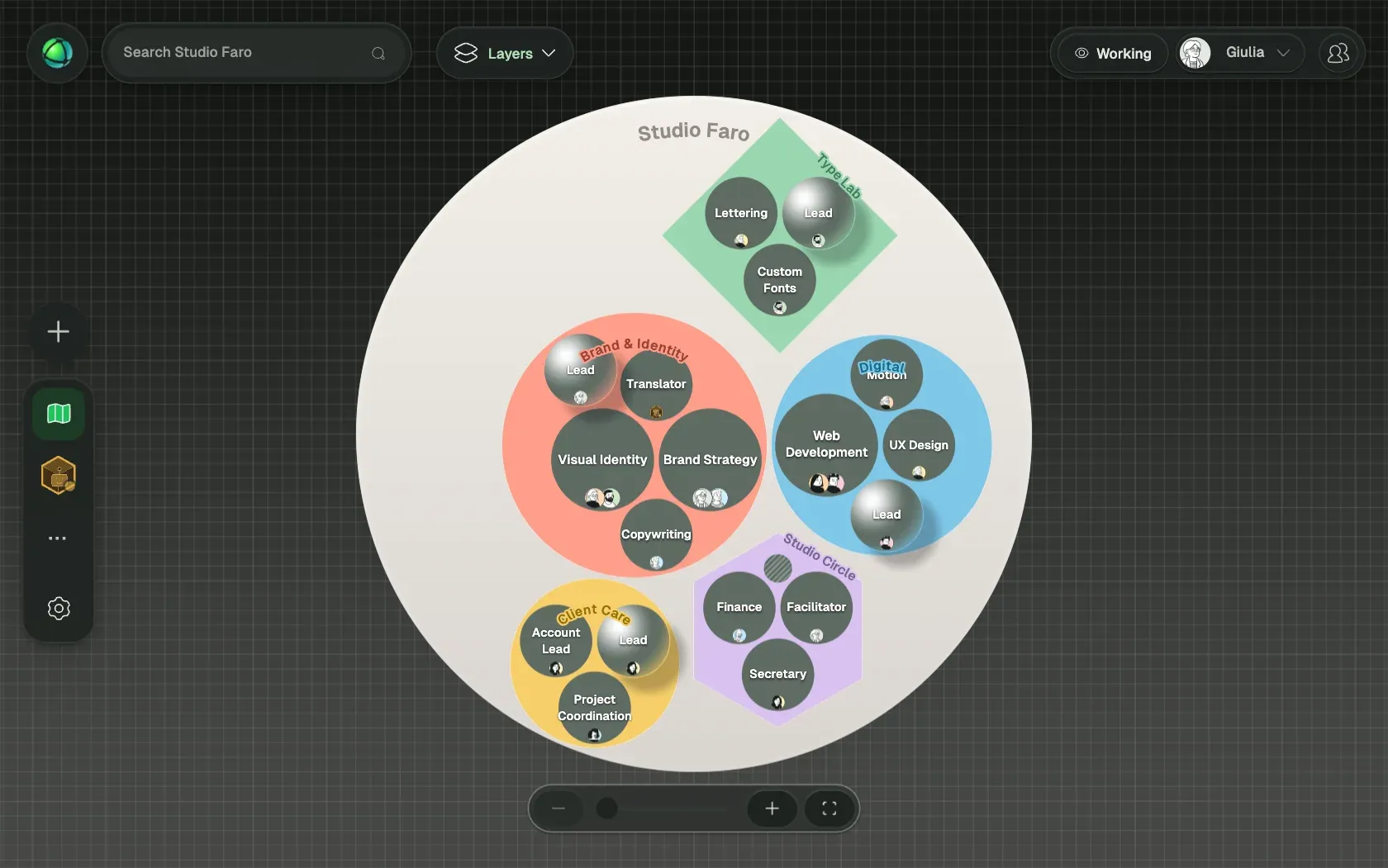
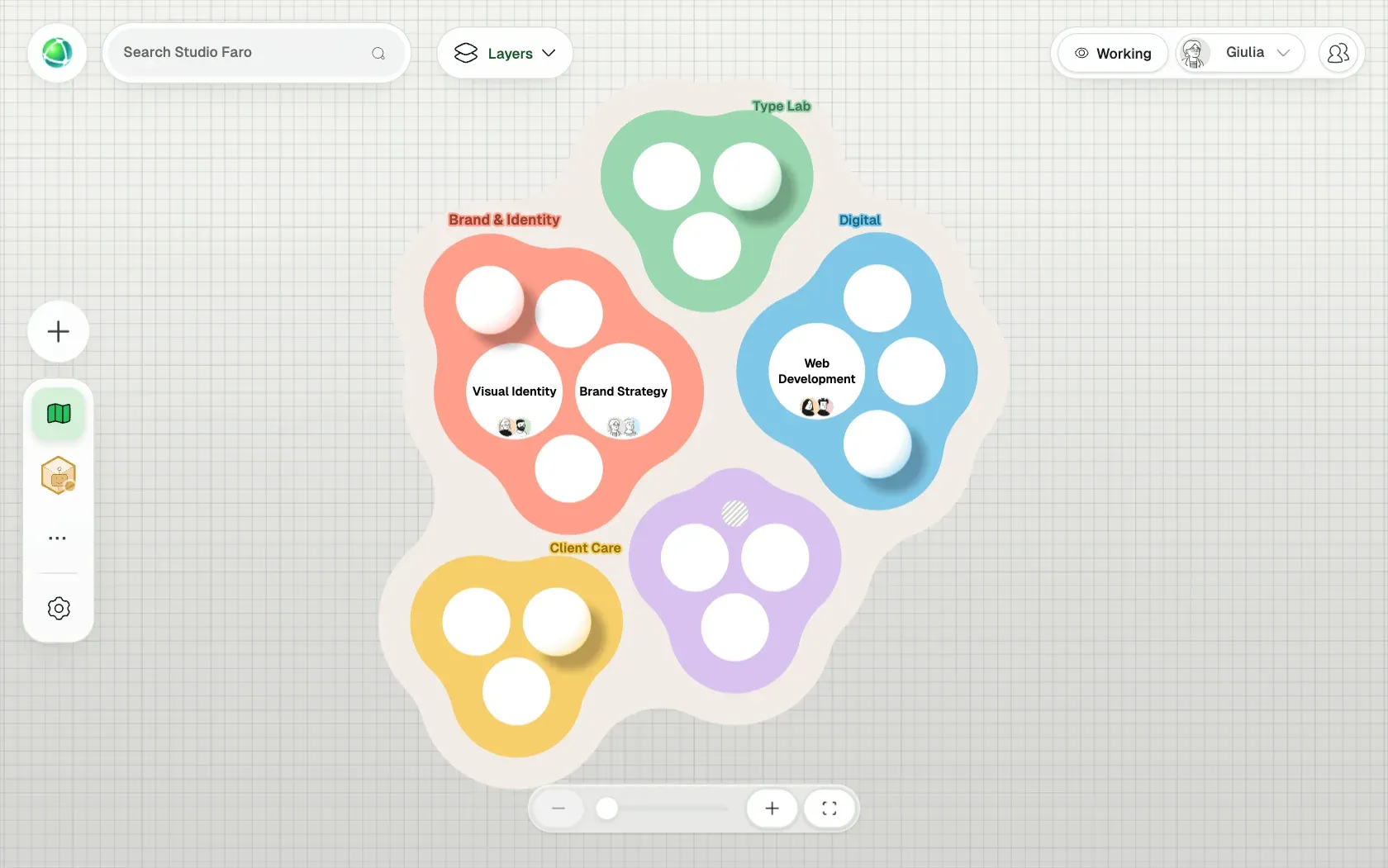
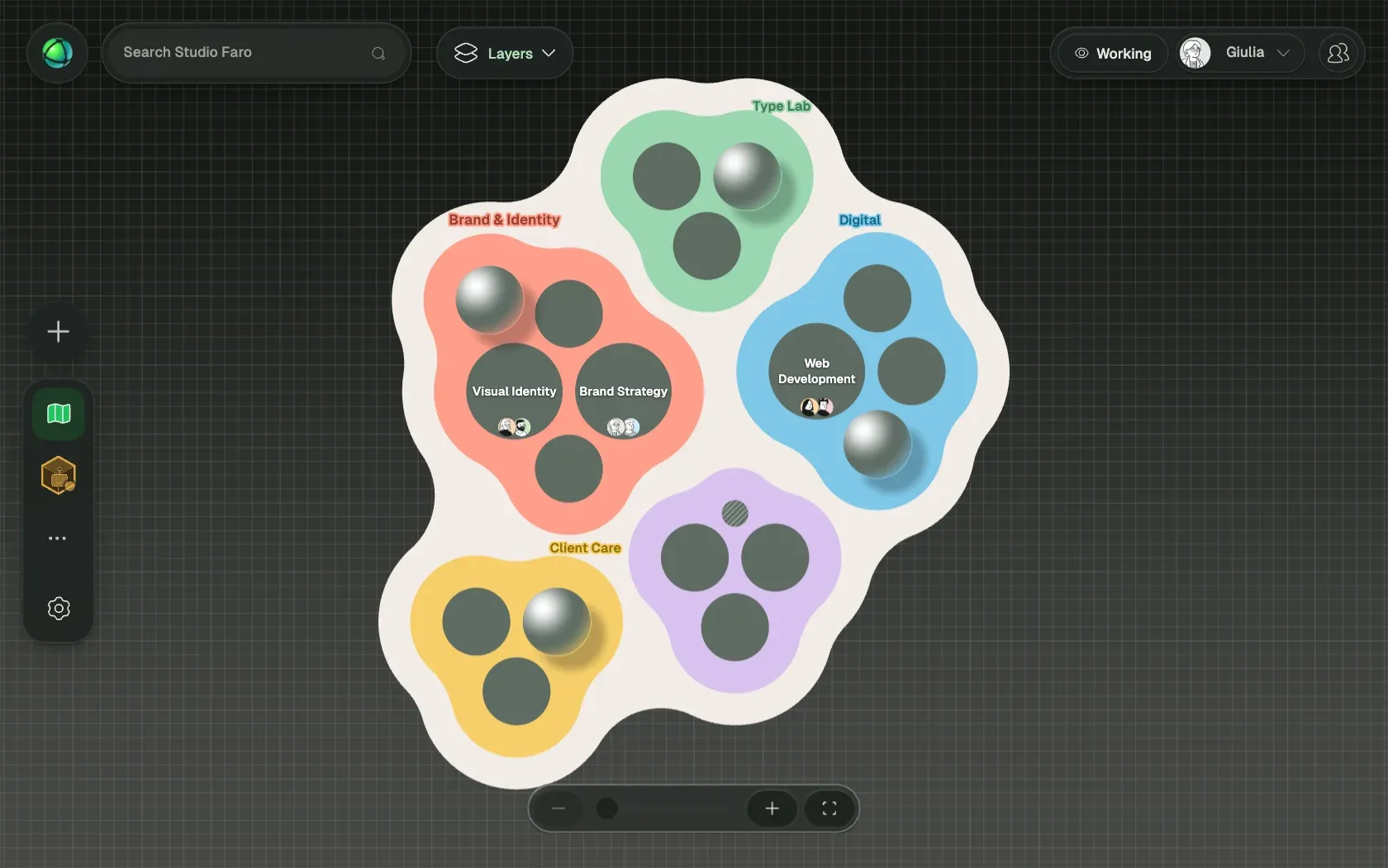
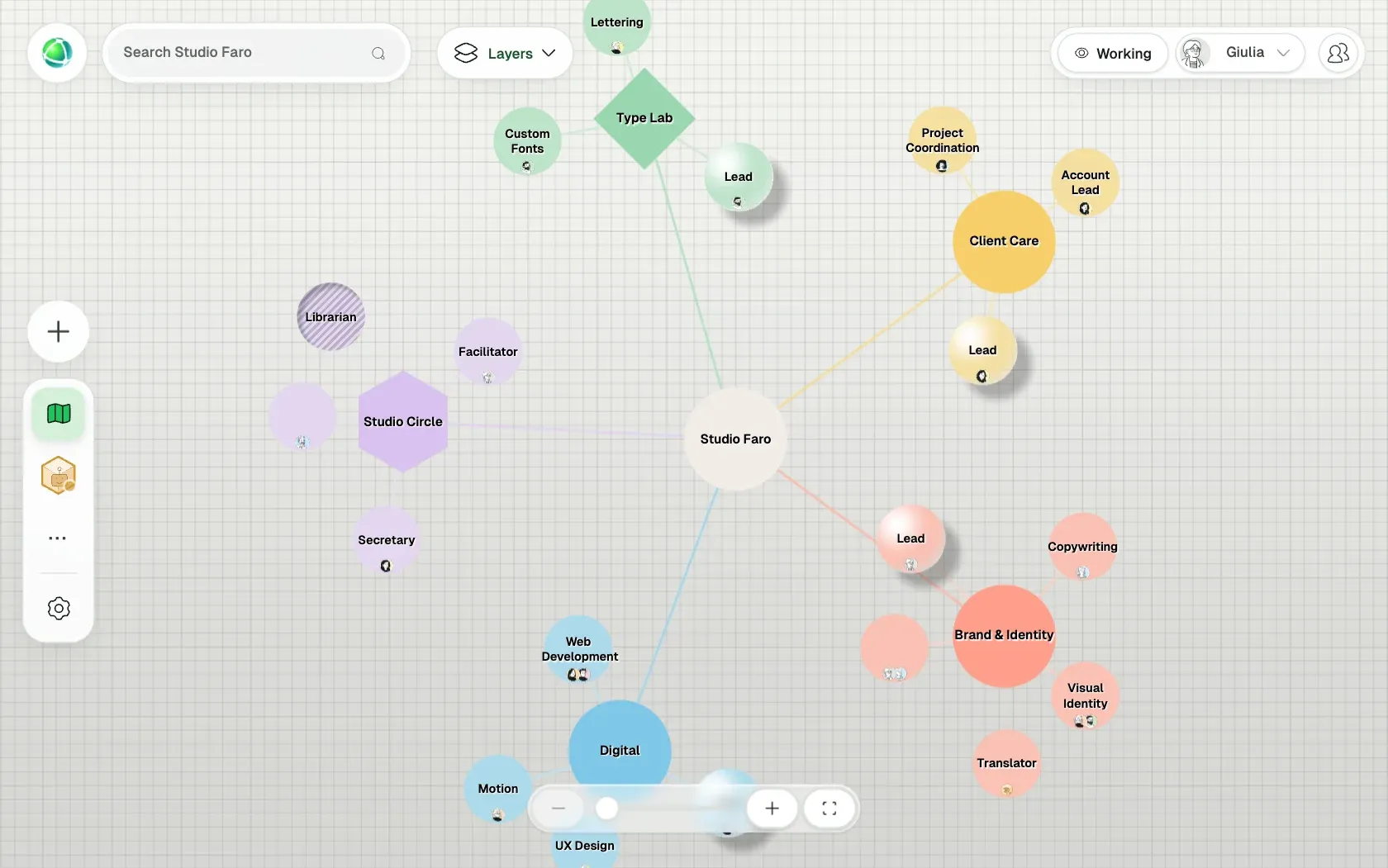
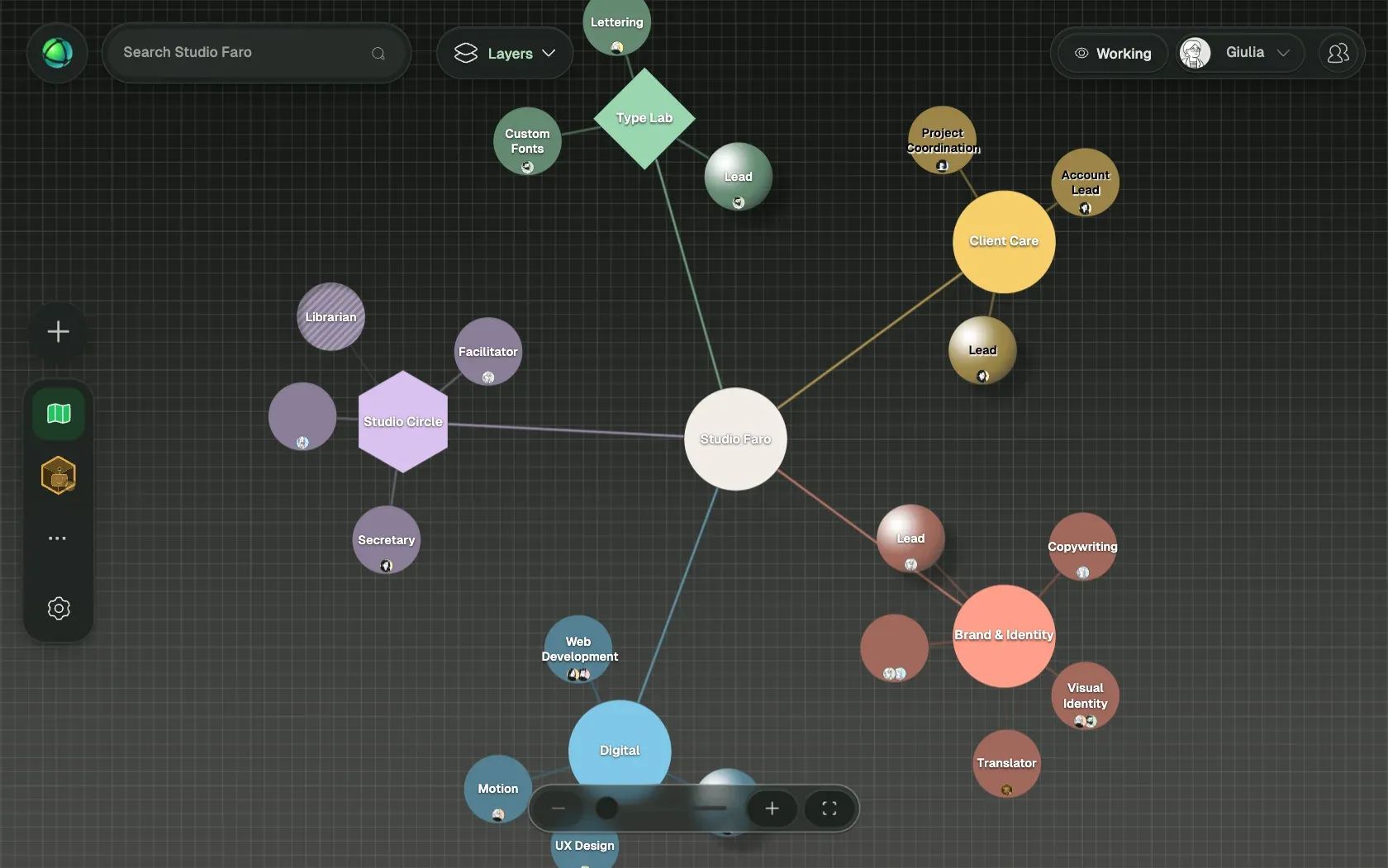
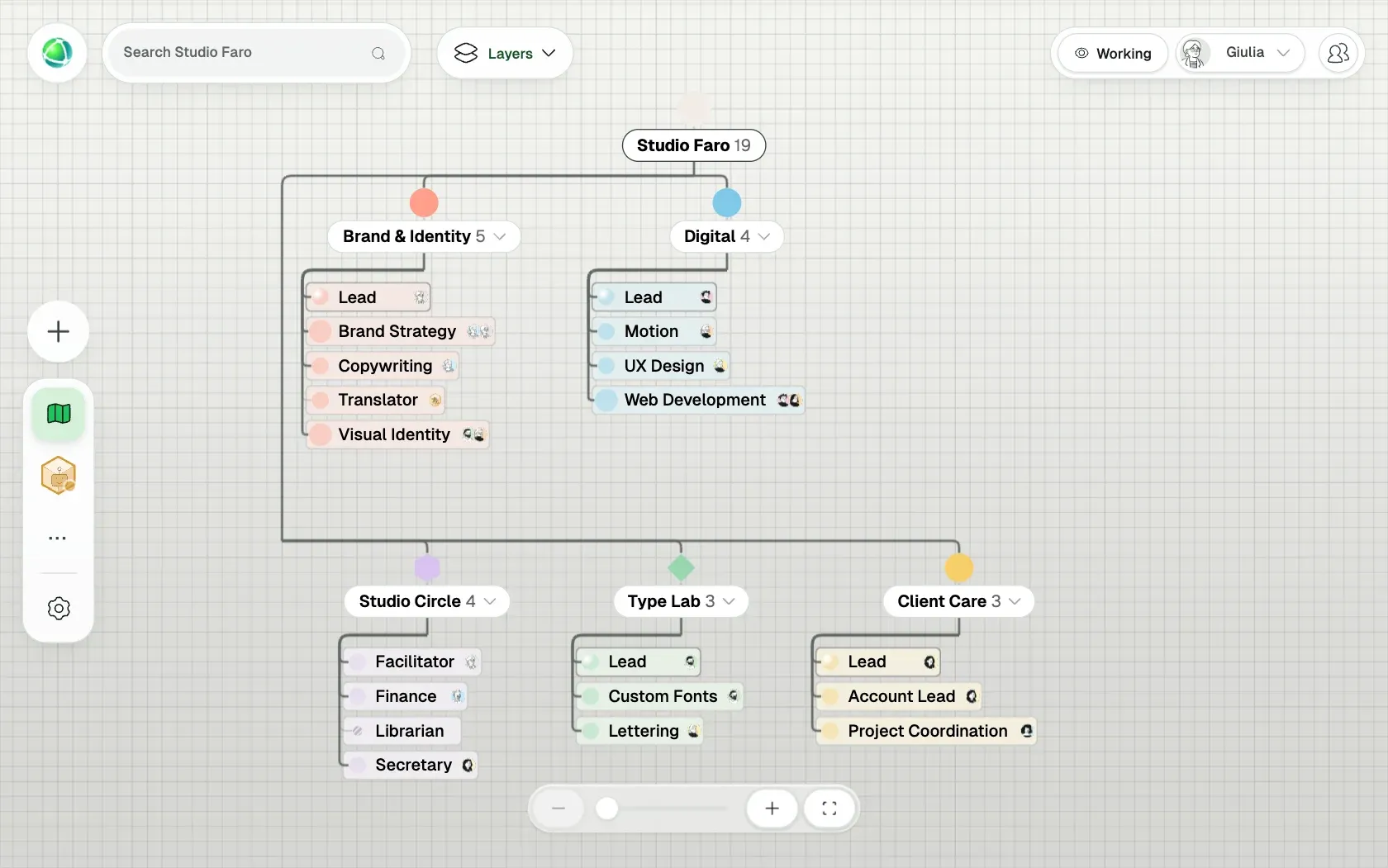
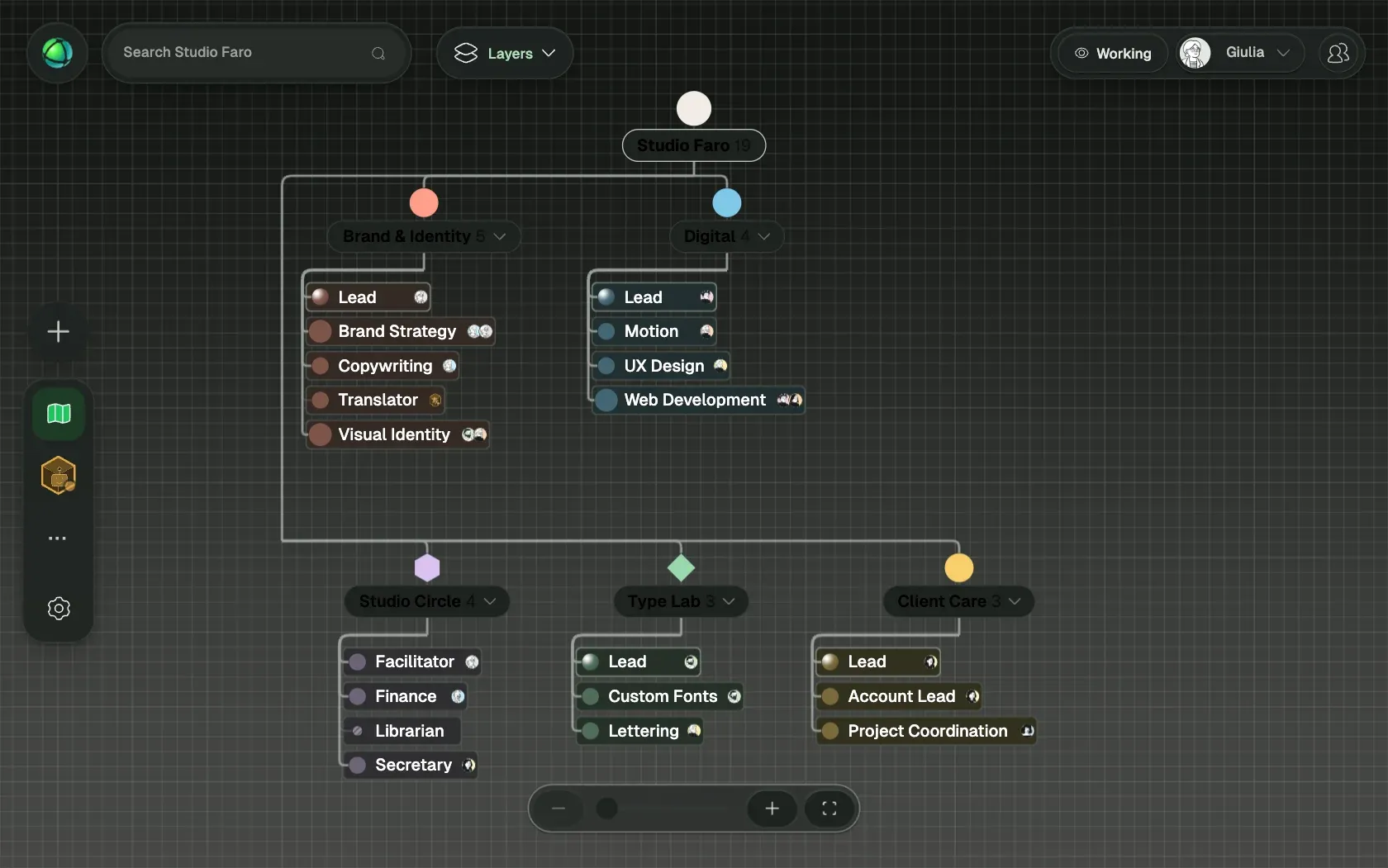
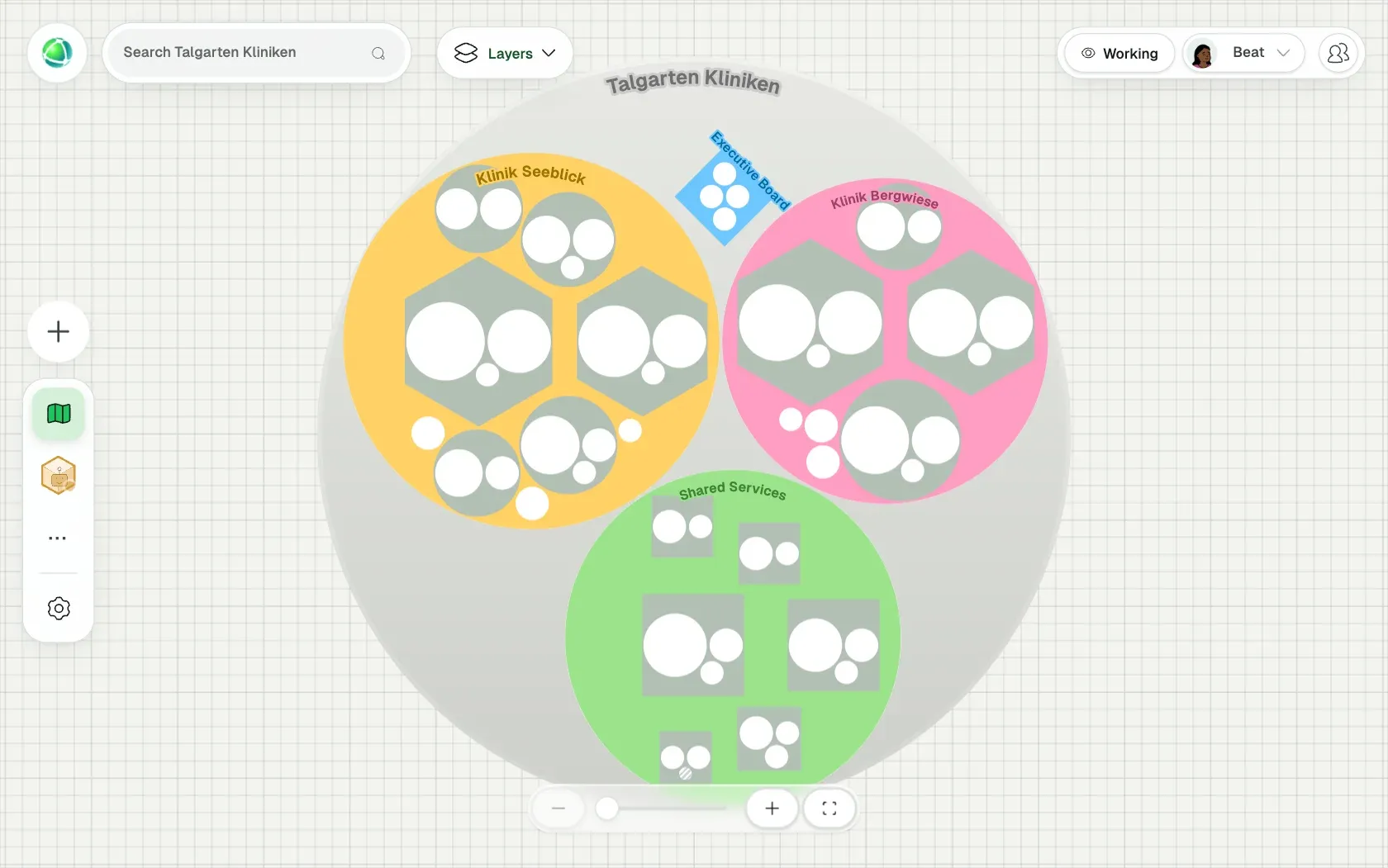
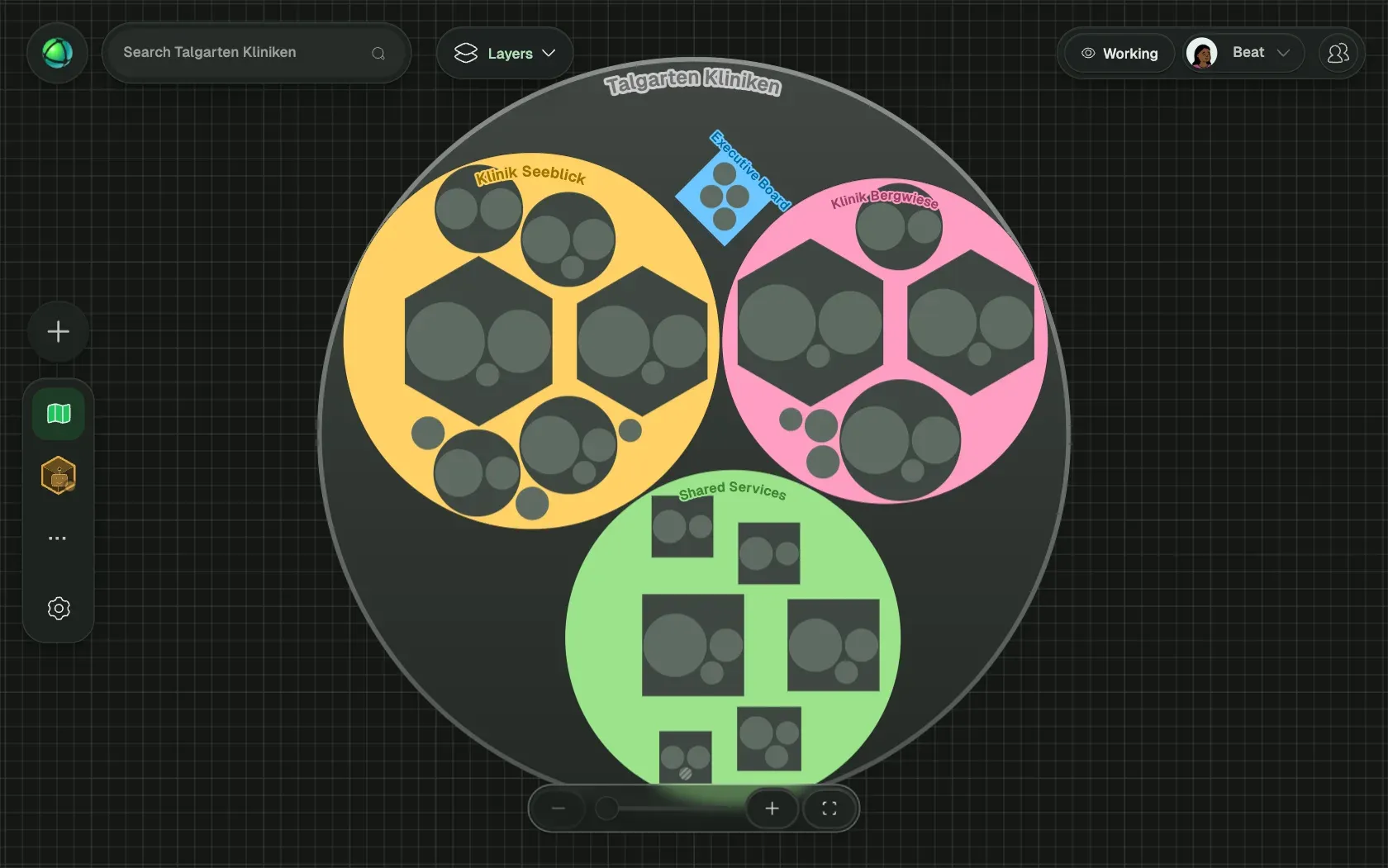
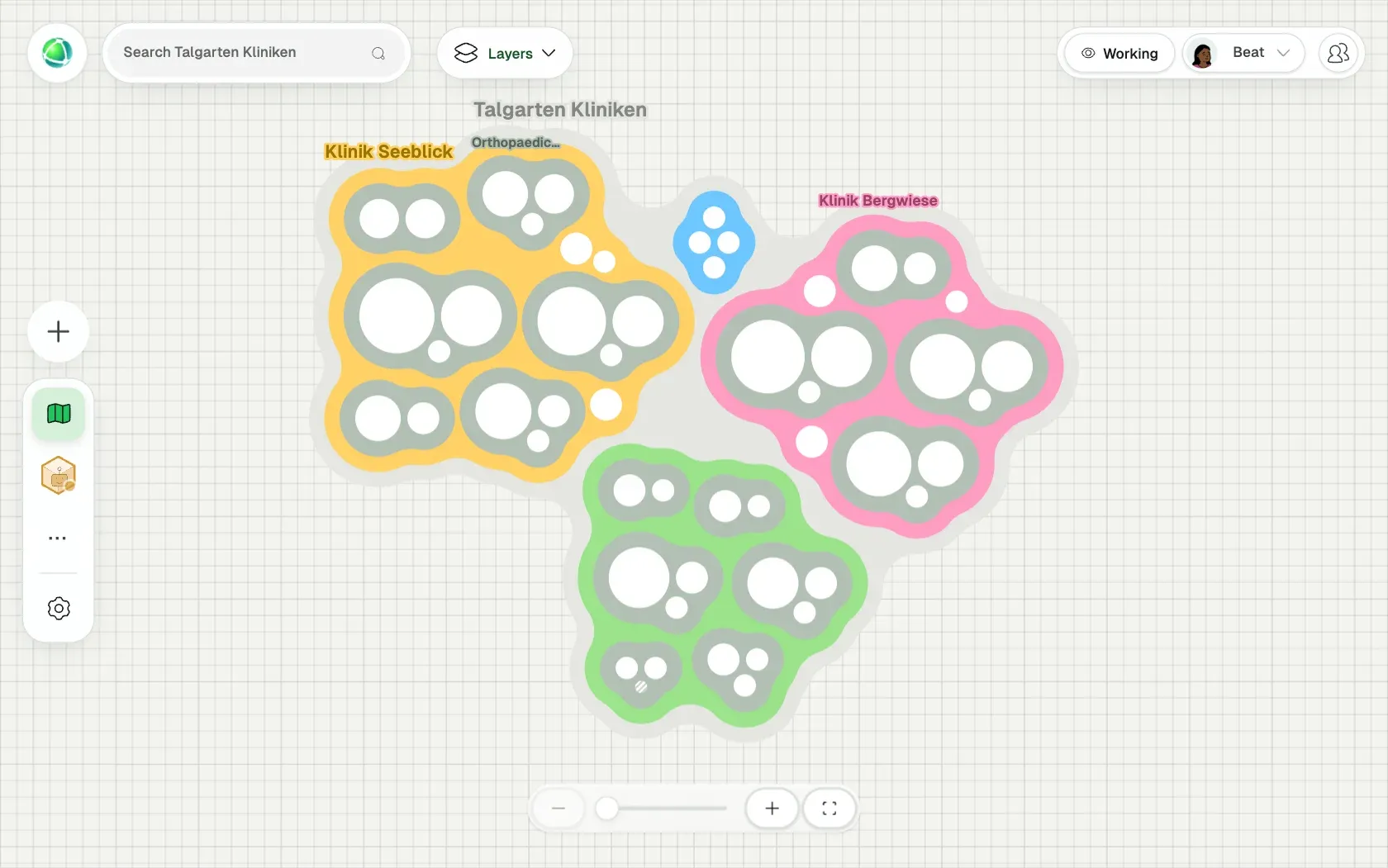
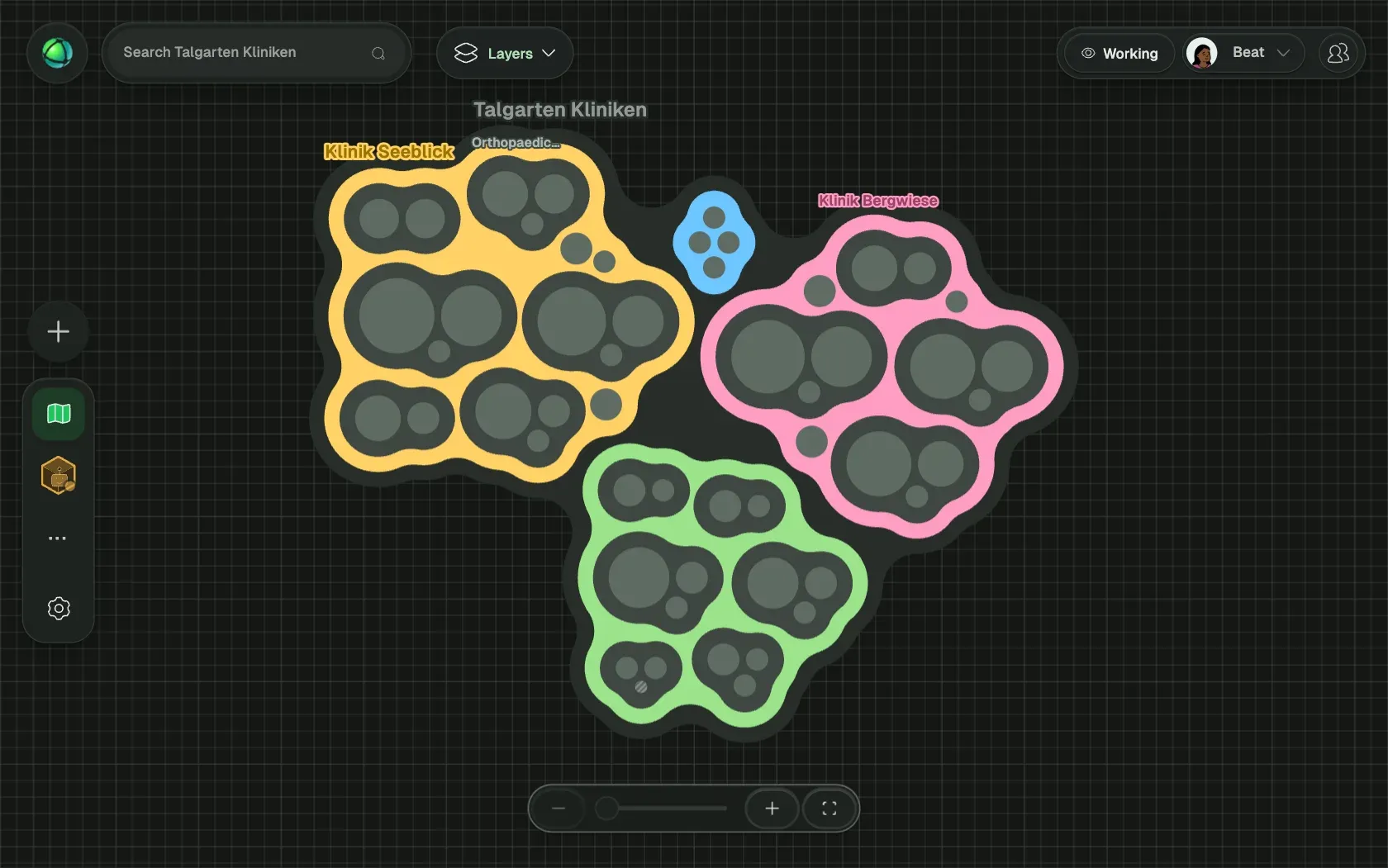
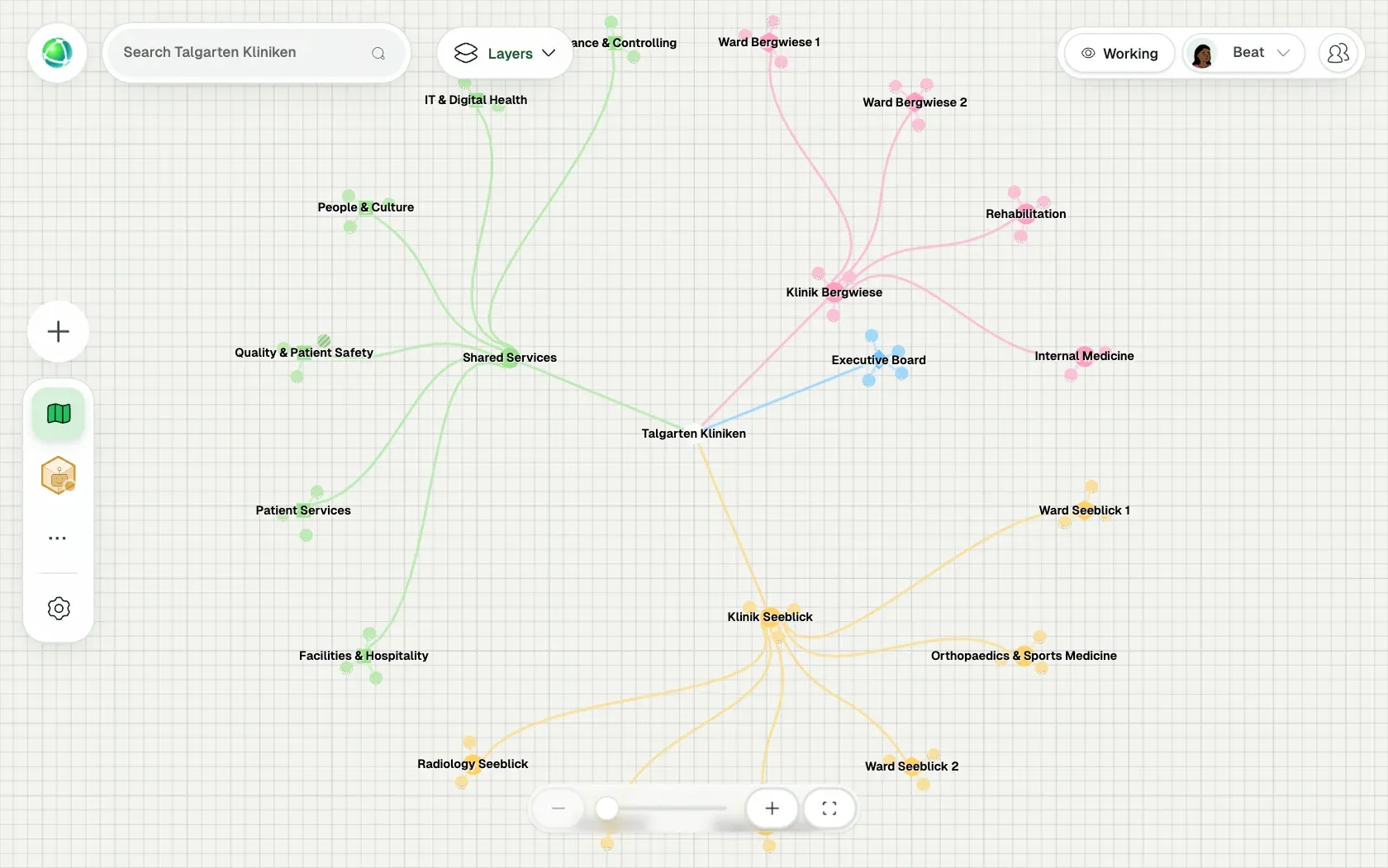
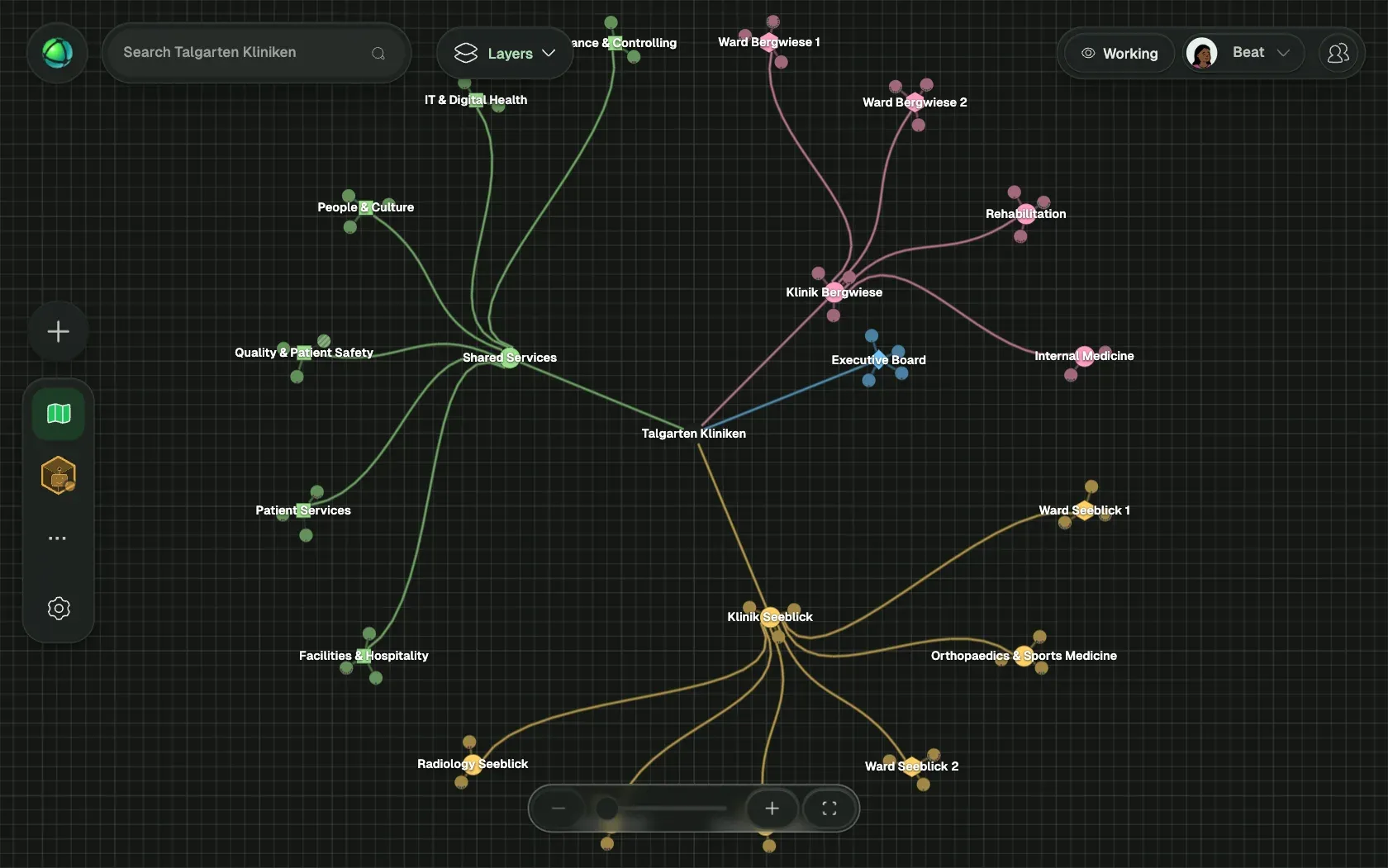
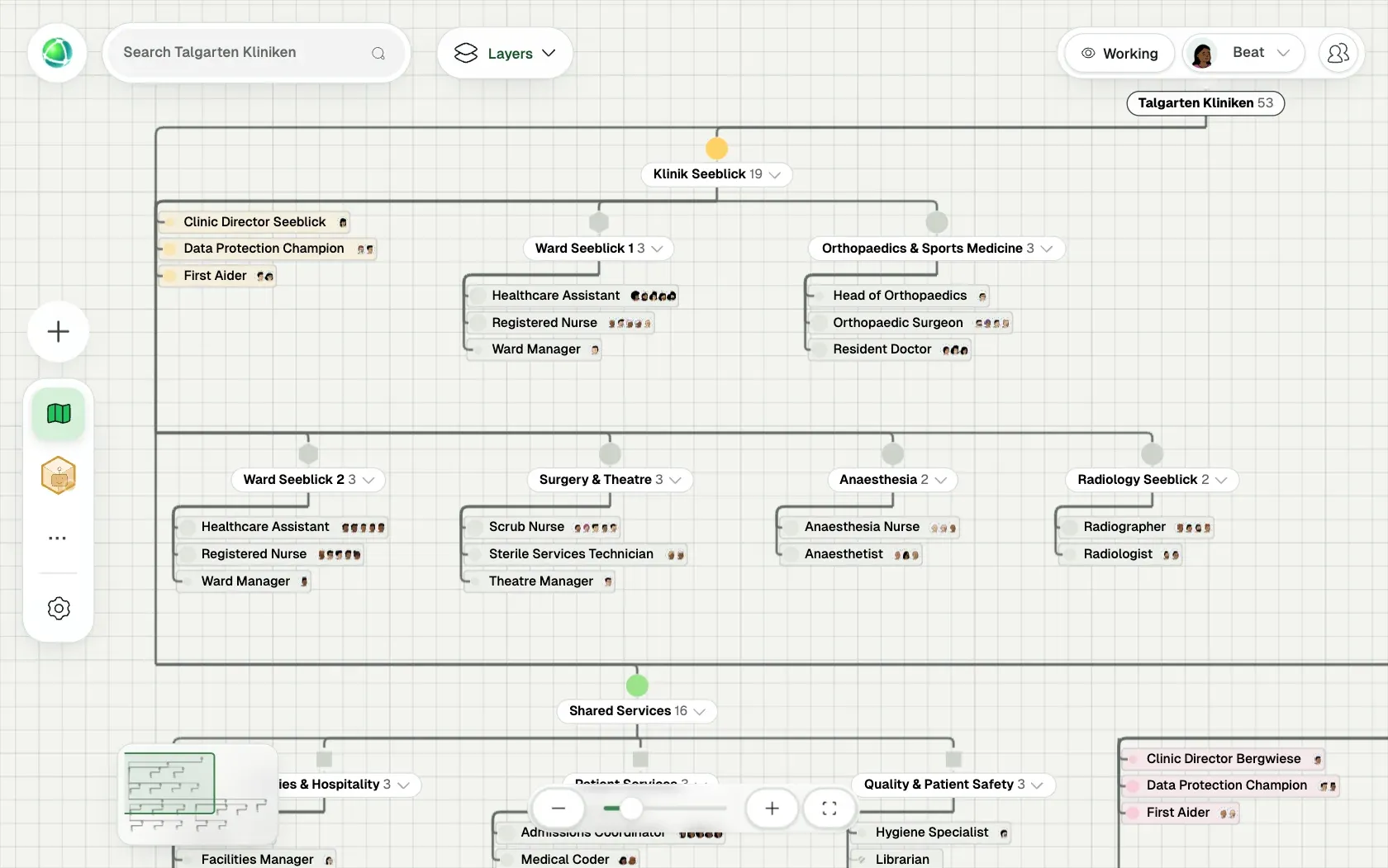
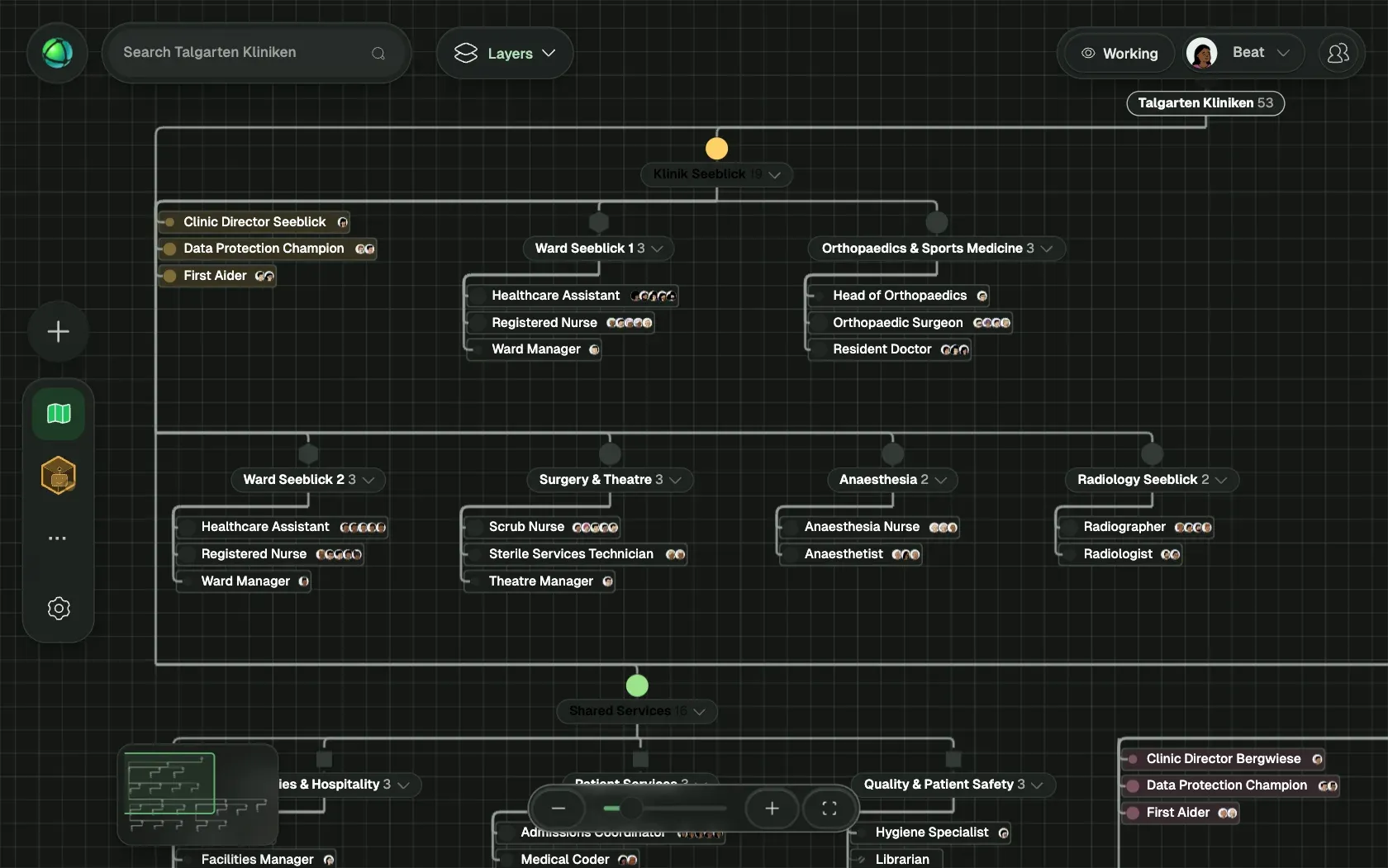
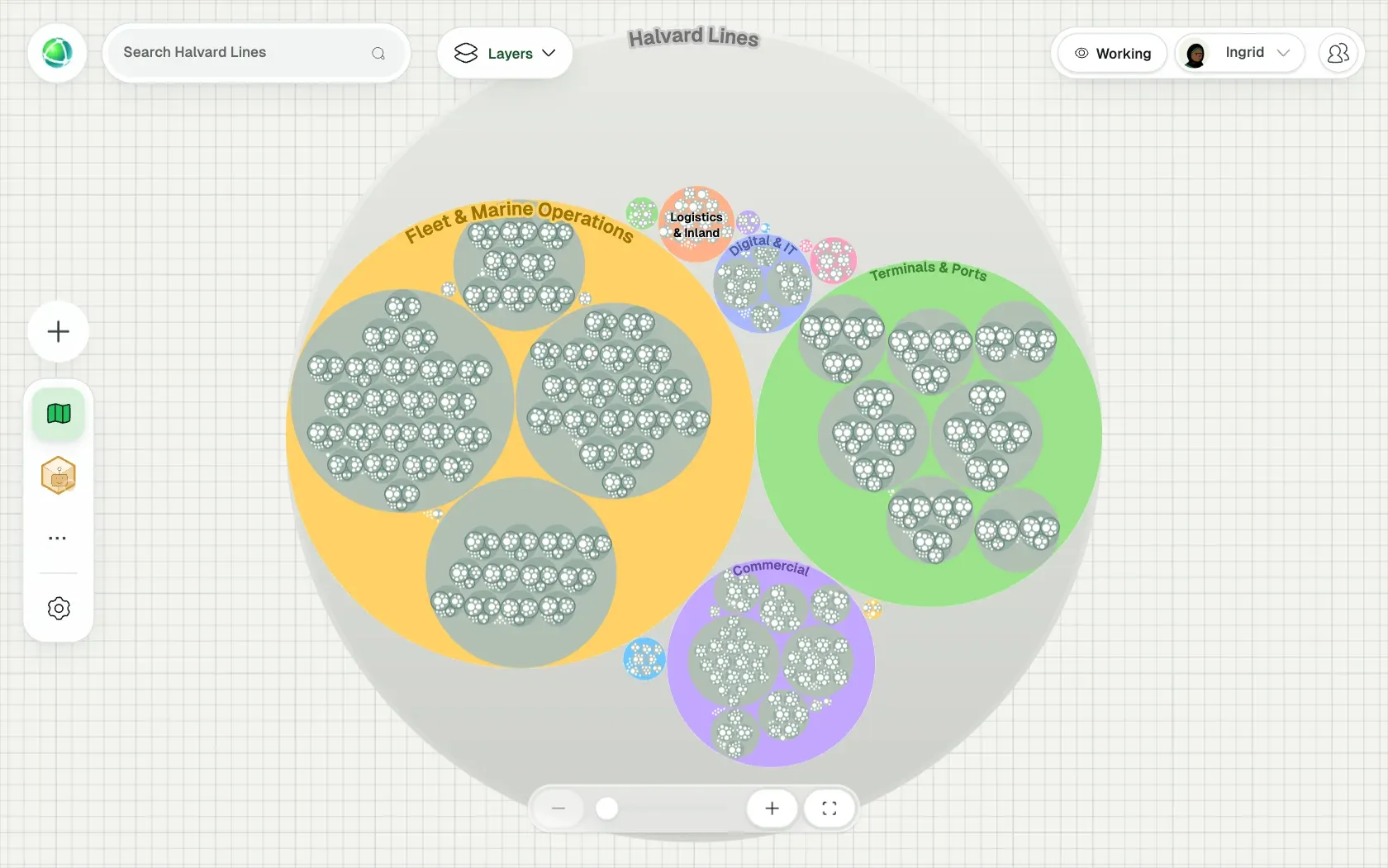
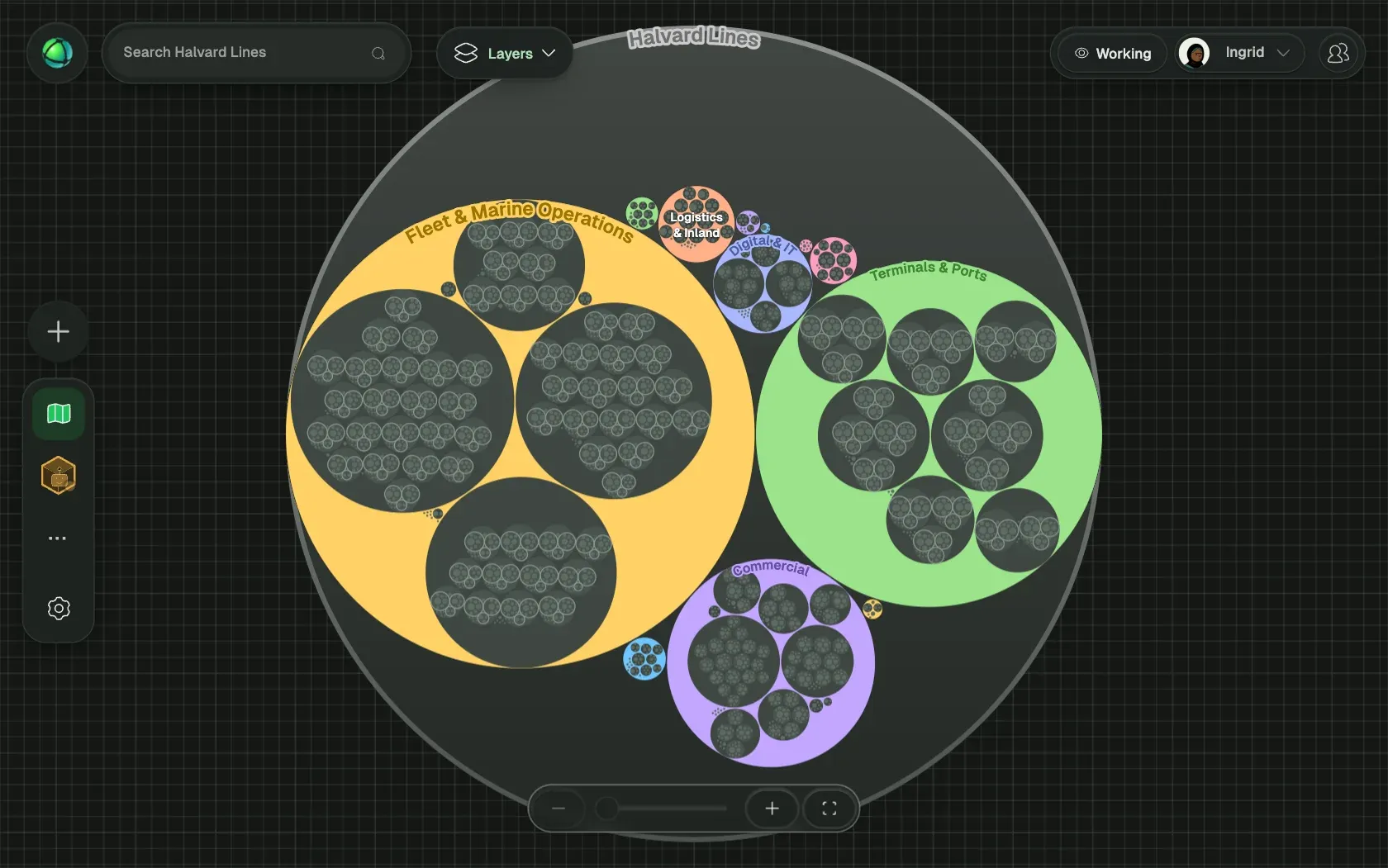
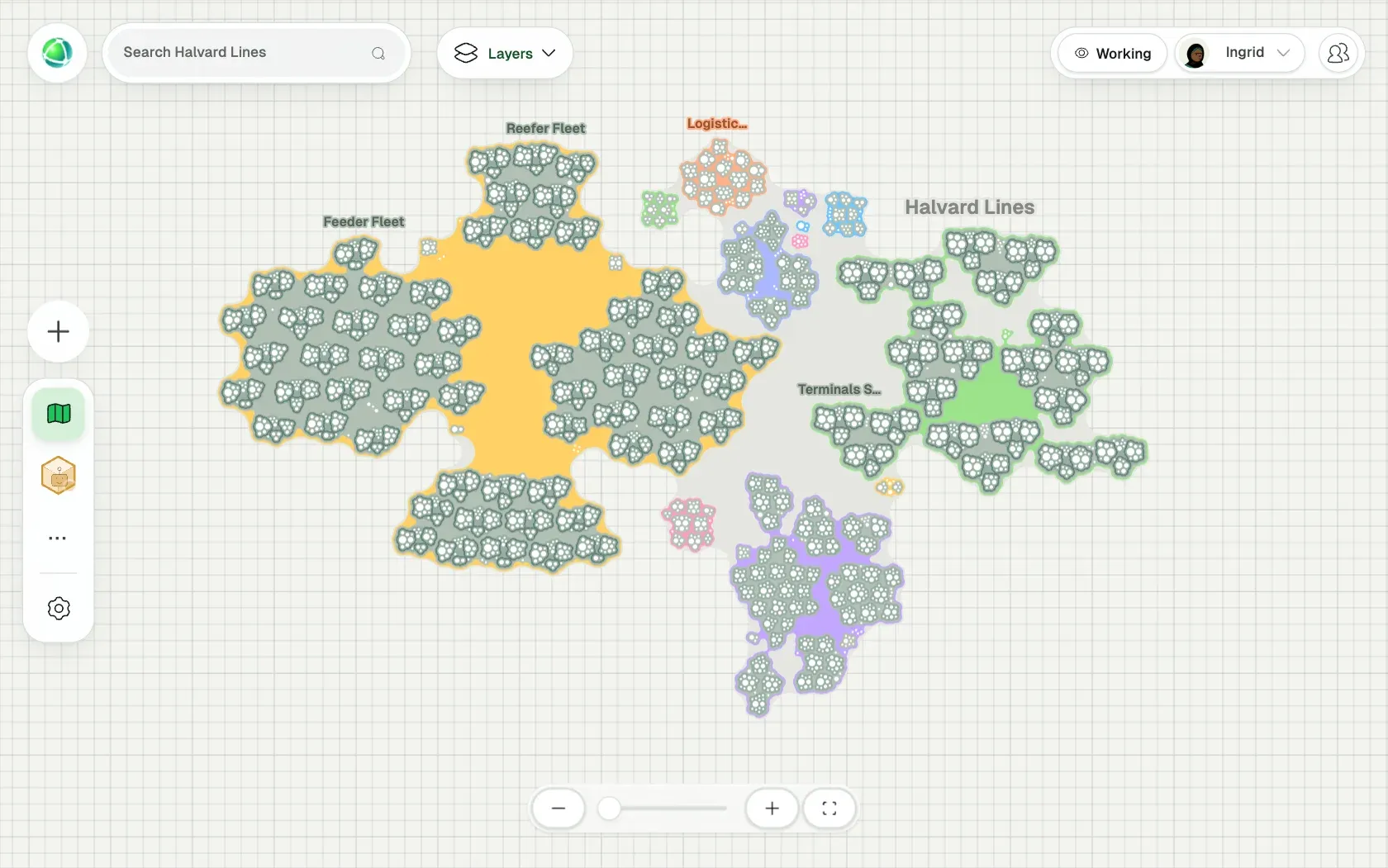
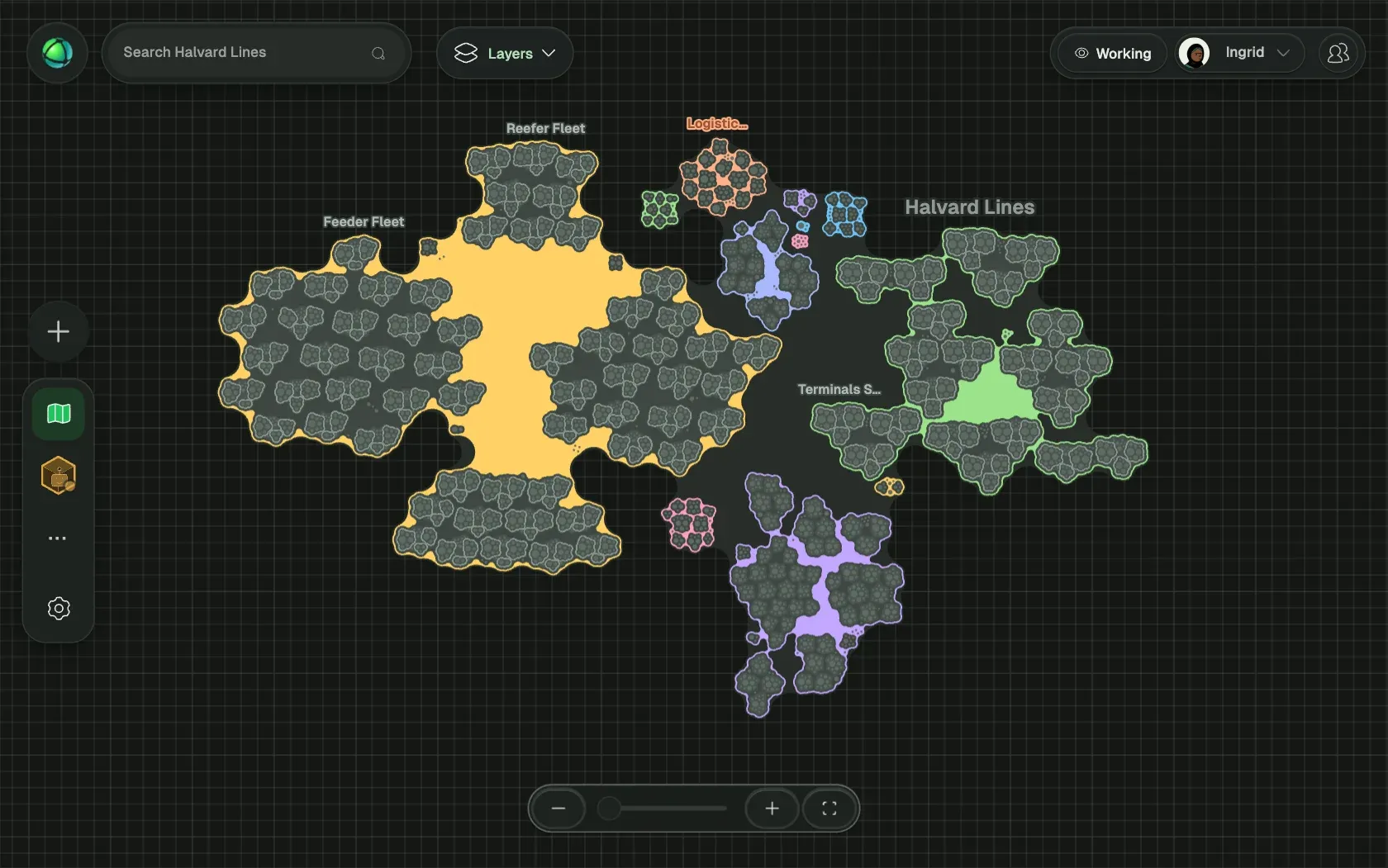
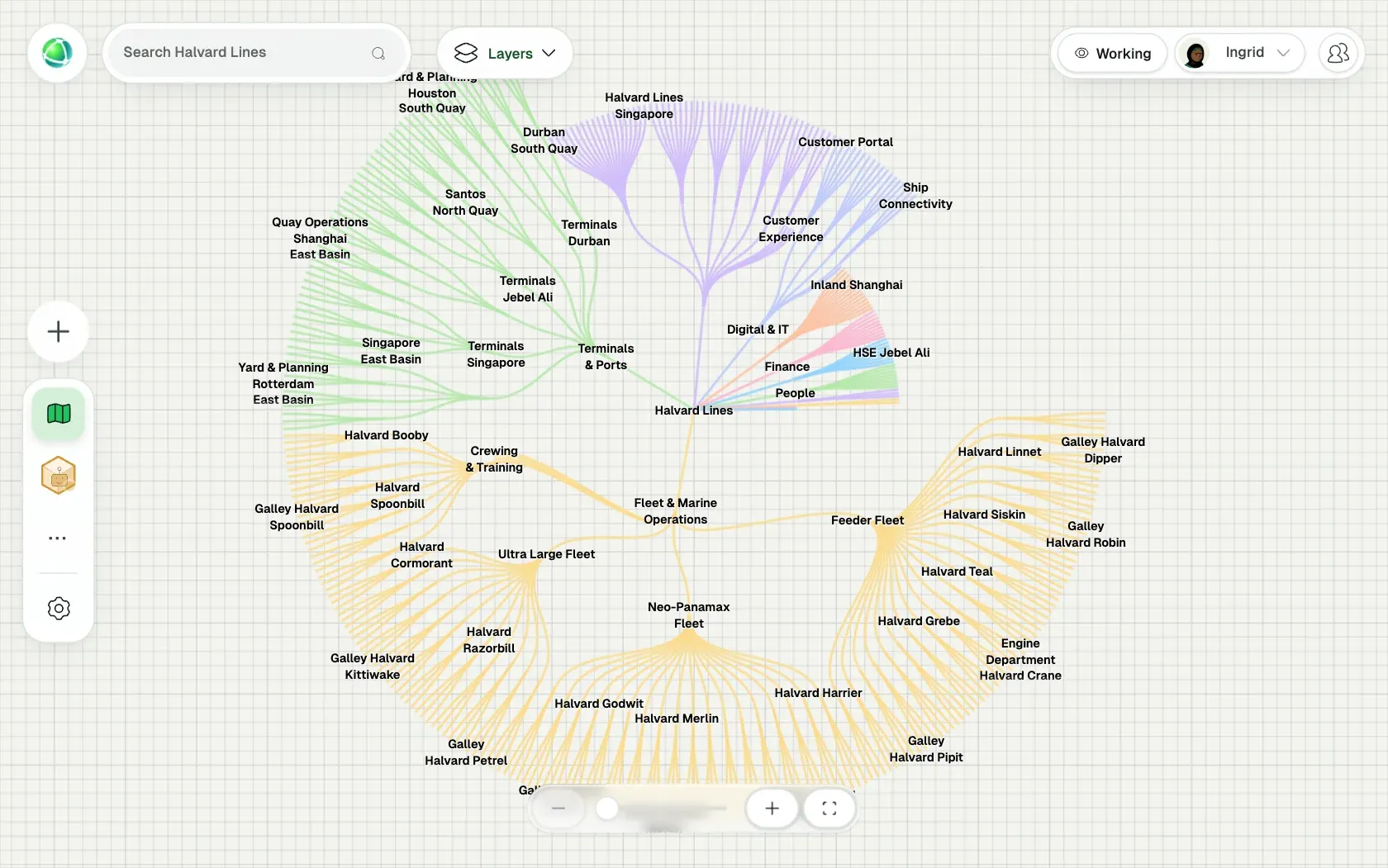
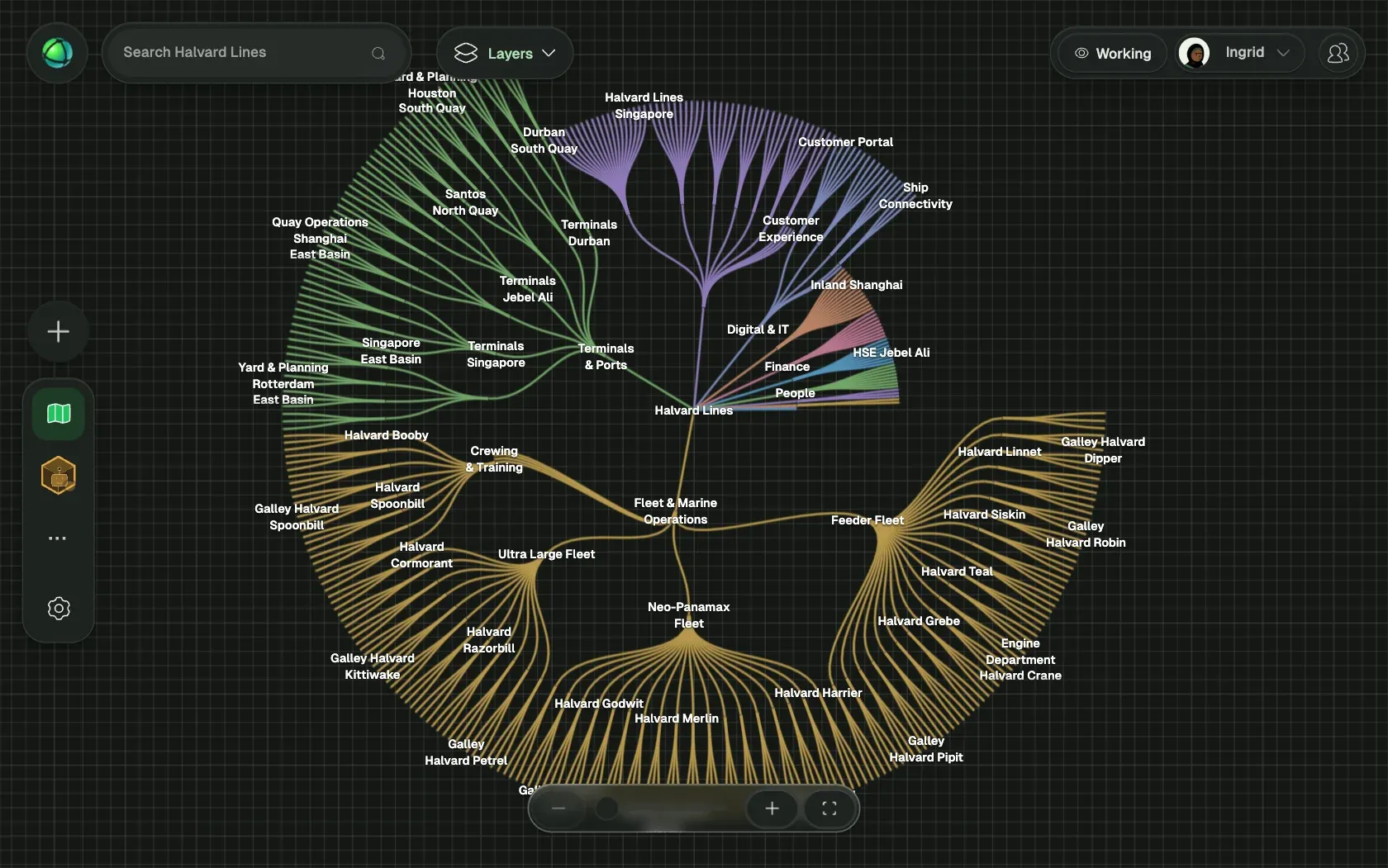
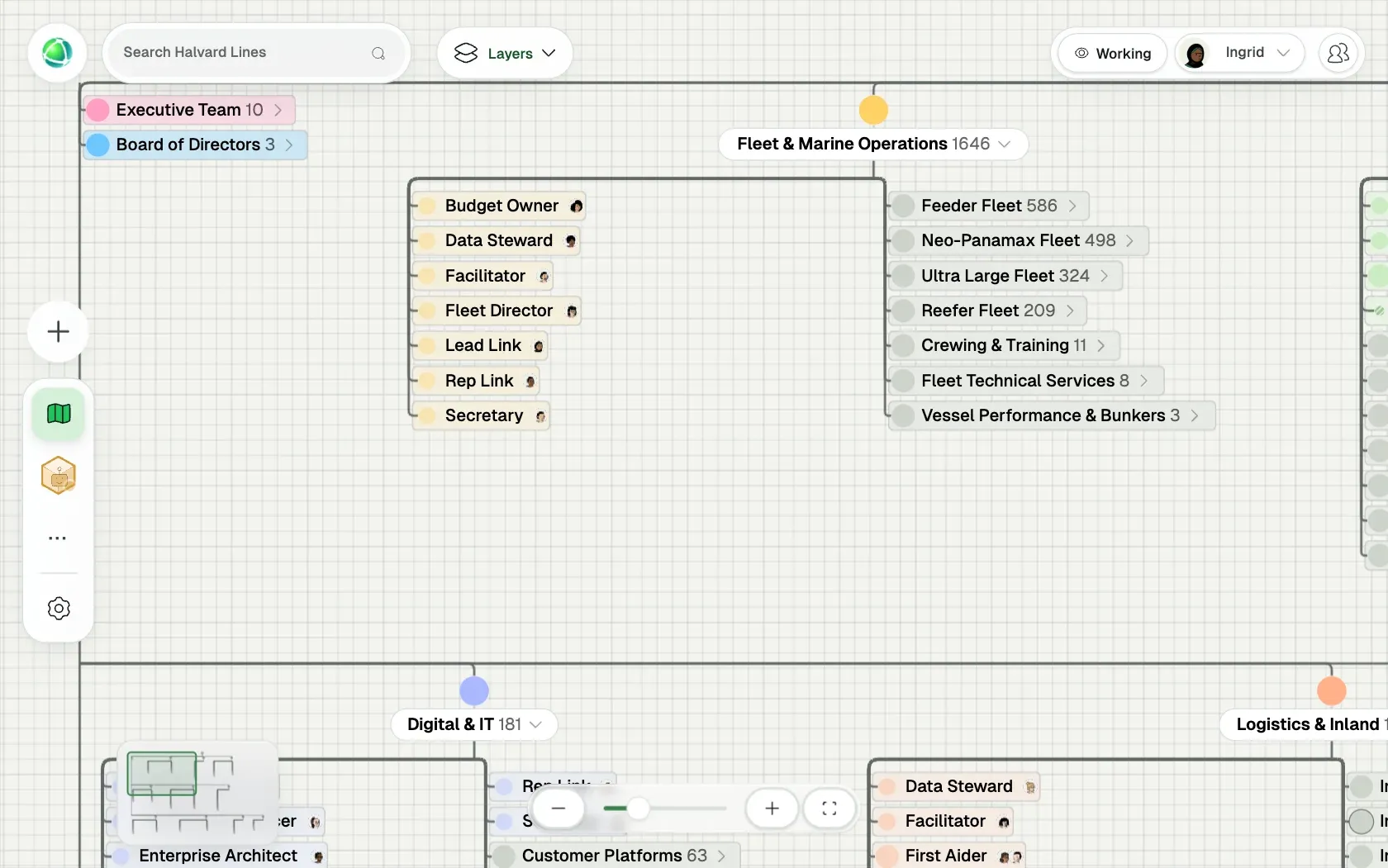
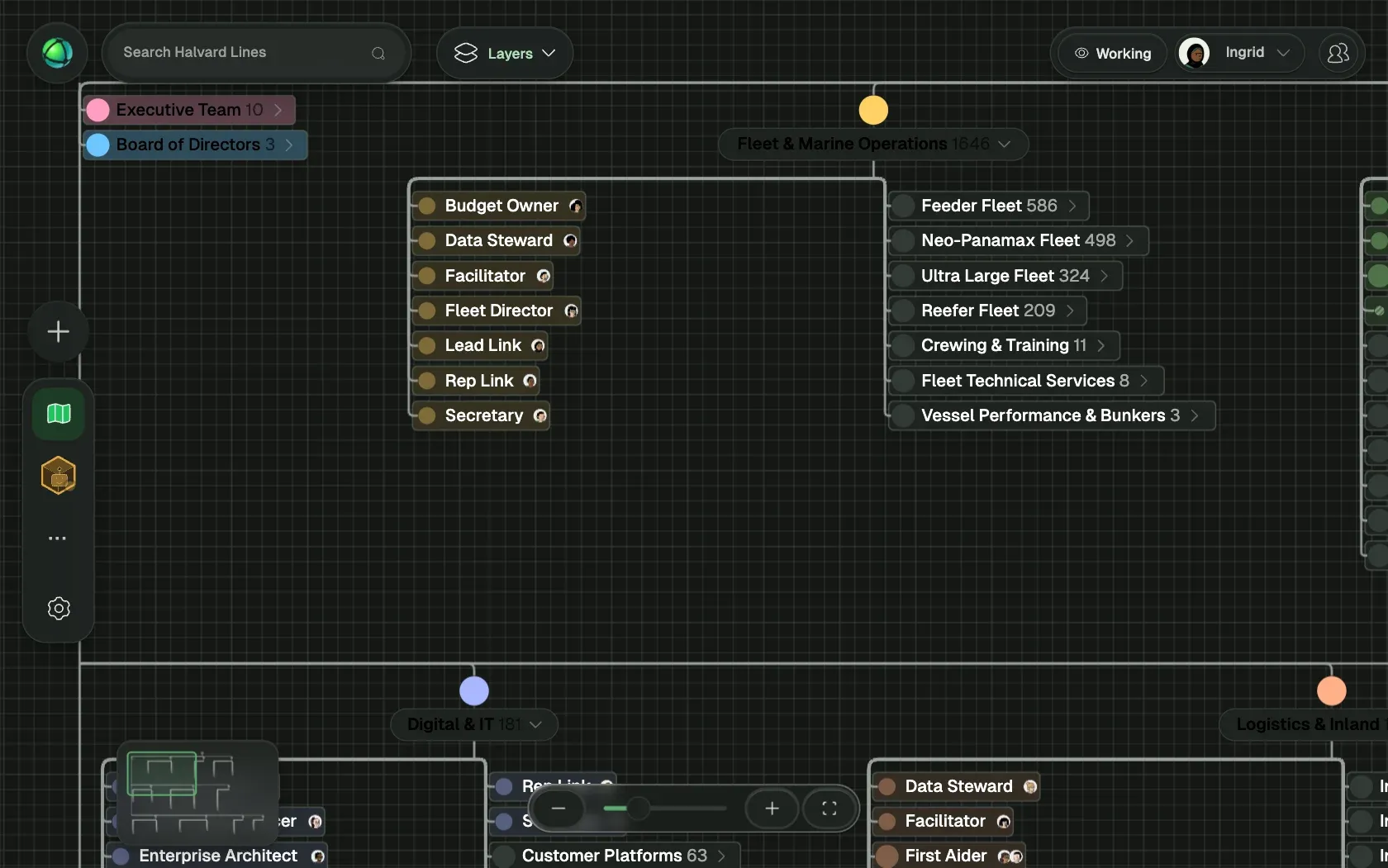
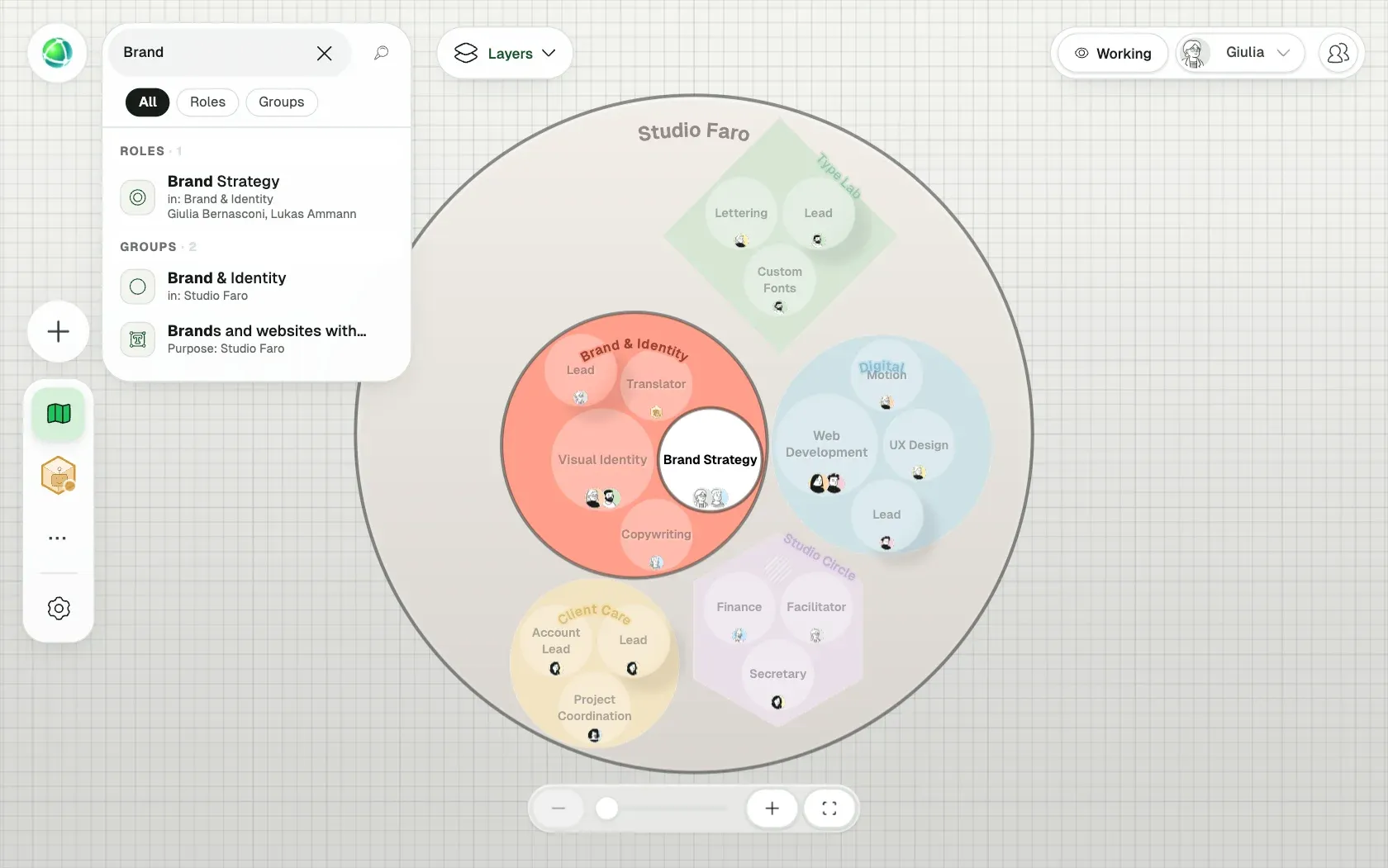
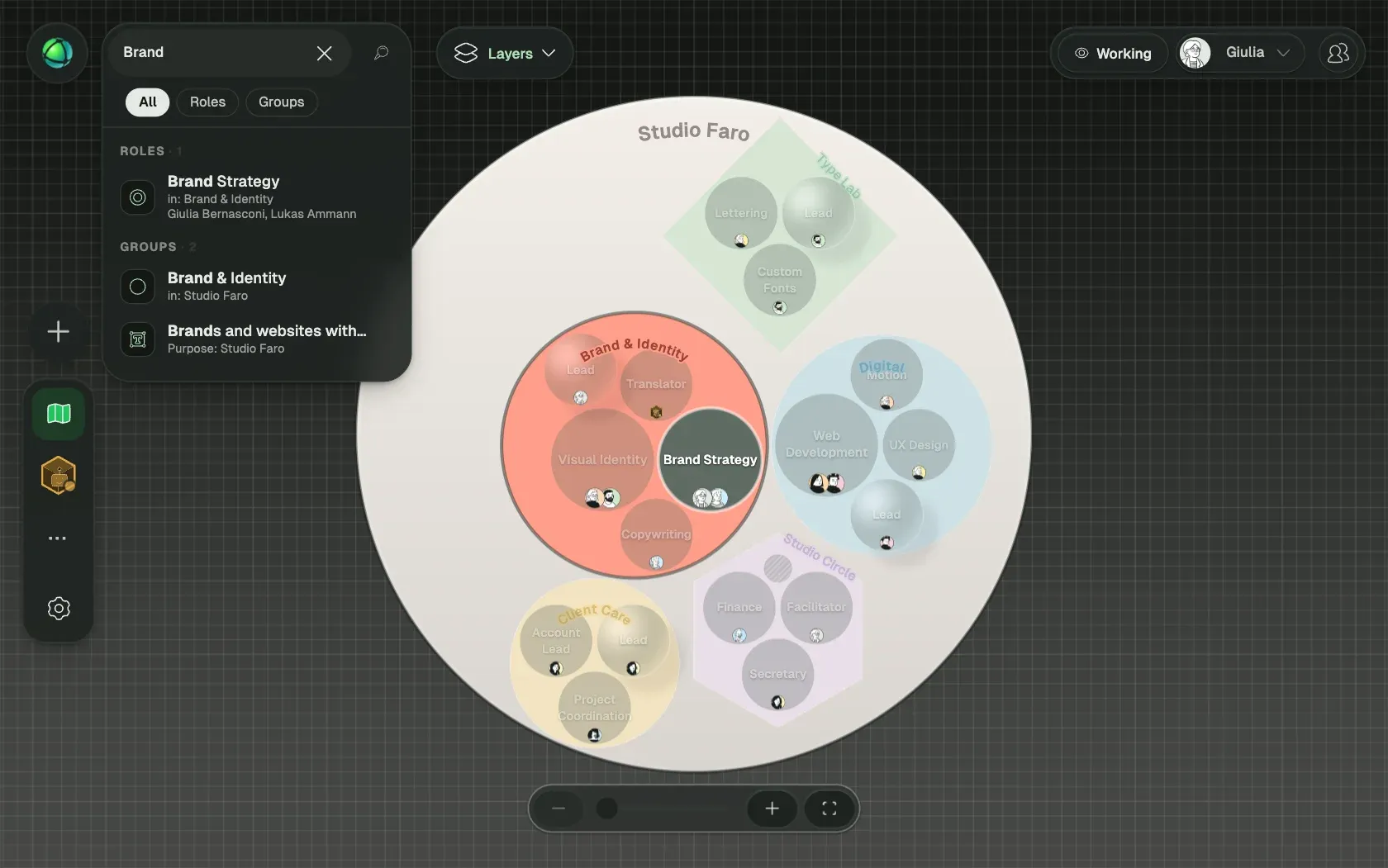
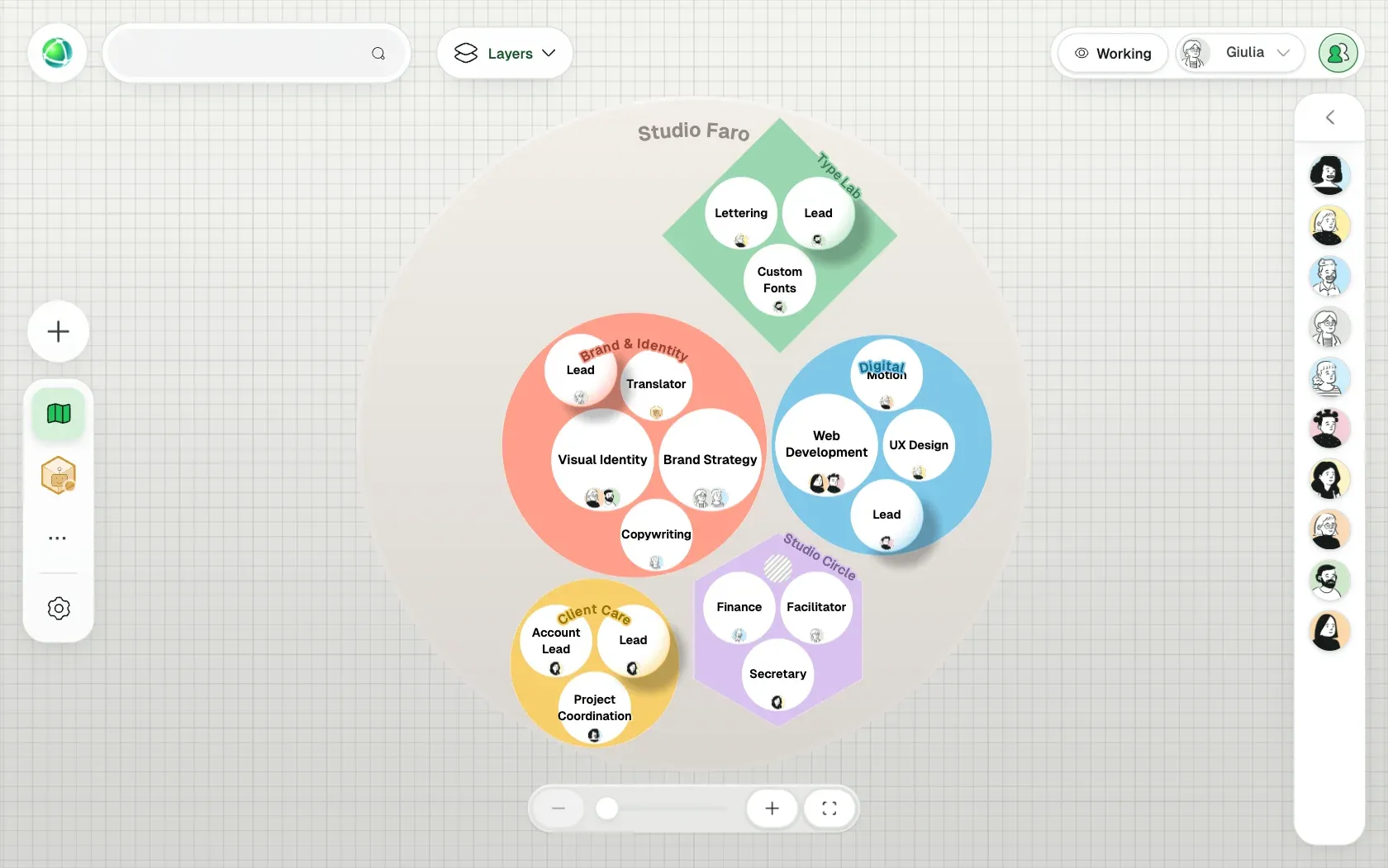
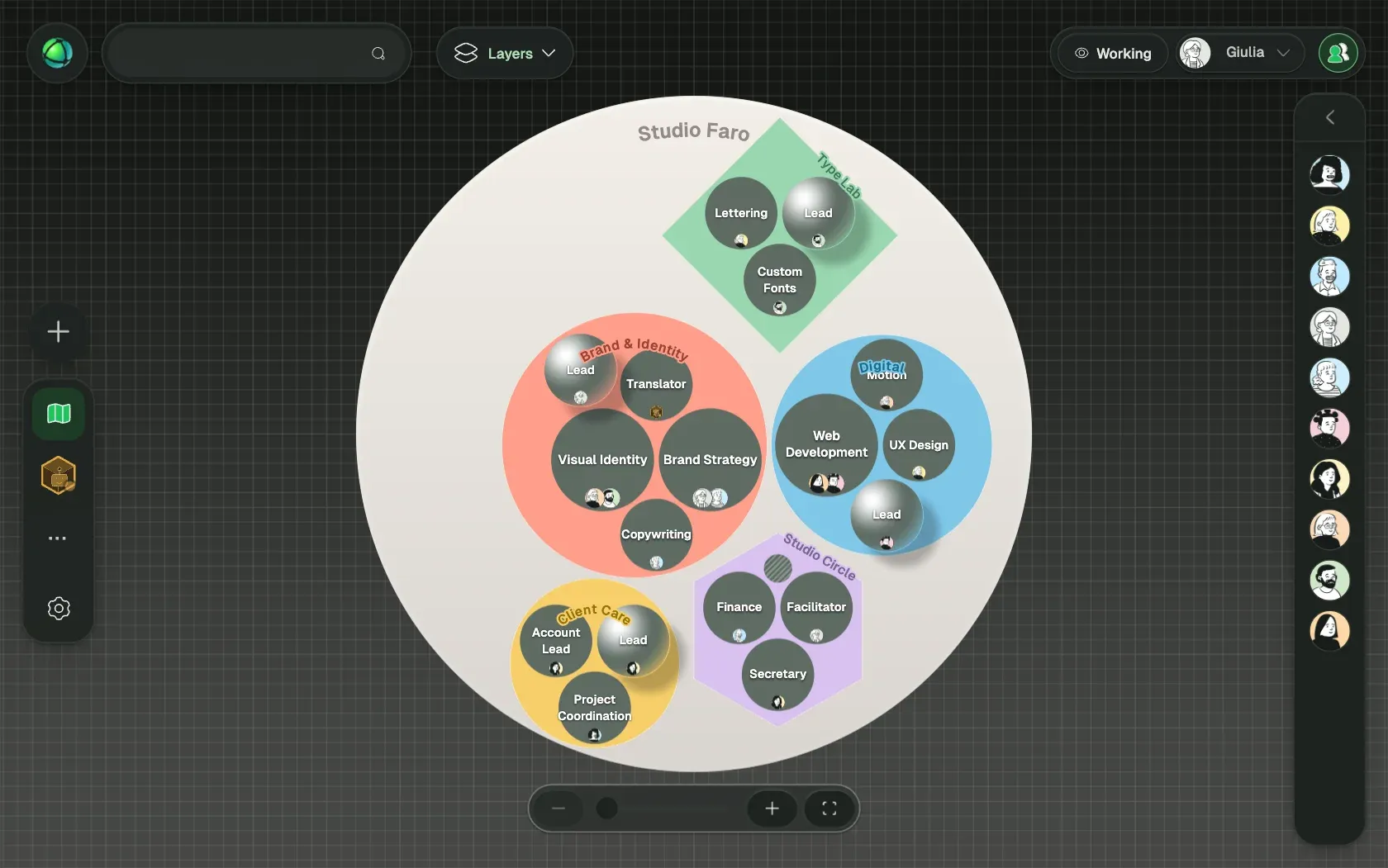
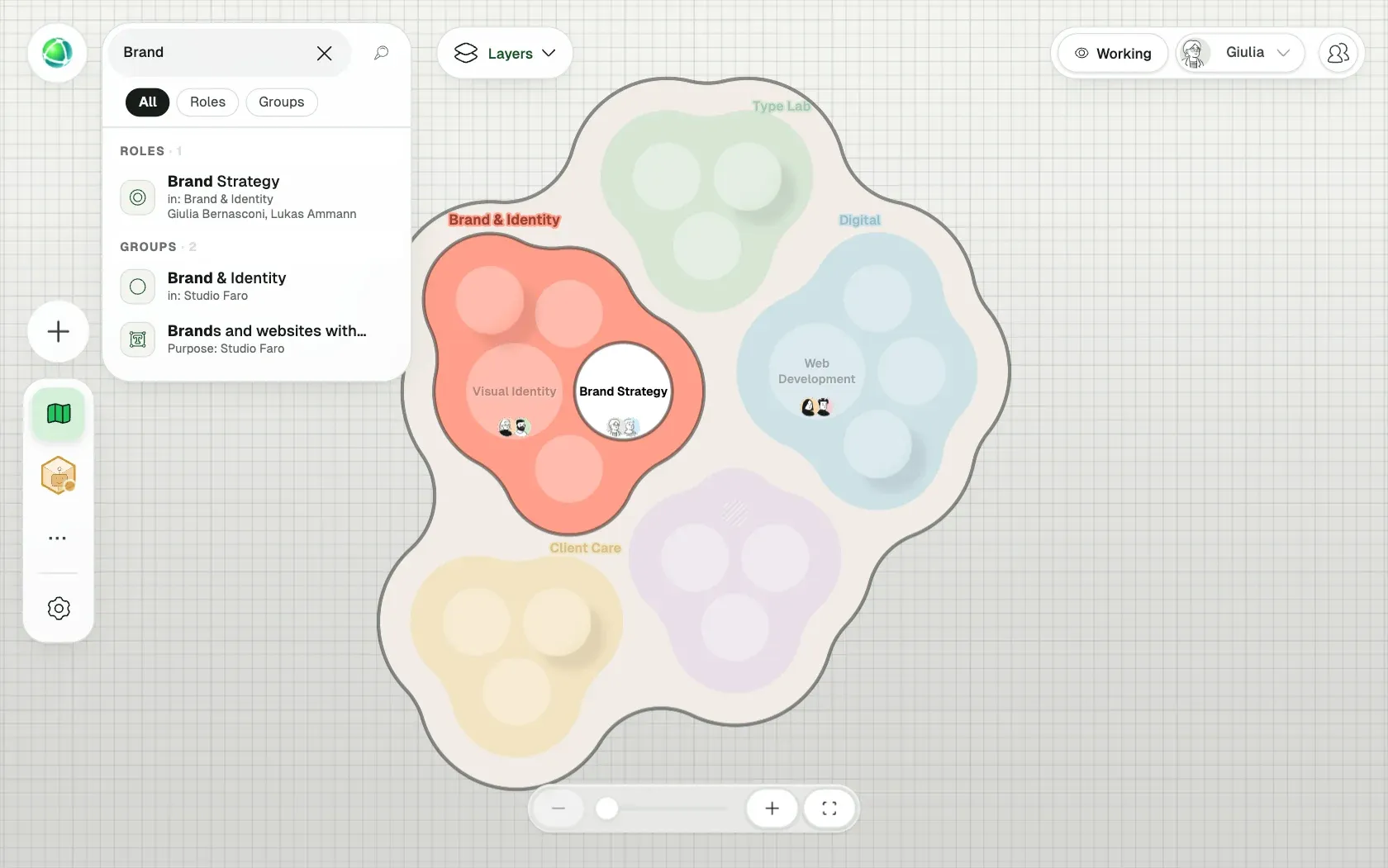
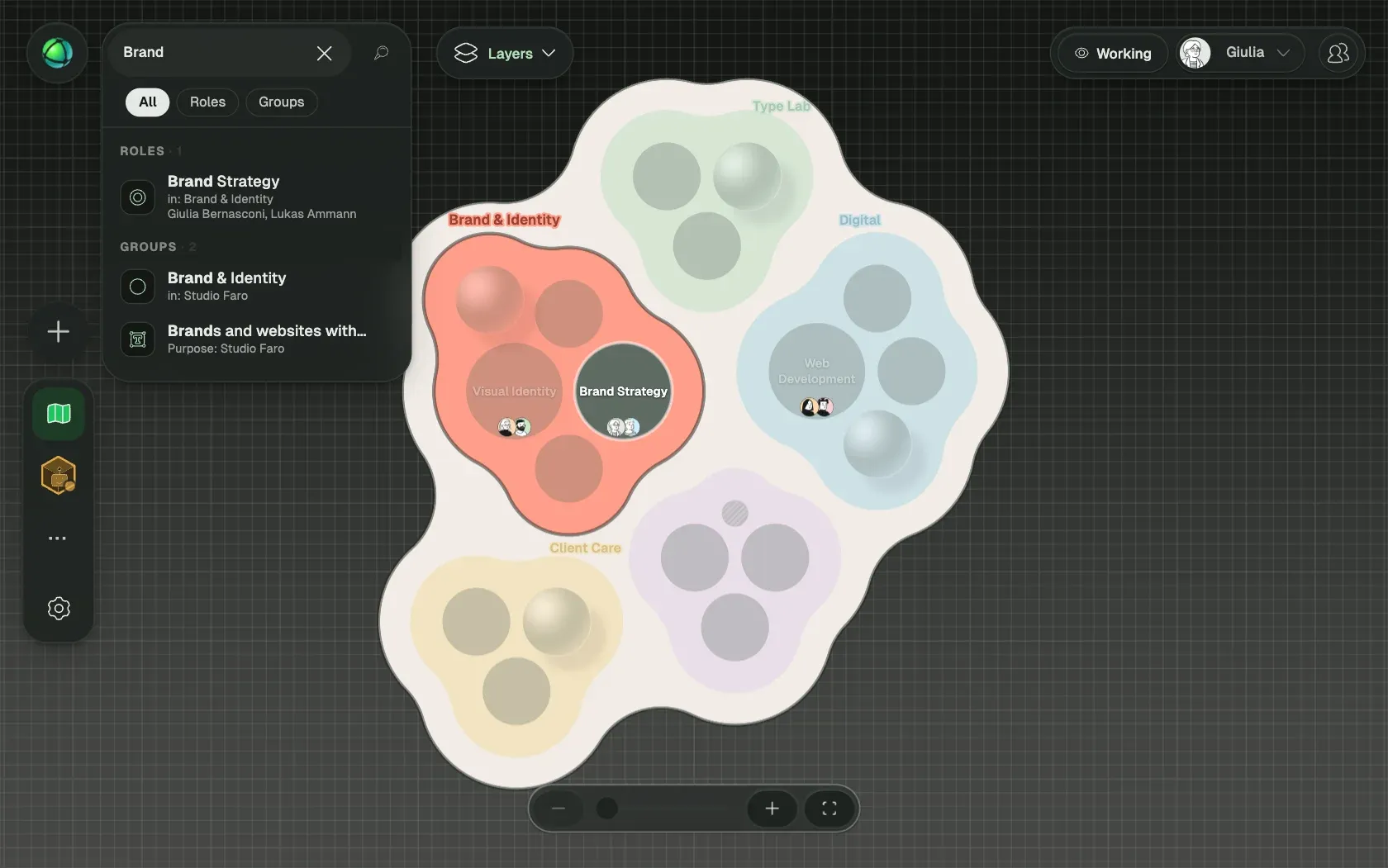
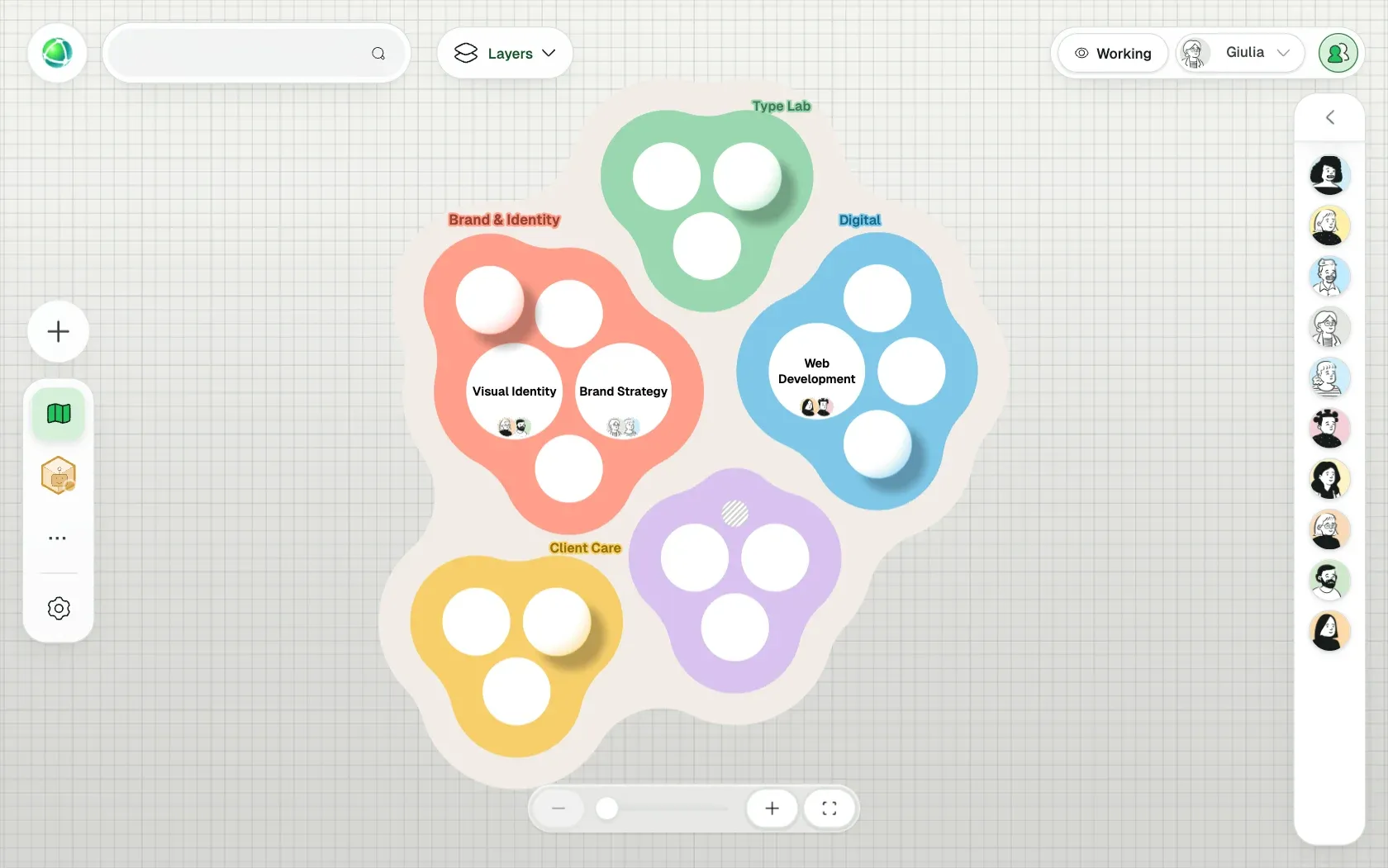
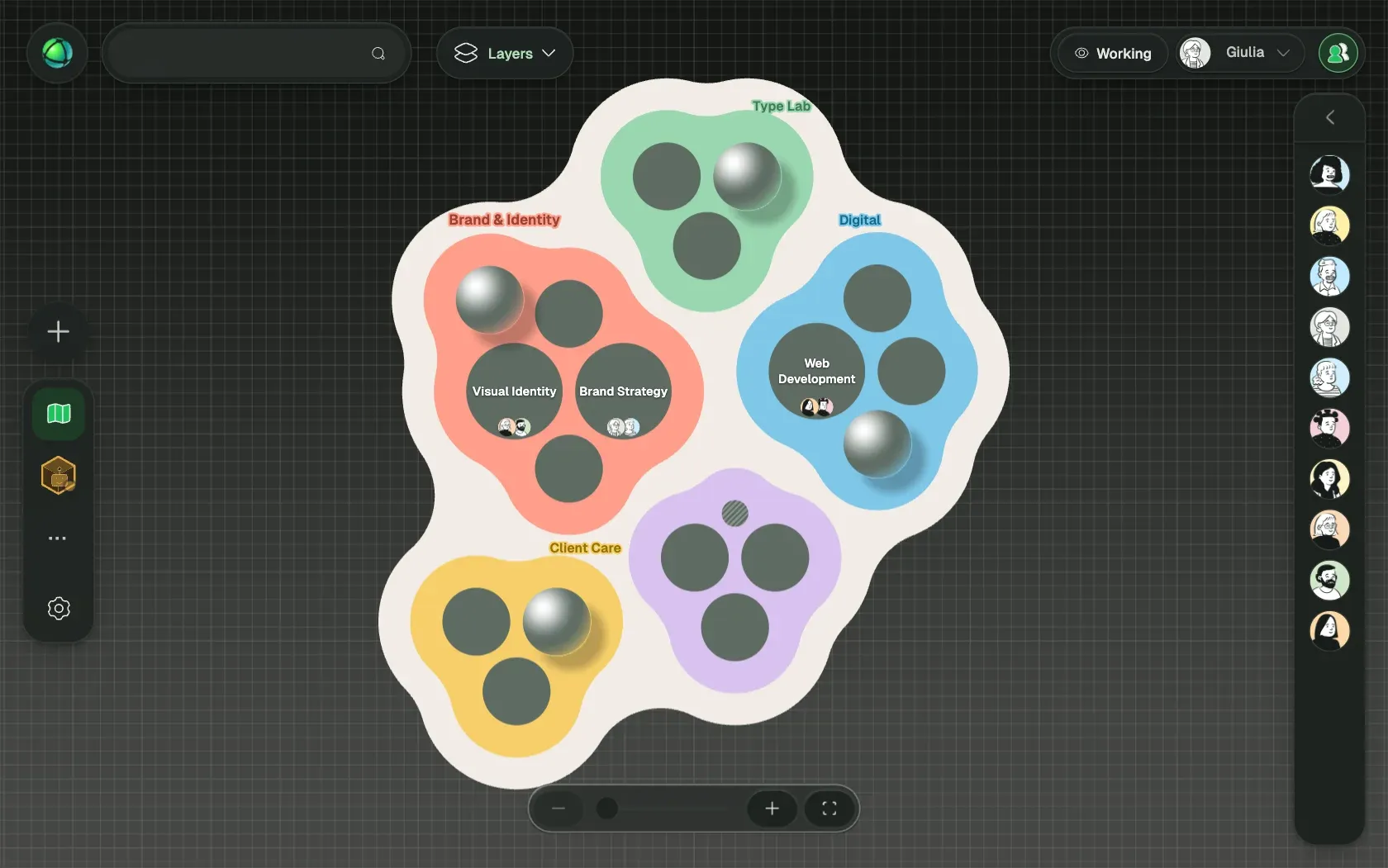
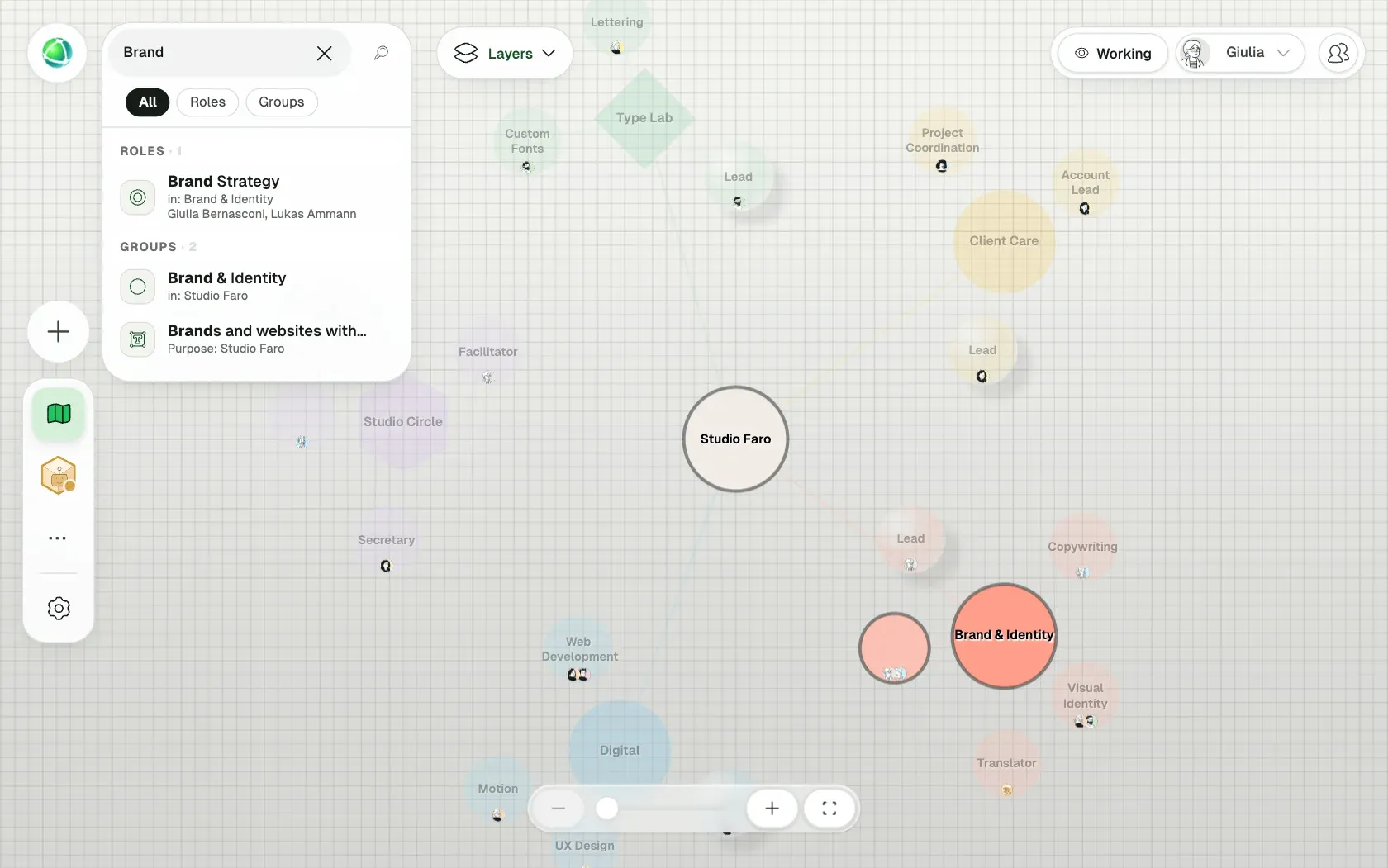
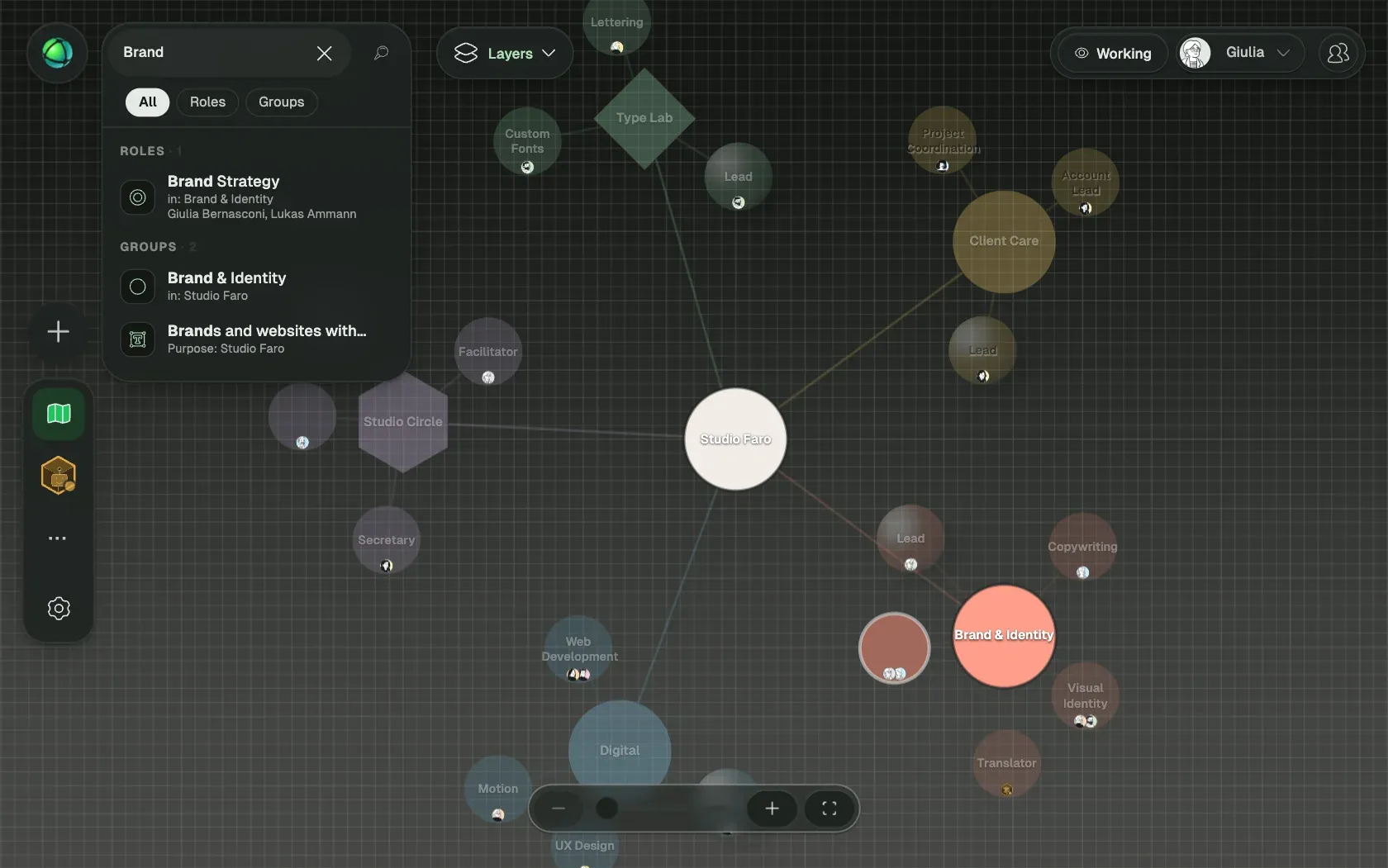
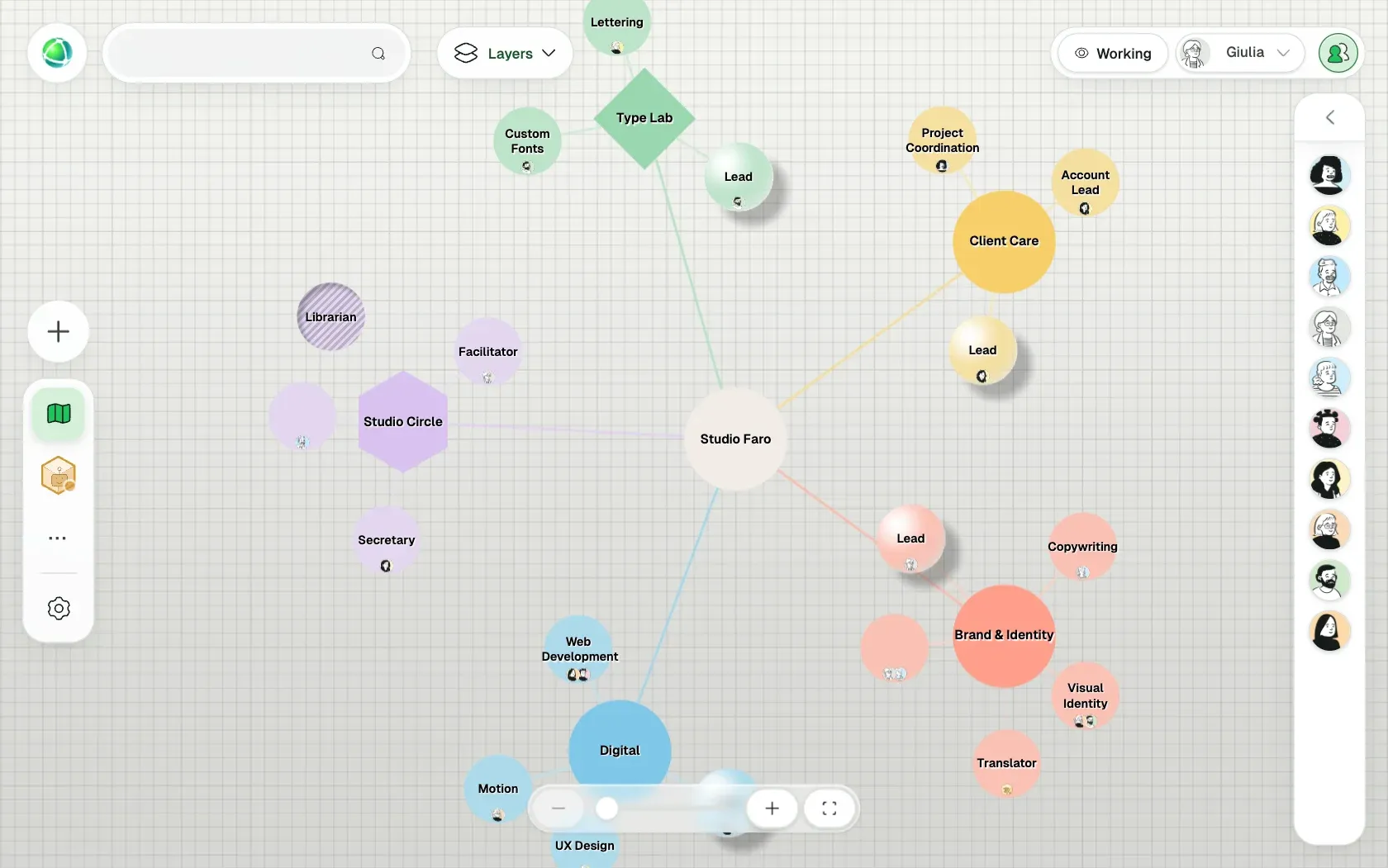
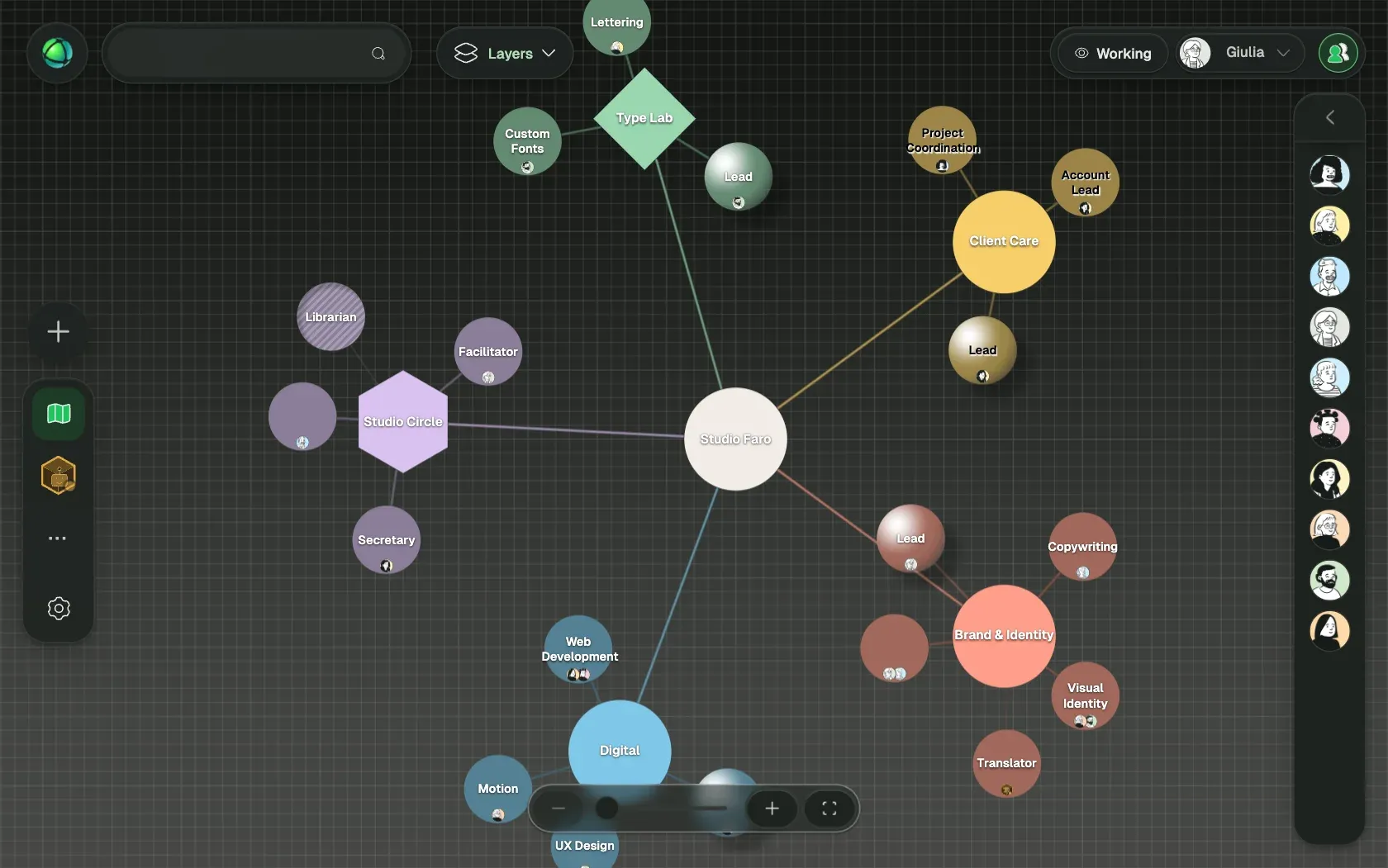
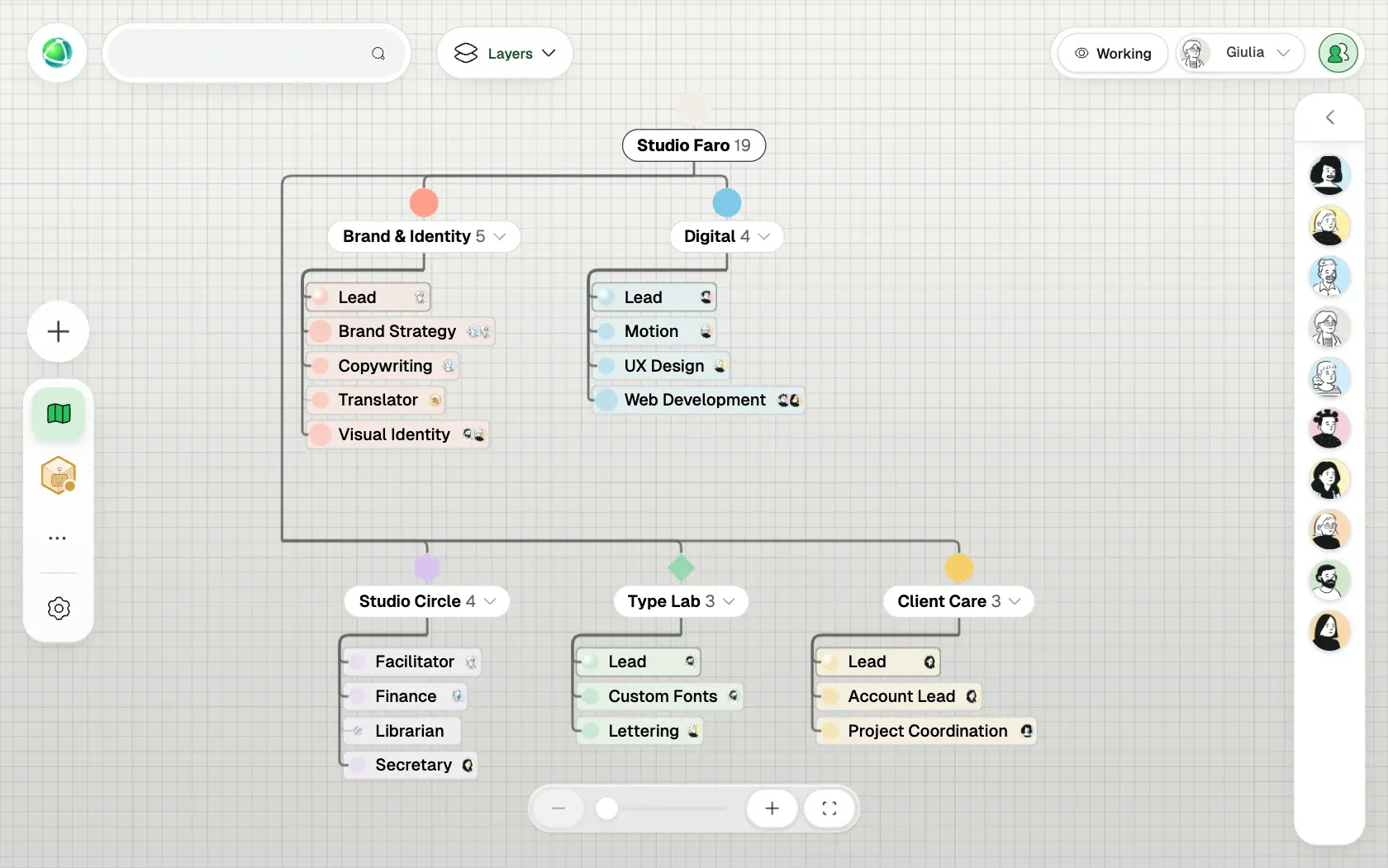
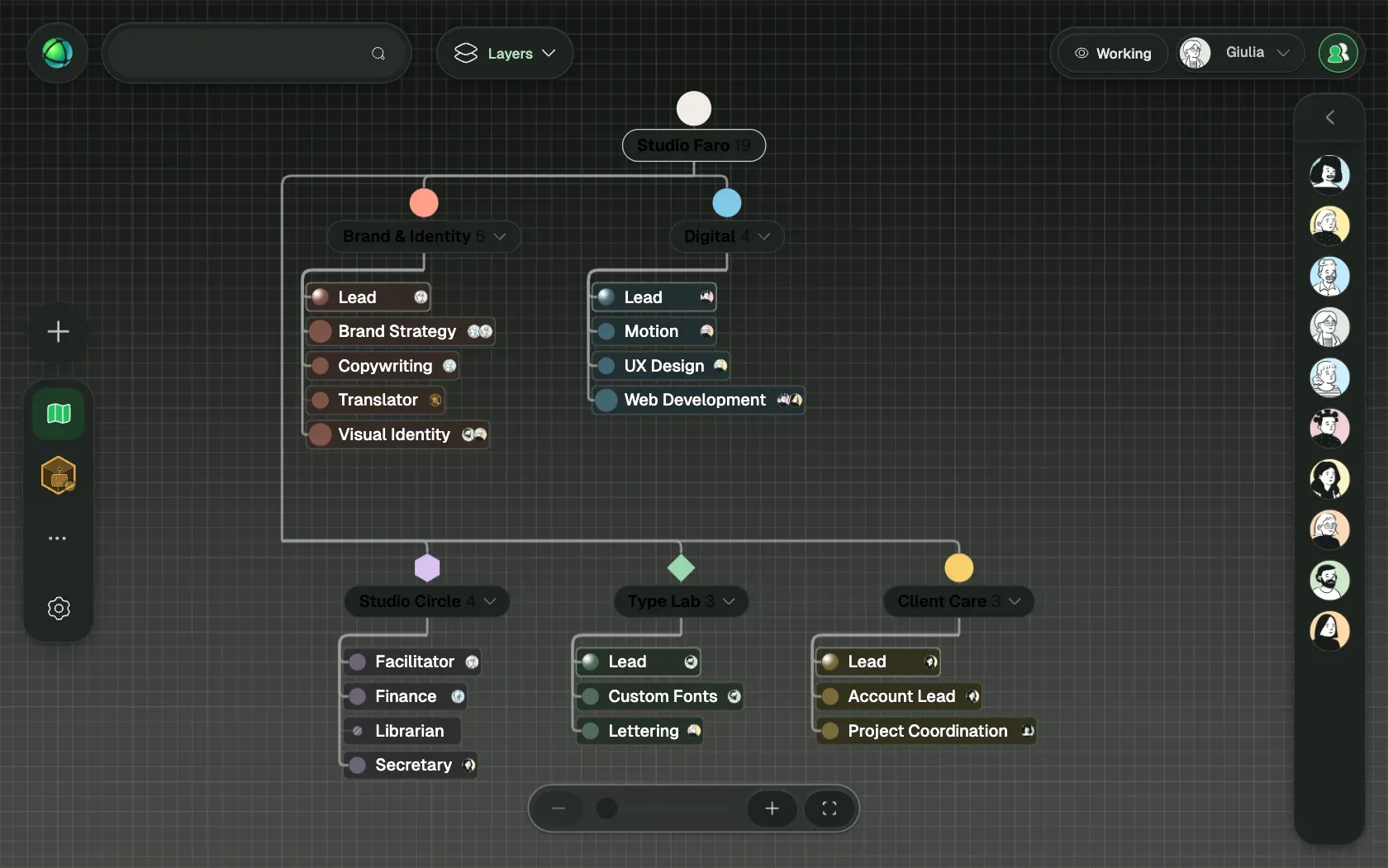
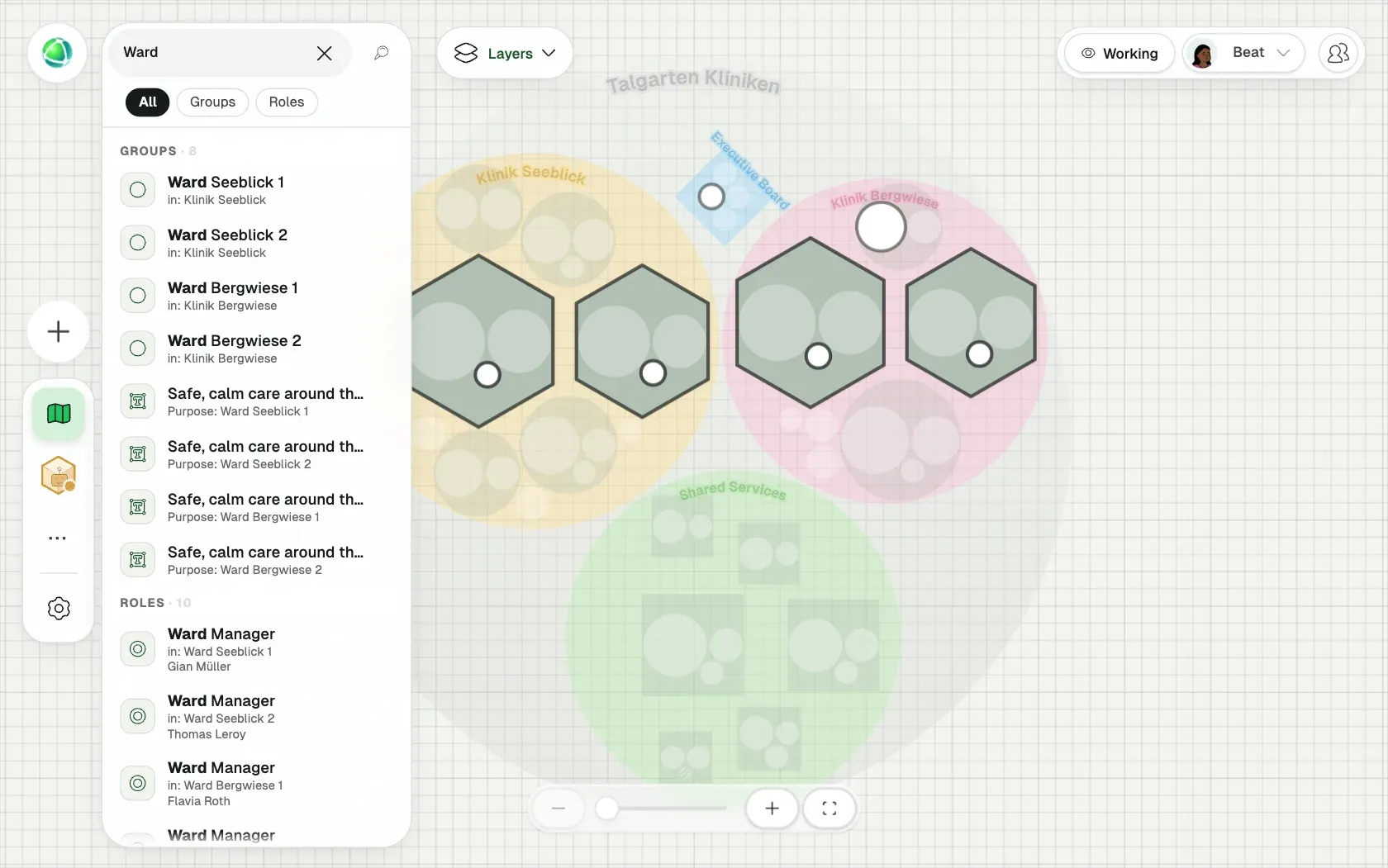
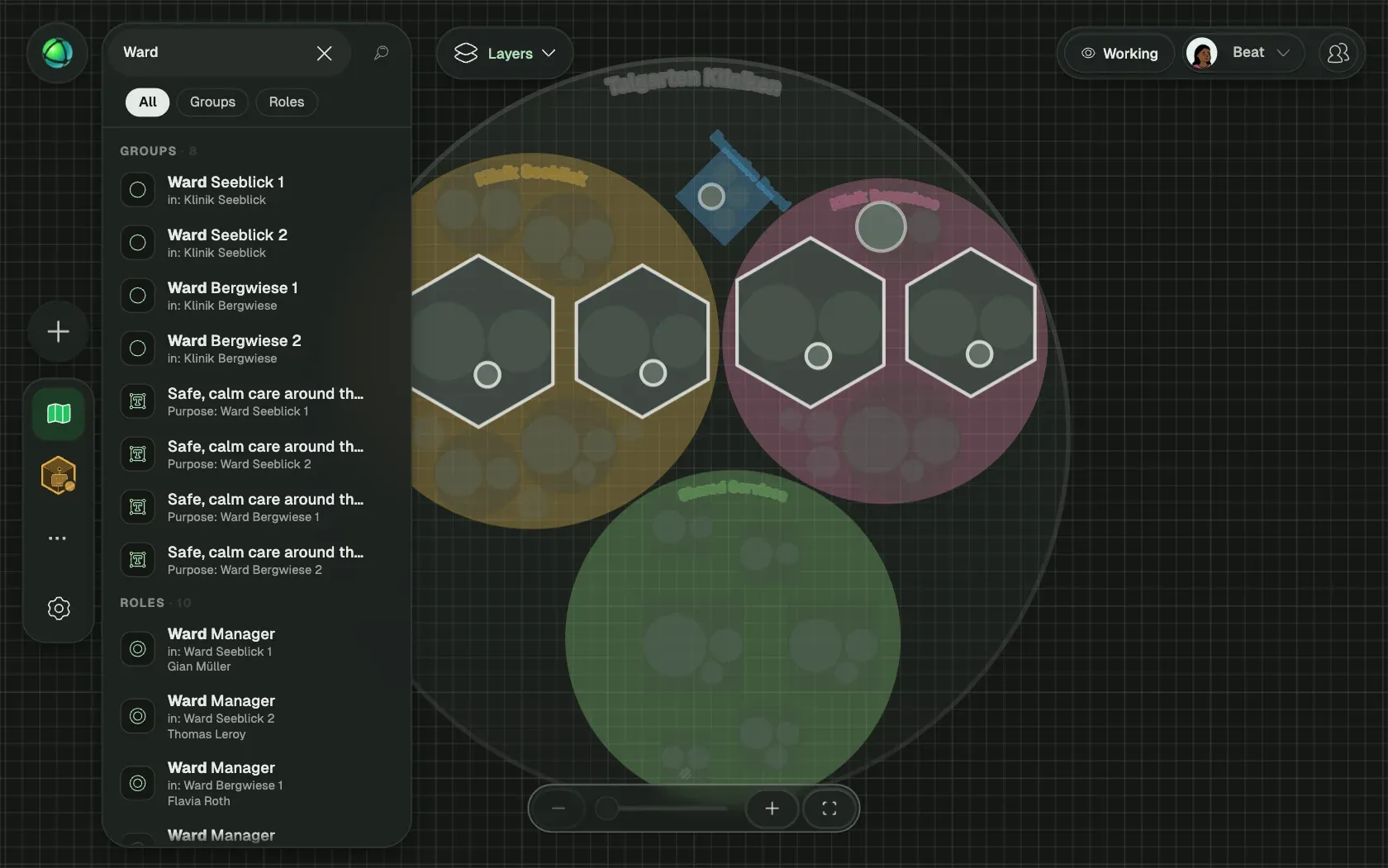
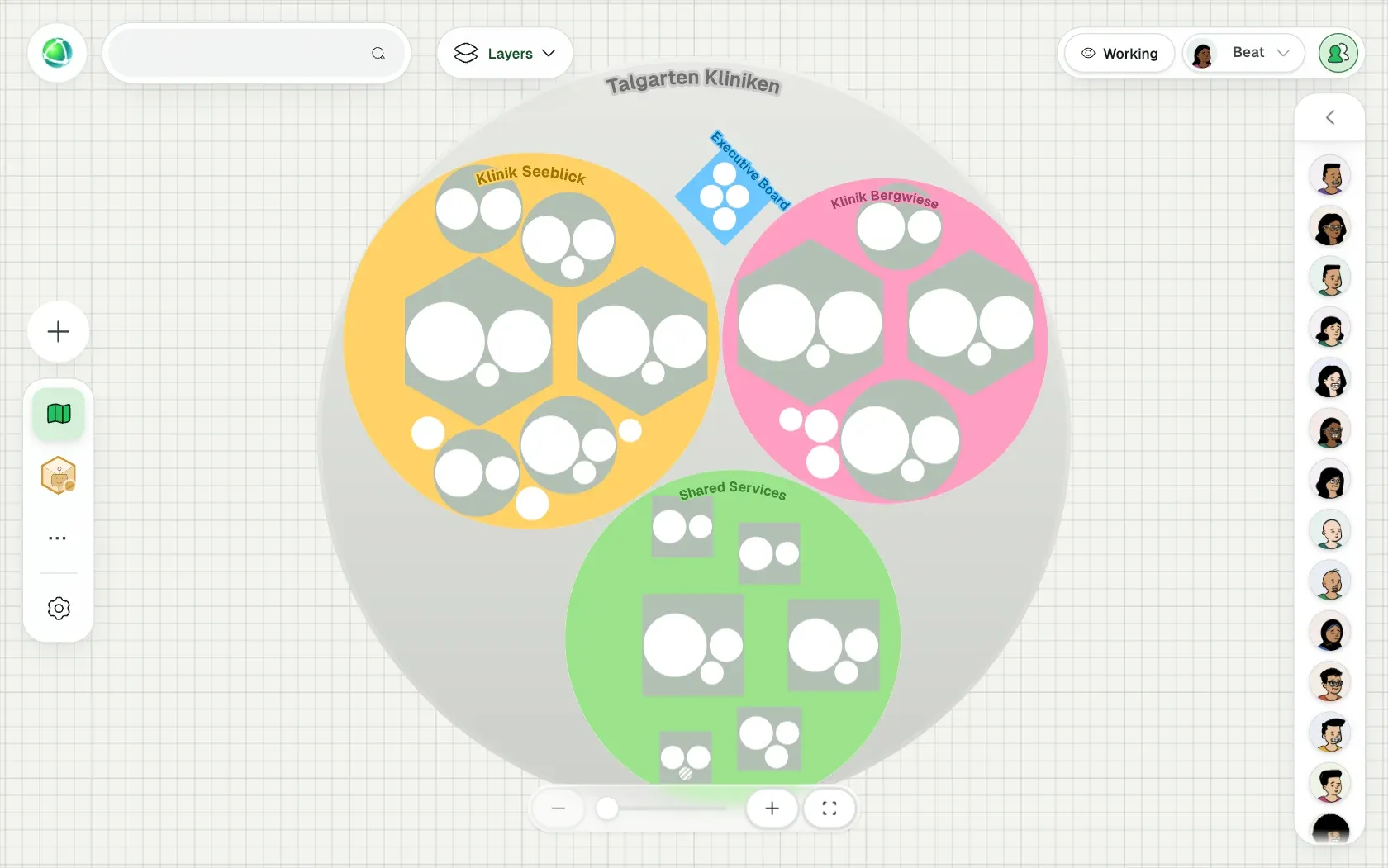
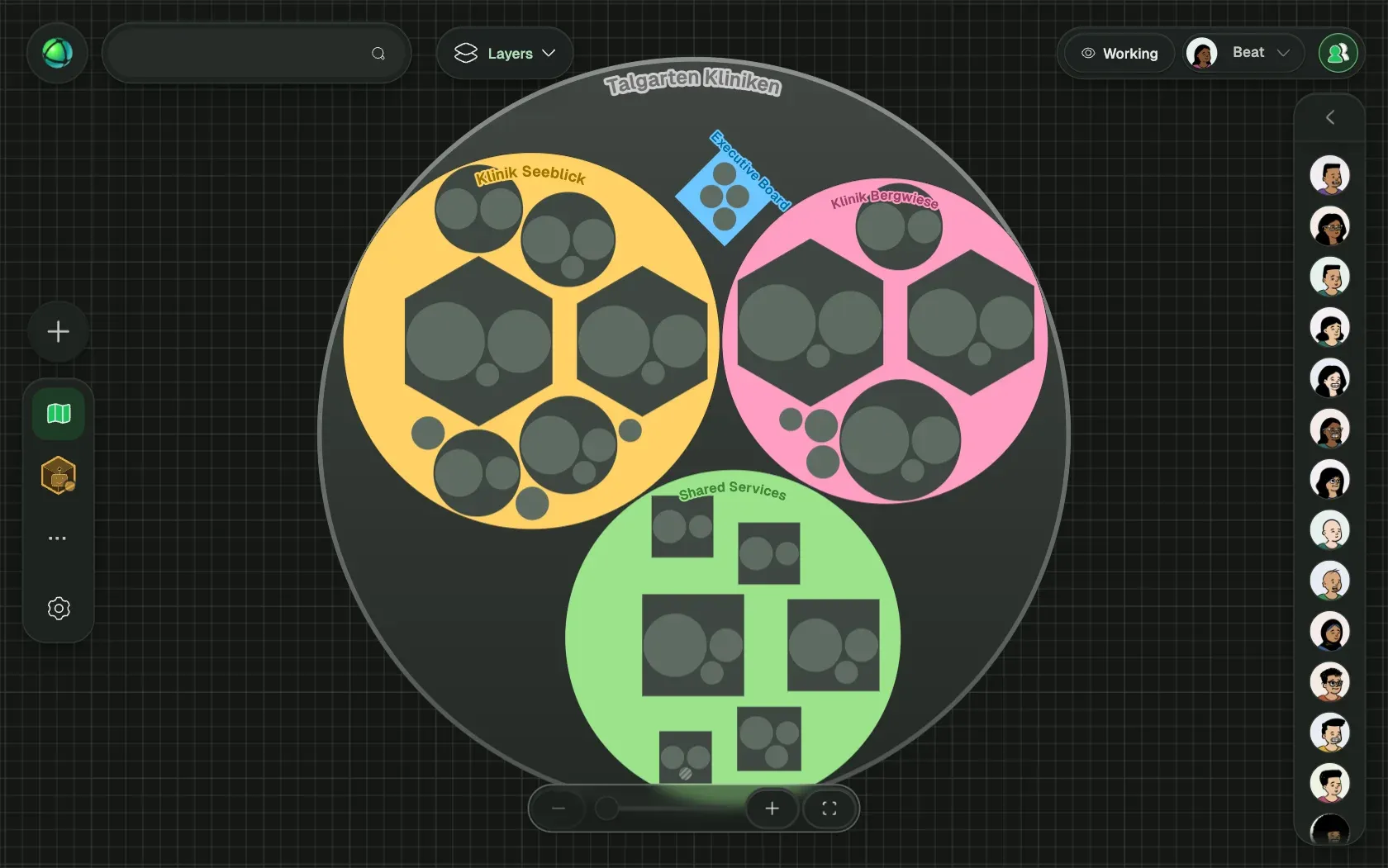
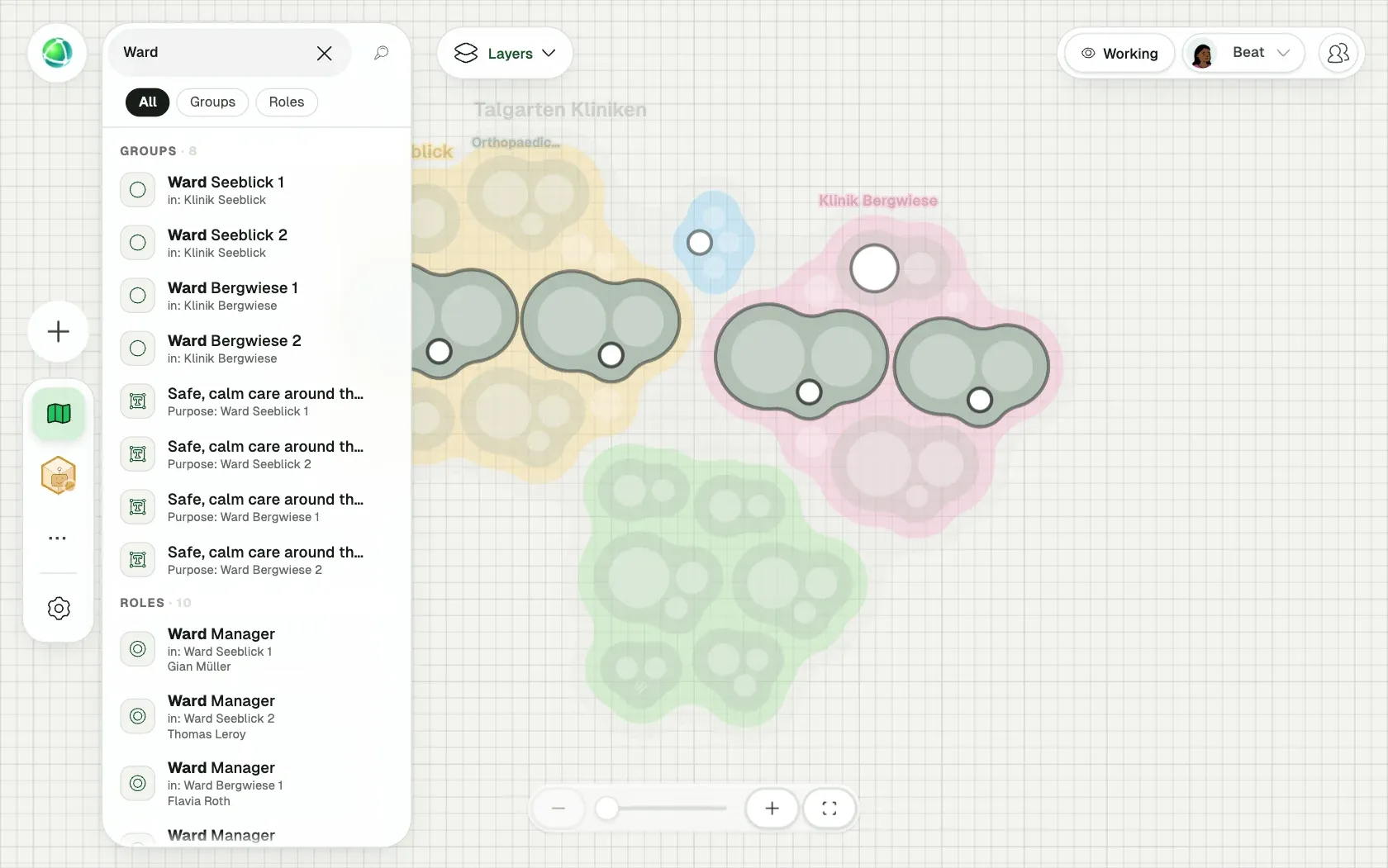
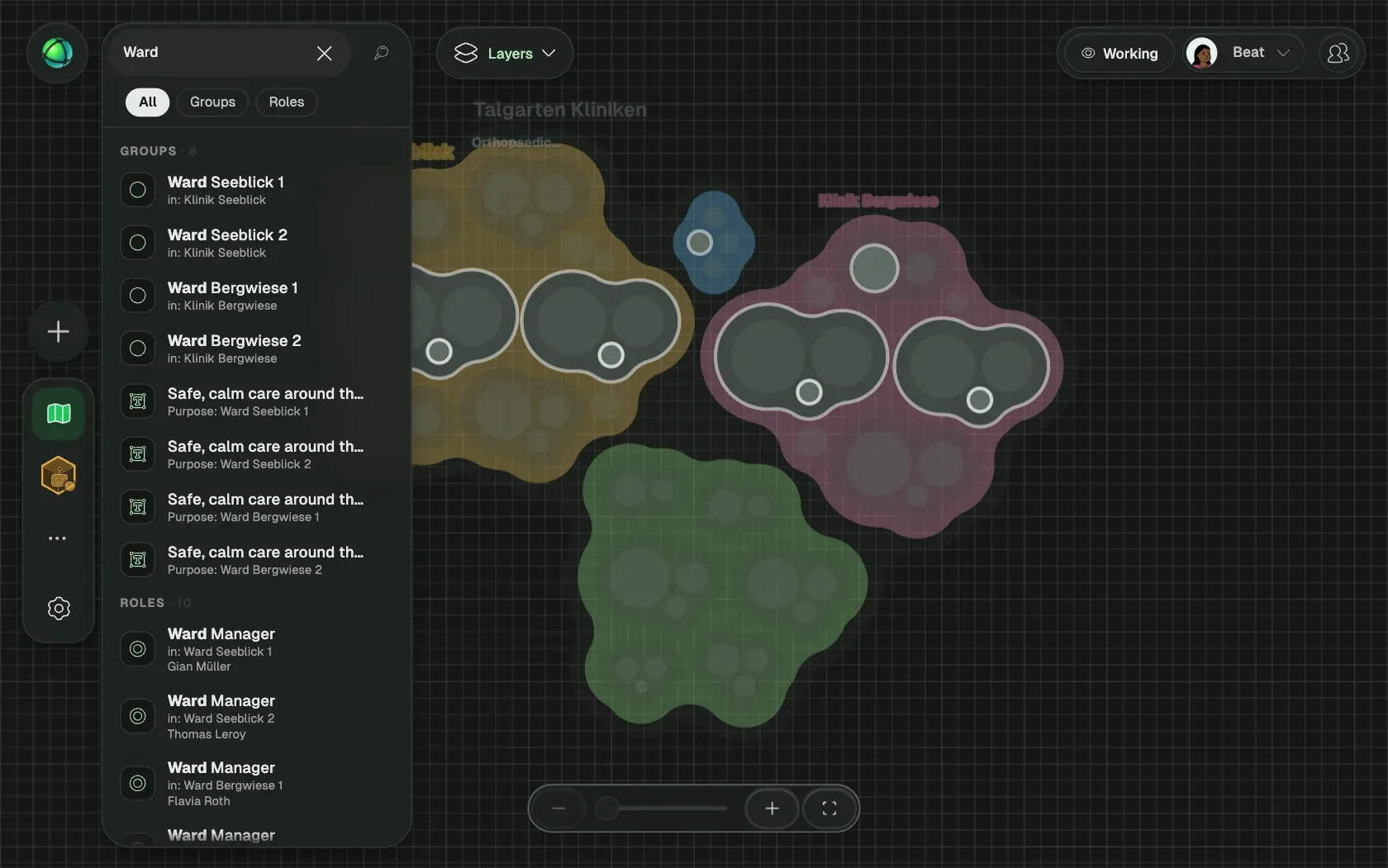
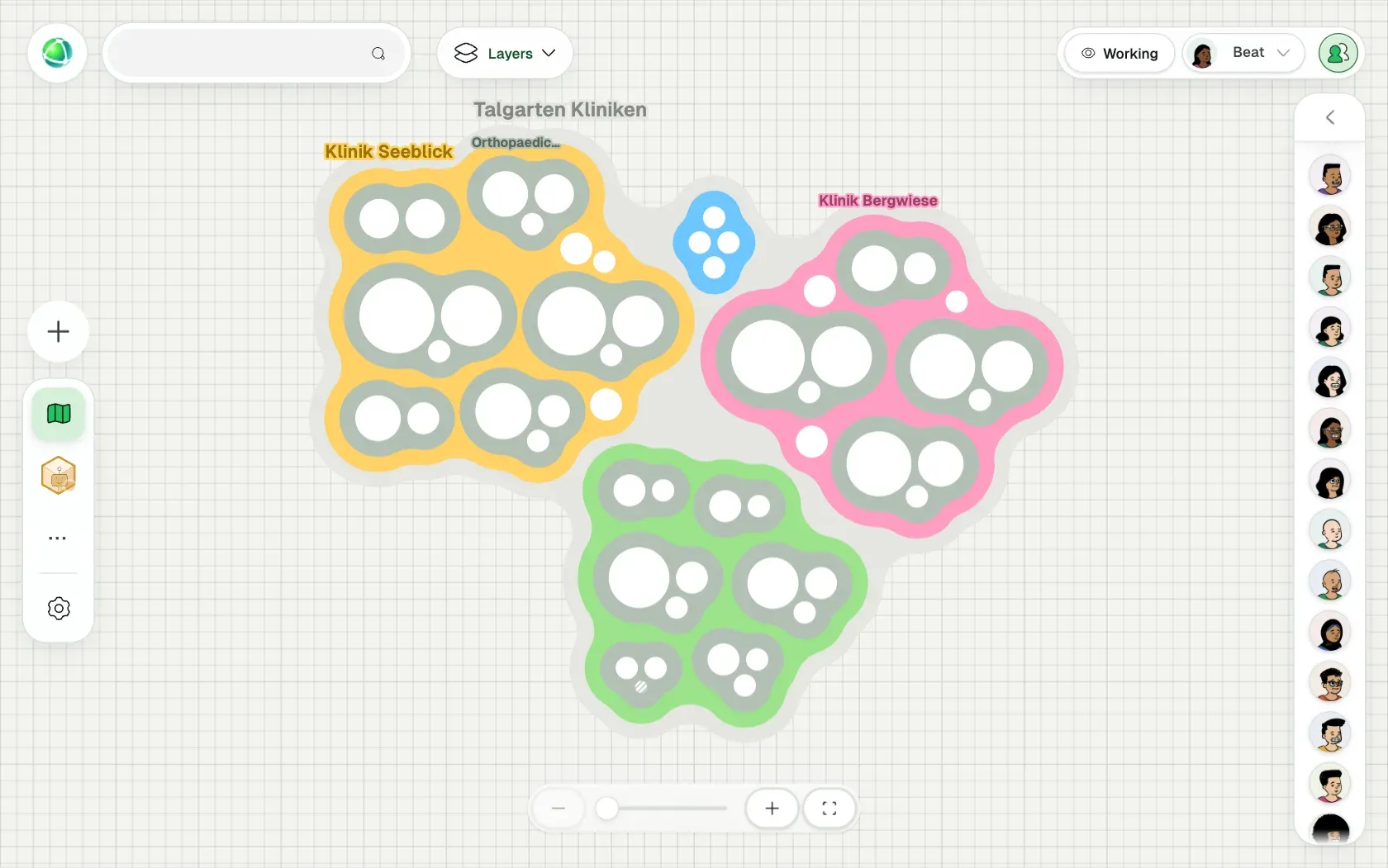
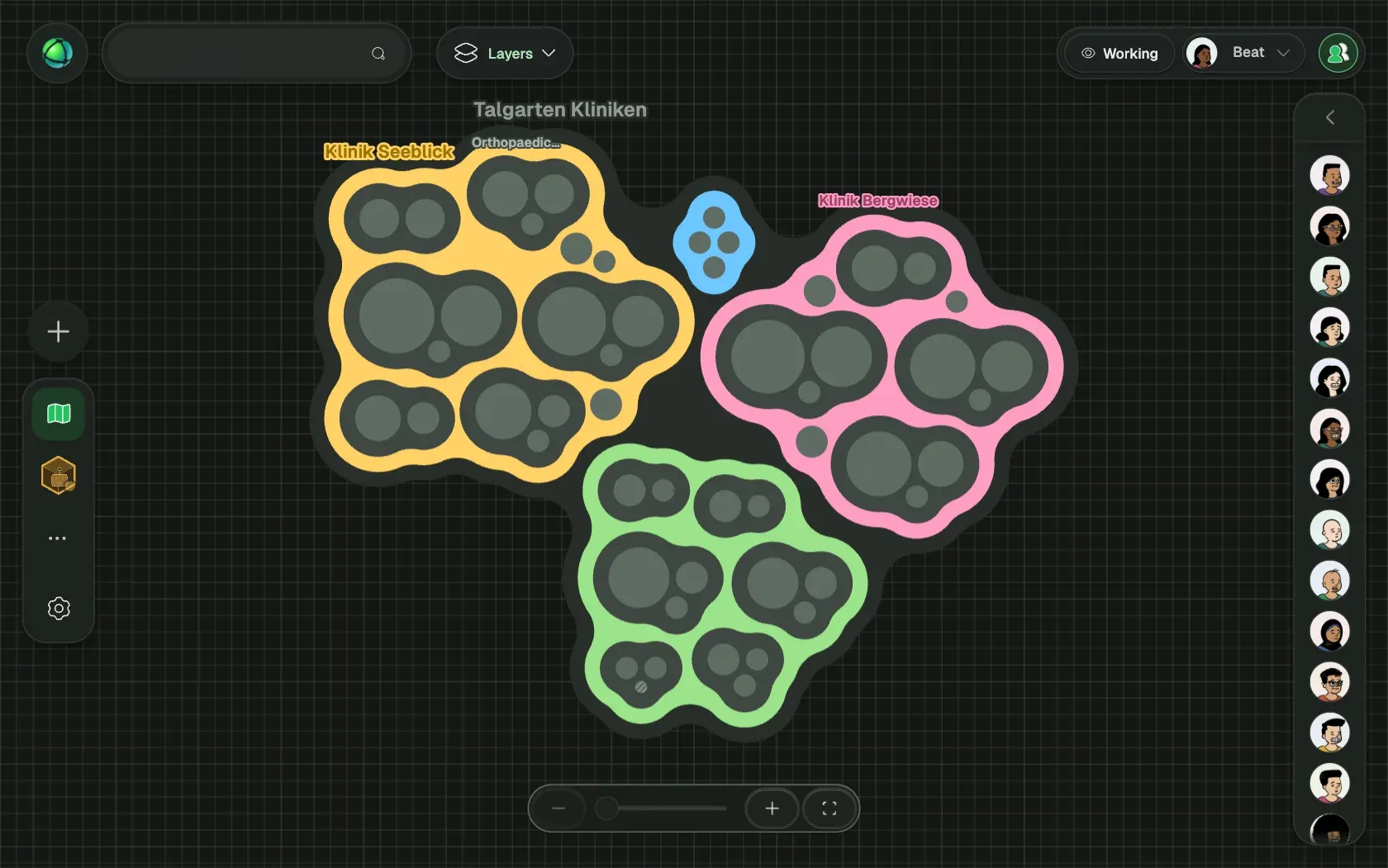
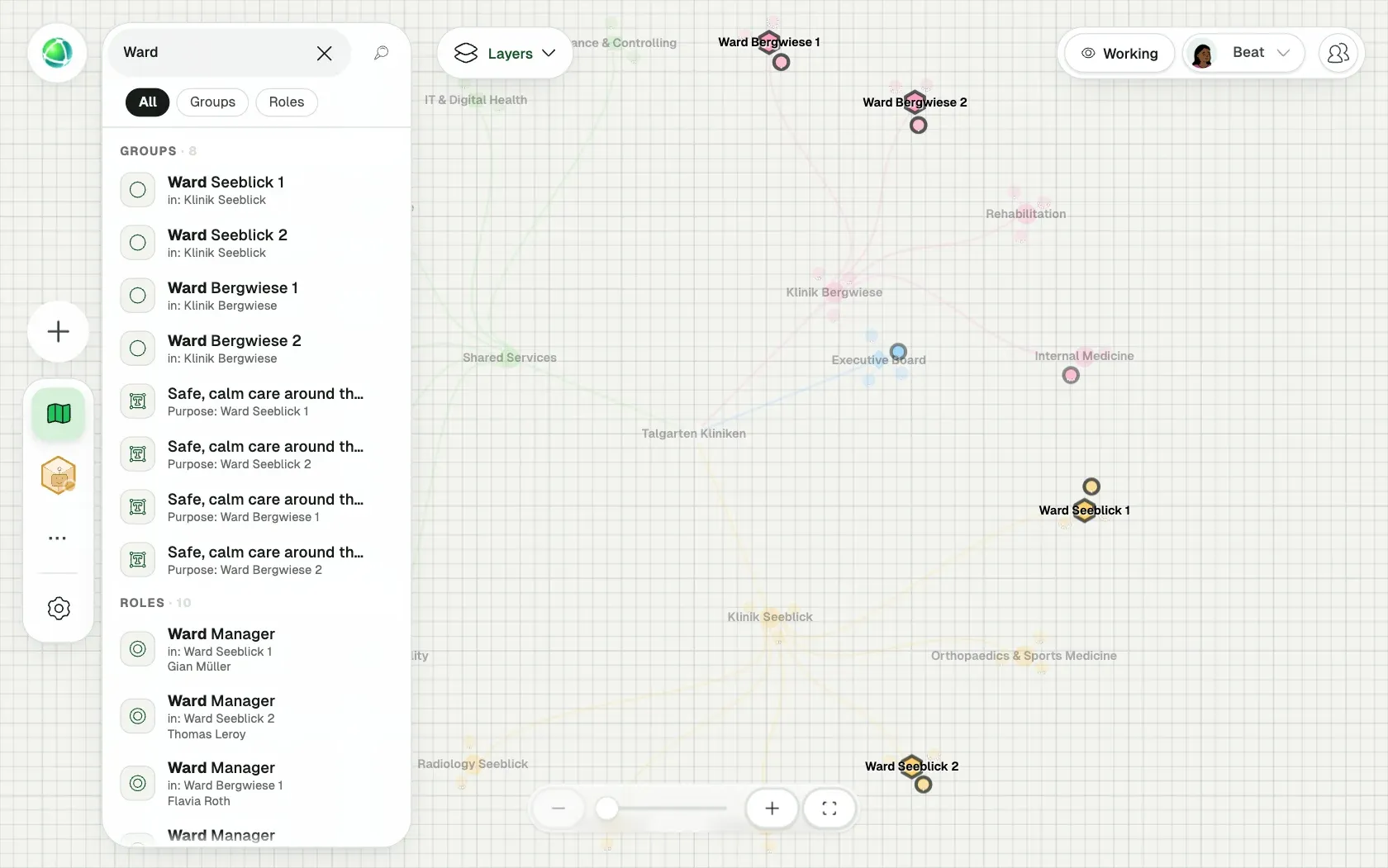
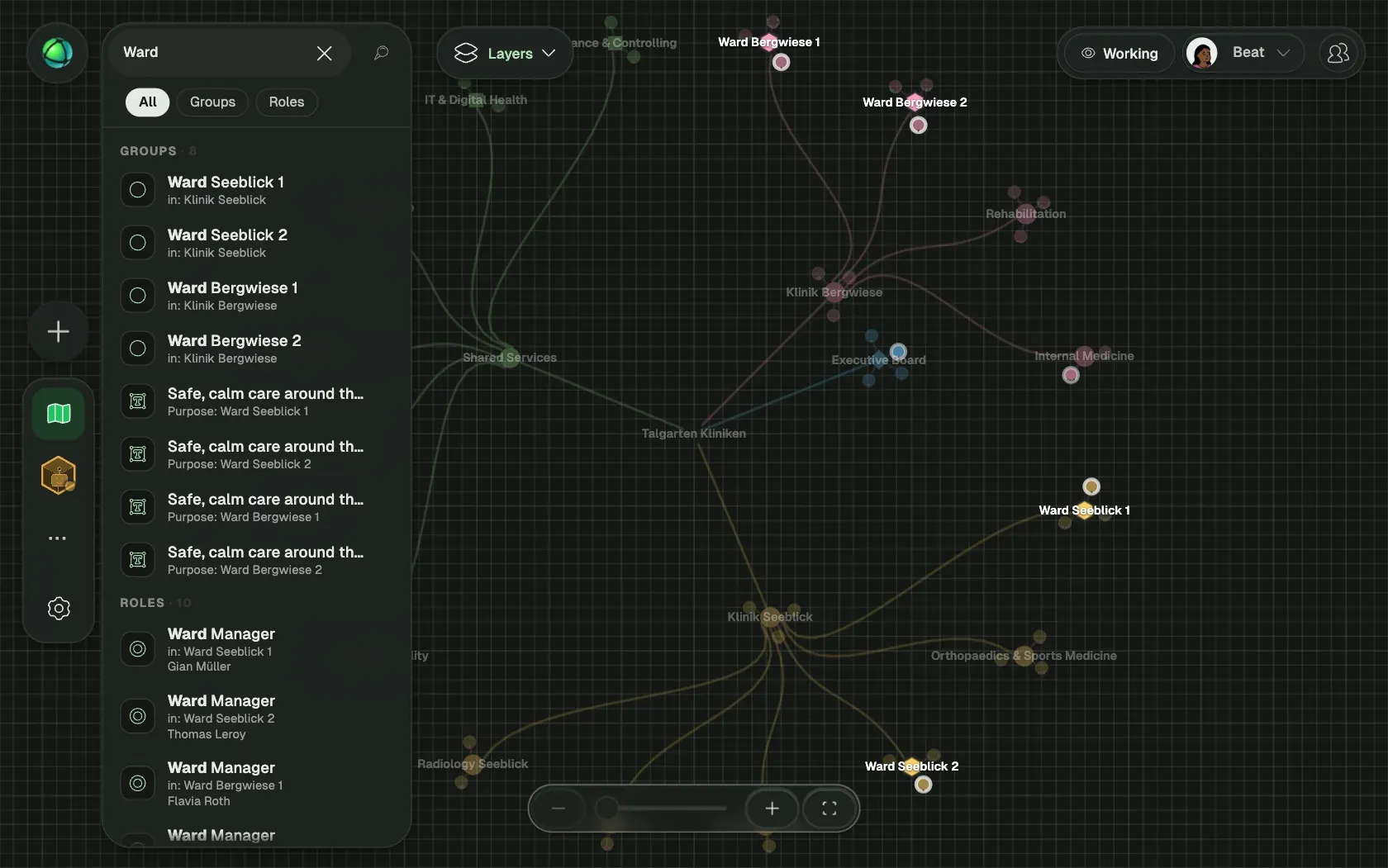
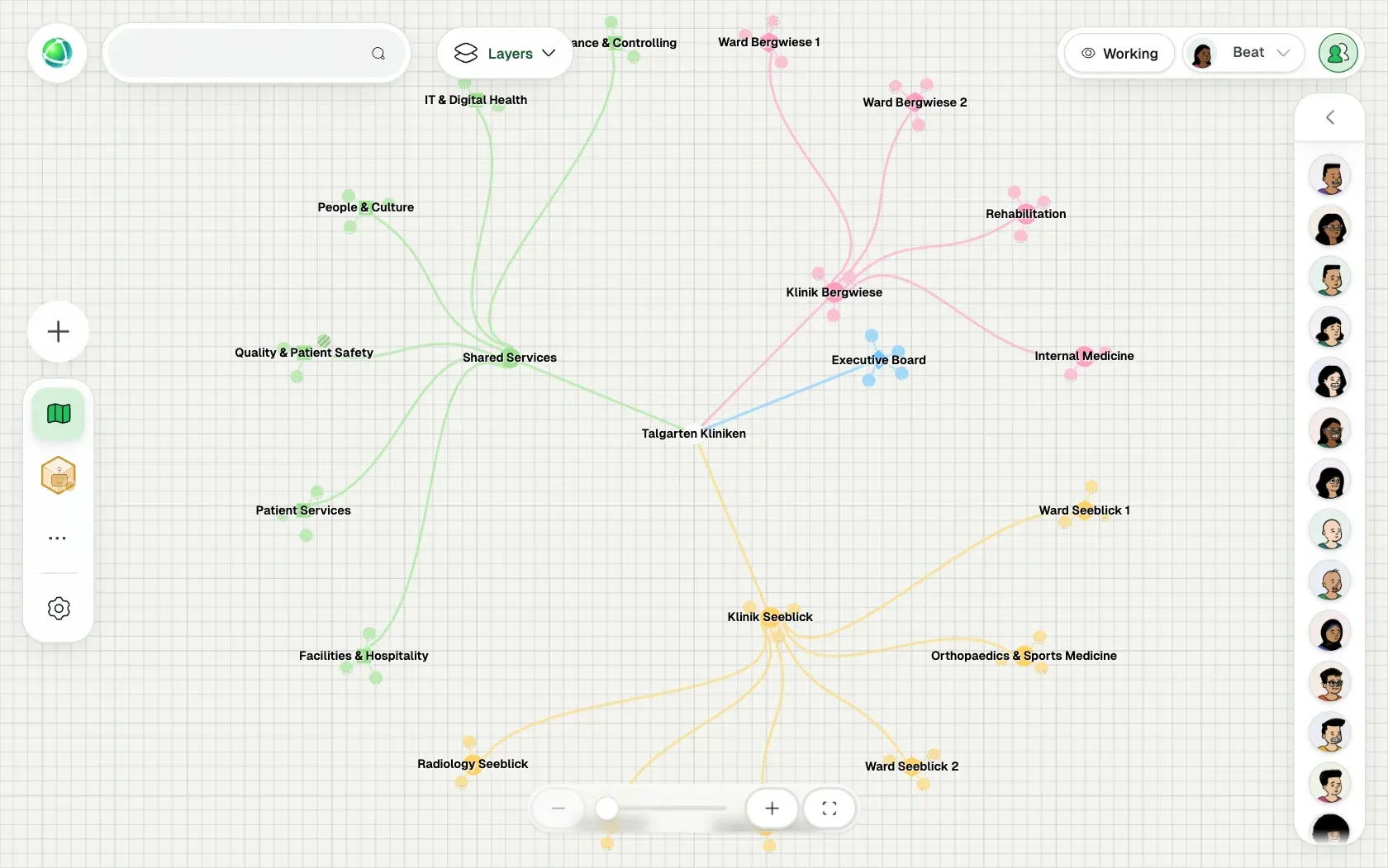
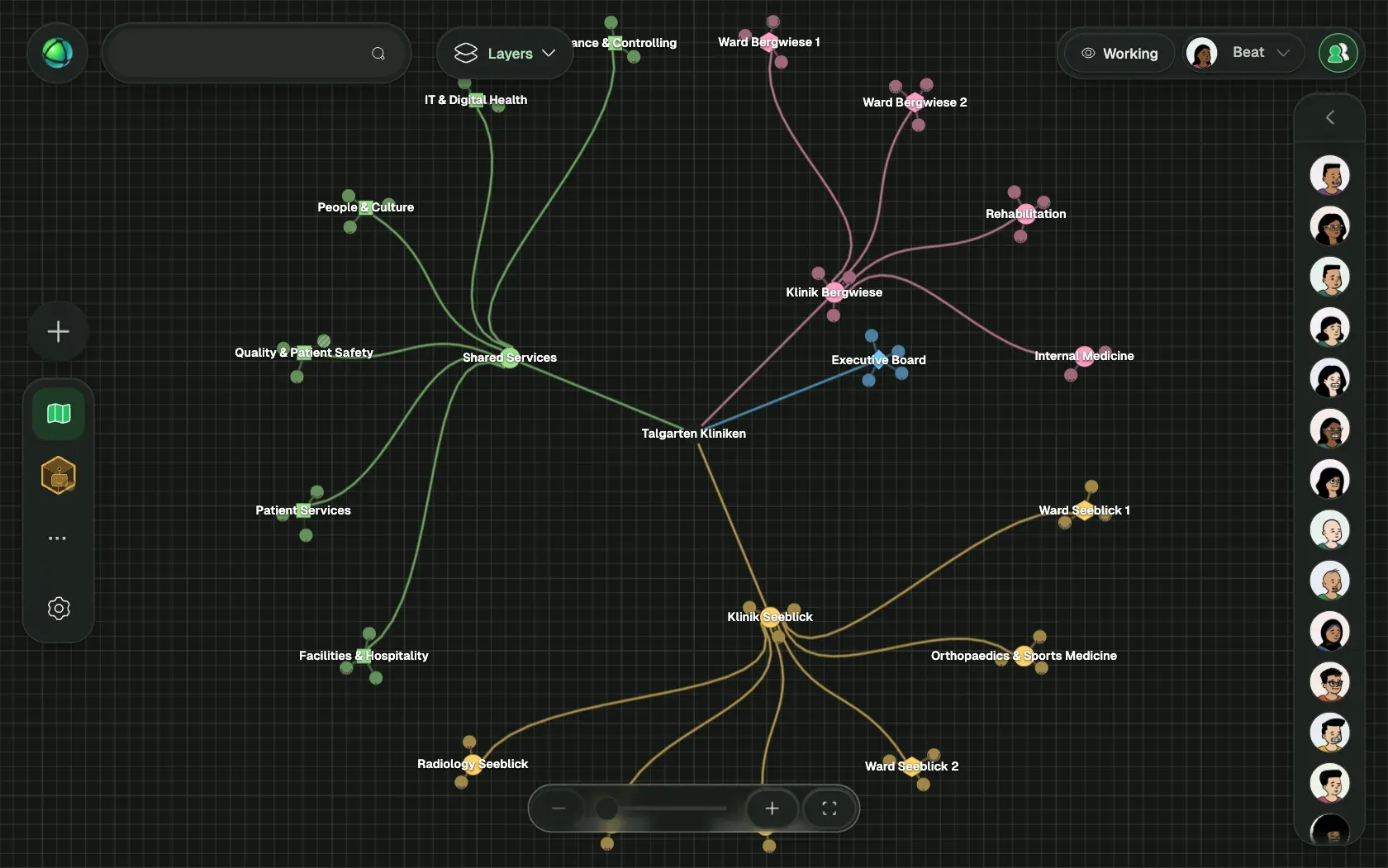
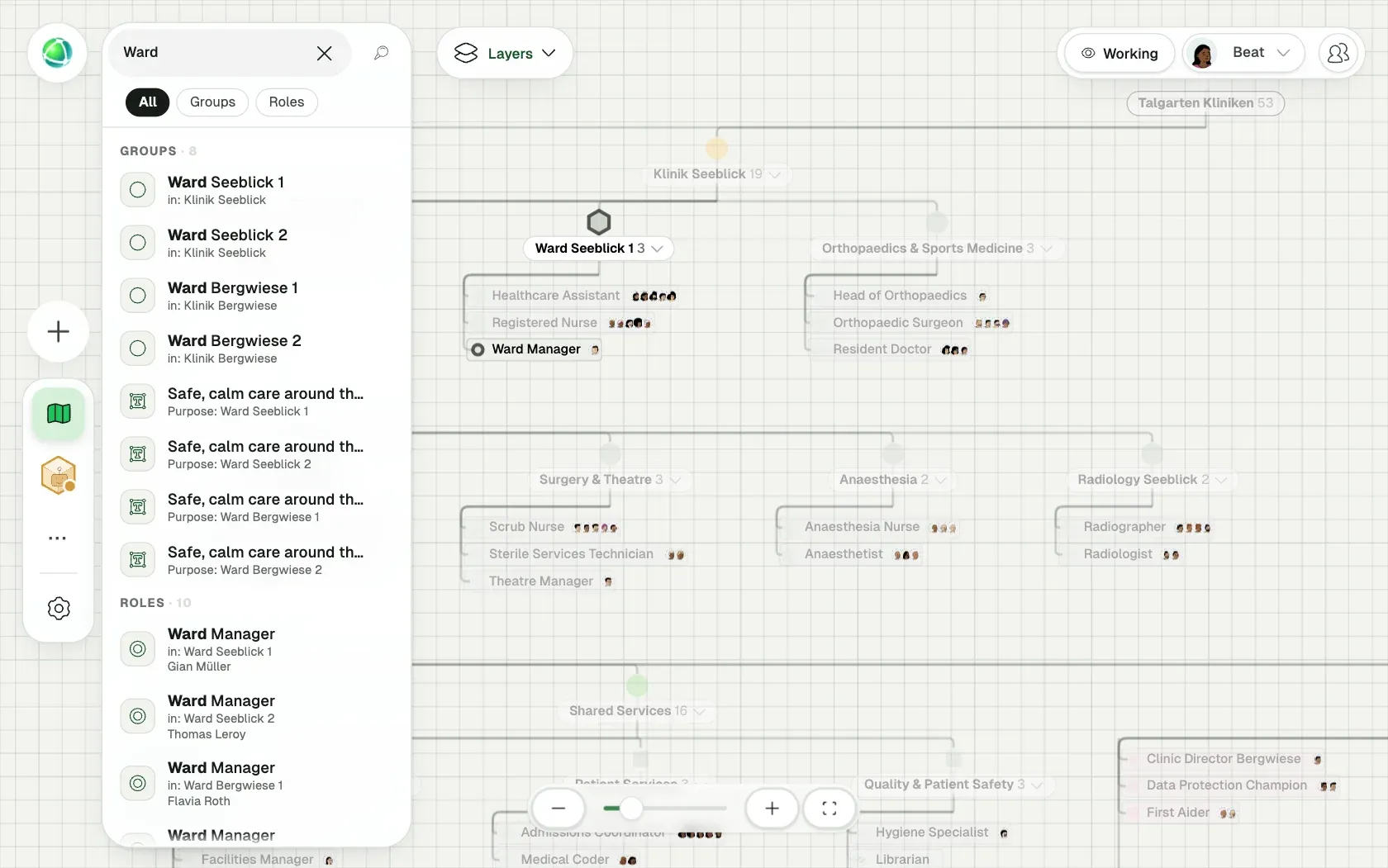
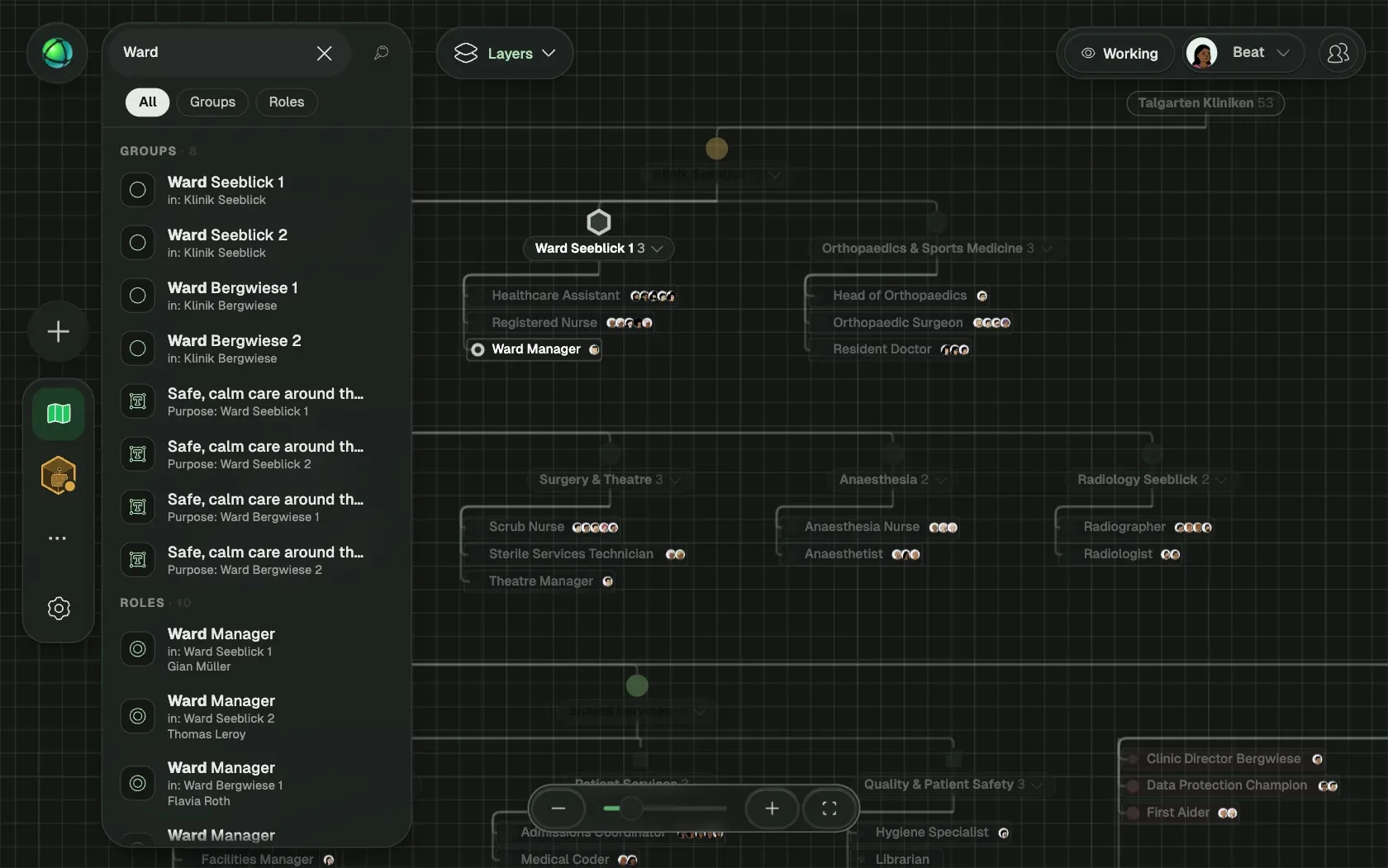
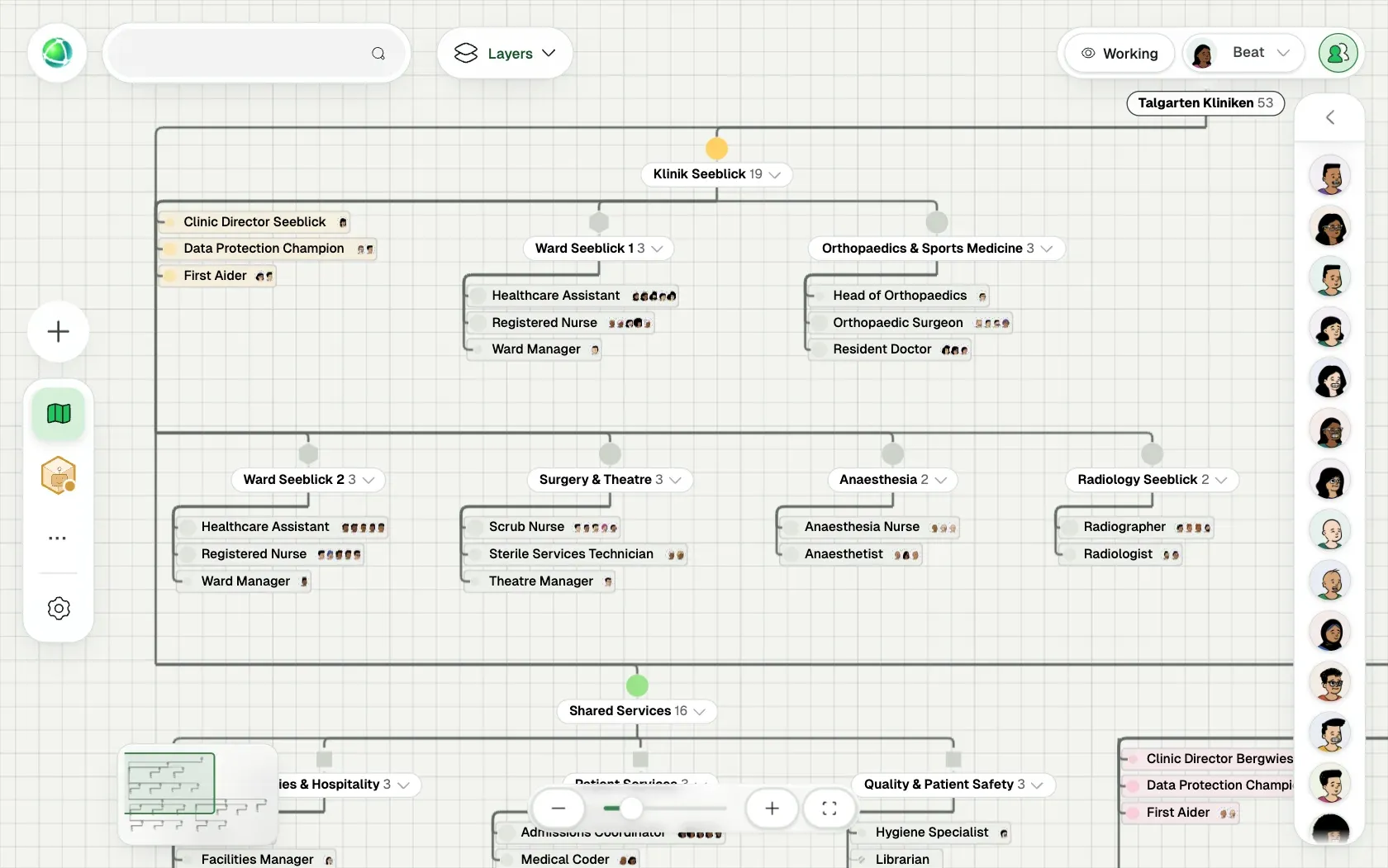
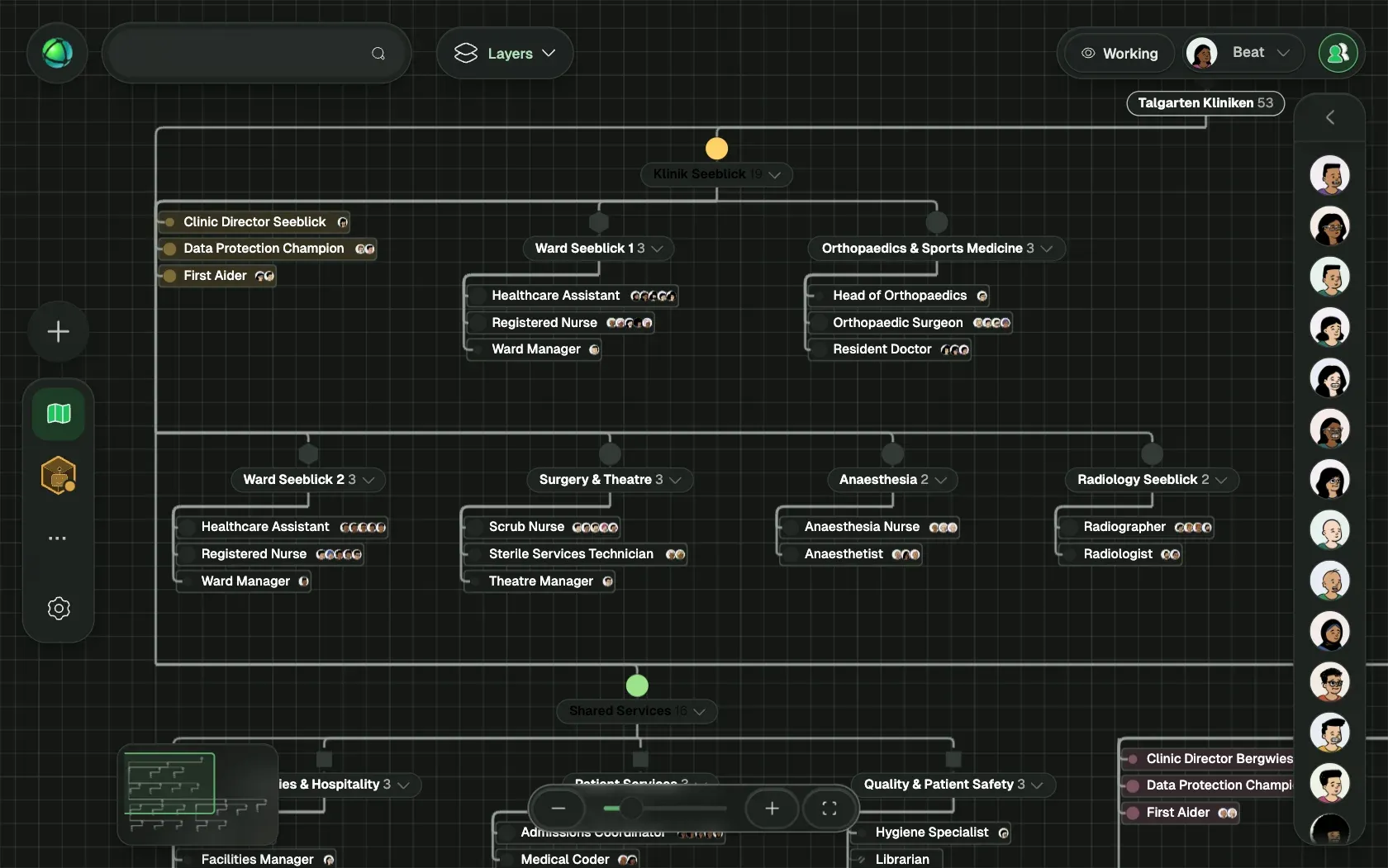
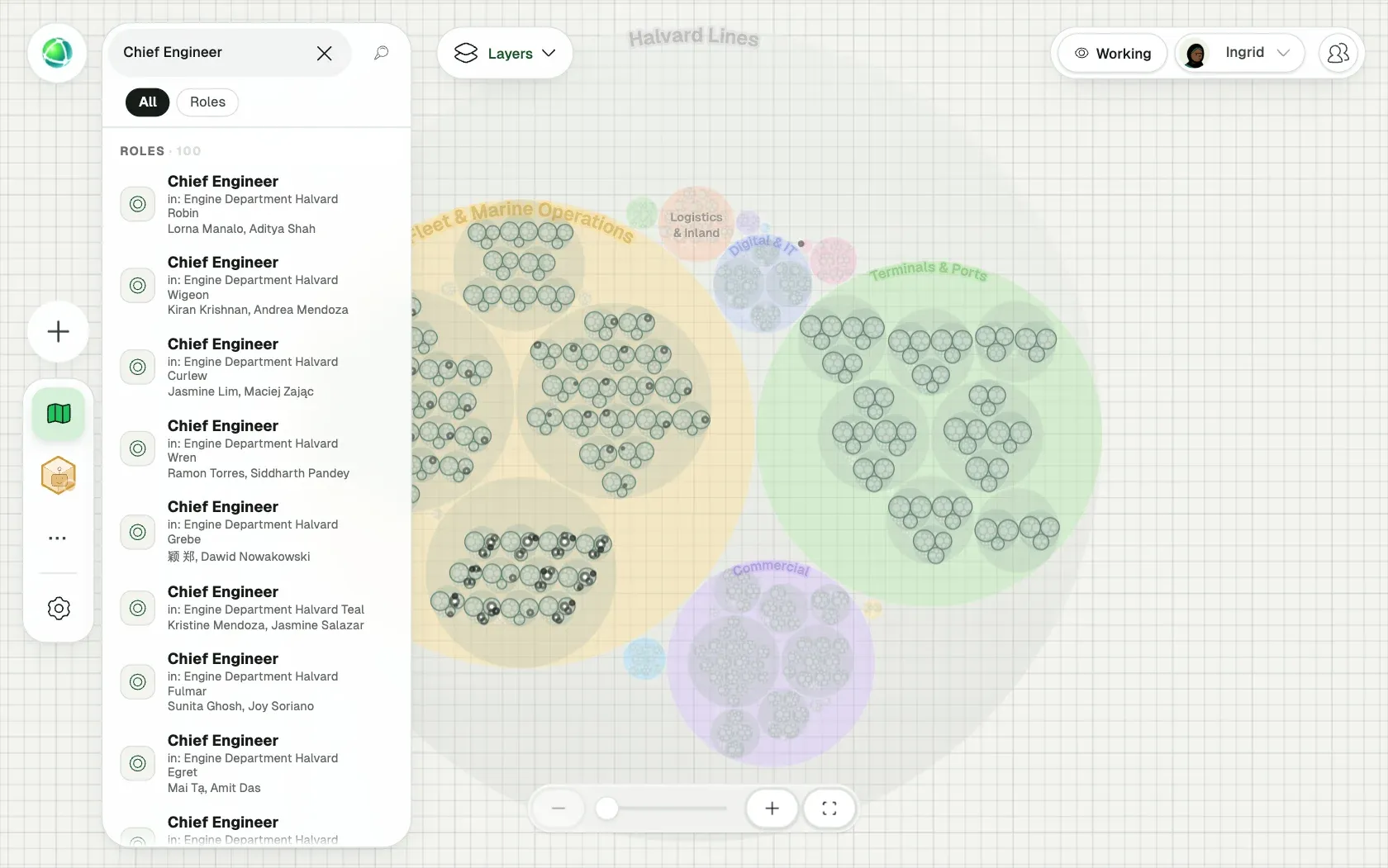
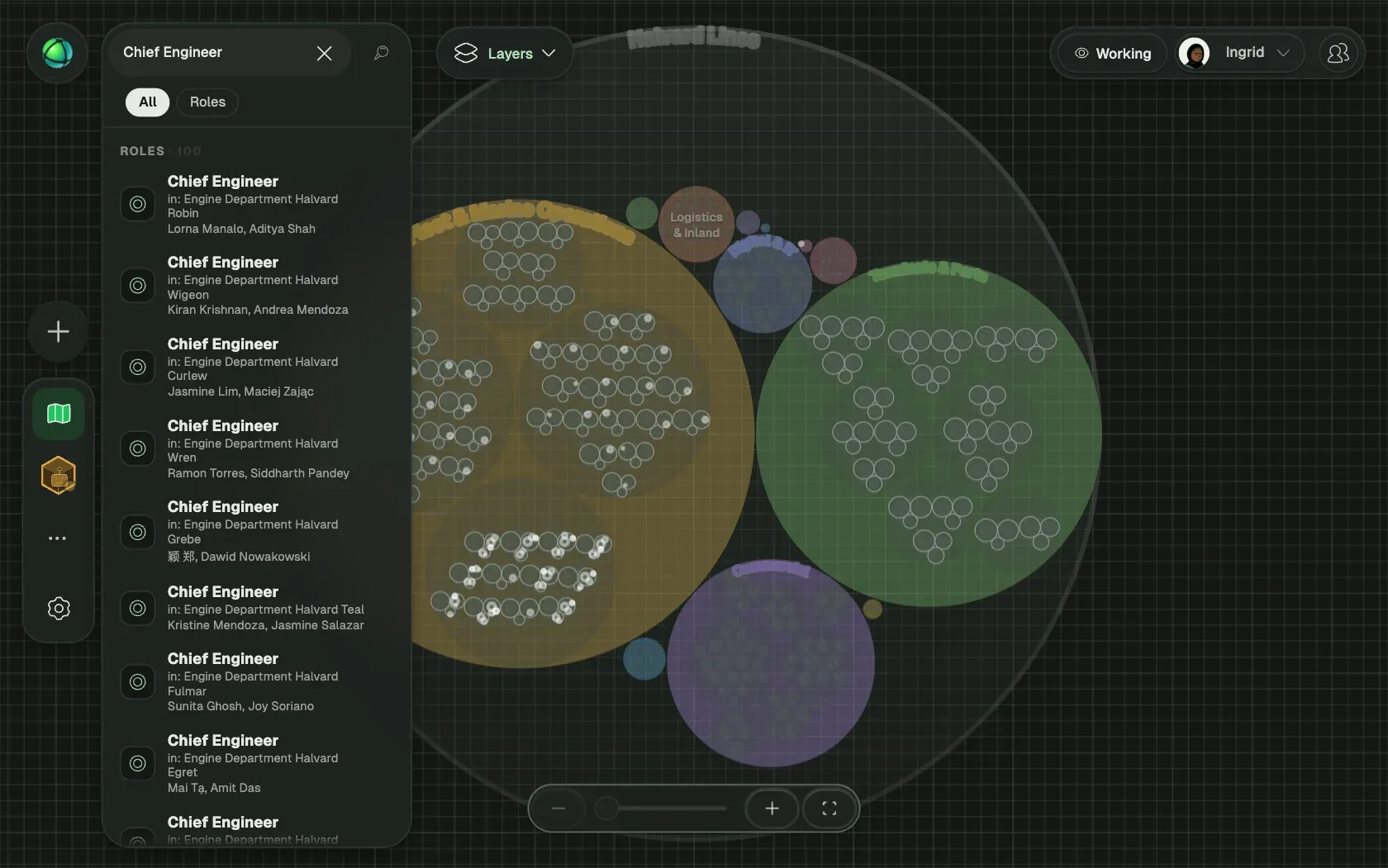
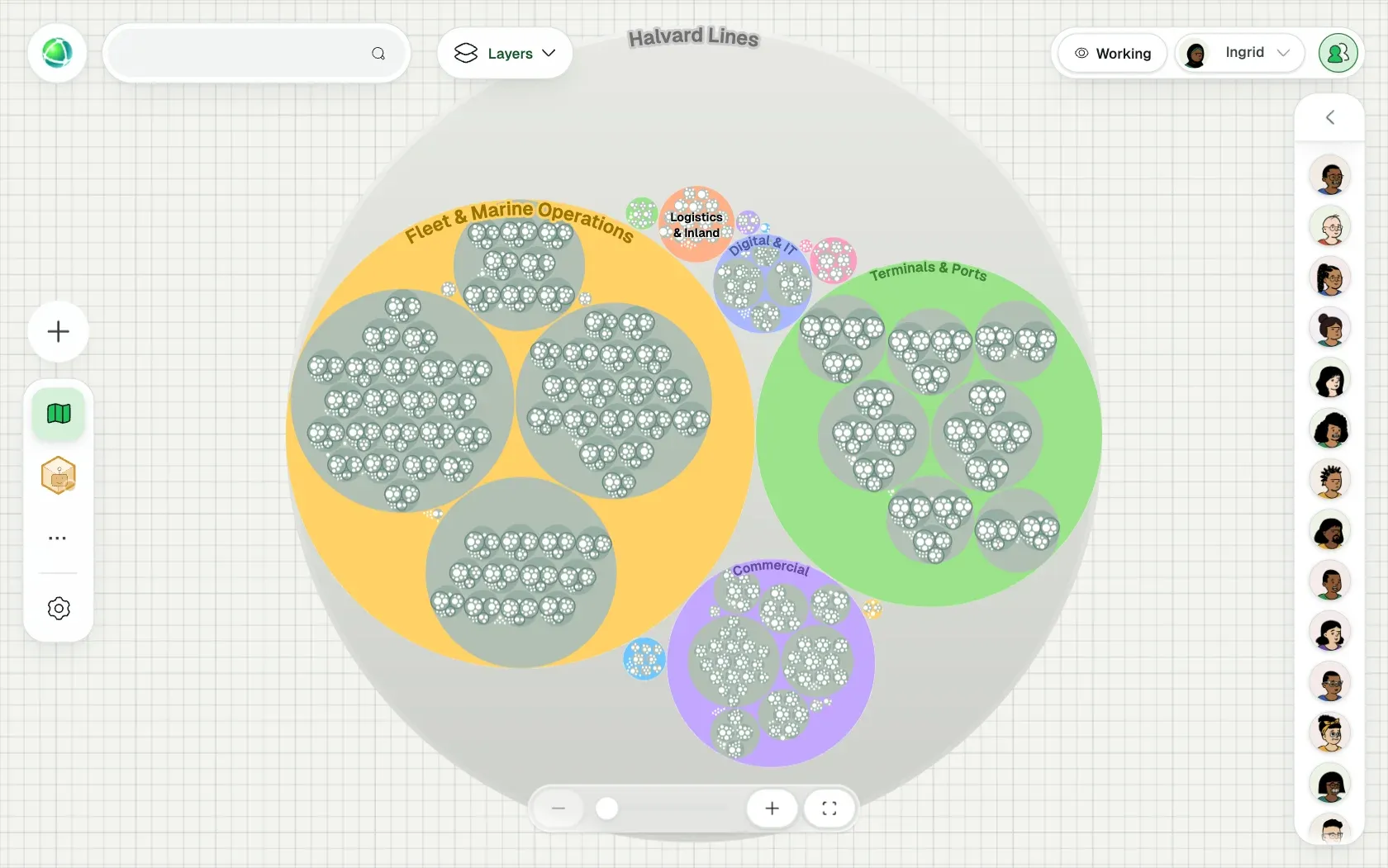
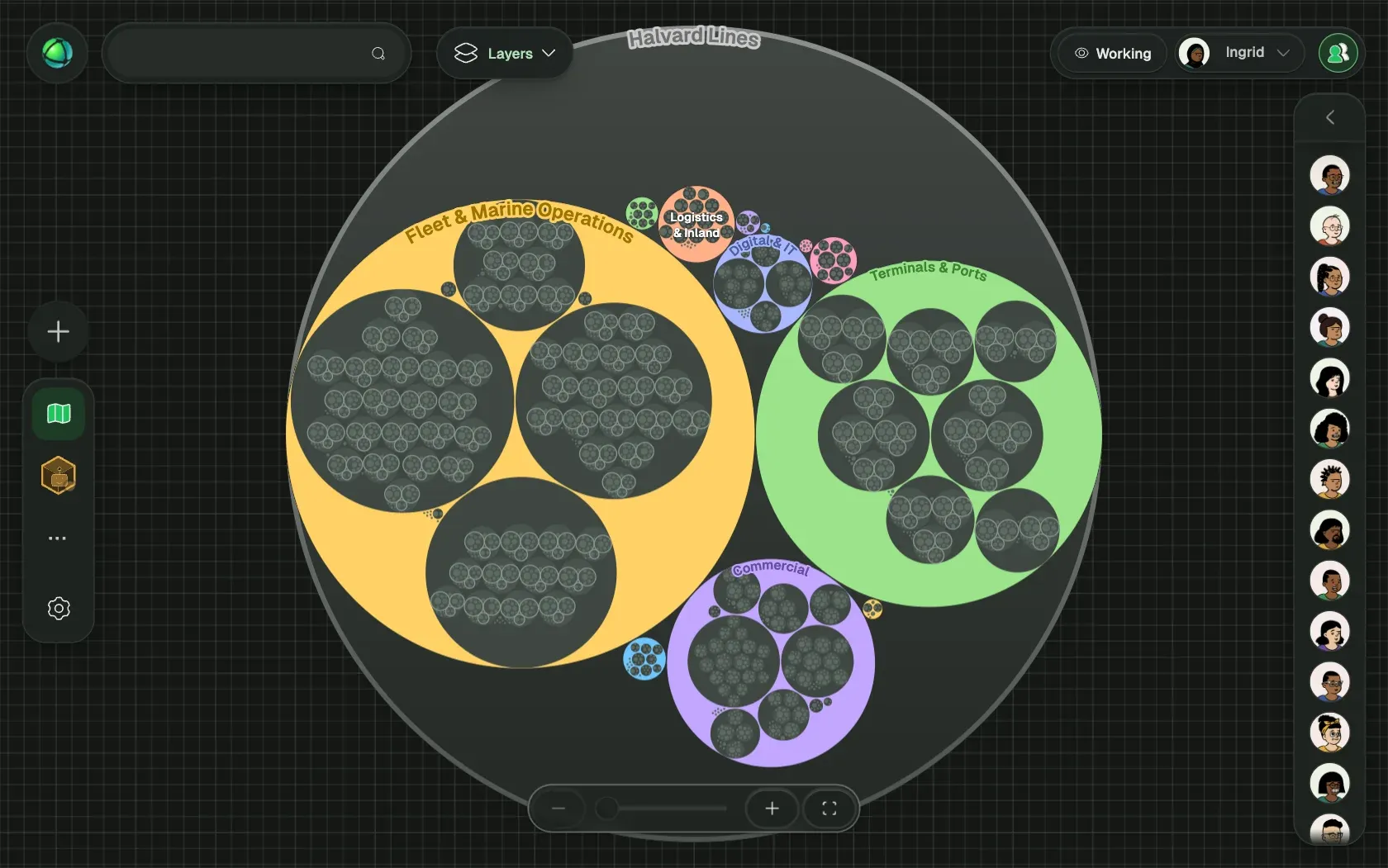
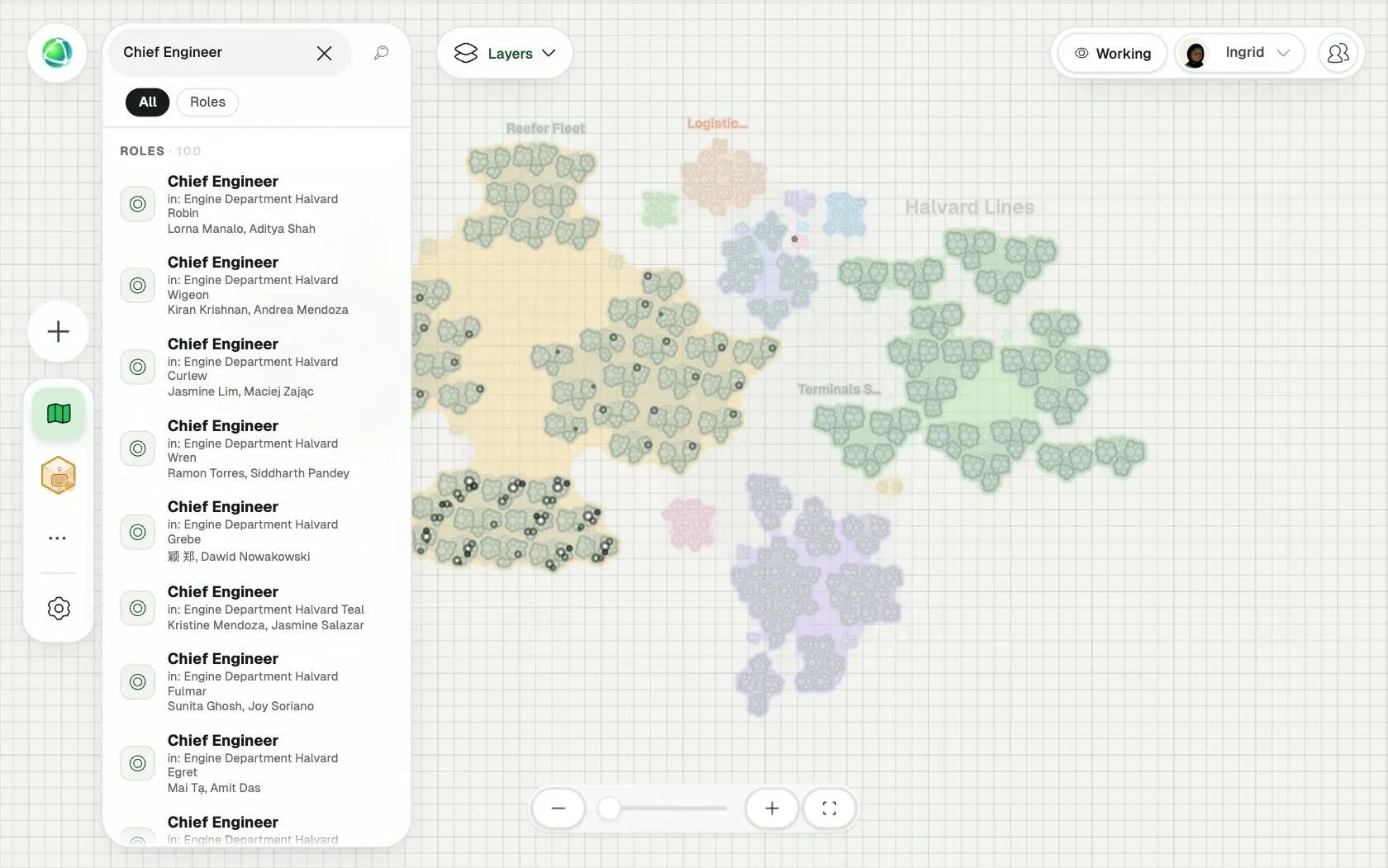
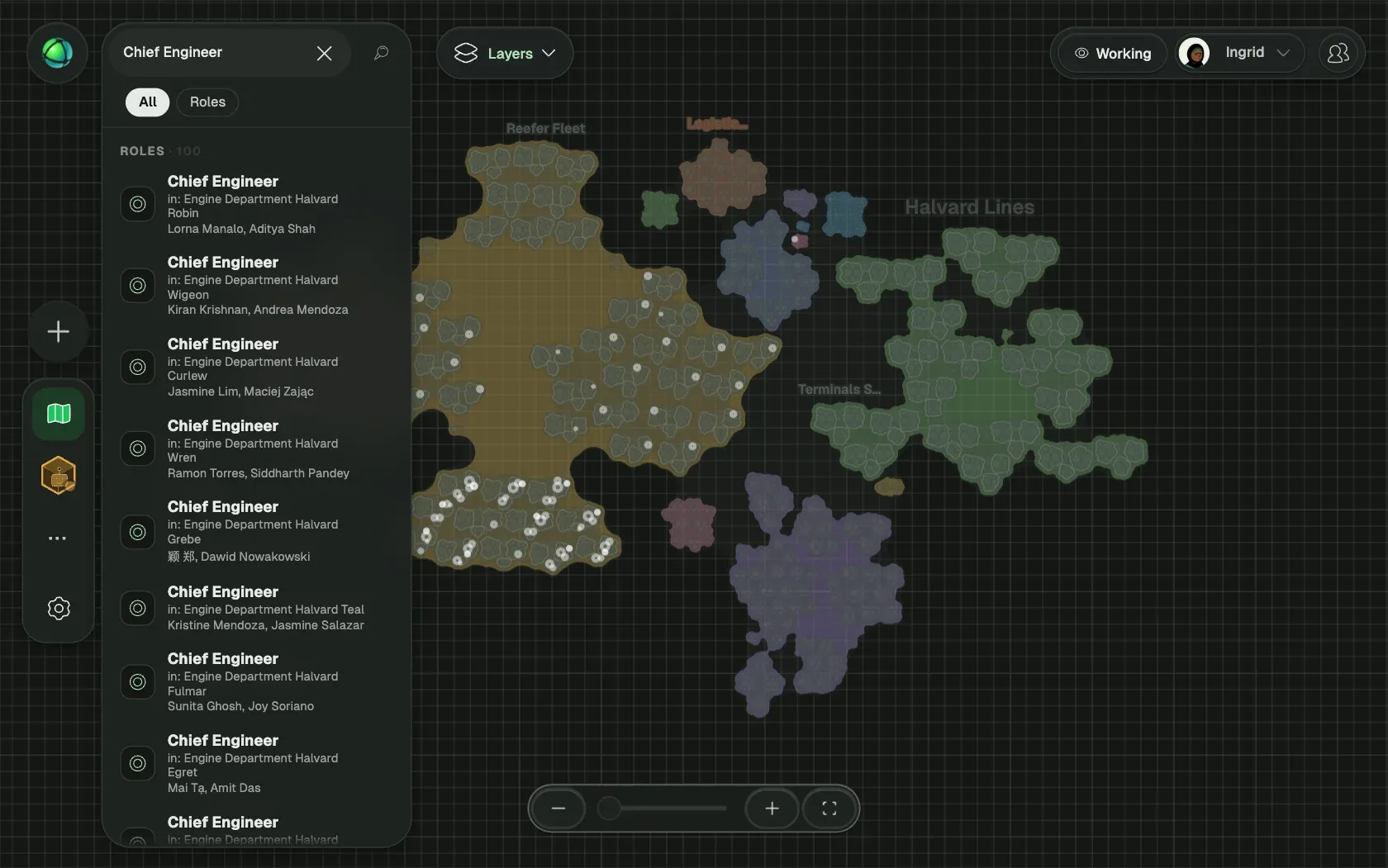
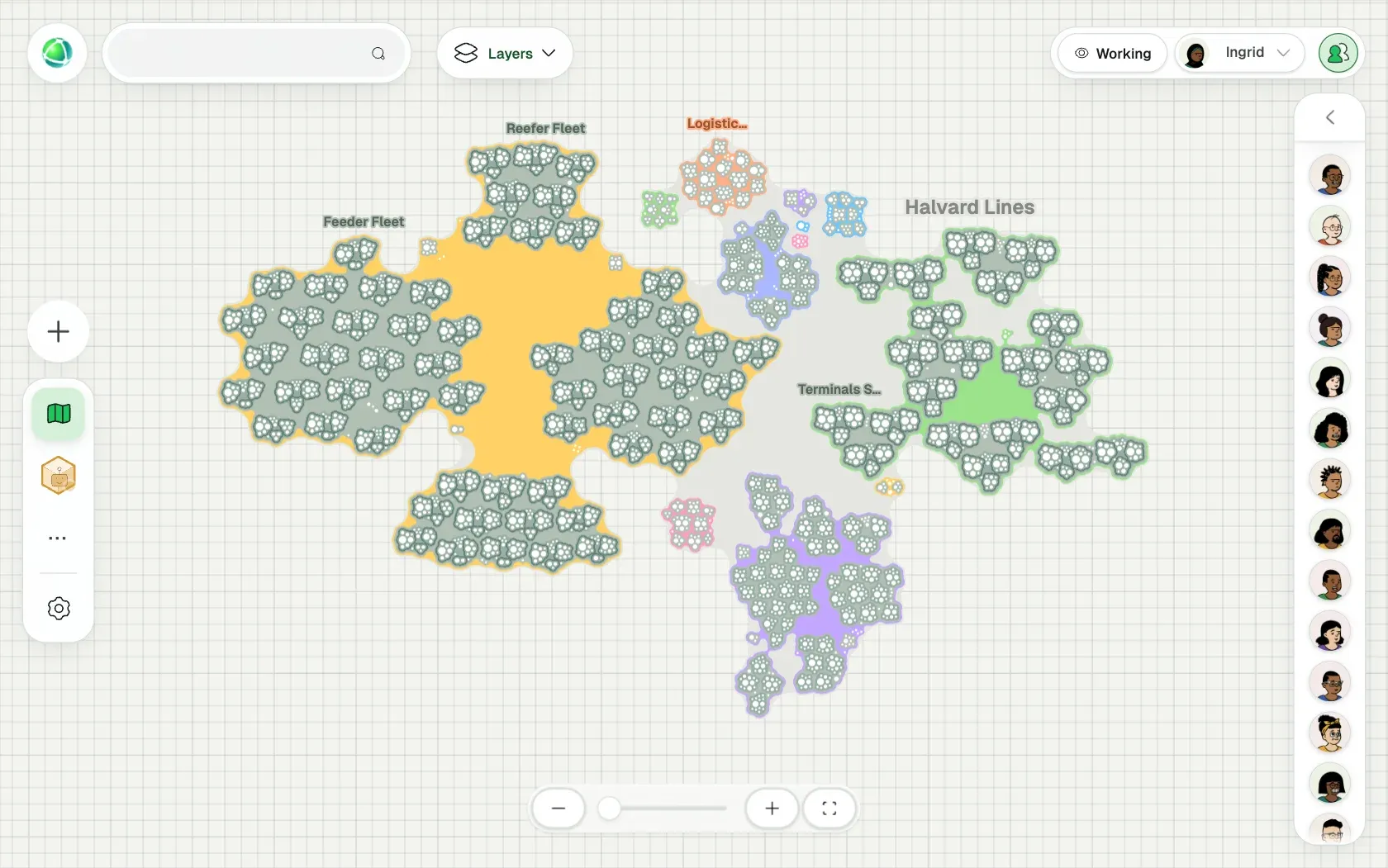
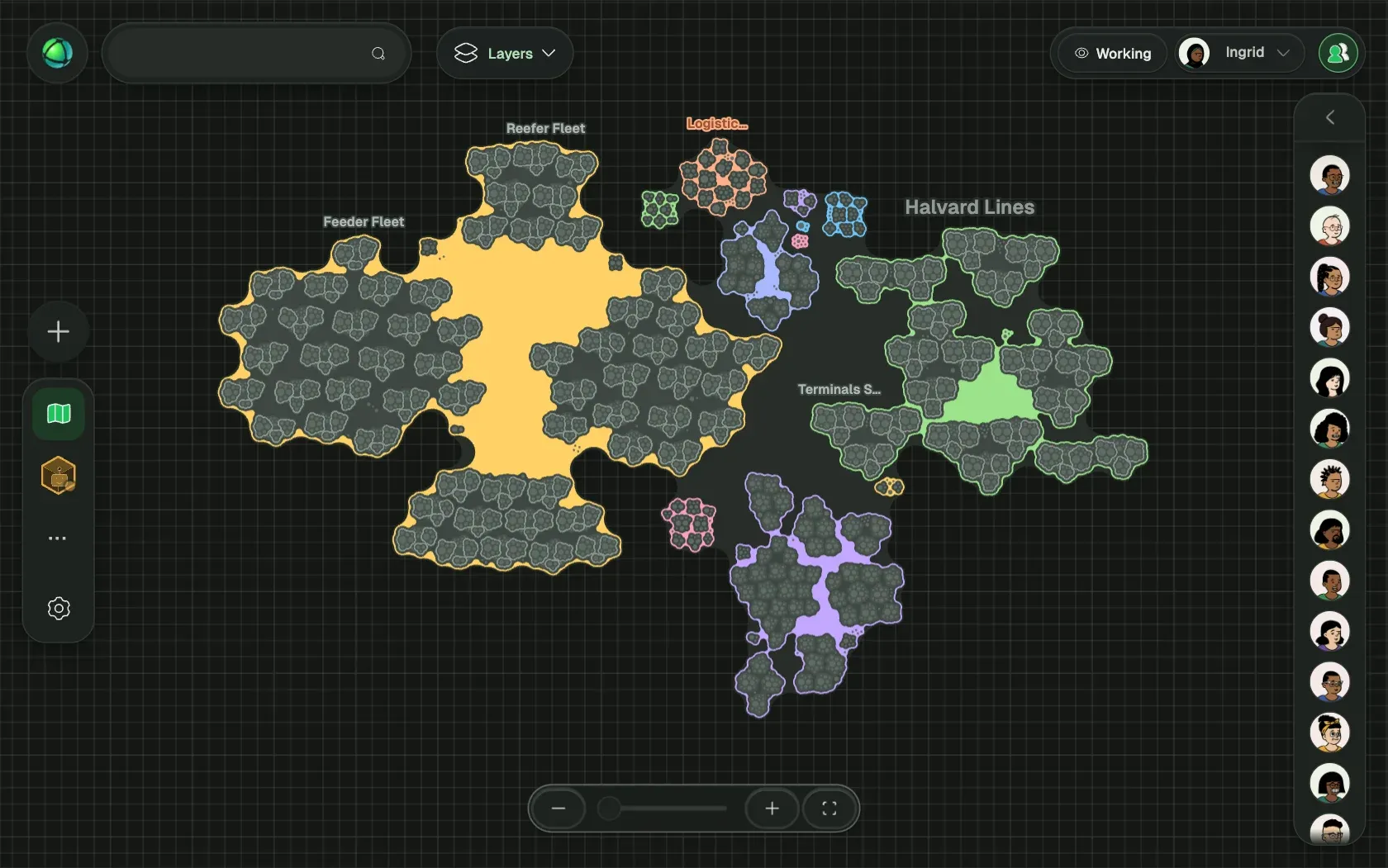
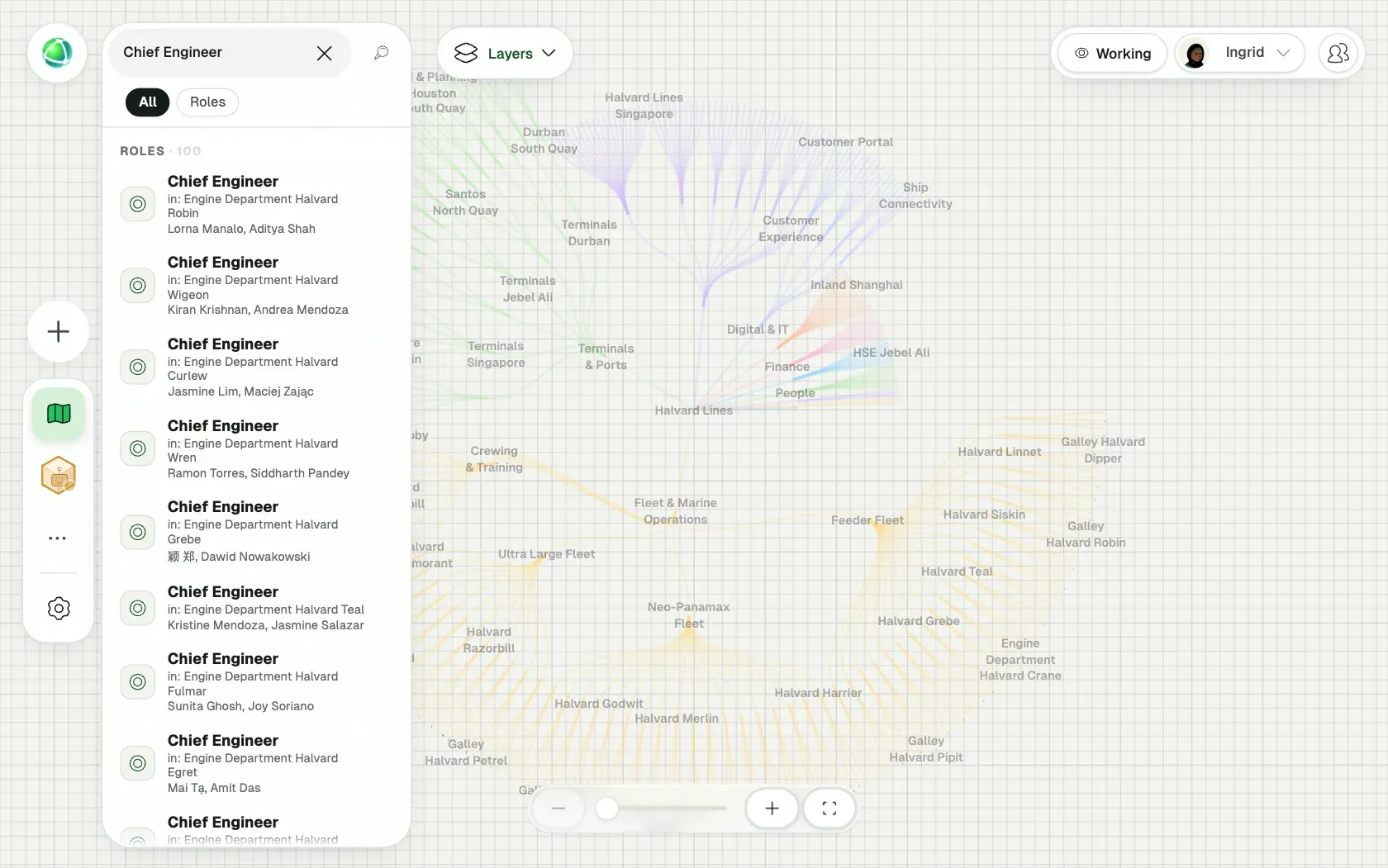
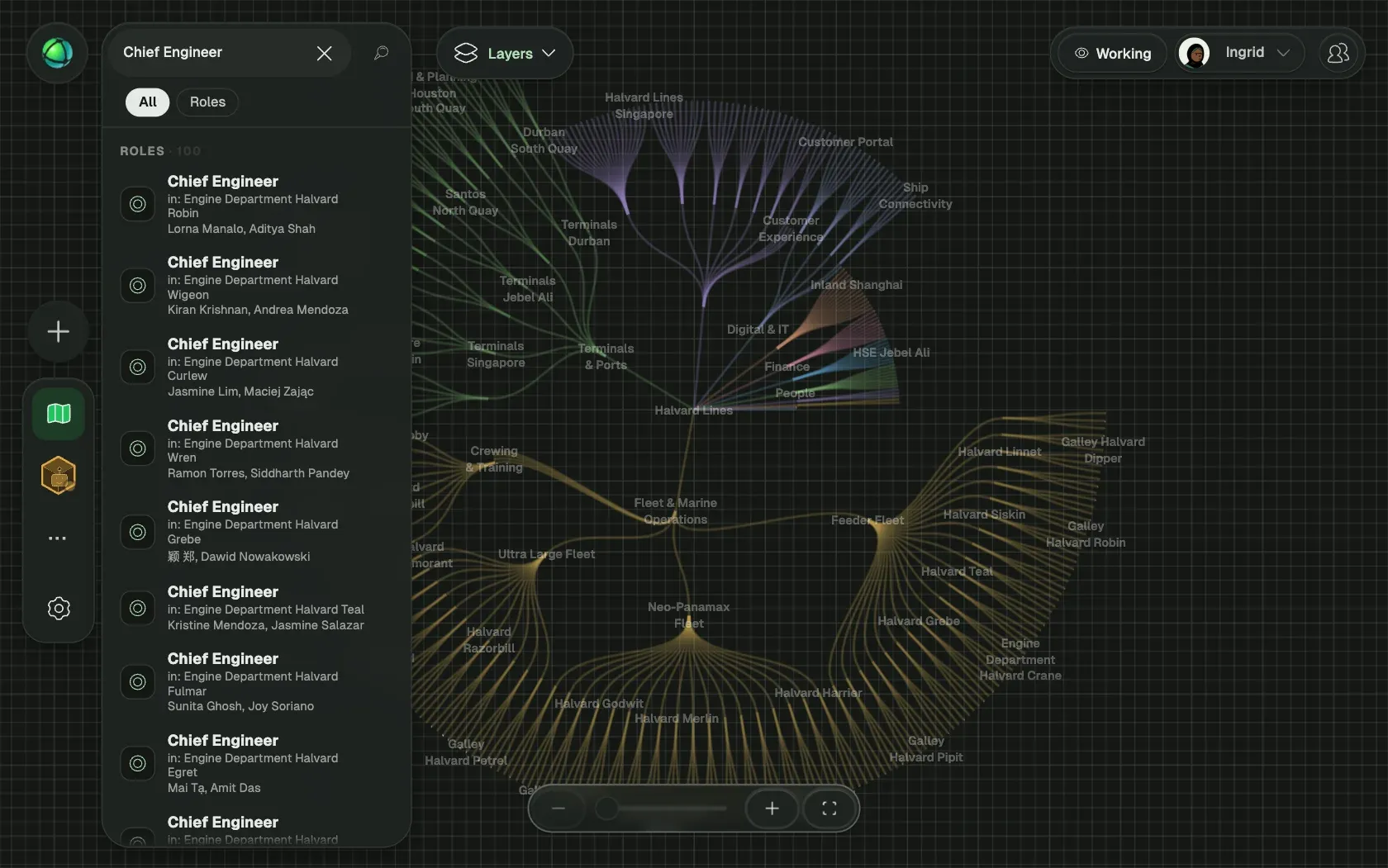
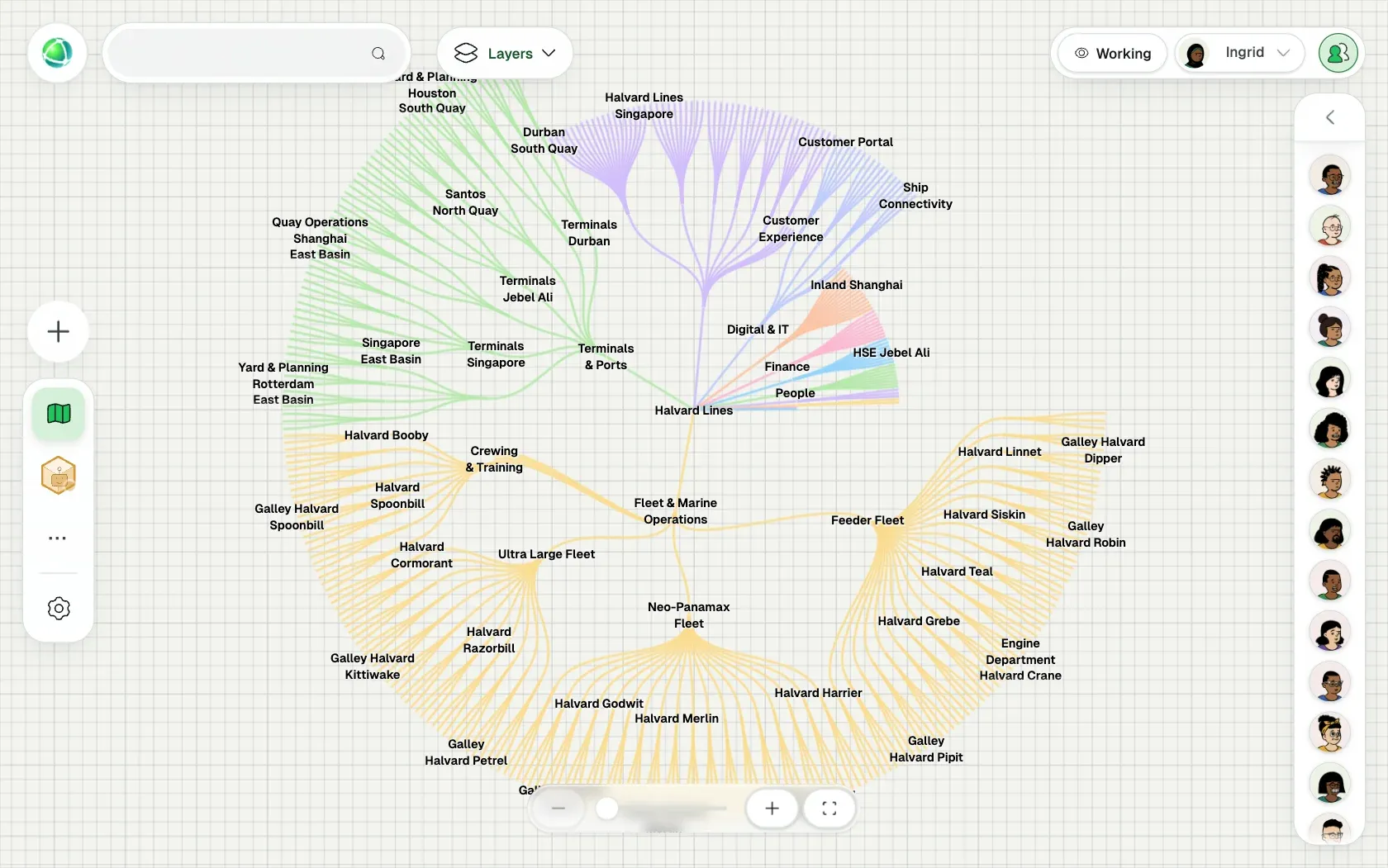
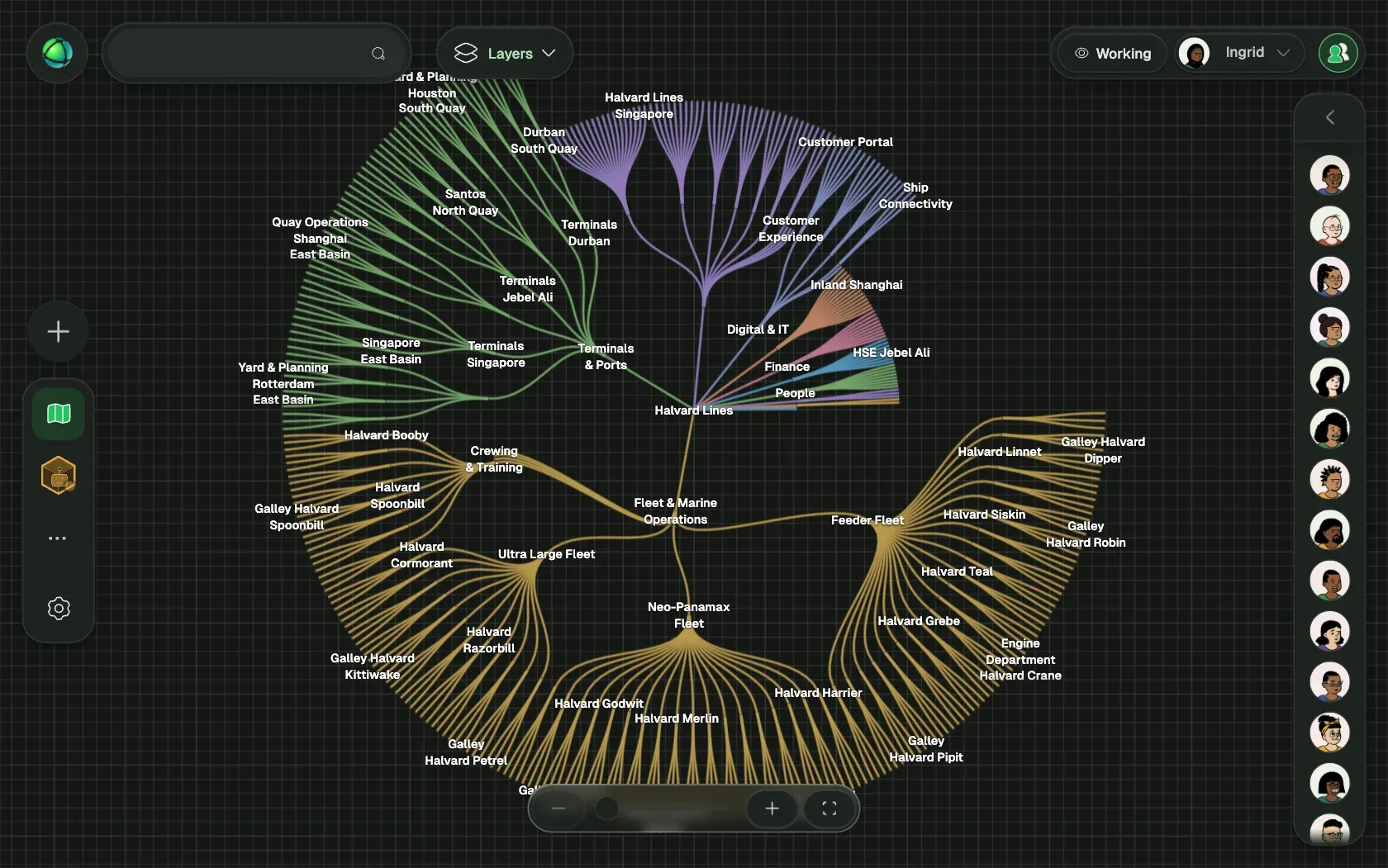
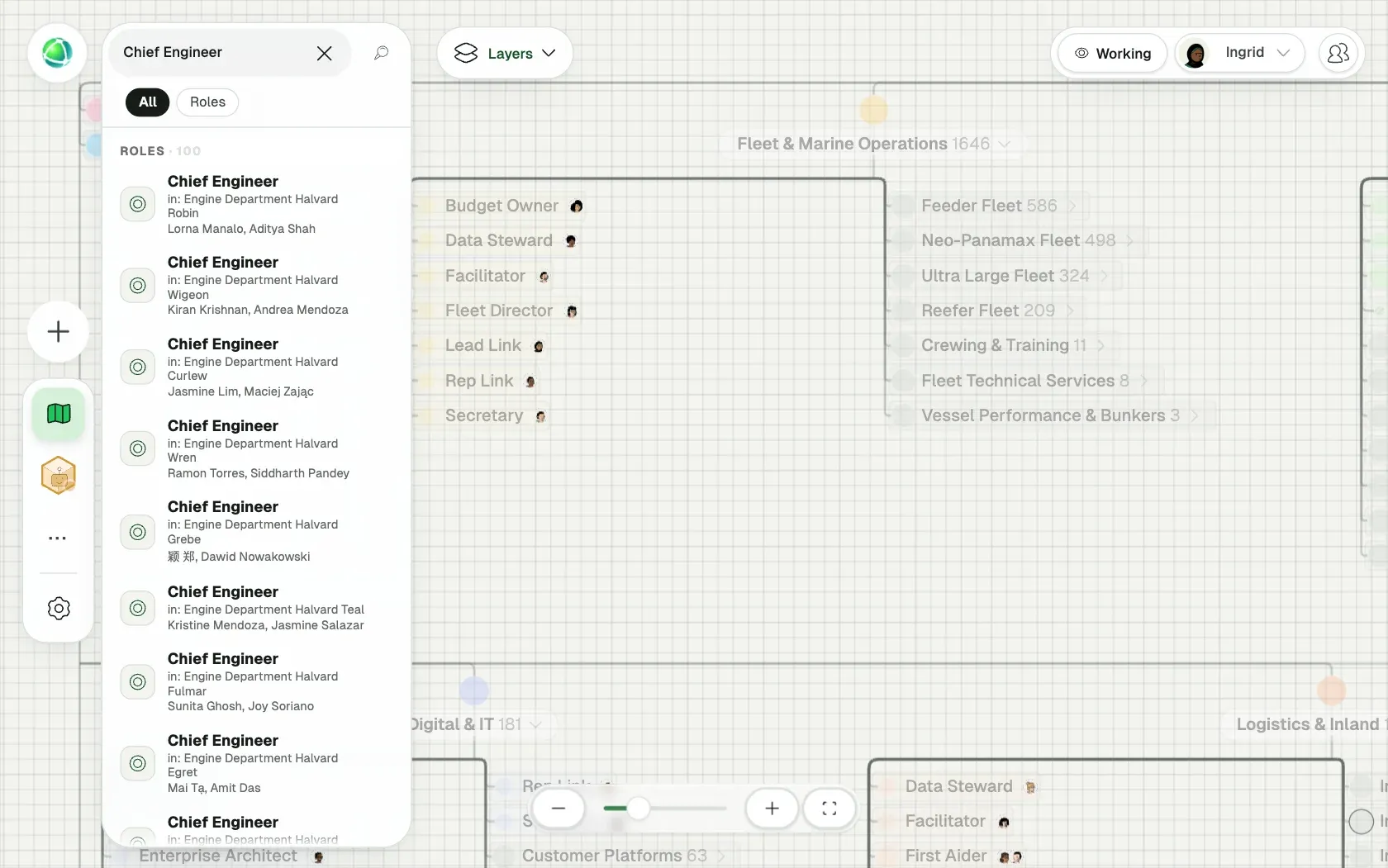
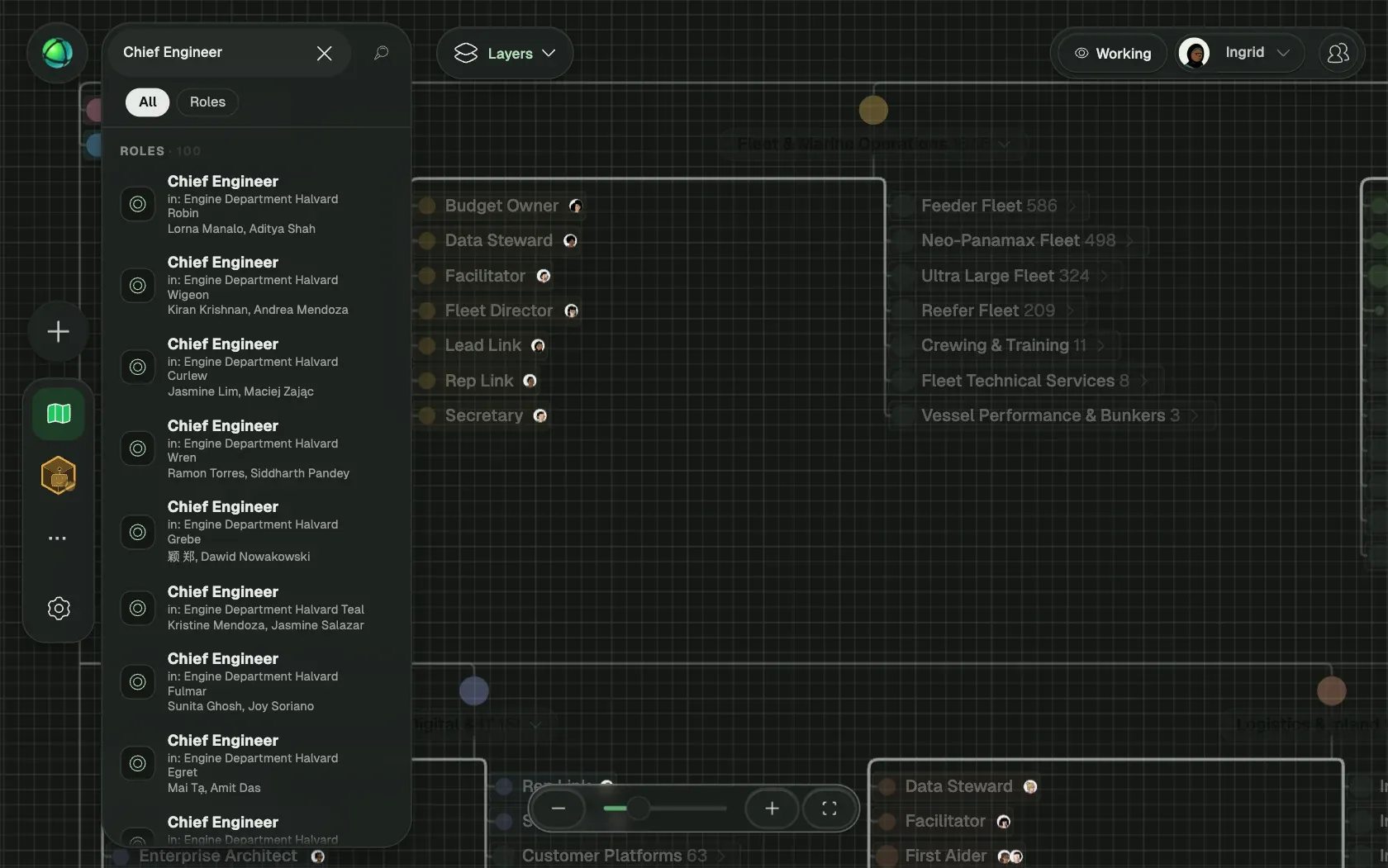
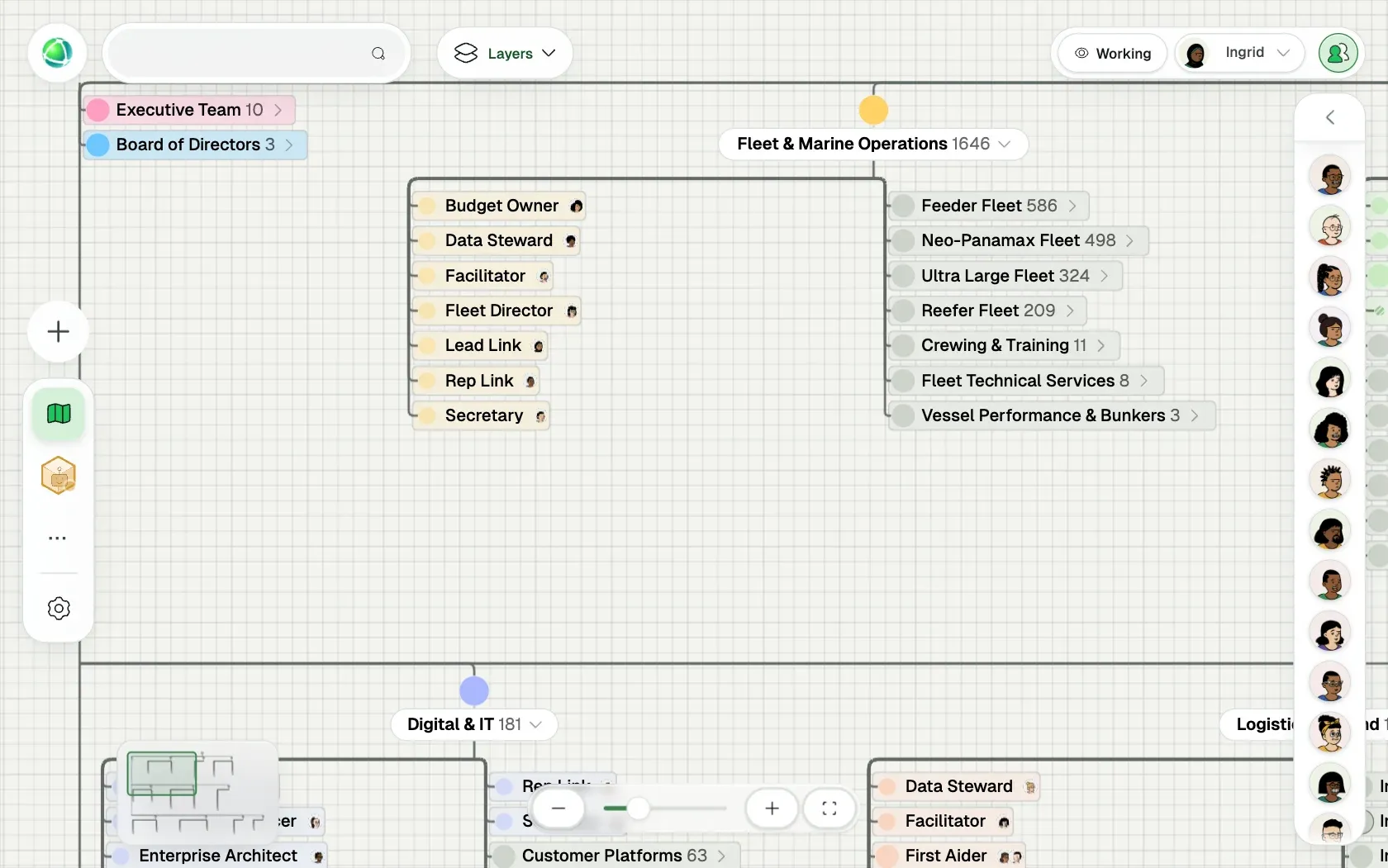
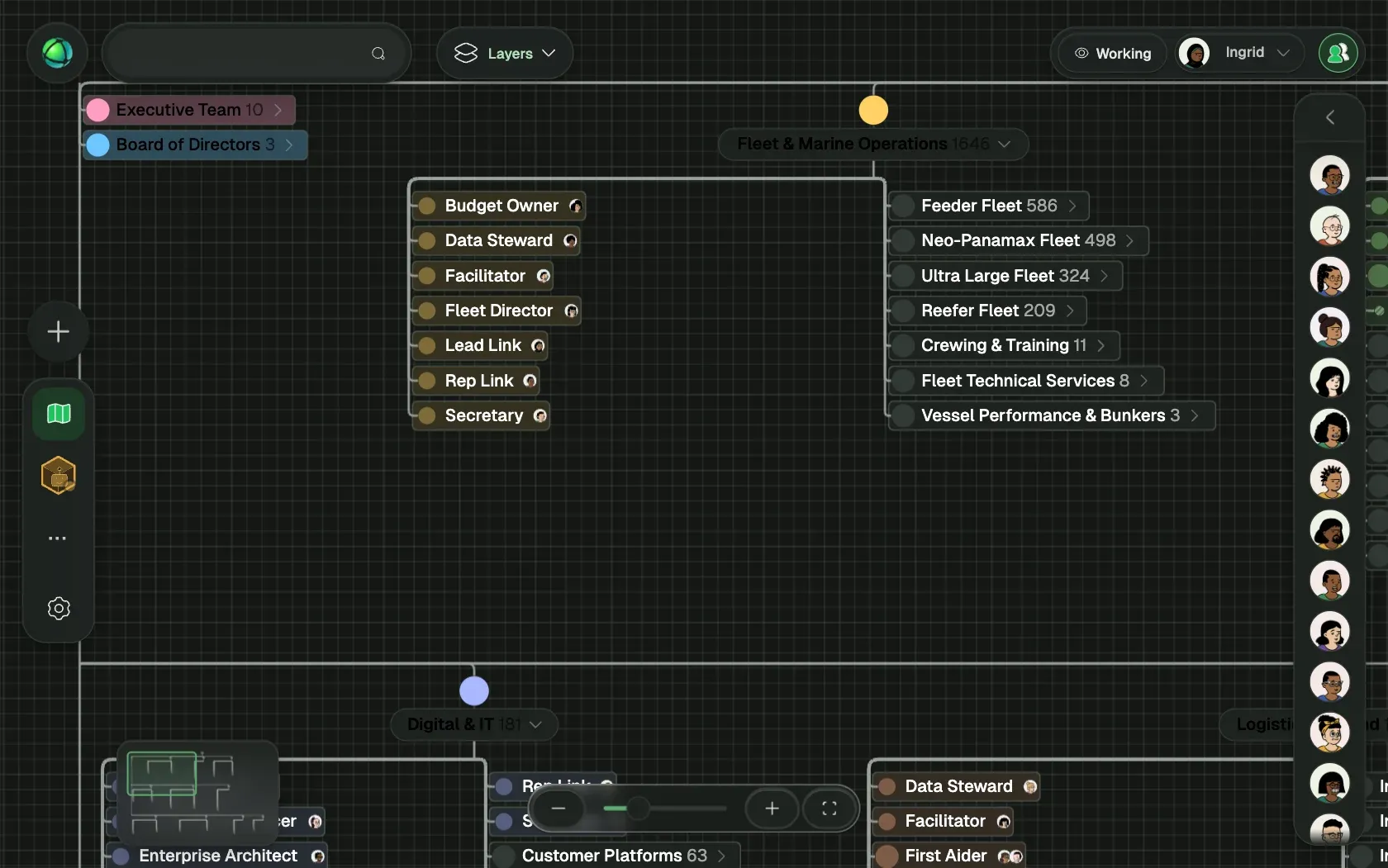




They search for a role and see its team and the people who hold it.
Loyco: “New employees say they are immediately oriented, in contrast to what took them years in their previous organizations.”
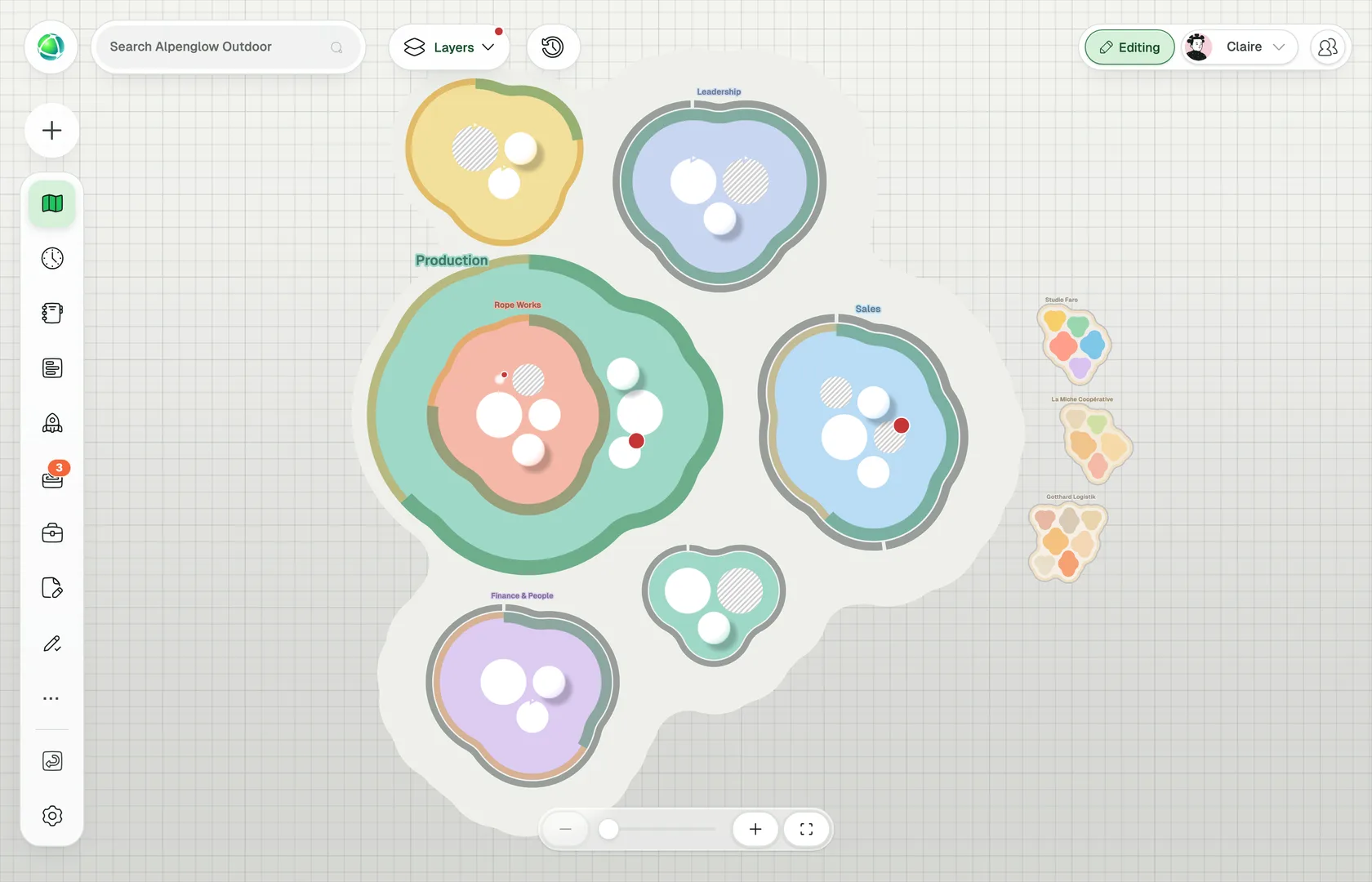
Prepare a draft alongside the live map, review it, and publish when agreed.
Bayer Pharma Schweiz previewed alternative structures in Drafts. Read the story
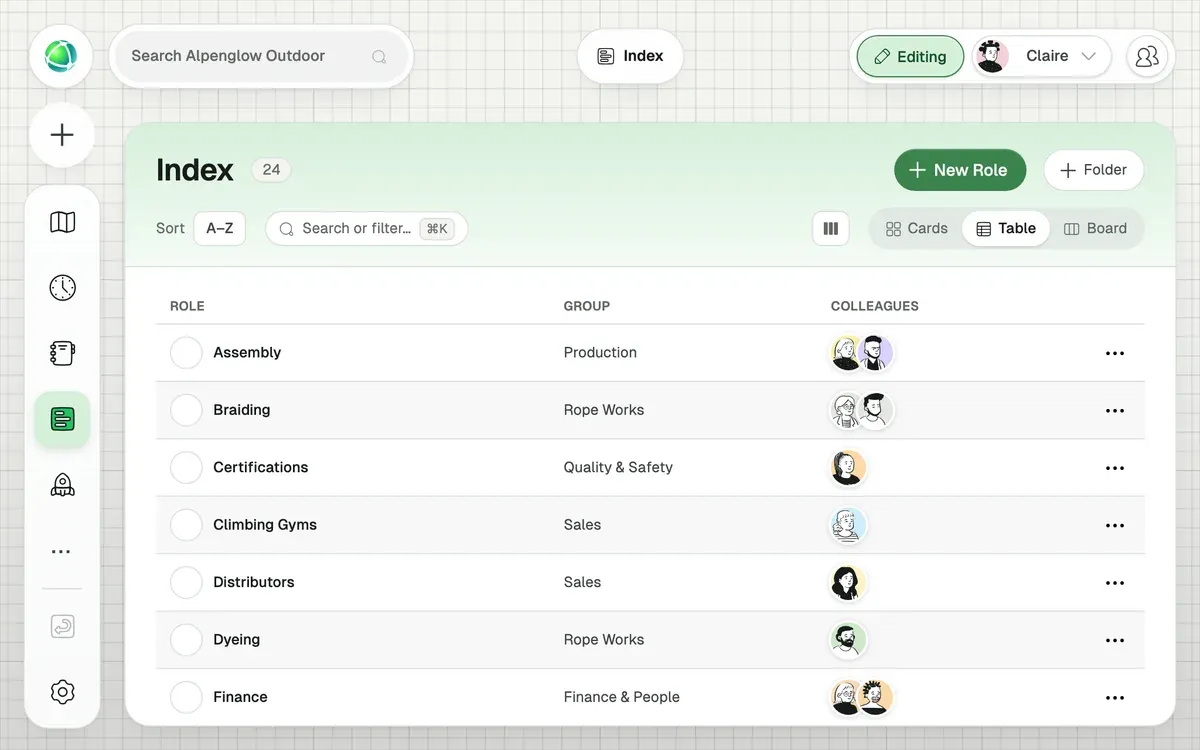
Sort Index by number of holders to review the assignments on your map.
When roles change, people need to find out who does what now. A manager or colleague can end up playing tour guide. With a current map, people find their own way. In this example, 15 of 100 people with paid access start in a new role in a year, replacing someone who left or moving to another team. What does that cost you?
Someone leaves, someone new takes over. The newcomer finds their role on the map, in its team, next to the people they will work with.
Someone moves to another team. The old team sees the role is open; the new team sees who holds UX Design now.
Example values. Change them to yours.
–
Planning more than 500 paid seats, a staged rollout or special terms? Talk with a co-founder about your offer. To compare it here, enter your annual offer or budget.
Illustrative figures, not guaranteed cash savings. Published volume prices, billed yearly, before taxes.
Setup and upkeep count only if you enter them. Default hourly cost: CHF 64, the Swiss average labour cost in 2020 (CHF 63.62), rounded. Source
Count replacements and internal team moves among people with paid access. For each new start, estimate the orientation and handover work saved; use zero where none applies, and count shared handover work once. Growth hires are not included. Working time saved, not how many days earlier either ends.
Explore the value of each app. See the apps
Rebuilt from the ground up around five essentials. See what changed, in the real product.
Peerdom perfectly meets our needs: lightweight and very easy to use, it allows us to see our organizations as we have never seen them before.
 Bernard DuPasquier Director, HEKS
 Peerdom has served as a visual, educational tool for our transformation. You can really see the impact our new ways of working has on you as an individual, while still getting the full picture of the company at the same time.
 Marius Leichte Virtual Minds
 Peerdom is a user-friendly tool that helped us make our organizational model tangible. Our 100+ Loycomates got used to it in only a few days and new employees say they are immediately oriented, compared to what took them years in their previous organizations!
 Christophe Barman Ex-CEO, Loyco
 Companies, schools and non-profits that made their maps public. Look at theirs before you start yours.
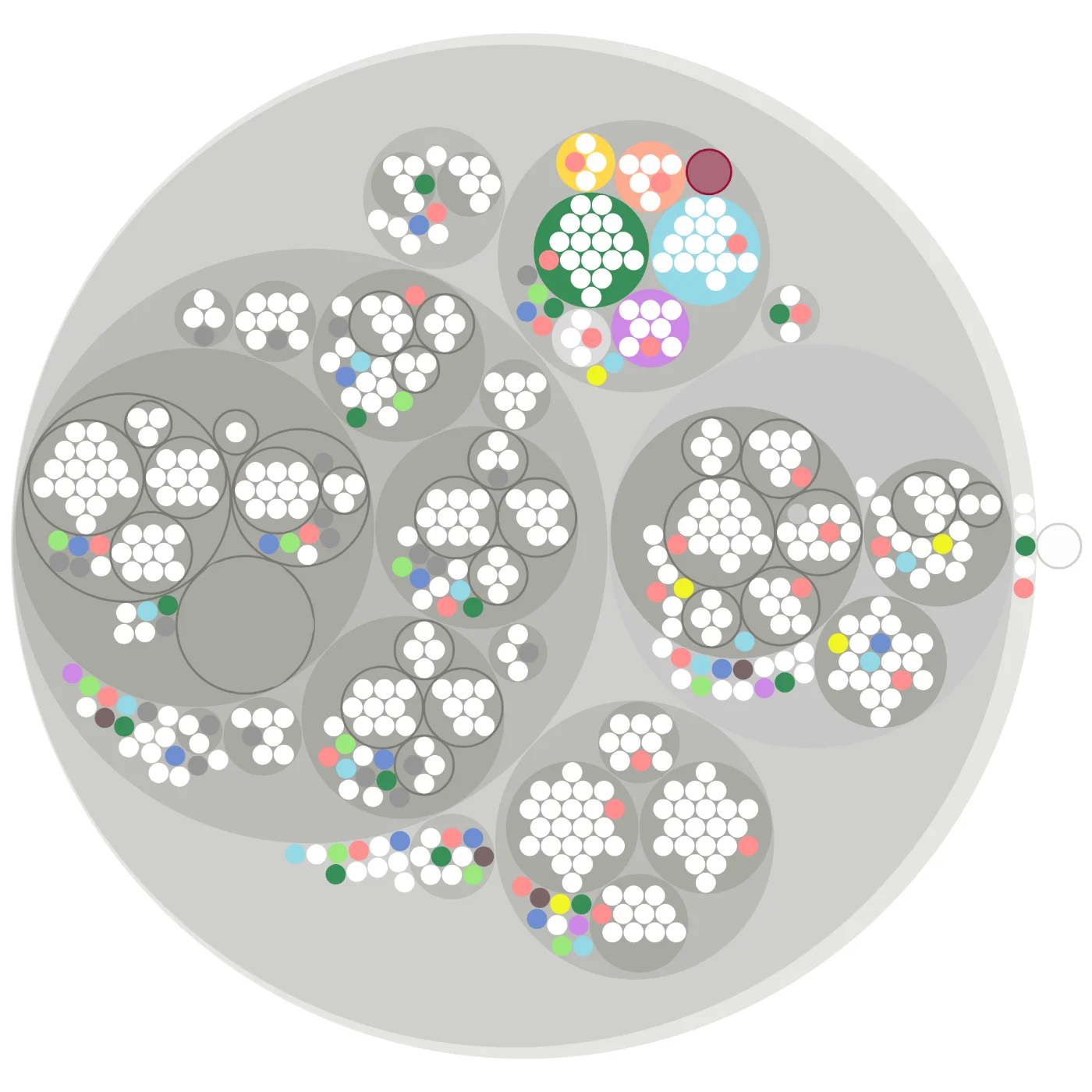
It works like the map apps you already use: zoom, pan, click something to see more. No training needed for anyone, no matter their department.
It starts minimal. Start with teams, names and roles, then add purposes, projects, goals and your directory as you go.
Show only what you need at first, and add detail when you’re ready. Most teams are up and running within an hour.
Free for up to 10 people. Invite your colleagues and see who does what in minutes.
Restructurings, mergers, fast growth, audits, and making room for AI agents.
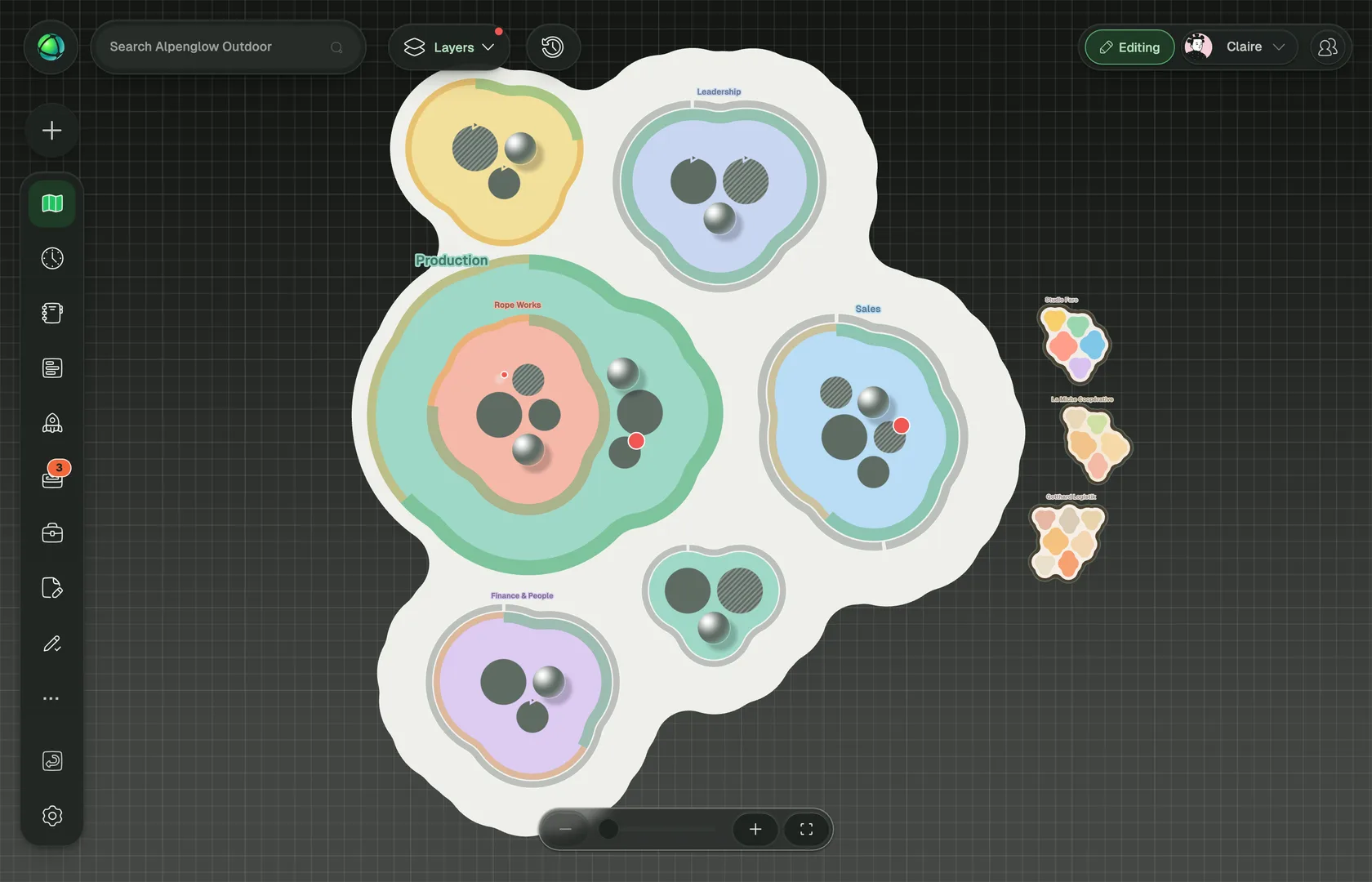
A live org chart from Switzerland: your departments, the positions in them and the people who hold them, beautifully drawn and kept current by the people on it. AI agents work from the same map, so they know who owns what and what they are allowed to do. Free for up to ten people, hosted in Switzerland.
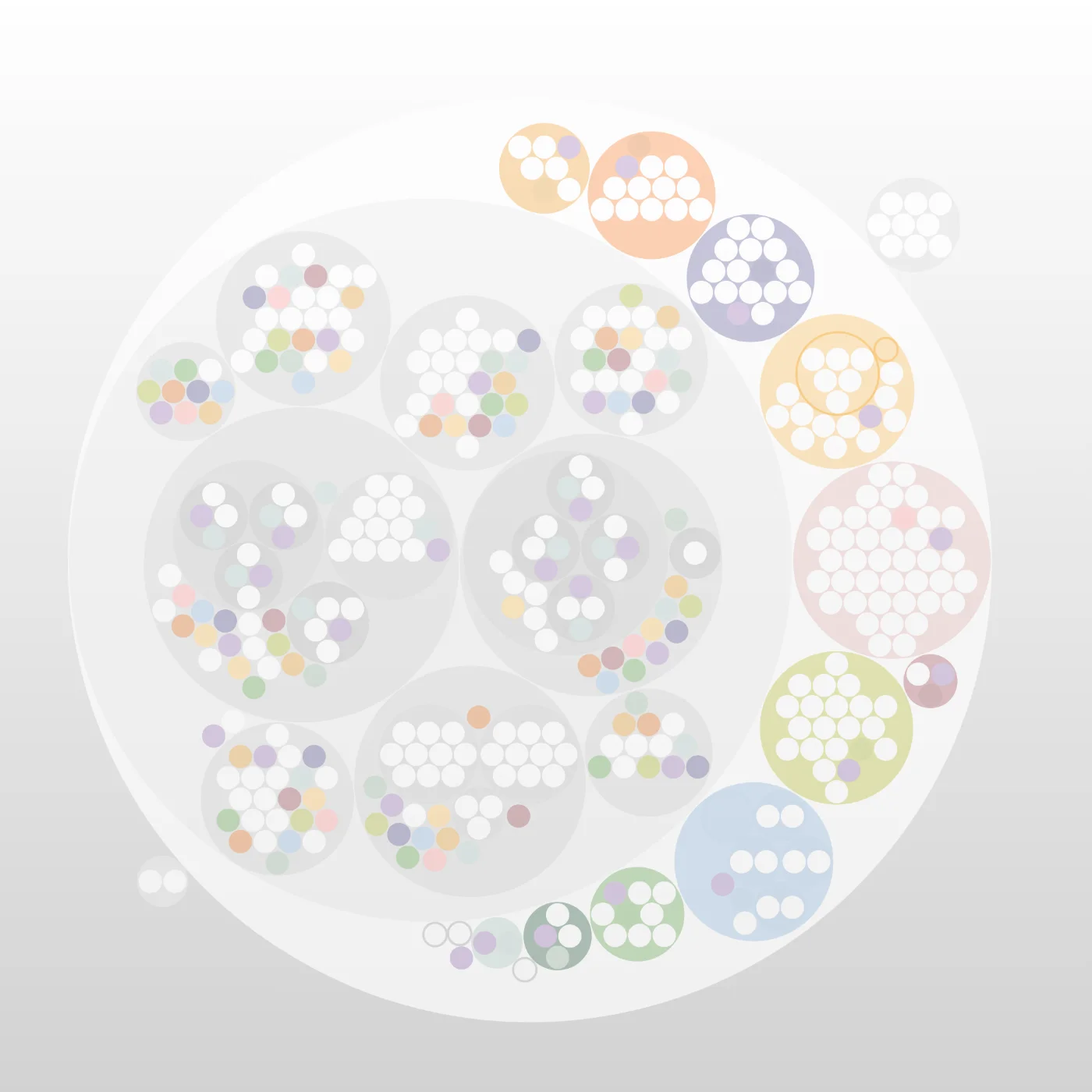
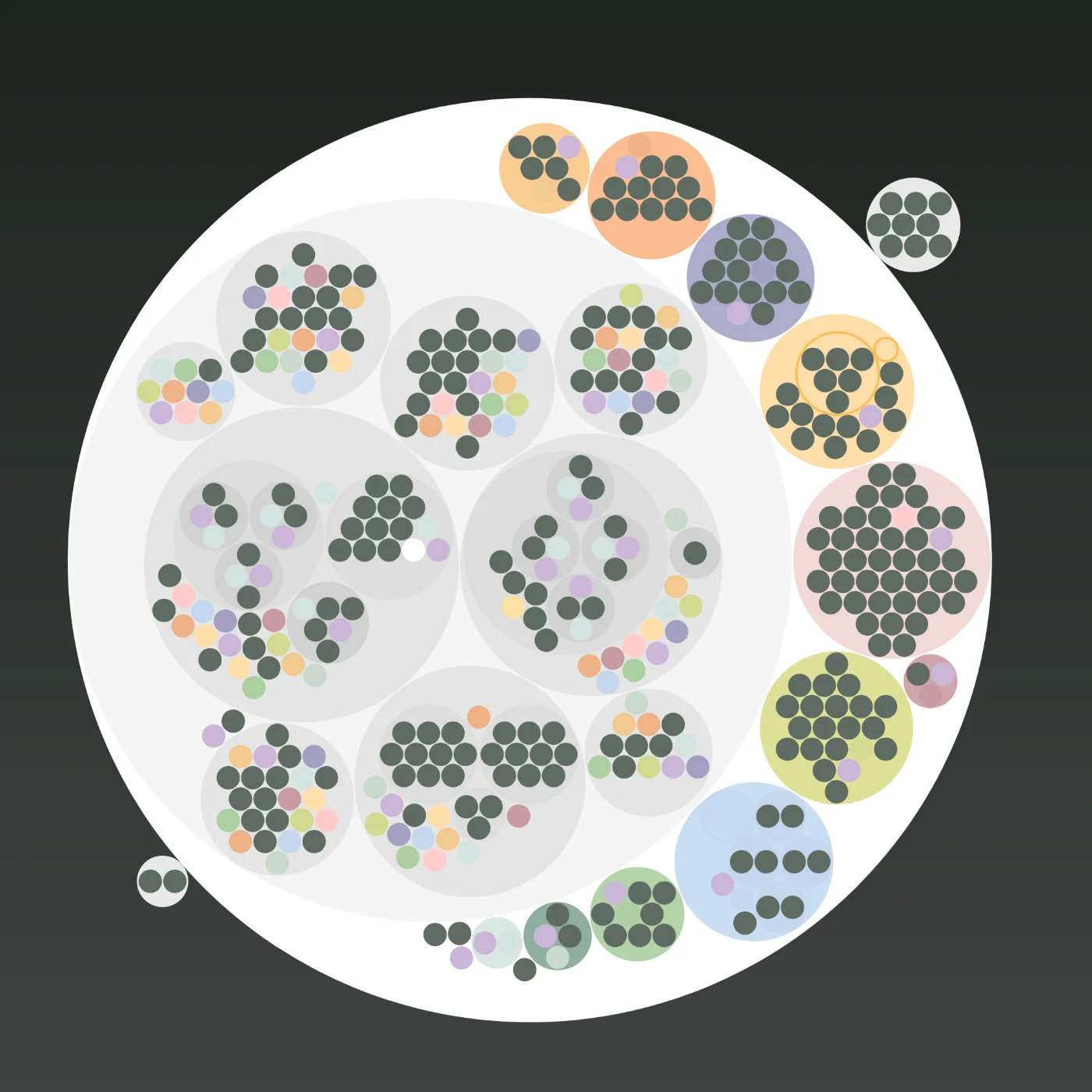
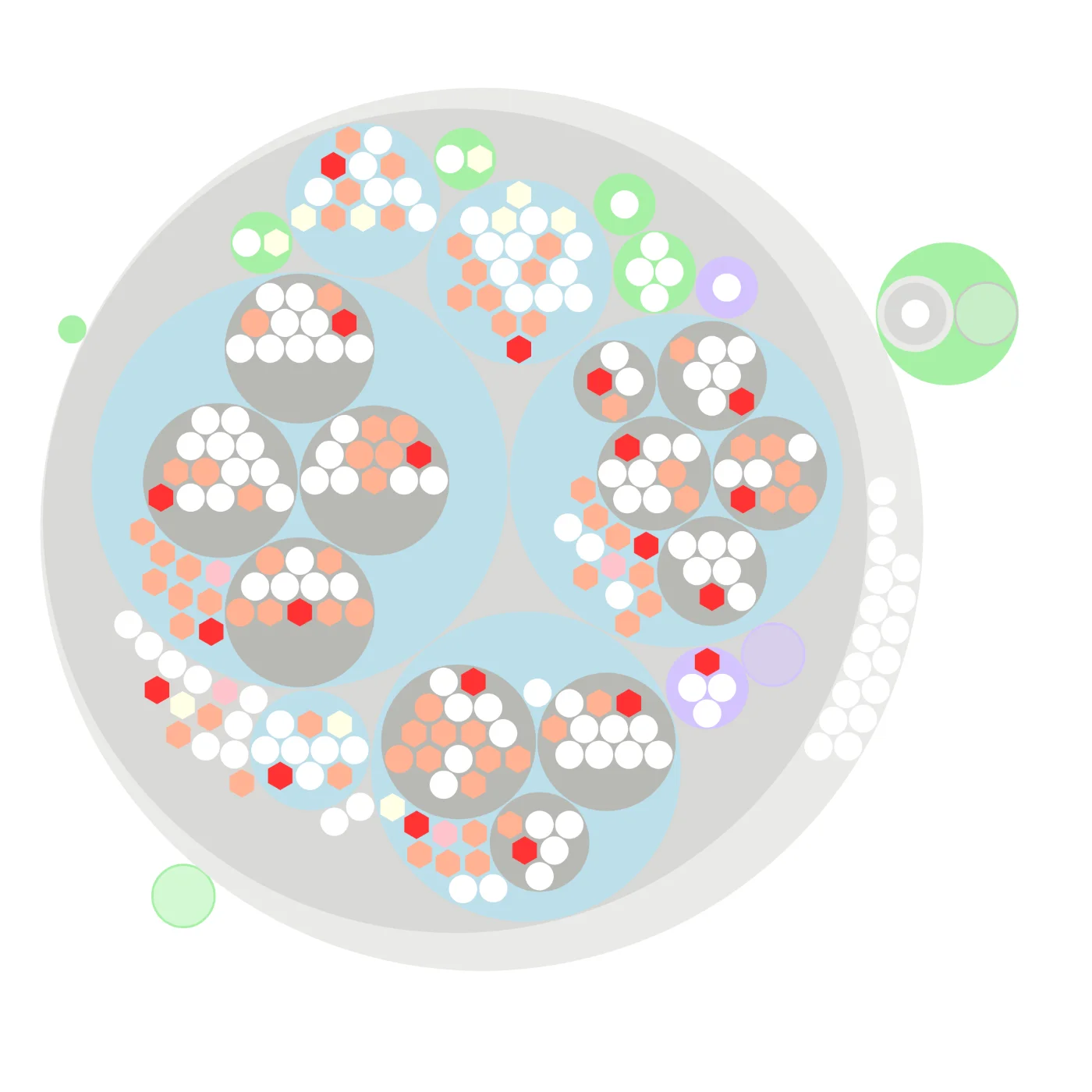
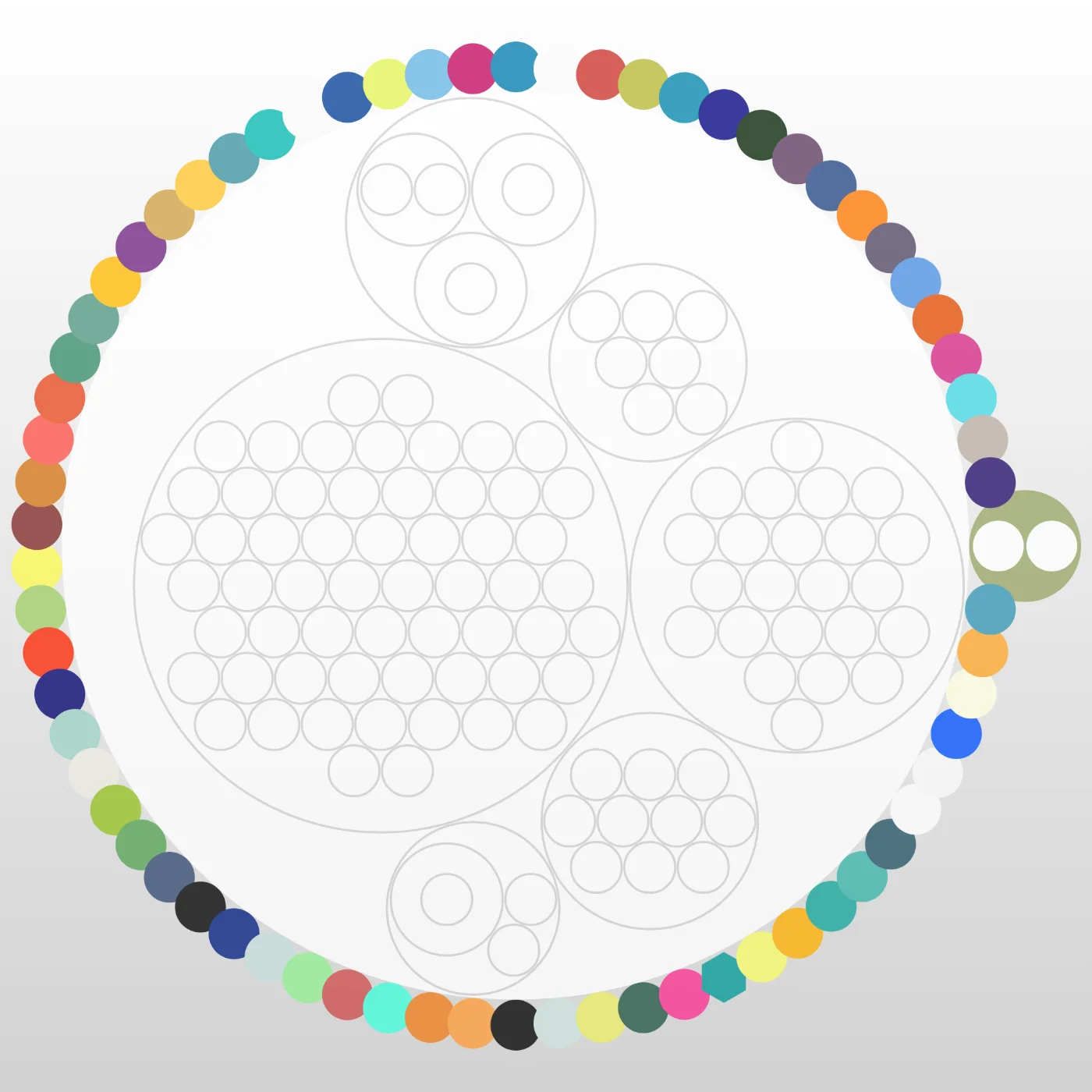
Yes. Peerdom is a live org chart for your departments, positions and people, drawn as a classic tree or as nested teams. When you need more, it also shows responsibilities and the work people do across teams.
Companies of every size, from start-ups to corporations such as Bayer and Die Mobiliar, as well as public bodies, schools and NGOs.
Some hold Great Place To Work® certification, based on employee feedback about their workplace. Others are B Corps, whose certification assesses broader social and environmental impact, including how workers are treated. Loyco, for example, has been a B Corp since 2015.
Peerdom doesn’t earn those labels for anyone. It supports what they measure: clear responsibilities, open information, and people who know where they belong and who to ask.
No. Peerdom works with any organizational model, including holacracy, sociocracy, reporting lines or a model of your own. Set your own words and the product follows them.
Your organizational data is stored exclusively in Switzerland using Swiss hosting providers including Google Cloud Platform (Zürich), Exoscale (Lausanne) and Infomaniak (Geneva).
By default, Peerdom’s digital colleagues run on a Swiss model we host ourselves. When you connect your own AI provider or assistant, the content you share with it is handled by that provider.
Some services like payments and emails use third-country providers with adequate data protection measures as outlined in our Data Processing Agreement (DPA).
Peerdom offers two plans:
On top of a subscription you can hire digital colleagues at CHF 2 per paid seat per month each, and buy on-premise, an SLA, priority support, a key account manager or training.
Yearly prices shown - save 16% with a yearly subscription compared to monthly billing. Pricing is displayed in your local currency automatically.