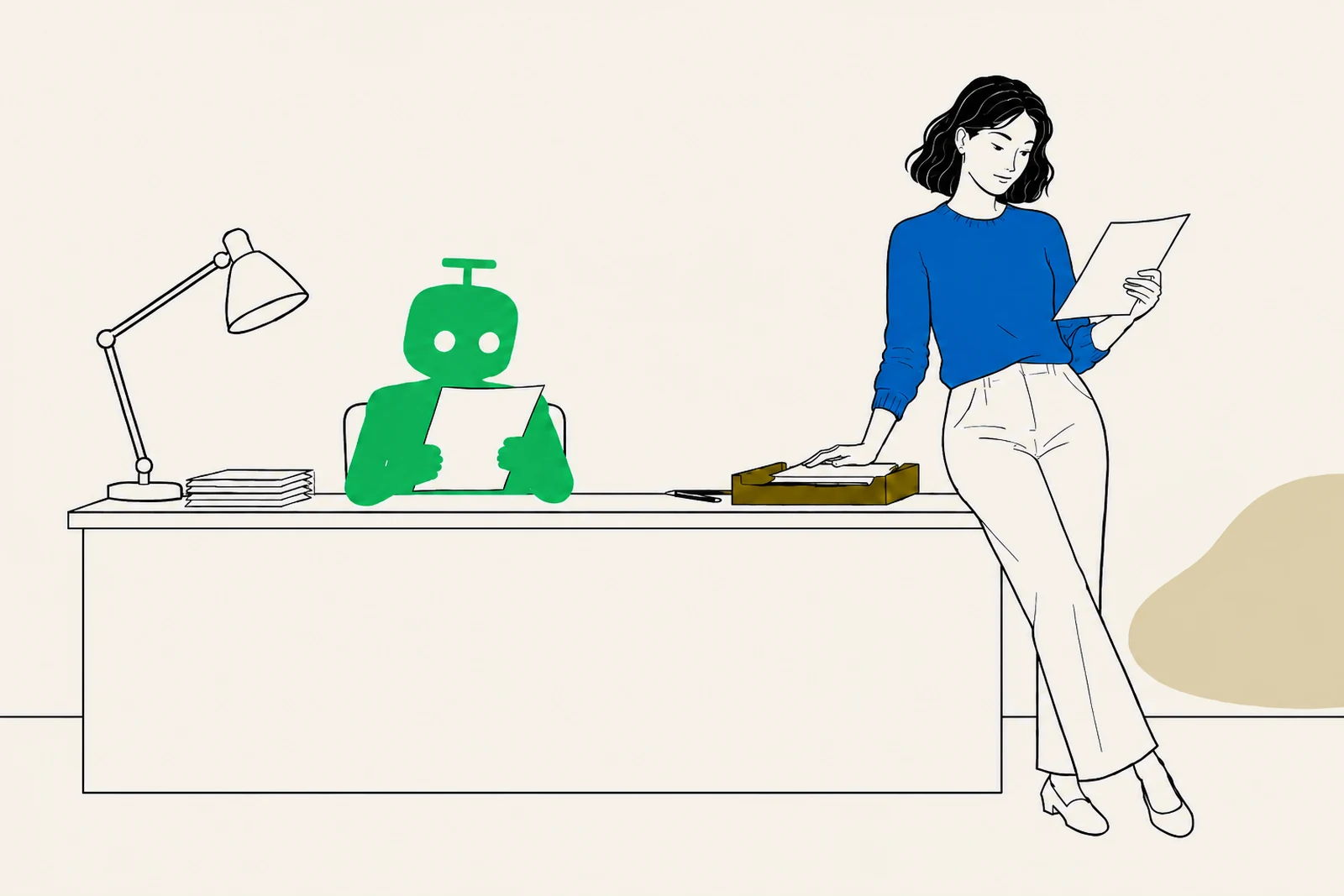
Most organizations now use AI somewhere. Few can say where it works, what it is allowed to do, or who answers for it. The AI sits in a chat window, a plugin or a script, outside the structure that tells everyone else what their job is.
We think that is the wrong place for it. If an agent does real, ongoing work for your organization, it should be treated as a colleague: with a role, with boundaries, with a person who is responsible for it, and under the same governance as everyone else. That is what lets people trust it and work alongside it.
With Peerdom 5.2 we are introducing digital colleagues, built on exactly that idea.
A colleague, not a tool
A digital colleague is hired the way you add a person to your organization. You click the + in the App Bar, choose New digital colleague, and pick one from the Digital colleagues tab in the App Store.
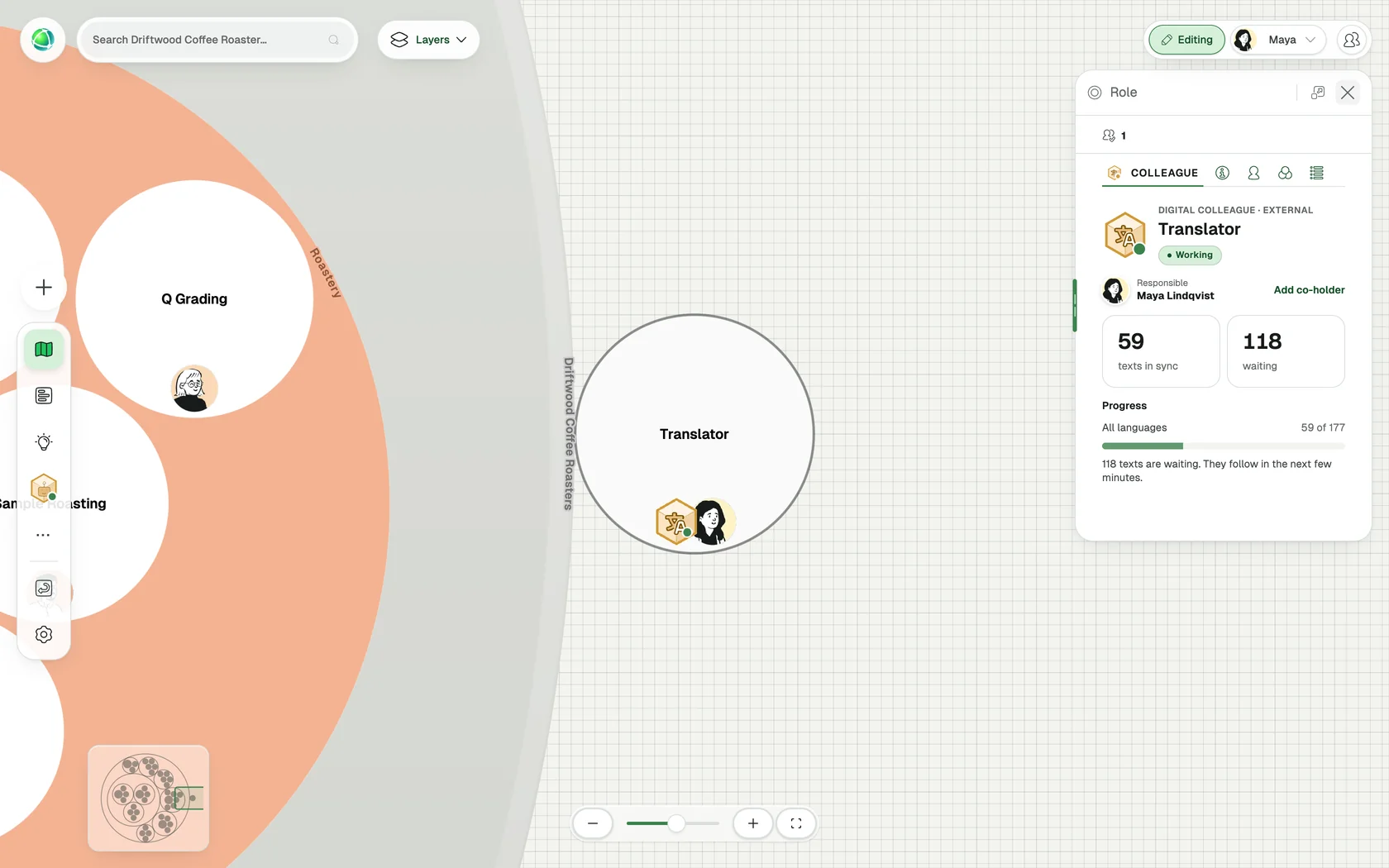
From that moment it holds a role on your map, in a group called External, and you can move it next to the people it works with. The role says what it is for and what it is accountable for. You can open it like any other role, see what it is doing right now, and see who is responsible for it.
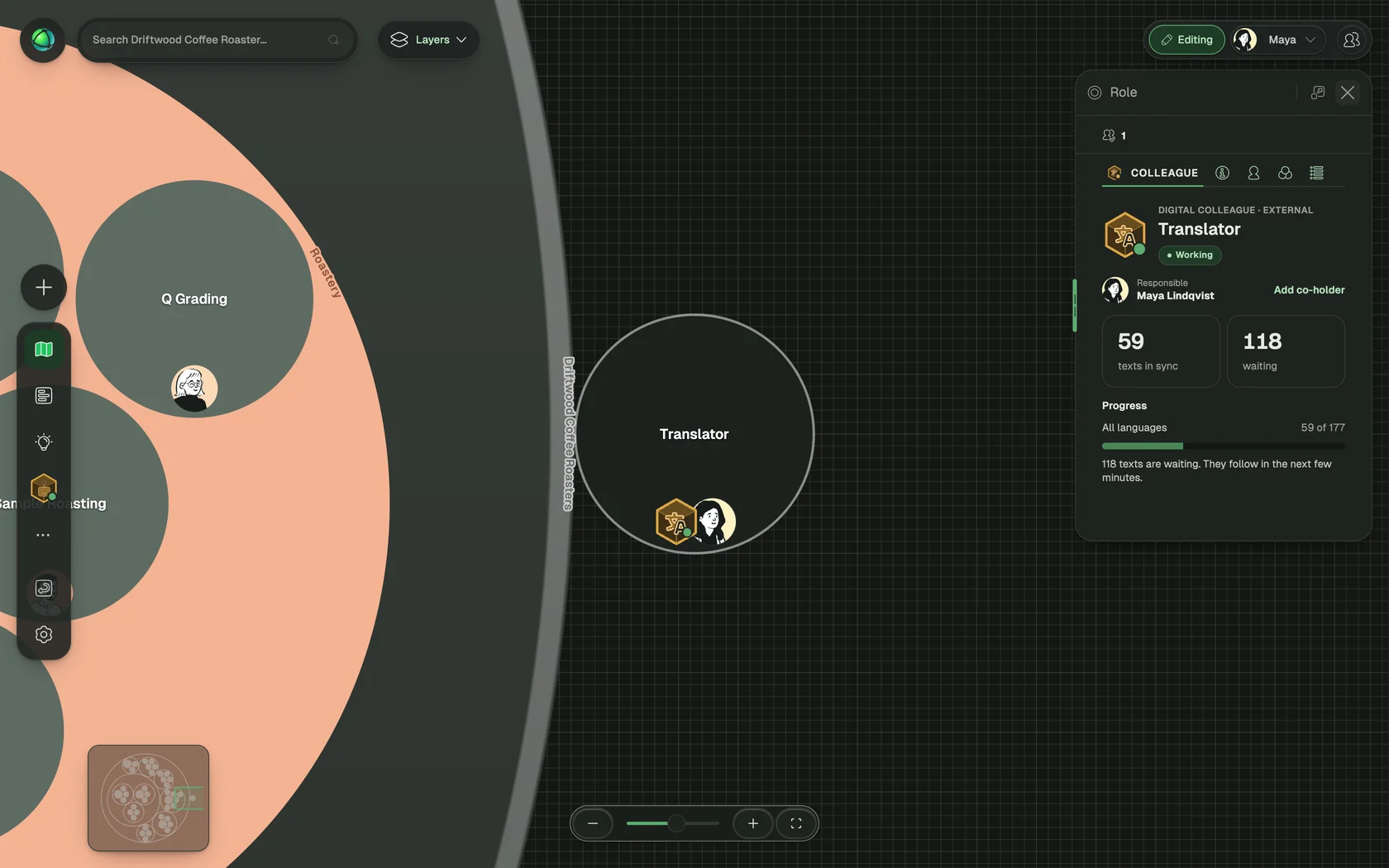
Four rules every digital colleague follows
We built digital colleagues around four rules. They are the same rules a good organization applies to people.
1. A clear role. Every digital colleague has one job, written down in its role. The Translator, for example, keeps your roles and groups readable in every language your organization works in. What they say stays up to you.
2. Boundaries. A digital colleague only does what its role covers. Decisions that shape your organization remain under the control of people. When someone’s edit changes what a text means, that person decides whether the translations follow.
3. A person who is responsible. Every digital colleague has a responsible person, who holds the role together with the colleague. The Owner who hires it becomes that person and can add others at any time. Responsibility for the work stays with people.
4. Governance. Digital colleagues live inside your structure, not beside it. Their role is visible to everyone on the map. You can see each colleague’s status wherever it appears in Peerdom, so everyone knows whether it is working or waiting for a person to decide. You can let a colleague go at any time, and its role stays on your map, so the history of what it did is not lost.
Why structure creates trust
People trust a colleague when they know what it does, what it decides and who answers for it. Agents are no different.
This is also why we put digital colleagues on the map. A map of your organization is a shared picture of who does what. When agents appear on it, in their own roles, next to the people, everyone sees the whole organization, not just the human half of it. We wrote more about this in AI agents are joining your org chart: here’s what that looks like and governing the hybrid workforce.
The first colleague: the Translator
The Translator is available today. Once hired, it:
- translates role and group names, and the text fields on roles, groups and people, into each content language you have set up
- picks up every change on its own, usually within 10 minutes
- shows its progress on its own tab: how many texts are in sync and how many are waiting
- starts by proposing your languages if your organization is not multilingual yet, so an Owner confirms them before anything is translated
Organizations that already used automatic translation in Peerdom keep it: their Translator is already hired and included in their contract.
Each digital colleague costs CHF 2 per paid seat per month with annual billing, or CHF 2.40 with monthly billing, on top of your Peerdom+ subscription.
What comes next
The Translator is the first of several. Next is the Librarian, which answers questions about any role or group from your map and the documents you attach to it. After that comes the Map Upkeeper, which reads emails asking for changes to your map, prepares each change, and waits for the responsible person to accept or reject it. It is the clearest example of our principle: the colleague does the work, a person makes the decision.
Common questions
What is a digital colleague in Peerdom? A digital colleague is an AI agent you hire like an app. It holds its own role on your organization’s map, has a person who is responsible for it, and works within the boundaries of that role.
How much does a digital colleague cost? Each digital colleague costs CHF 2 per paid seat per month with annual billing, or CHF 2.40 with monthly billing, on top of your Peerdom+ subscription.
Who is responsible for a digital colleague? A person who holds the role together with the colleague. The Owner who hires it becomes that person and can add others at any time.
Can a digital colleague change my organization on its own? No. A digital colleague only does the work its role describes. Changes that shape your organization are decided by people.
Where does a digital colleague run? On a Swiss-hosted AI model by default.
Can I stop a digital colleague? Yes. You can let a colleague go at any time in Billing. One you hired keeps working until the end of your billing period; one included in your existing contract stops right away and can be brought back at no charge. Either way, its role stays on your map.