AI Agents Are Joining Your Org Chart. Here's What That Actually Looks Like.
Nathan Evans
AI agents already do real, ongoing work in companies: flagging defects, watching for regulatory changes, keeping records straight. The hard part is no longer building them. It is knowing what they own.
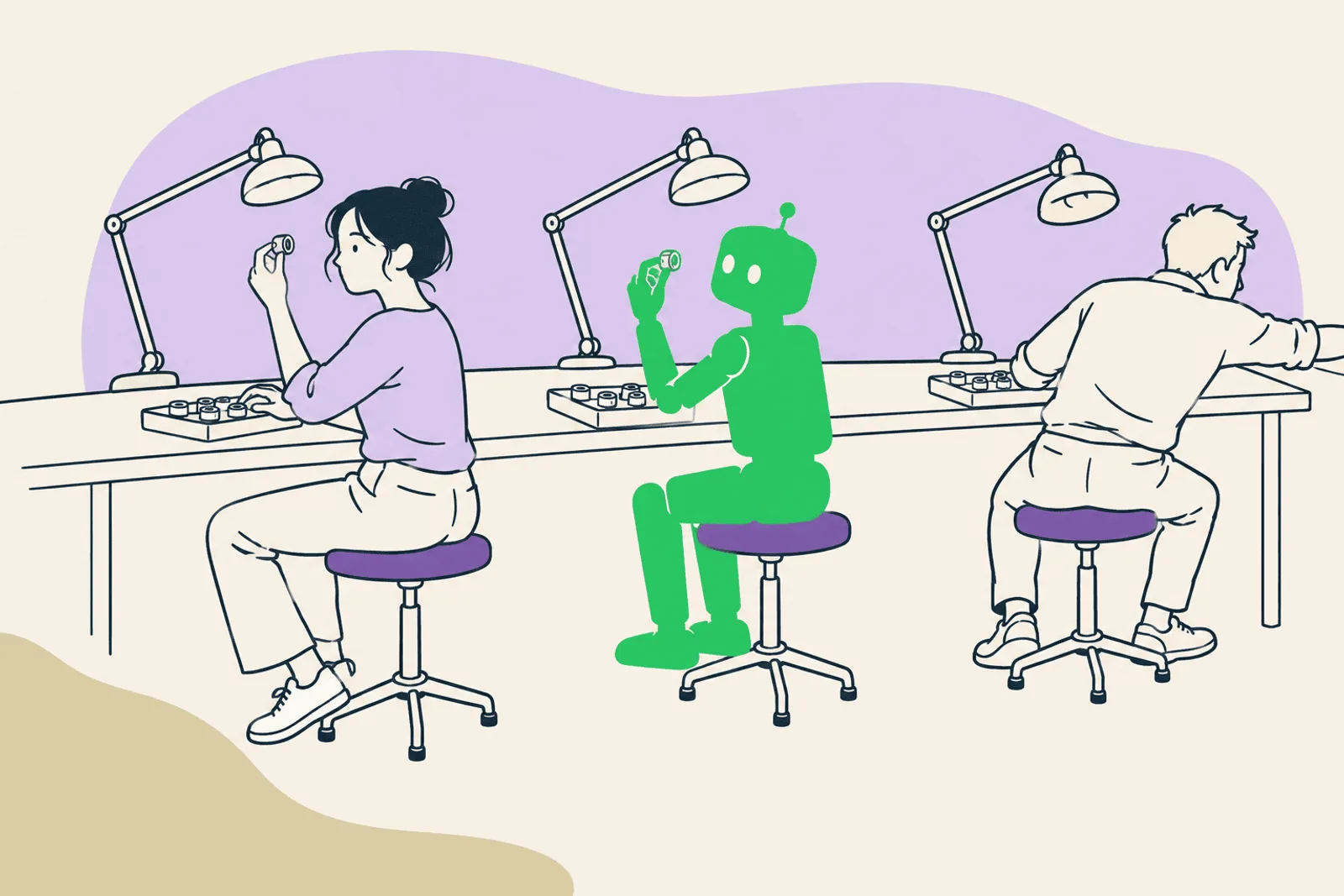
An AI agent is not a chatbot you open when you have a question. It is a piece of software that holds a job and does it on its own: a model that inspects every part coming off a line and flags the bad ones, a tool that watches for changes in regulation and updates a file, a service that keeps a set of records consistent without being asked.
Plenty of companies already run work like this. What most of them cannot do is point to it. The agent is not an employee, so it is not in the HR system. It is not a person, so it is not on the org chart. It sits in the gap between the two, doing real work that nobody can quite see. And when something it owns goes wrong, the first question anyone asks, “who is responsible for this?”, has no clear answer.
The fix is simpler than it sounds. Put the agent on the map, as the holder of a role, next to the people, and mark plainly that it is an agent.
A role is a role, whoever holds it
On a role-based map, work is described as roles. Each role is a purpose and a set of responsibilities, held by someone. Nothing about that requires the someone to be a human. An agent can hold a role the same way a person does. The role still states what it is for and what it is accountable for. What changes is only who stands behind it.
That one idea is what lets a company put people and agents on the same map without any awkwardness. You are not inventing a separate chart for the machines. You are letting them hold roles, and saying which holders are machines.
What it looks like in a fast-growing tech company
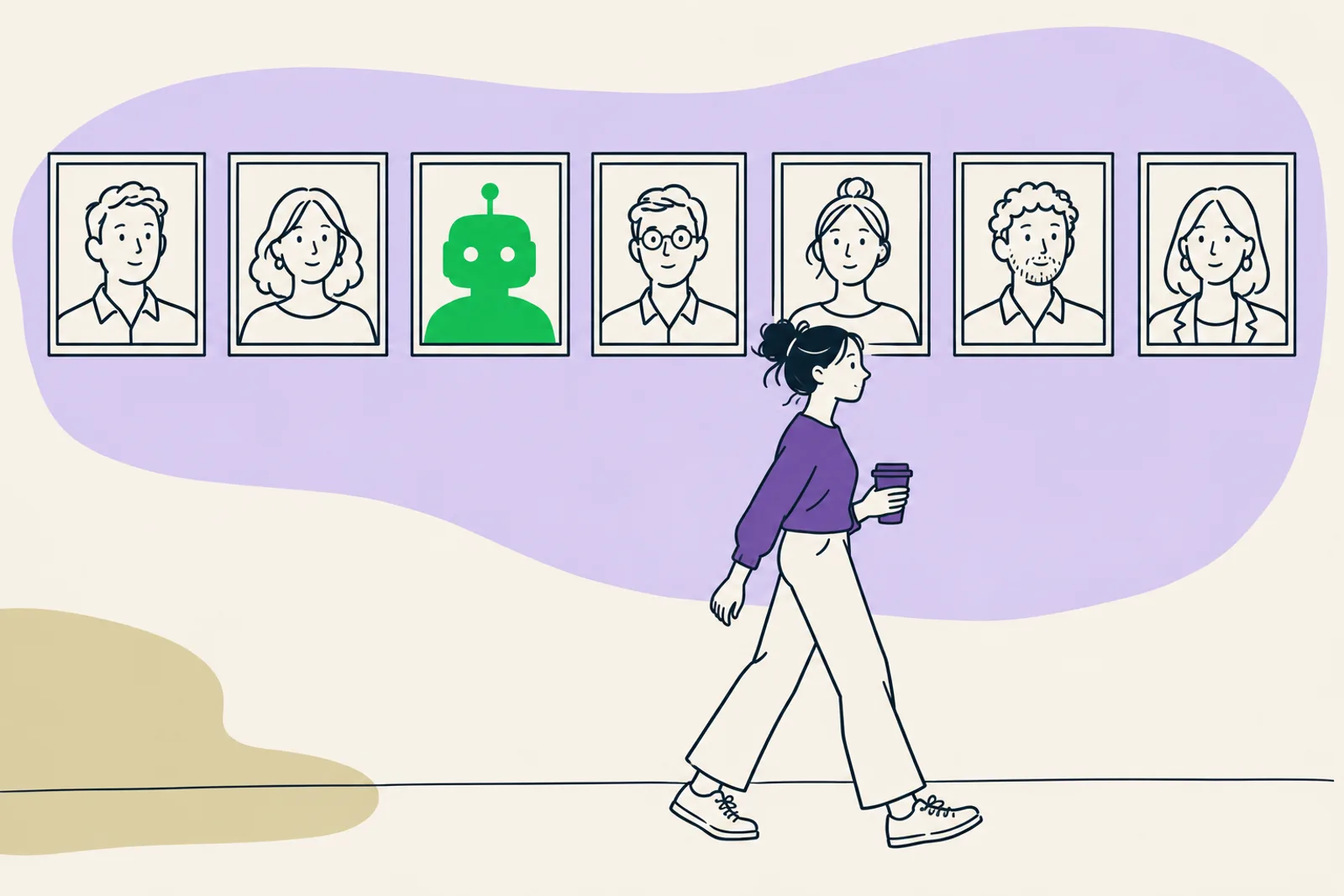
Collimate builds machine-vision systems that inspect parts on factory lines. One of its core jobs is the defect model, the thing that decides whether a part passes or fails. At Collimate that role, “Defect Models”, is held by an agent named Argus, working inside the Machine Learning pod alongside the human engineers who train and maintain it.
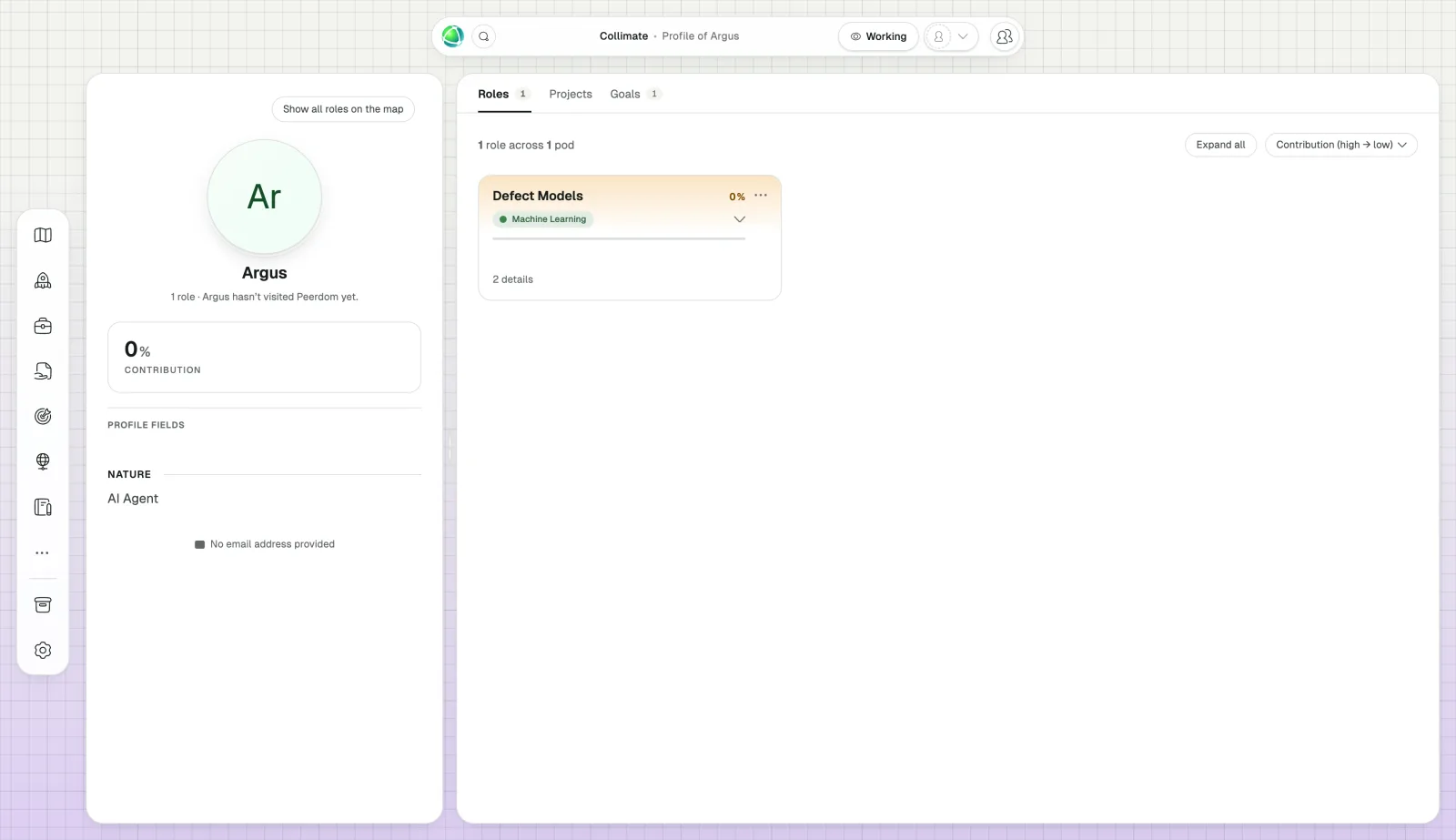
Argus is marked as an AI Agent, not a person. It sits at zero percent employment, because it is not on anyone’s payroll, and it still holds a real role with real responsibilities, right there on the map next to the people. Open the Defect Models role and you see every holder together: the human engineers and the agent, sharing one clearly described accountability.
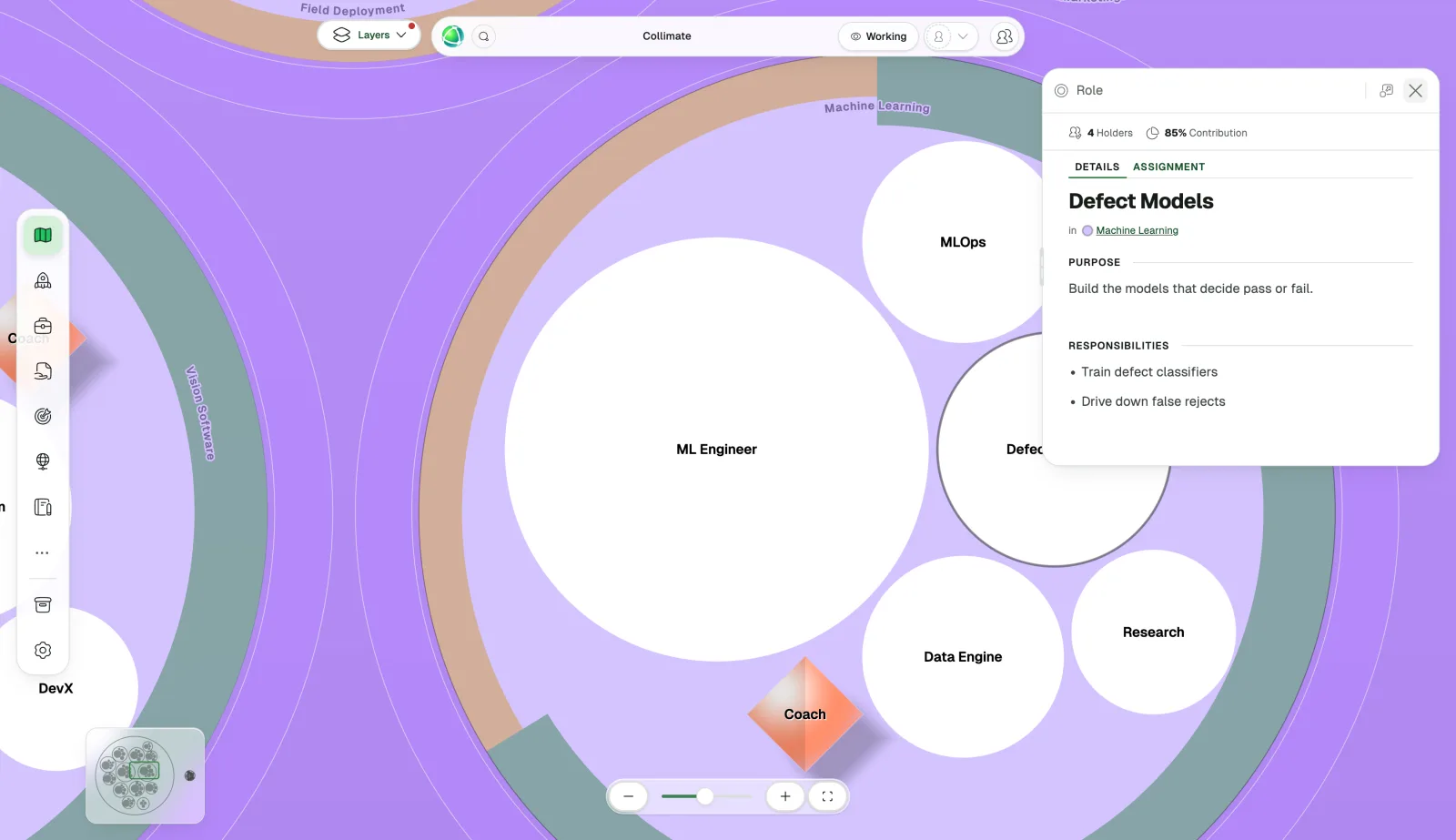
Collimate runs a few of these. A data-pipeline agent that feeds the training set, a monitoring agent that watches models in production, a reconstruction service. Each one holds a narrow, well-scoped role, and each one is visible on the map as exactly what it is.
What it looks like in a traditional manufacturer
Agents are not only a tech-company thing. Roncieux, a Swiss workshop making precision parts for medical devices, uses them for the exacting, repetitive work that suits a machine. An agent called Régula holds “regulatory monitoring”, watching for changes in the rules the company has to follow and flagging them to the people who act on them. Another keeps document control in order. These are not experiments. They are narrow tasks a piece of software does reliably, now each with an owner and a place on the map.
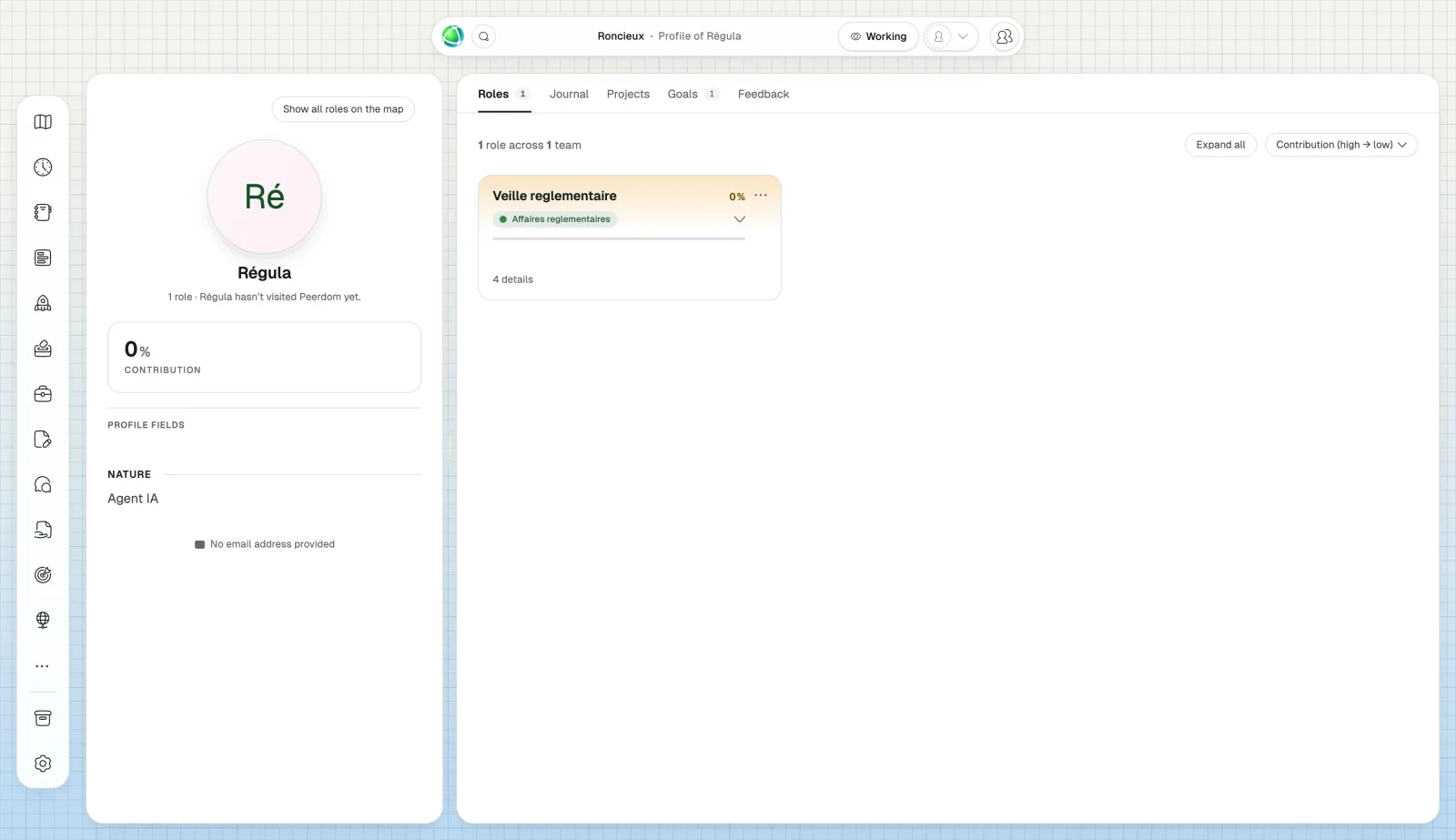
The contrast with Collimate is worth noticing. At Collimate the agent shares a role with people. At Roncieux the agent holds its narrow role on its own. Both are fine. The map does not care, so long as it is clear which holders are people and which are not.
Why marking them matters
Putting agents on the map is not about tidiness. It is that “an AI handles this now” is only safe when you can see it. When an agent is a visible role-holder, you can answer the questions that actually matter. What exactly does it own? Who supervises it? Where does a human take over when it is unsure or wrong? An agent buried in a pipeline answers none of these. An agent on the map, marked as an agent, answers all of them.
The marking itself is a small thing: a field on every holder that records what they are. Human. AI Agent. Script. Robot. There is an animal option too, for the office dog. It means you can look at the map and ask “show me everything an AI owns”, and get an honest answer instead of a shrug.
What to do if agents are creeping into your work
- Treat each agent as a role-holder, not a hidden tool. Give it a role with a clear purpose and written responsibilities.
- Mark what is an agent, so nobody has to guess whether a job is done by a person or a machine.
- Keep a human accountable for each agent. The agent holds the role; a person owns the outcome.
- Put them where everyone can see them, beside the people, so the picture of who does what stays honest as more of the work becomes automated.
Agents will hold more of the work over time, not less. The companies that stay in control of that are the ones that can watch it happen, role by role, instead of finding out the day something an invisible model owned goes wrong.
You can explore both maps: the tech company at peerdom.org/collimate and the manufacturer at peerdom.org/roncieux. Click any holder to see whether it is a person or an agent, and what it is accountable for.
Common questions
What is an AI agent, in plain terms? Software that holds a job and does it on its own, instead of waiting for you to ask. A model that flags defects, a tool that watches for regulatory changes, a service that keeps records consistent. It does ongoing work, which is why it belongs on the org chart.
Why put an agent on the org chart at all? Because it does real work that someone needs to account for. If the agent is invisible, nobody can say what it owns, who supervises it, or what happens when it is wrong. Putting it on the map, marked as an agent, makes all of that answerable.
Doesn’t calling agents “holders” overstate what they are? No, as long as you mark them. An agent holds a role the way a person does: with a purpose and responsibilities. Marking it clearly as an agent, and keeping a human accountable for the outcome, keeps the picture honest.
How do you tell people and agents apart on the map? With a simple field on each holder that records what they are: human, AI agent, script, and so on. You can then filter the map to see everything an AI owns, which is the exact view you want when deciding what to trust it with.
What is a living org chart? It is a map of your organisation that shows roles and responsibilities, not just names and titles, and that teams keep up to date themselves. Because a role does not care whether a human or an agent holds it, the same map can show a hybrid workforce honestly, with people and agents side by side.
Collimate and Roncieux are illustrative examples, not real Peerdom customers. They stand in for a fast-growing tech company and a traditional manufacturer, so the pattern is easy to follow.
Keep reading
insights
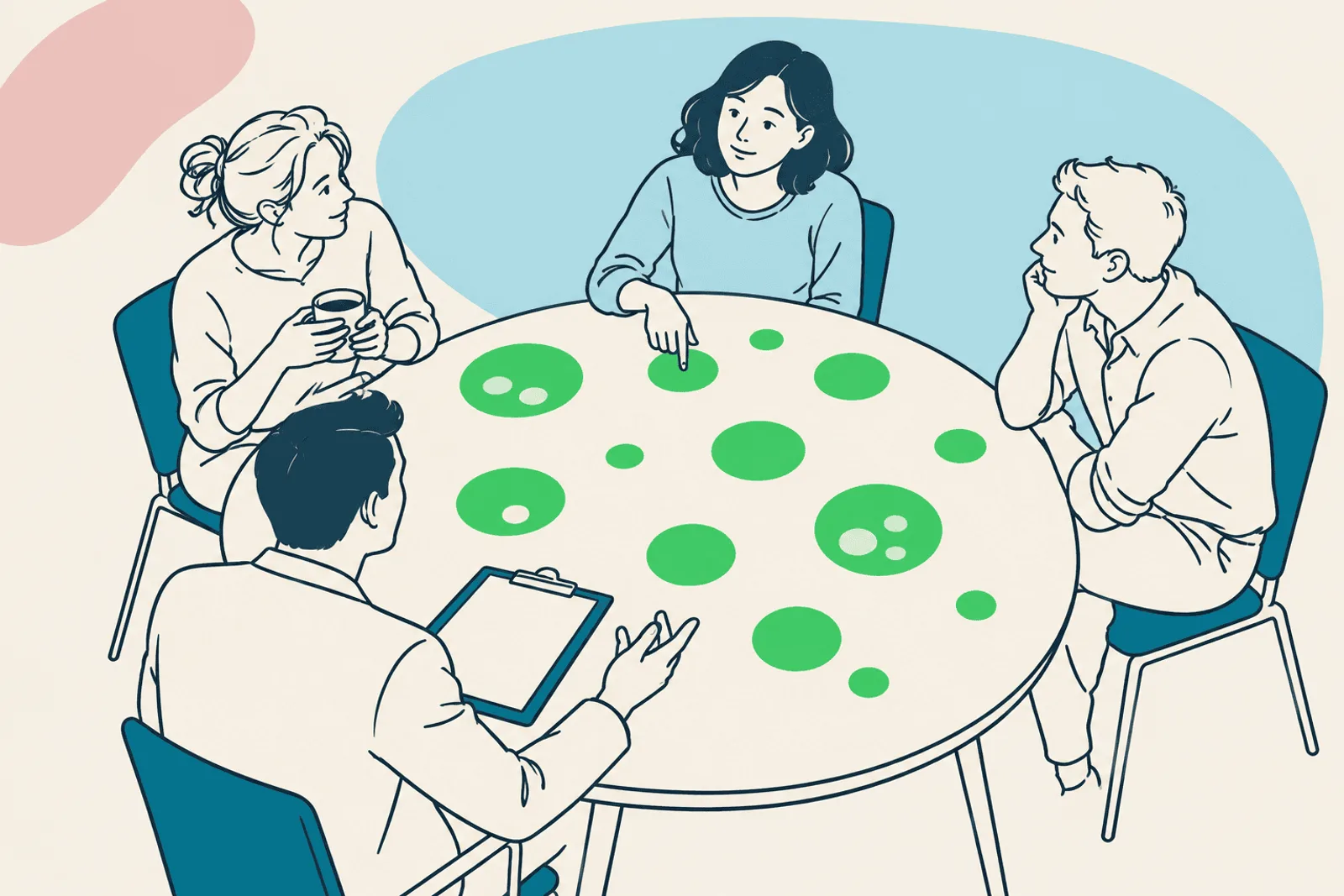
Most of the stress around an audit comes from scrambling to prove who owns what. When every role and its responsibilities are written down and kept current, the answer is already sitting there.
insights
Self-management isn't always sunshine. Explore the hidden pitfalls, power dynamics, and blind spots, and how Peerdom helps organizations address them transparently.
insights
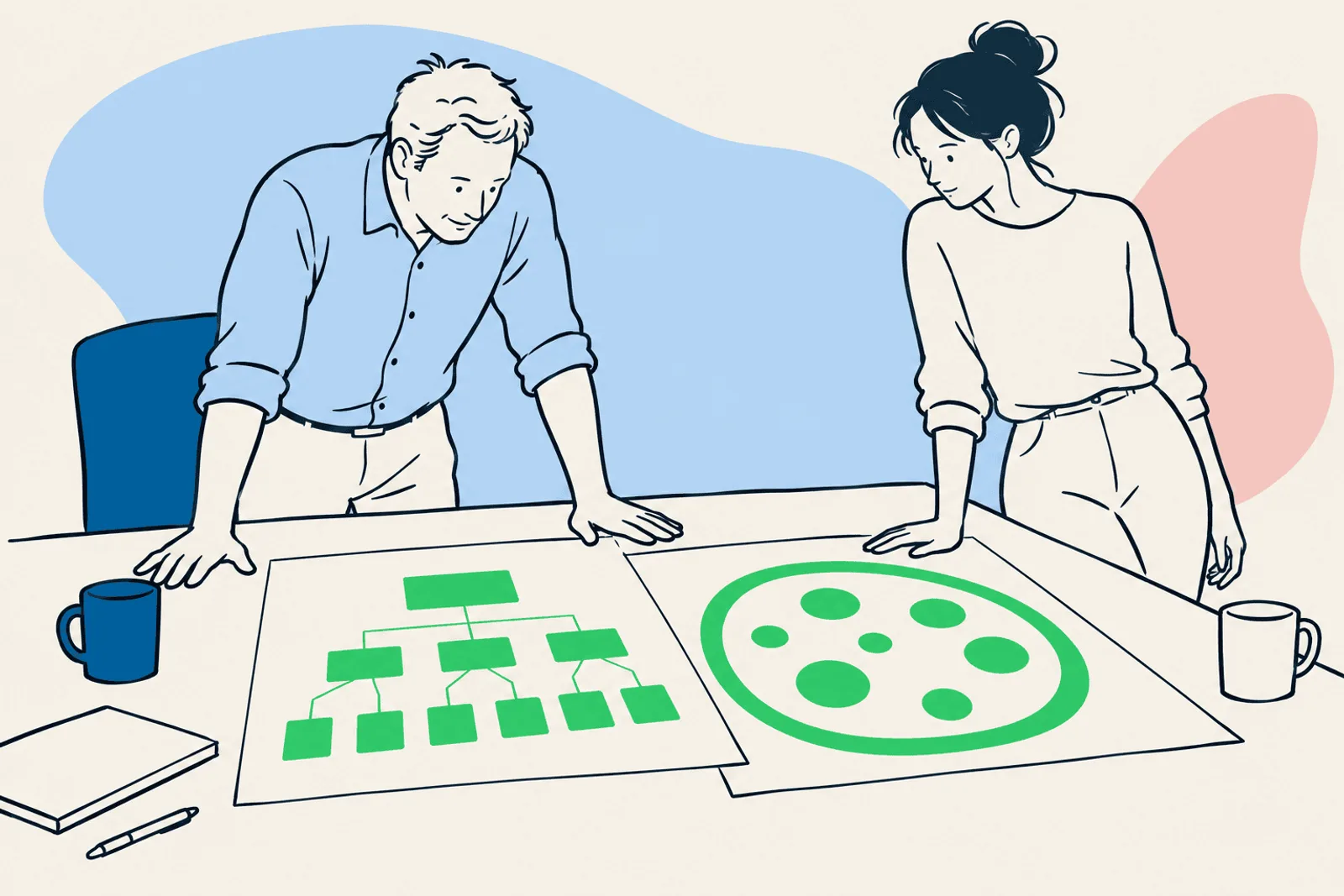
An acquisition brings two organizations together, and usually two very different ways of working. Force one onto the other and you lose people. Leave them apart and you never integrate. There is a calmer middle path.