Building a Team Before It Exists
Nathan Evans
The Swiss Army Logistics Center Grolley (CLA-G) used its org map to simulate jobs before hiring for them, within a transformation of 700 people
When Alexandre Robatel inherited his team, the majority of it was retiring. He needed to rebuild almost the entire group, but had no job descriptions that reflected what people actually did, only titles that had drifted from the reality of their daily work.
So he did something nobody had asked him to do: he invented the people he hadn’t hired yet.
His center uses Peerdom to map every role and responsibility across the organization. Alexandre created a handful of fictional placeholder employees on its map: Fictif 1, Fictif 2, Fictif 3. One by one, he placed them into real roles on real teams, the way he imagined a future hire might fit.
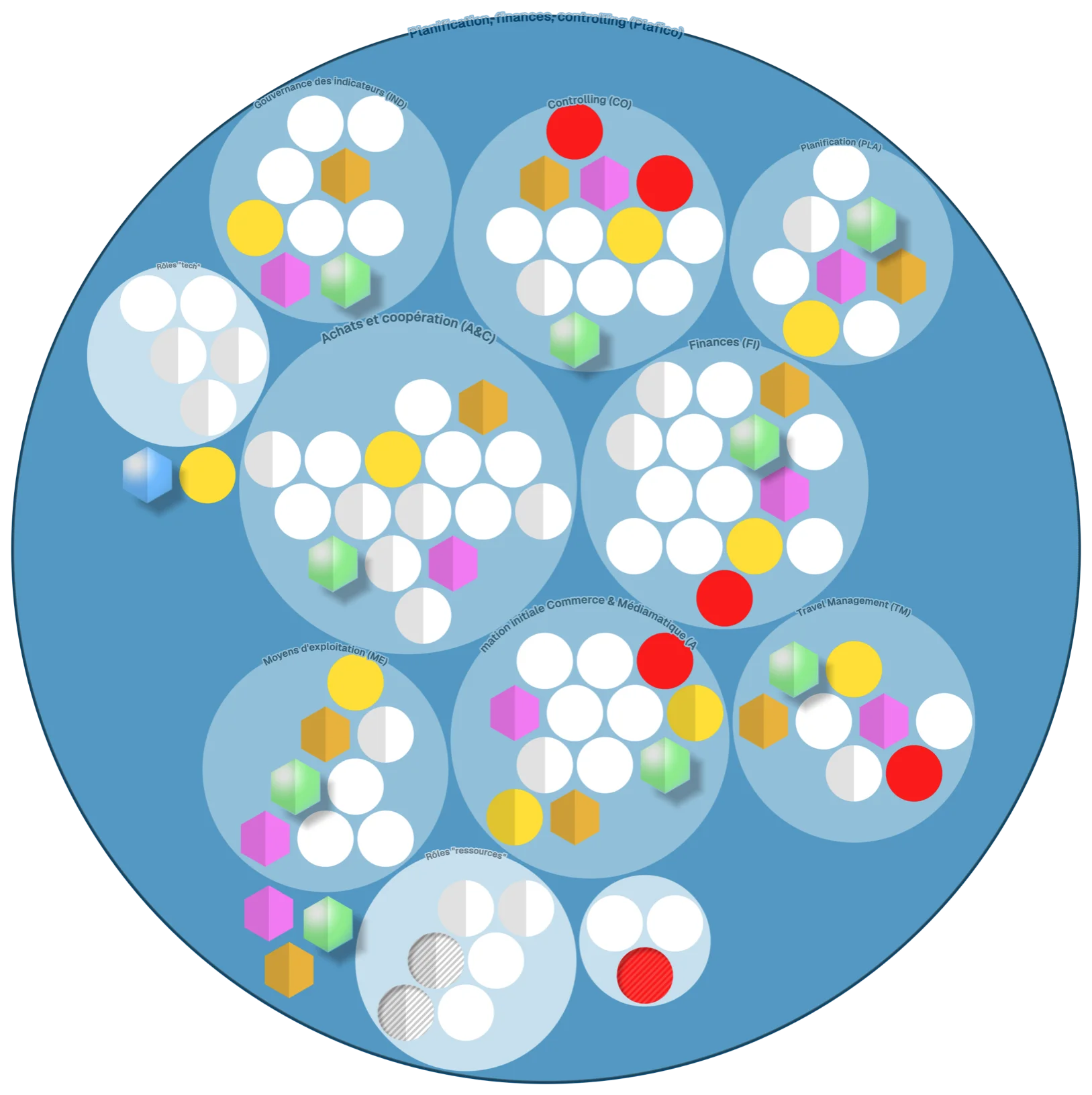
Working with these placeholders, he could pull the job description of an employee who didn’t exist yet. He could see whether a position added up to 100%. Sometimes it went over, and he rebalanced the job descriptions. He could also check, role by role, that the work was coherent and varied enough to be interesting. All of this happened before a single interview took place: Alexandre could see exactly what he was going to ask a real human being to do, and adjust it in advance.
When it came time to write the job postings, he didn’t start from a blank page. He reused what the map already documented. Instead of writing “I want an accountant” and searching for one, he could say: an accountant handles a share of receivables and a share of payables, but also needs English because they will work with the aircraft, and also this, and also that.
Our new hires were recruited based on an analysis done in Peerdom, without them knowing it. They’re competent, they keep growing, they want to go further in the system, and they’re happy. So are we.
 Alexandre RobatelHead of Planning, Finance and Controlling, and Deputy Chief of StaffSwiss Army Logistics Center Grolley (CLA-G)
“People were interested because they said: ‘I’m an accountant, I know how to do that. But the rest of what you’re offering around it, that speaks to me,’” Alexandre says. They didn’t feel like they were applying for a job title, but for a rich set of responsibilities they could already picture themselves living in.
Everyone who was hired during this phase is still there. “They were recruited based on an analysis done in Peerdom, without them knowing it,” Alexandre says. “They’re competent, they keep growing, they want to go further in the system, and they’re happy. So are we.” He’s direct about what he thinks made the difference: not a better interview process, but a clearer picture of the actual job before anyone applied for it.
From silos to a living map
That recruitment story is a small piece of something much larger. To understand why that experiment was even possible, it helps to go back five years. At that time, the Swiss Army Logistics Center Grolley (CLA-G), responsible for supplying troops with everything from equipment and ammunition to medication and food, and for maintaining systems and infrastructure, was organized into silos. Each department optimized its own work, with little reason to talk to the others.
The center’s leadership wanted something different: an organization built around the client’s experience, not the internal process chart. That meant restructuring around regions instead of functions, each one covering the full chain of services for its own customers.
Around the same time, Alexandre took on a new role leading a team of ten, with a mandate that was unusually open for a military institution. When he asked his superior how much freedom he had to organize his own team, the answer was simple: “As long as you can, do it. Do what you feel like doing.”
He used it to build a flat, role-based structure inspired by holacracy: clear roles, clear areas of authority, clear accountabilities, co-designed with his own team from day one. A colleague elsewhere in the organization was experimenting with a similar, more sociocratic model. “In the end, the cellular representation of the organization was the same,” he says.
What worked for Alexandre grew from 10 to 40 people, then caught the attention of the center’s head, who had been trying to evolve the structure all along. He recognized the model he needed: “agile, self-empowering, it promotes intrapreneurship.” Within months, it reached nearly 700 people across the entire center.
Before settling on Peerdom, Alexandre’s team ran the same test structure in a competing tool for several months. The difference, he says, wasn’t really about software features. “Peerdom was much more responsive, not in the software sense of the word, but in the human sense. We had a question, we got an answer. We had a proposal, someone listened and said, ‘we haven’t planned for that, but why not,’ or ‘it’s in the pipeline, it’s coming.’” The other tool went quiet. Peerdom didn’t.
Making the implicit explicit
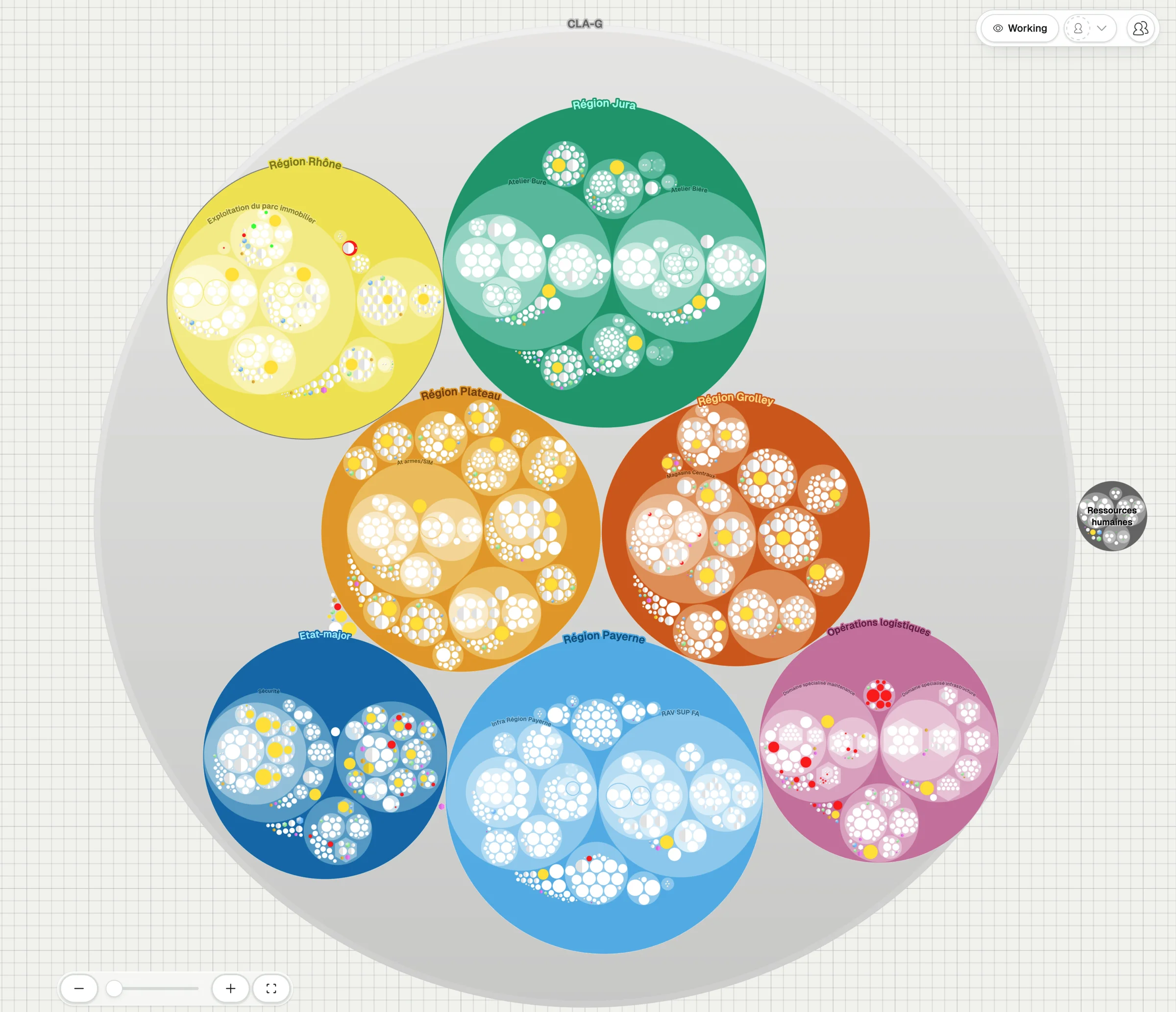
Grolley’s map is now one of the richest and most densely interconnected on the entire platform: thousands of roles, teams, and relationships, maintained by a small group of trained “scribes” and governed by a written style guide that specifies everything down to which shade of red means what.
It isn’t tidy everywhere. Alexandre is candid about that. “It’s normal, because there are humans behind it, and they follow the rules or they don’t. They do it because it’s intuitive, so they quickly put something in, then tell themselves, ‘I’ll clean it up later.’ And that, we want. We don’t want to stop people from going in.” To keep things as uniform as possible, the center runs audits: checking whether connections still make sense, whether purposes are written the same way, whether a “mirror role” was copied without actually being one.
There is also a simple rule for anyone who spots a role that no longer matches reality: mark it in red and leave a comment. People do it, then come and say so: “it’s me who put it in red, because of this thing I saw.” They aren’t bosses, Alexandre points out, they’re team members. “The mindset has already started to change a little,” he says. “We’re at the beginning, but it’s very promising.” On the map, these flags show up as red dots.
What the map has replaced is something more costly than an outdated org chart: a chase for information that went through six people. When someone wanted to know who was responsible for the freight rail wagons, they would first come to Alexandre, because his team holds the contracts with the carrier. “Oh, it’s not with us. Try transport.” Off to transport: “Yes, but no, I only have the trucks.” In the end, they had asked six people before landing, by chance, on the right one. Today, people type the name of the freight partner into Peerdom’s search bar, and they have the answer.
The clarity shows up in less visible ways too. Meetings that used to run five hours, Alexandre says, now take less than one. Not because people talk less, but because everyone knows explicitly what is expected of them. Before, accountabilities were blurry enough that most of the meeting went to sharing information people already had, or didn’t need.
None of this happened without resistance, and Alexandre is unusually precise about where it came from: “basically, it was 33, 33, 33%.” The first third were the skeptics: Alexandre likes to “work by proof,” he demonstrates and people come around. The second third feared losing something: bosses for whom becoming an intrapreneur meant “I lose my boss hat.” He told them they kept their role as leader and simply shed tasks that were futile for them but important to the people working with them. The real change was posture: moving from the hierarchical boss through whom everything transits to being a leader, a facilitator, a coach. The last third said: “we already work like this, what’s the point?” To them, the answer was simple: “indeed, for you nothing changes. But your way of working becomes explicit, so that the other person, who doesn’t understand how you work, understands it too.”
An external governance consultancy that coached the center through the transition later told Alexandre they’d never seen an organization pull off a double transformation (new structure and new governance model, together) in six months. Grolley did. Alexandre sees the explanation in the culture of the house: “We decide, so we go. Not: we go around in circles. We take stock of the situation, we correct, we move forward.”
A map that behaves like a body
Before Peerdom, Alexandre had tried to draw all of this by hand, first in Miro, then in graphic design software. “It’s nice for making something fixed,” he says. “But the goal of mapping is exactly the opposite.”
“It doesn’t matter if a team is drawn in grey, pink, or blue,” he says. “What matters is that today it’s small, tomorrow it’s big, and the day after it’s small again, and there’s a new team inside it. That’s the agility of the thing.”
He keeps returning to one image: “The organization, like a human body, is alive. Cells separate, they can merge, they can split apart, and that’s what Peerdom represents.”
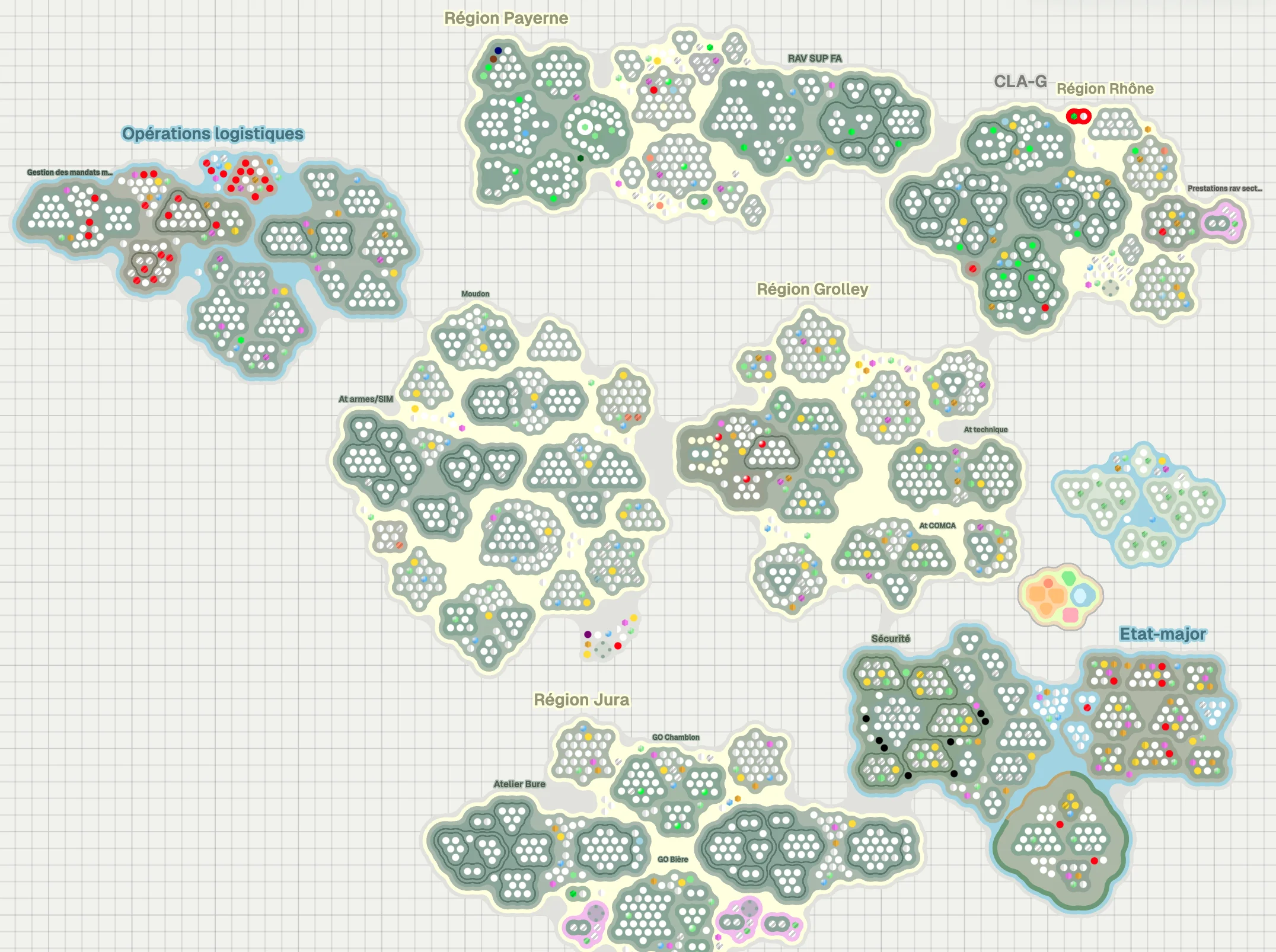
Asked to sum up what the tool actually does for his center, in one sentence he’d say to a colleague who’d never heard of it, Alexandre doesn’t reach for the word “org chart” at all.
“It’s like the human body,” he says. “It’s the simplest tool to express how an organization actually works, and it makes everything that used to be implicit, explicit. That’s what makes life easier.”
Takeaway lessons
- Simulate the role before you fill it. Placeholder profiles on the map let Alexandre test a job’s workload and scope before a single interview took place, and before a candidate ever had to live with the result.
- A richer role attracts a better fit. Candidates responded to everything the role offered “around” the core skill, not just its title.
- Make resistance specific, not generic. Alexandre could name the three distinct sources of pushback he met, and responded to each differently rather than treating skepticism as one undifferentiated problem.
- Naming how you work doesn’t change what you do, but it changes who else can understand it. Even teams that already worked this way informally benefited once it became explicit.
- A map that behaves like the organization it describes stays useful. A static diagram freezes the moment it’s drawn; a living map keeps up as roles split, merge, and change shape.
Keep reading
insights
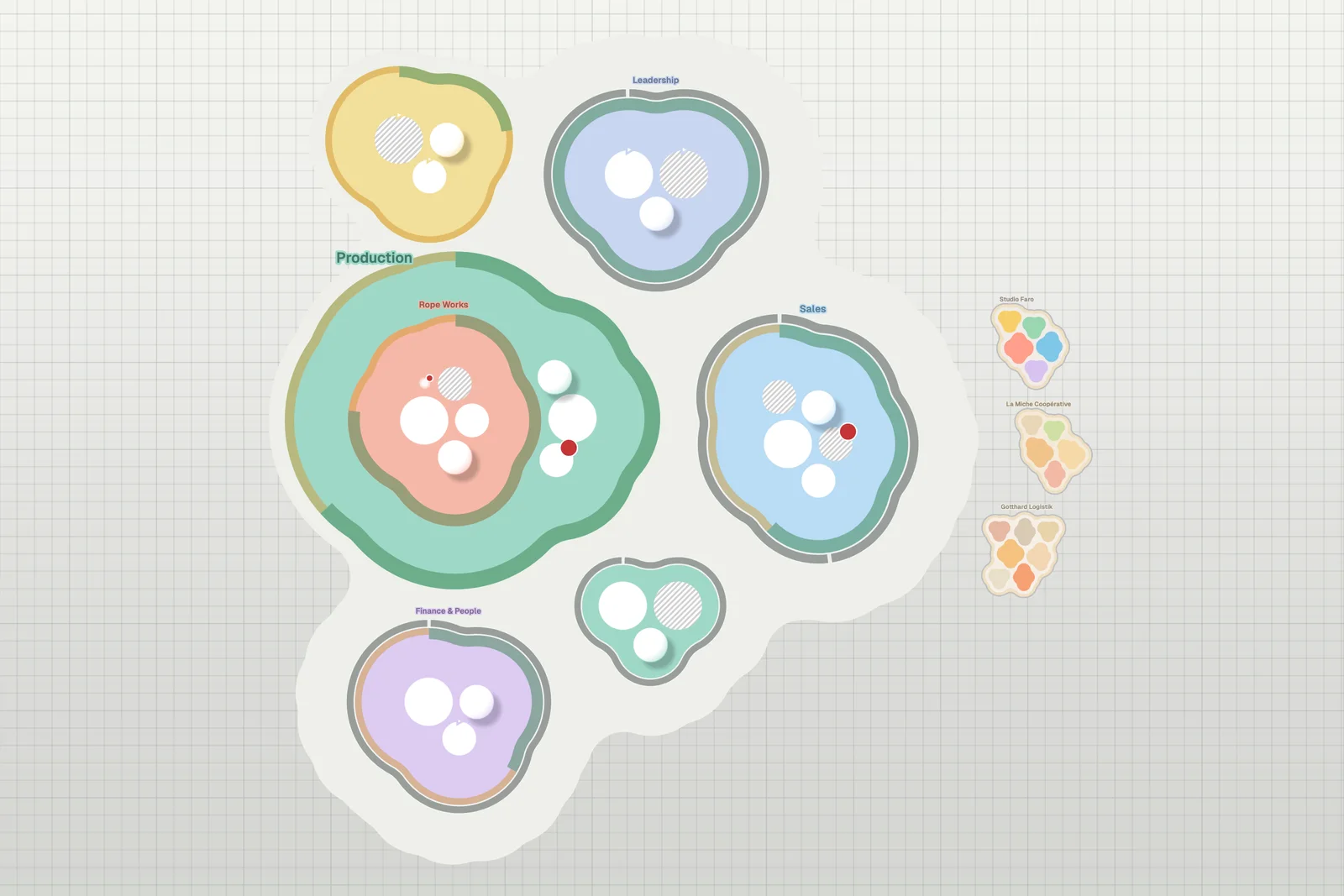
Organizations change shape all the time. The Bubble Map draws every team as a cell that grows, splits and reshapes as your structure changes. It is available today on every plan.
insights
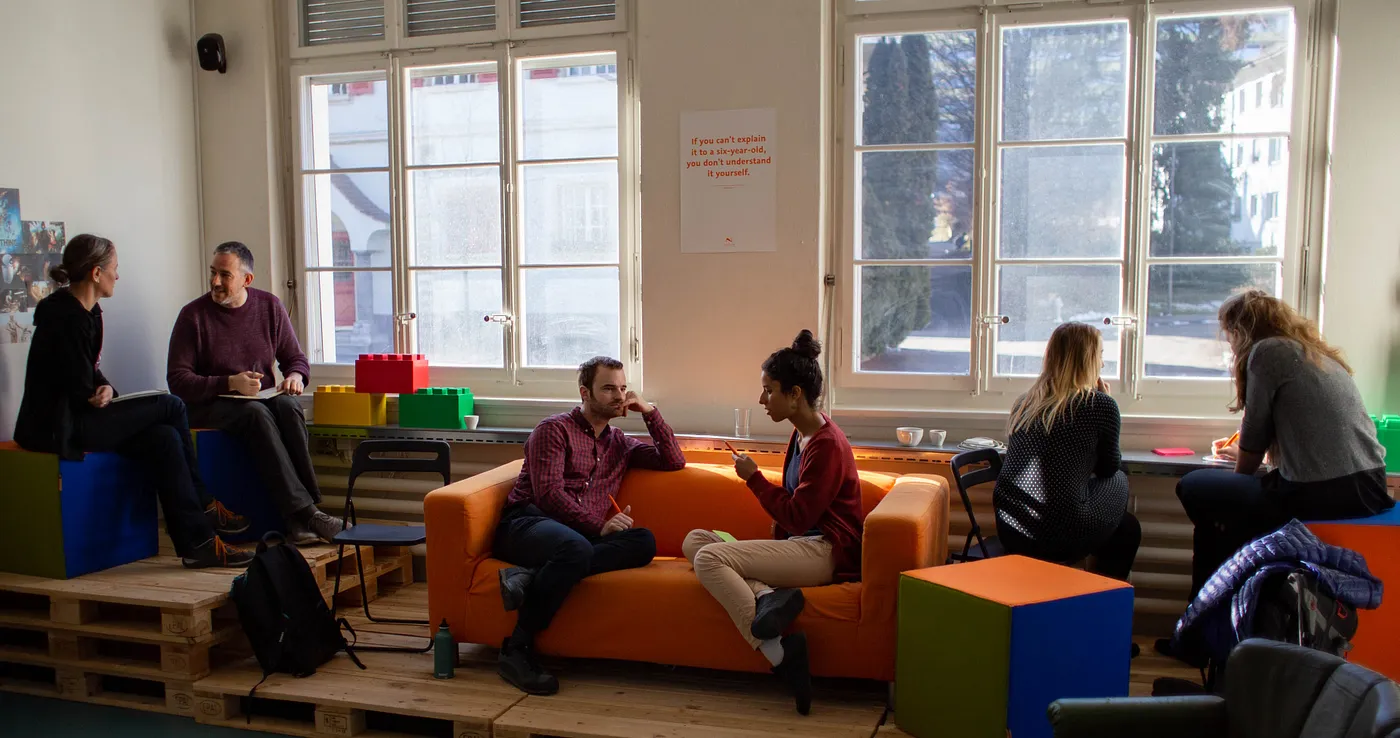
Seven challenges self-managed teams meet, from power dynamics to blind spots, and practical ways to handle each one openly with Peerdom.
insights
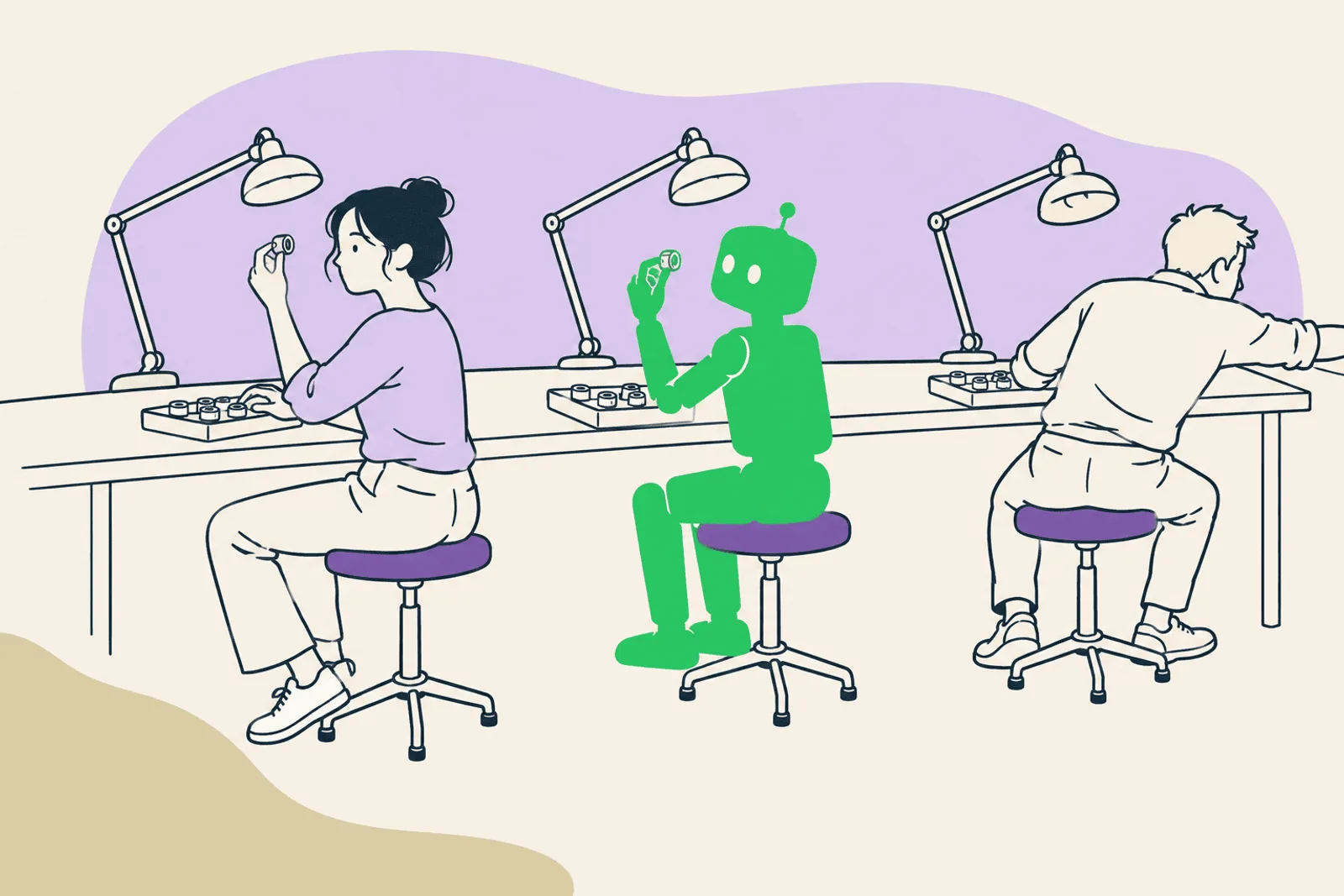
AI agents already do real, ongoing work in companies: flagging defects, watching for regulatory changes, keeping records straight. The hard part is no longer building them. It is knowing what they own.