Self-Management Software for Every Model .
Whether you practice Holacracy, Sociocracy, agile, or your own hybrid approach, Peerdom makes roles, authority, and decision rights visible and governable in real time. Any framework. Your own structure. Clarity throughout.
Get started Free forever, No credit card needed



How self-management software works
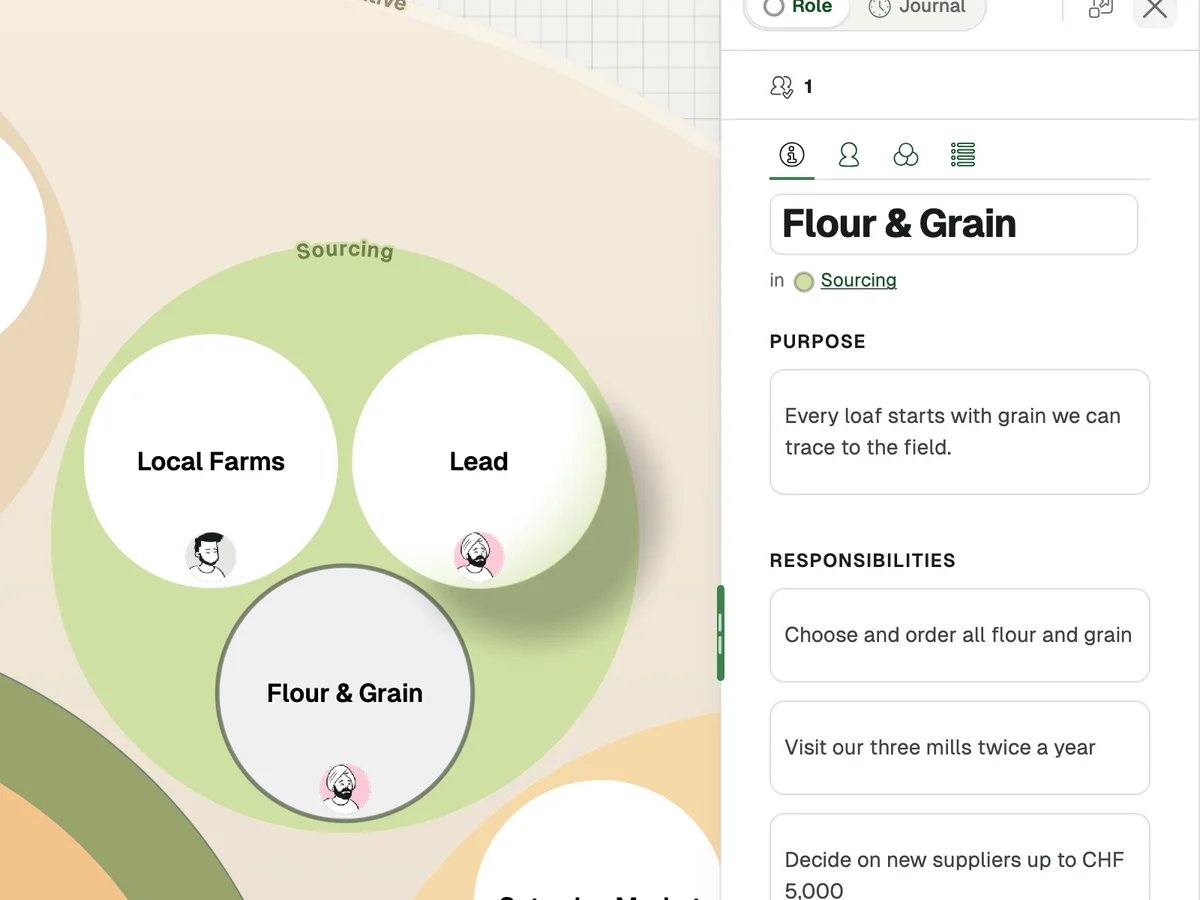
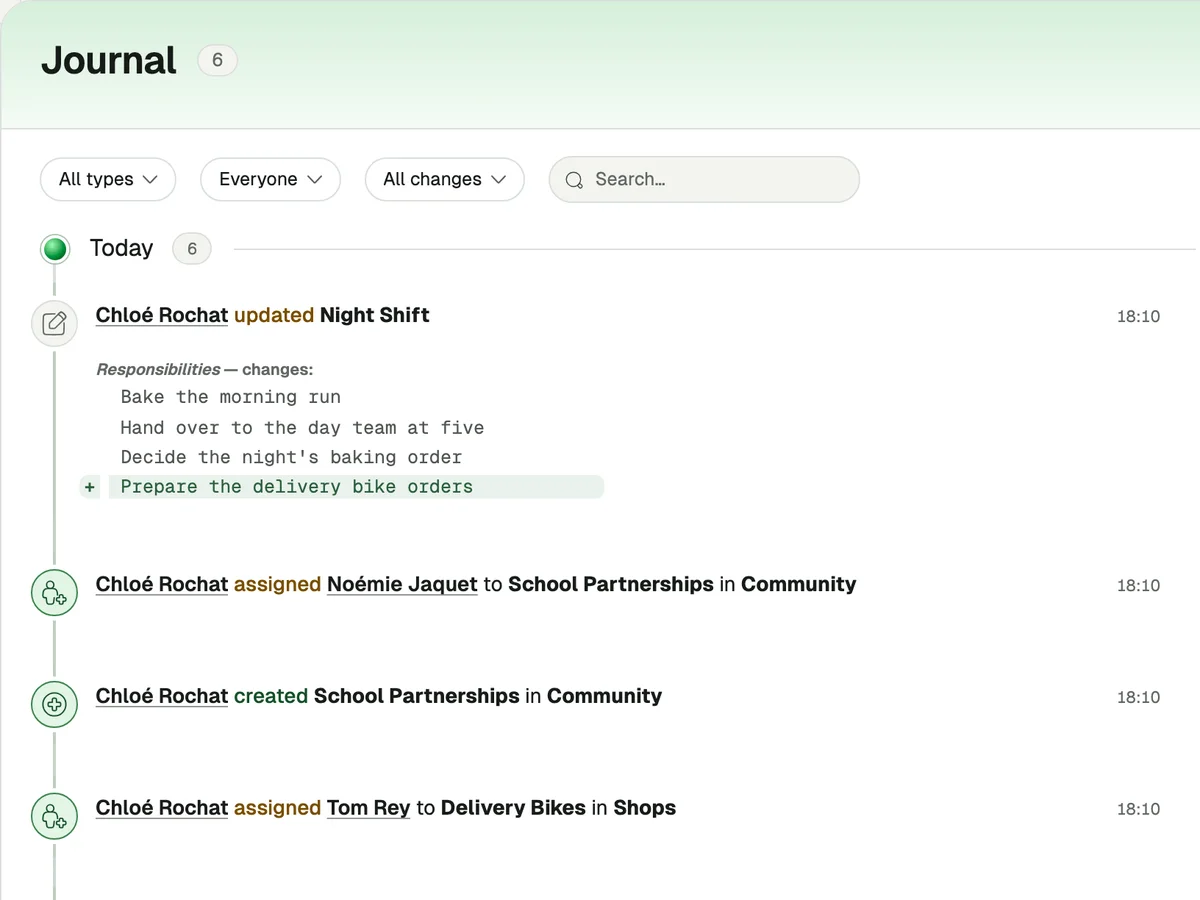
Shown with La Miche, a bakery cooperative in Lausanne. A fictional company.
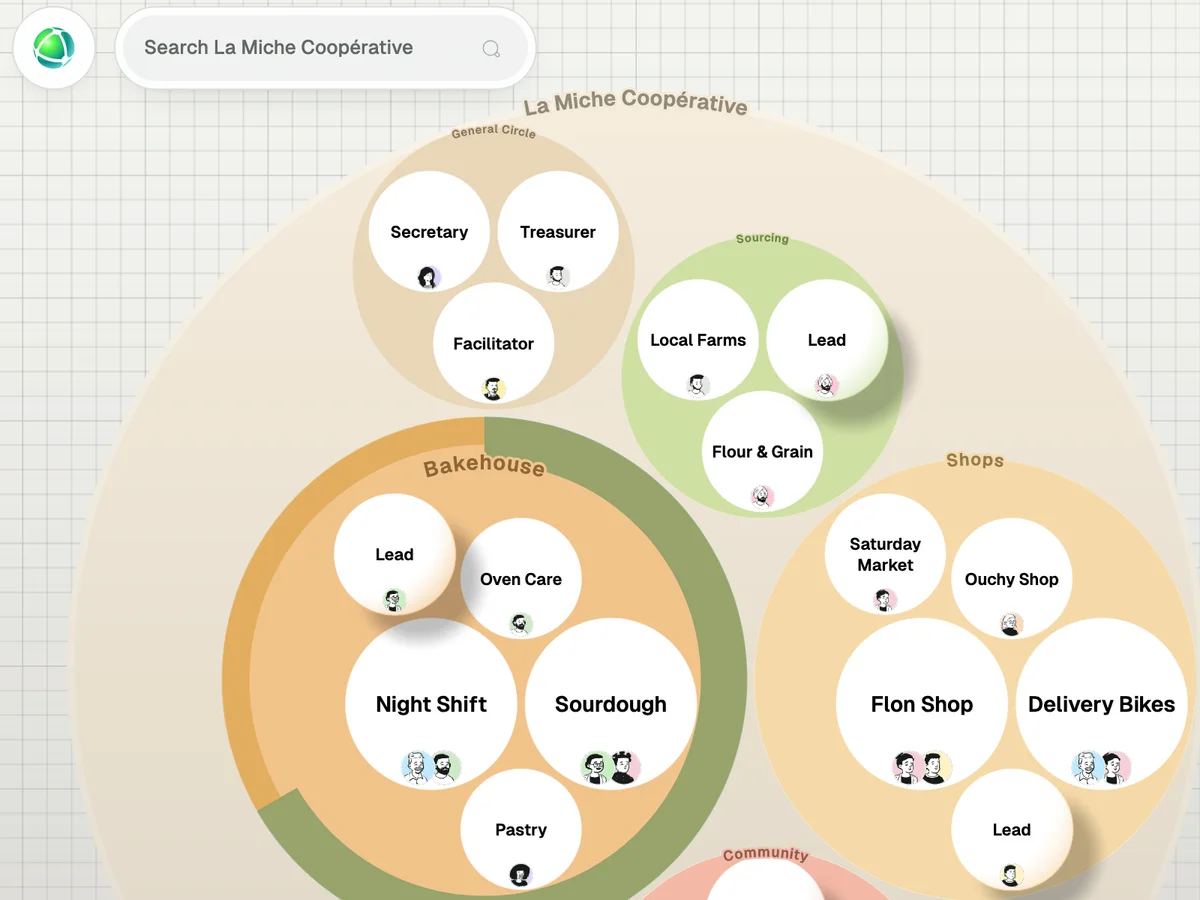
Map
Visualize your organization as it actually works (roles, circles, teams, and decision boundaries) not just who reports to whom.
Define
Make authority explicit. Define who decides what, which roles hold which accountabilities, and where boundaries sit, all searchable and transparent.
Evolve
Adapt your structure continuously. Peerdom updates in real time as roles shift, teams form, and governance evolves: no static diagrams to maintain.
Self-management frameworks supported by Peerdom
Explore our in-depth guides
Holacracy
Authority flows through roles and circles, not management hierarchy. The most codified self-management framework, with formal governance, tactical meetings, and an operating manual.
Sociocracy
Decisions by consent, not consensus. Double-linked circles ensure every voice is heard while keeping governance lightweight and scalable.
Spotify Model
Squads, tribes, chapters, and guilds. A popular framework for scaling agile product development while preserving team autonomy.
And many more
Peerdom supports Beta Codex, Buurtzorg, Semco Style, RenDanHeYi, Role-based governance, and any hybrid model your organization uses. Use any framework or operating model, and change it as you evolve.
Peerdom is a user-friendly tool that helped us make our organizational model tangible. Our 100+ Loycomates got used to it in only a few days and new employees say they are immediately oriented, in contrast to what took them years in their previous organizations!
 Christophe Barman Loyco
 We are fans. Peerdom helps us a lot, especially now that we are all working remotely and collaborating digitally… Without Peerdom it would be unthinkable to forward our organization’s development!
 Regina Meier Greenpeace
 Peerdom perfectly meets our needs: lightweight and very easy to use, it allows us to see our organization as we have never seen it before.
 Bernard DuPasquier Bread for all
 Compare self-management platforms
See how Peerdom compares to other tools


Peerdom vs GlassFrog
GlassFrog locks you into Holacracy. Peerdom supports Holacracy and your own unique operating model: read the full comparison.
Peerdom vs Talkspirit (Holaspirit)
Both support governance frameworks, but Peerdom offers deeper, more intuitive visual mapping and modular apps: read the full comparison.
Peerdom vs Organimi
Organimi charts hierarchical structures. Peerdom governs them with roles, authority, and real-time updates read the full comparison.
Peerdom vs Notion
Notion is a general knowledge management workspace. Peerdom is purpose-built for visually navigating organizational structure, responsibilities, and governance: read the full comparison.
Peerdom vs Excel
Spreadsheets can’t show authority or link roles to governance. Peerdom replaces the workaround: read the full comparison.


Peerdom vs Nestr
Nestr focuses on sociocracy tooling. Peerdom supports sociocracy and scales to any framework or hybrid: read the full comparison.


Peerdom vs Maptio
Maptio maps purpose-driven structures. Peerdom adds governance, elections, feedback, and scales to 30,000 people: read the full comparison.


Peerdom vs Rolebase
Rolebase targets small teams. Peerdom works for any framework and any size. Read the full comparison.
Frequently asked questions
What is self-management software?
Self-management software makes distributed authority visible and governable: teams define roles, decision rights, and accountabilities explicitly, so anyone can see who owns what and act with autonomy.
Peerdom is self-management software that works with any framework: holacracy, sociocracy, the Spotify model, or your own hybrid approach. It provides a real-time organizational map, governance tools, elections, feedback loops, and modular apps that adapt to how your organization actually operates.
Which self-management frameworks does Peerdom support?
Peerdom supports every major self-management framework, and you choose the methodology. This includes holacracy (roles, circles, governance meetings), sociocracy (consent-based decisions, double-linked circles), the Spotify model (squads, tribes, chapters, guilds), Beta Codex, Buurtzorg, Semco Style, RenDanHeYi, and role-based governance. Peerdom also works for organizations that blend multiple frameworks or use their own custom approach to distributed authority.
How is self-management software different from an org chart tool?
An org chart tool draws boxes and lines: typically showing reporting relationships in a hierarchy. Self-management software goes further. It maps roles as well as positions, defines authority and decision rights, supports governance processes like elections and consent-based policy changes, and evolves in real time as your organization changes.
Peerdom gives you an interactive, searchable organizational map where anyone can find who decides what, what each role is accountable for, and how teams connect across the organization.
Do I need to practice holacracy to use Peerdom?
No. Peerdom works for any organizational model: traditional hierarchies, matrix structures, holacracy, sociocracy, agile teams, flat structures, or any hybrid approach. Organizations as diverse as Bayer (corporate), Greenpeace (nonprofit), and ETH Zurich (academic) use Peerdom. The platform adapts to your structure.
How much does self-management software cost?
Peerdom is free forever for teams of up to 10 people: no credit card required. For larger organizations, Peerdom+ starts at CHF 5 per person per month and includes everyone on the map, unlimited free guest accounts, the archive, and five apps: Missions, Journal, Index, Insights and Network. Every other app is one franc per person per month. Single sign-on and directory sync come with the Directory app. See the pricing page for details.
Can self-management software scale to large organizations?
Yes. Peerdom serves organizations ranging from teams of 3 to enterprises with 30,000 people across 18 countries. The platform is designed to handle complex, multi-layered structures: including organizations that combine multiple governance models across different departments or regions. Large clients include Bayer, Lufthansa, and the Swiss Armed Forces.