The library of organizational structures and models .
Over the years we have written up the ways organizations choose to structure themselves, from Kotter’s dual operating system to Haier’s RenDanHeYi. Here they are side by side, each with a guide to how it works and what it looks like in practice.
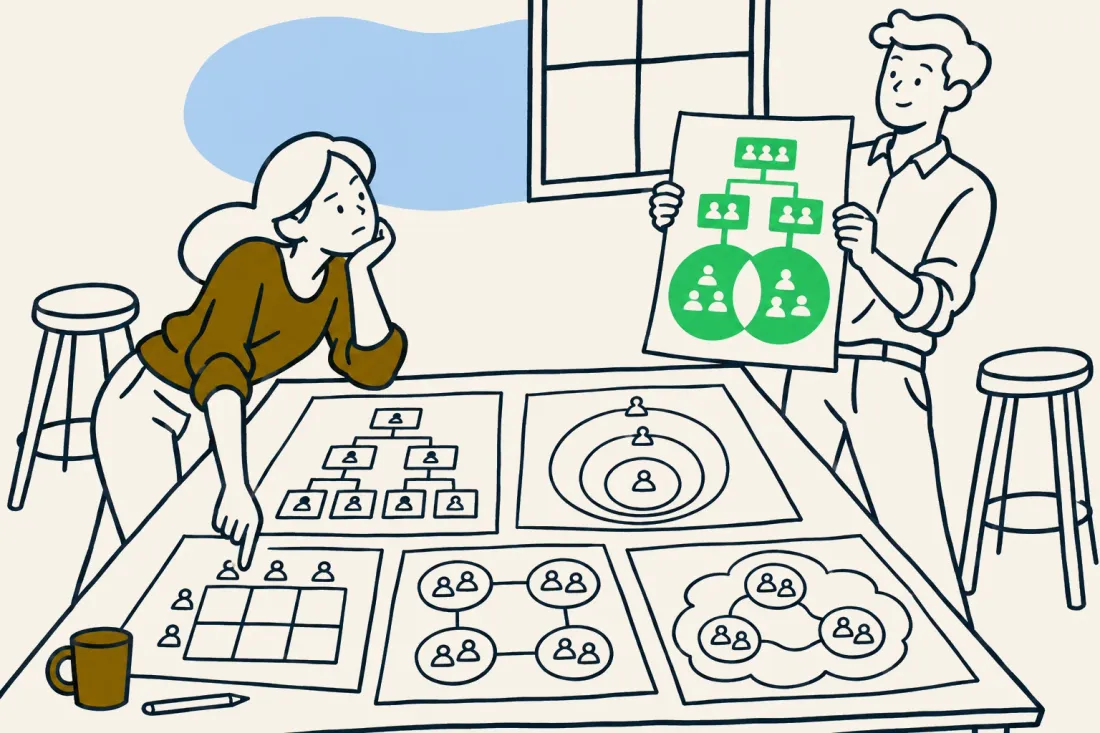
Side by side
Ordered from the models that keep the hierarchy to the ones that replace it.
| Model | Who decides | How work is organized | Fits best | Origin |
|---|---|---|---|---|
| Dual operating system | The hierarchy runs the business, a volunteer network drives change | Line organization plus projects and working groups | Established companies that need to change while they keep running | John Kotter, 2012 |
| Mission Based Teams | Teams that form around a mission, next to the formal structure | Mission teams, staffed from across the line organization | Large enterprises tackling problems that cut across departments | Roche |
| SAFe (Scaled Agile Framework) | The portfolio sets direction, release trains plan together each increment | Agile release trains of teams, alongside the line organization | Large enterprises coordinating many teams on one portfolio | Dean Leffingwell, 2011 |
| Spotify model | Autonomous squads, with chapters keeping craft standards | Squads grouped into tribes, crossed by chapters and guilds | Product and software organizations scaling agile teams | Spotify, 2012 |
| Dynamic Shared Ownership | Autonomous teams, with leaders who coach rather than approve | Small teams working in 90-day cycles | Large corporations removing layers of management | Bayer, 2024 |
| RenDanHeYi | Microenterprises, each with its own customers and results | Microenterprises linked in ecosystems | Companies that want every team close to its customer | Zhang Ruimin, Haier, 2005 |
| Viable System Model | Each unit steers itself, higher levels serve and coordinate the ones below | Nested units, each able to run itself, inside larger ones | Organizations that want autonomy at every level without losing coherence | Stafford Beer, 1972 |
| Beta Codex | Teams at the periphery, facing the market, with the center serving them | Cells in a center and periphery network (the Peach model) | Organizations moving from command and control to networks | Niels Pfläging, 2008 |
| Buurtzorg model | Self-managing teams, supported by coaches instead of managers | Neighborhood teams of up to 12 people | Service work done close to clients, such as care | Jos de Blok, 2006 |
| Semco Style | Employees, who vote on decisions and set their own hours and pay | Small self-managing units | Companies ready to build radical trust and transparency | Ricardo Semler, Semco, 1980s |
| Holacracy | Roles, through a written constitution and governance meetings | Circles of roles, each with a purpose and accountabilities | Organizations that want explicit, rule-based self-management | Brian Robertson, 2007 |
| Sociocracy and S3 | Circles, by consent: a decision passes when no one has a reasoned objection | Nested circles, linked by people who sit in both | Cooperatives, nonprofits and values-led teams | Gerard Endenburg (1970s), S3 since 2015 |
The guides
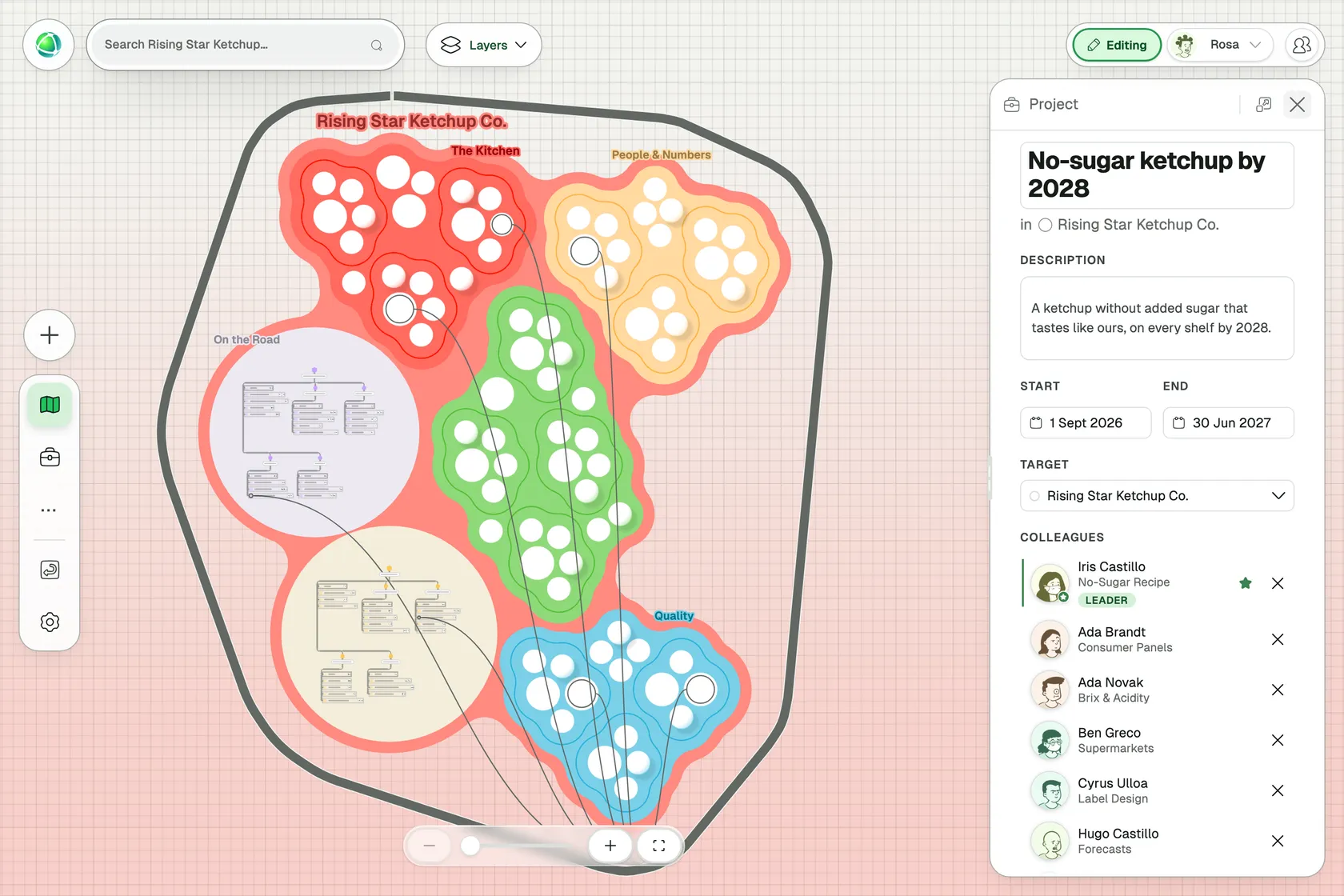
Your org chart shows who reports to whom. Your projects and working groups show how the work gets done. Peerdom now puts both on one map, so everyone can see where they belong in each.
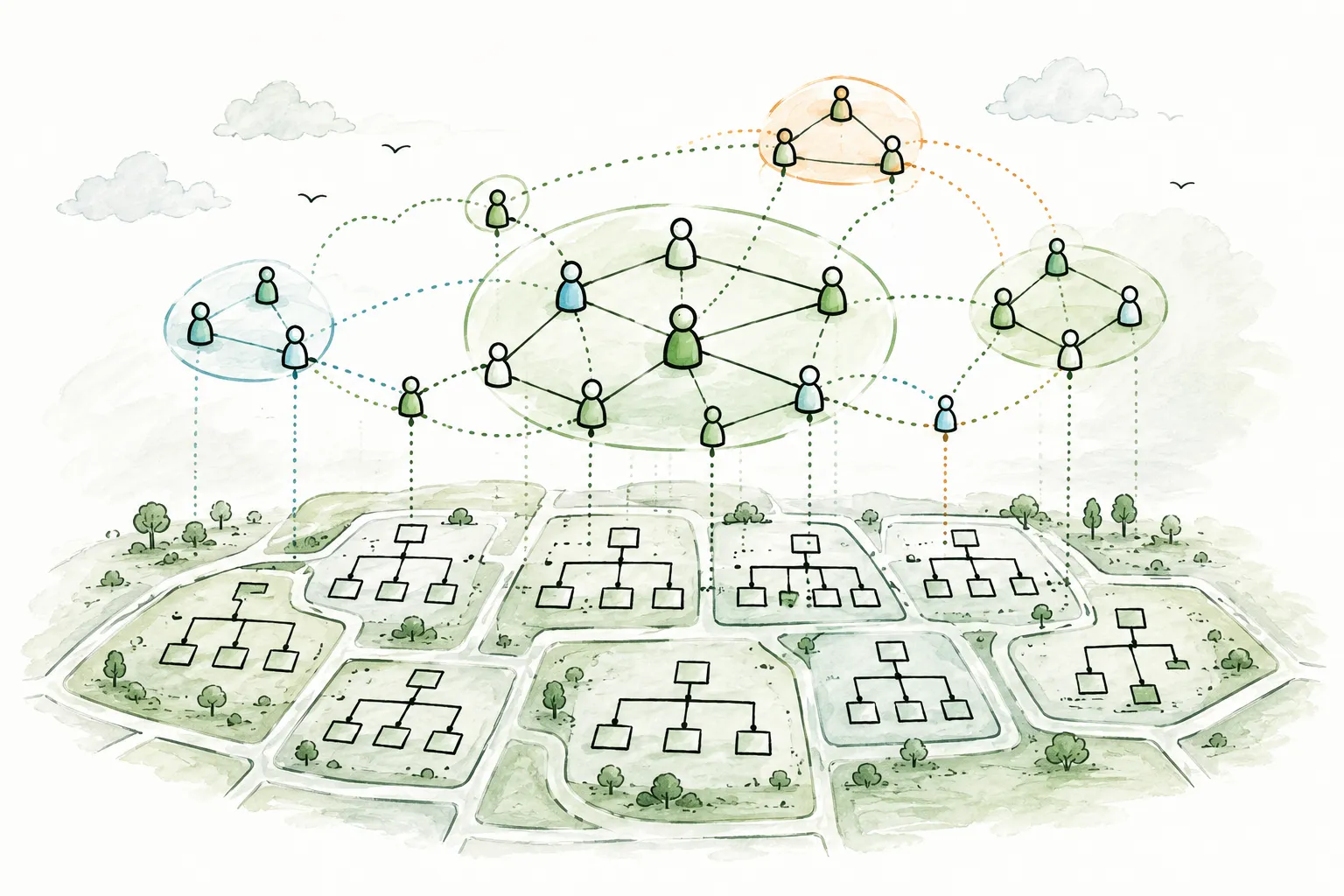
Mission Based Teams let people self-organize around the problems that matter most. Roche runs over 1,100 of them across 89 countries, alongside their formal structure, not instead of it.
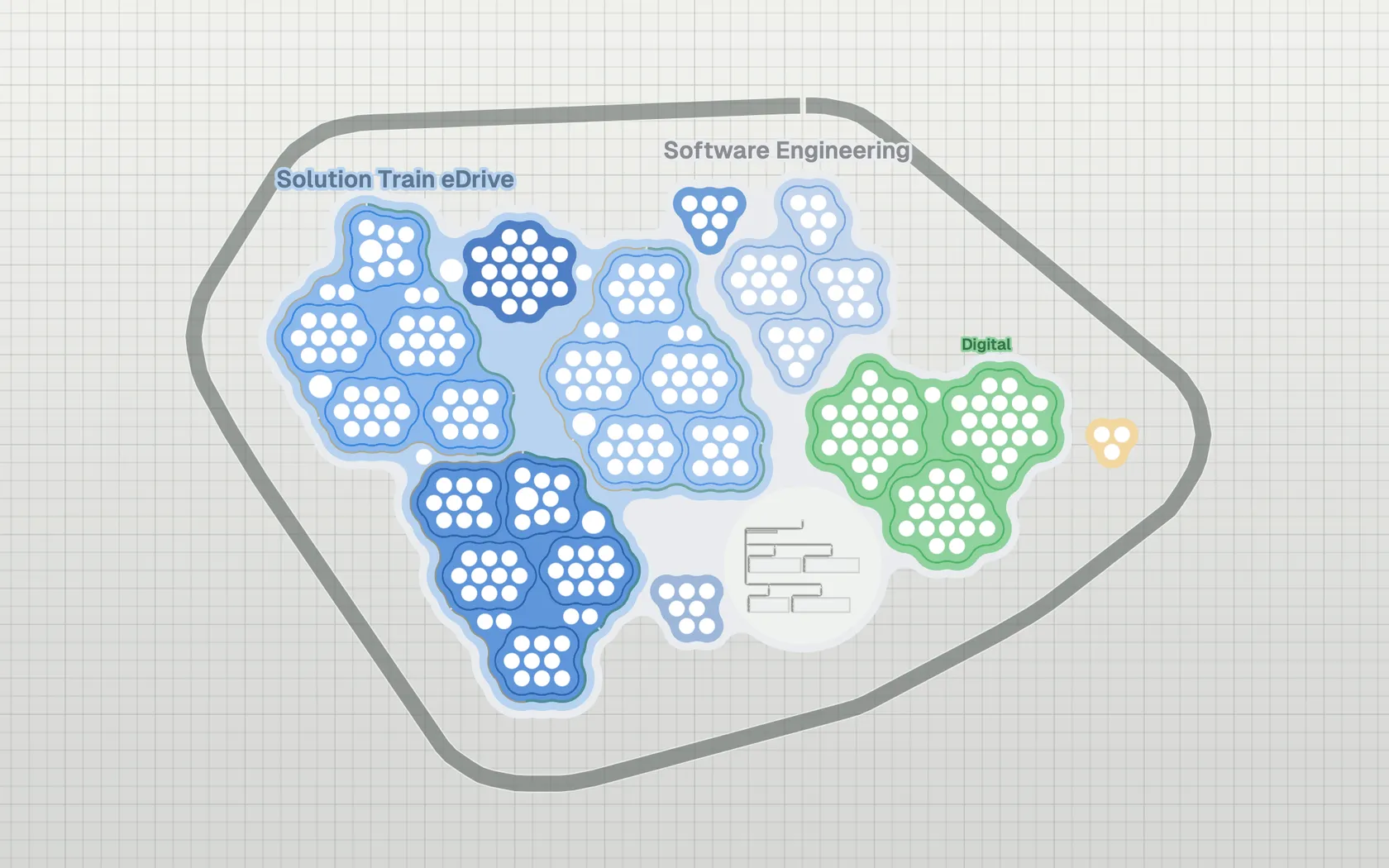
Leaders want to see the whole portfolio at once. Everyone else wants to know where they belong. A Peerdom map shows trains, teams, the line organization and the dependencies between them, together, with one profile per person.
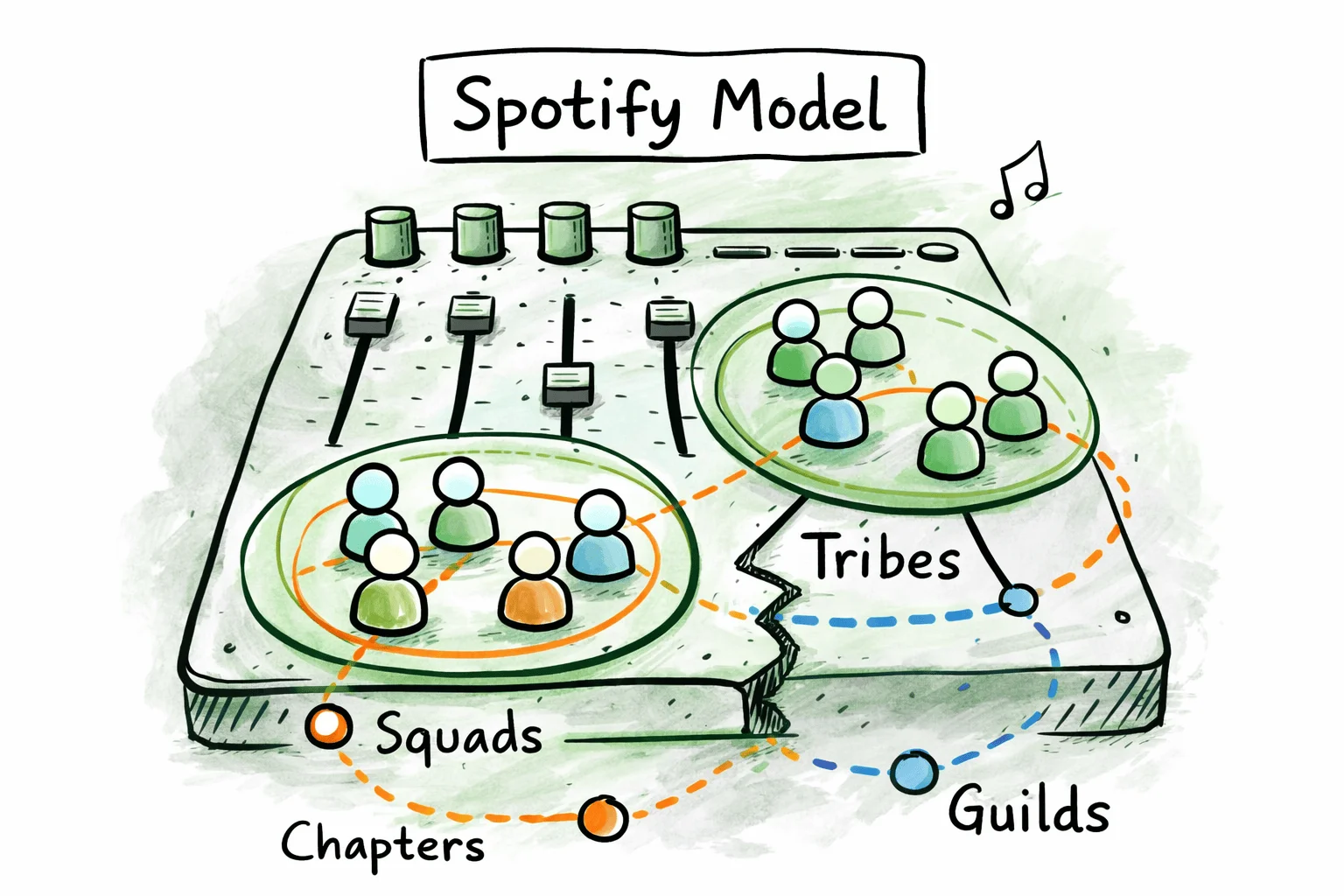
The most widely adopted agile scaling framework was never meant to be a framework. Here is what the Spotify model actually is, why it spread, where it breaks, and how to make it work.
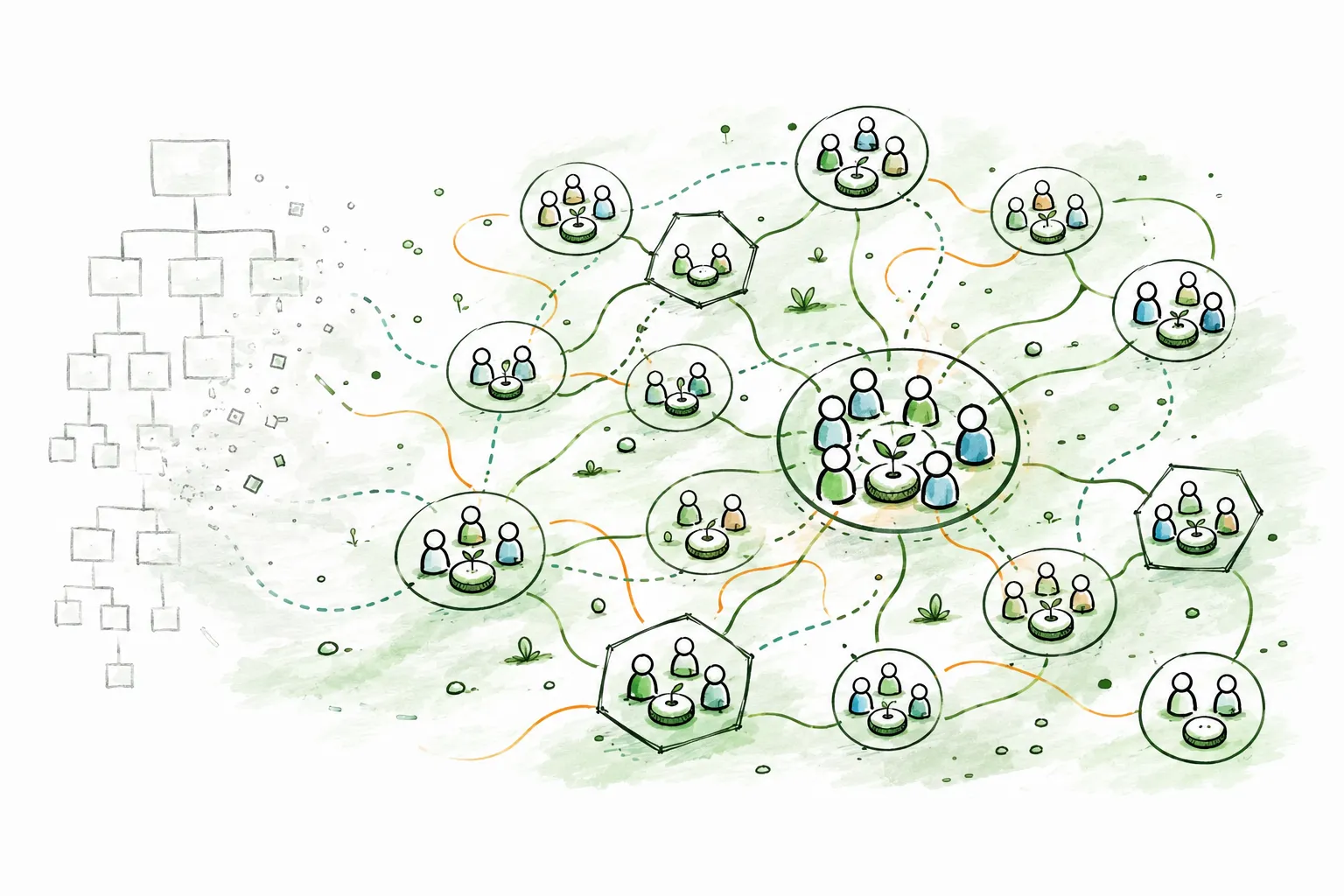
How one of the world's largest corporations is replacing hierarchy with 2,000 autonomous teams, 90-day cycles, and shared ownership, and what DSO means for the future of organizational design.
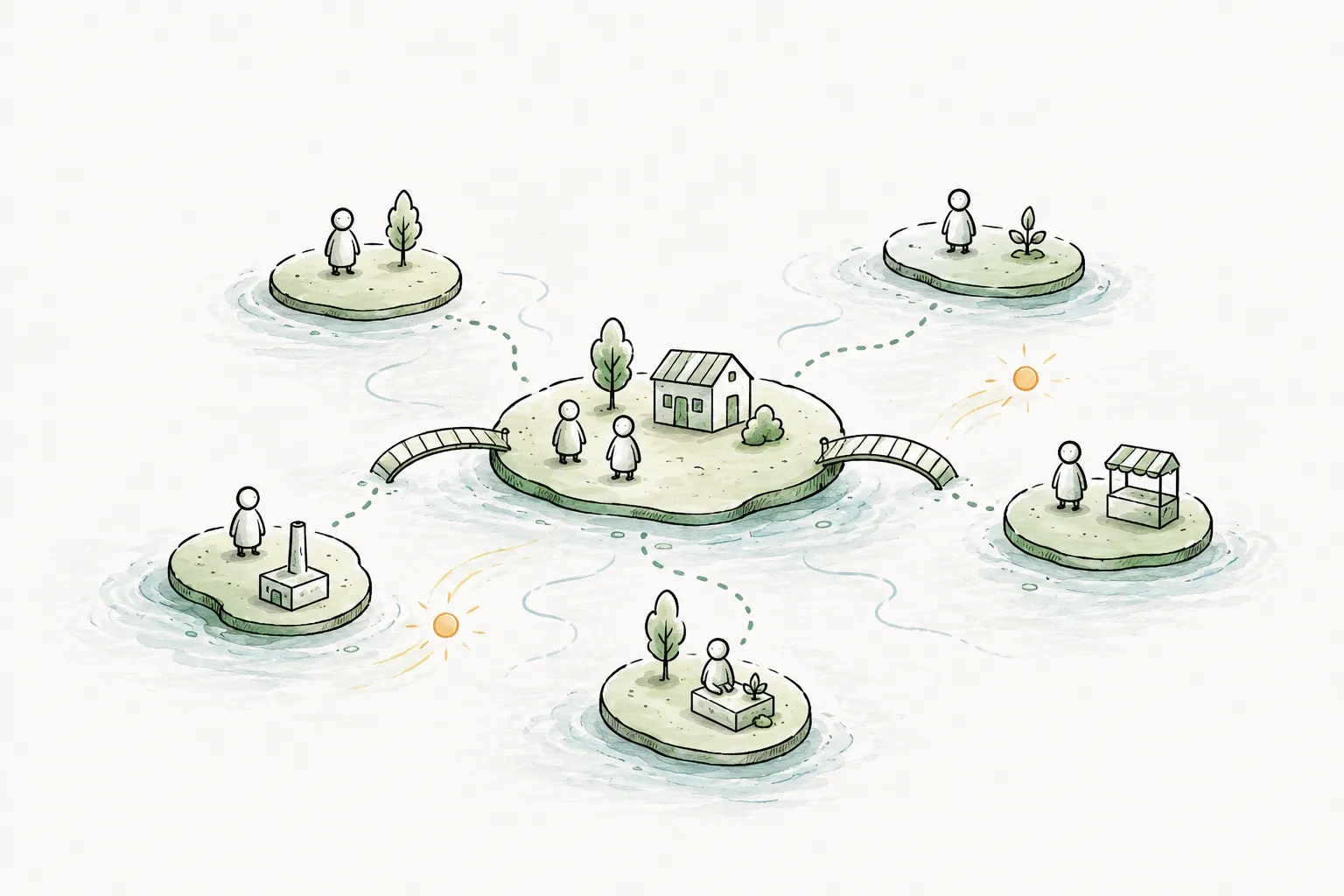
How a Chinese appliance manufacturer became the world's most radical management experiment, and what the RenDanHeYi model means for the future of organizational design.
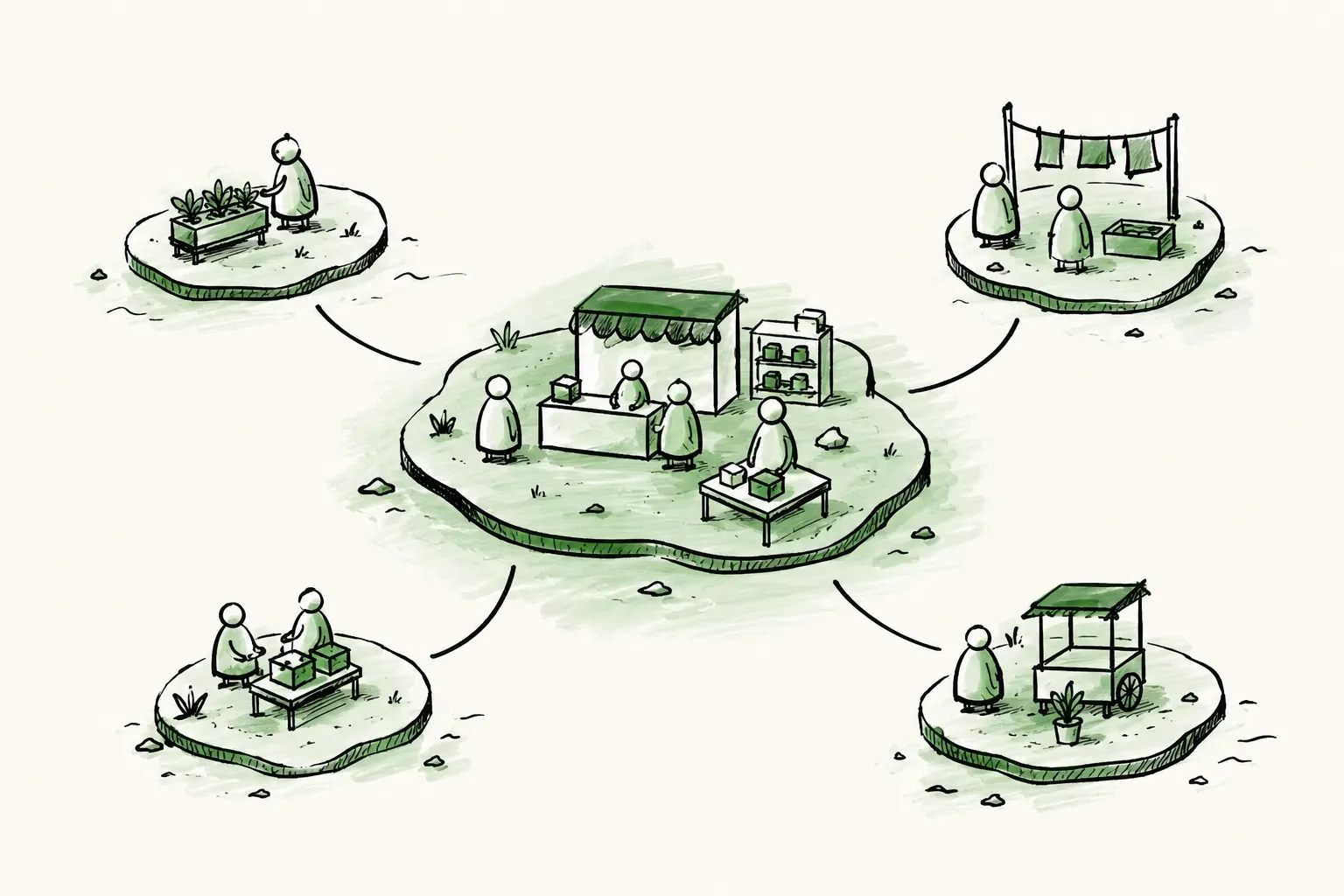
See how Peerdom helps organizations adopt the Rendanheyi model. Visualize microenterprises, networks, and accountabilities with living maps.
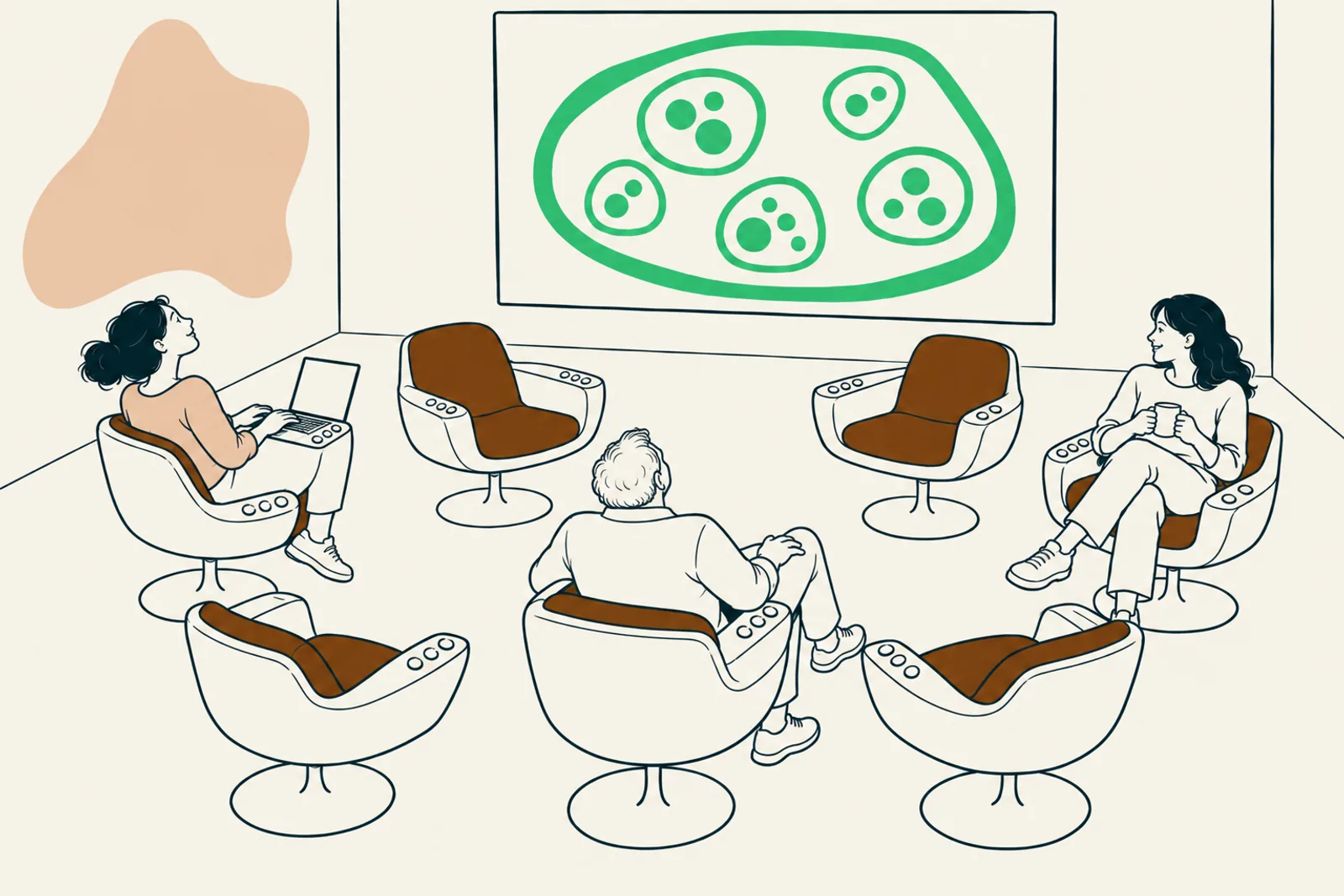
Cybersyn is remembered as a control room that ran a country. Its designer built a nervous system instead: teams steer themselves, and the center helps when they can't. With AI, that difference matters more than ever.
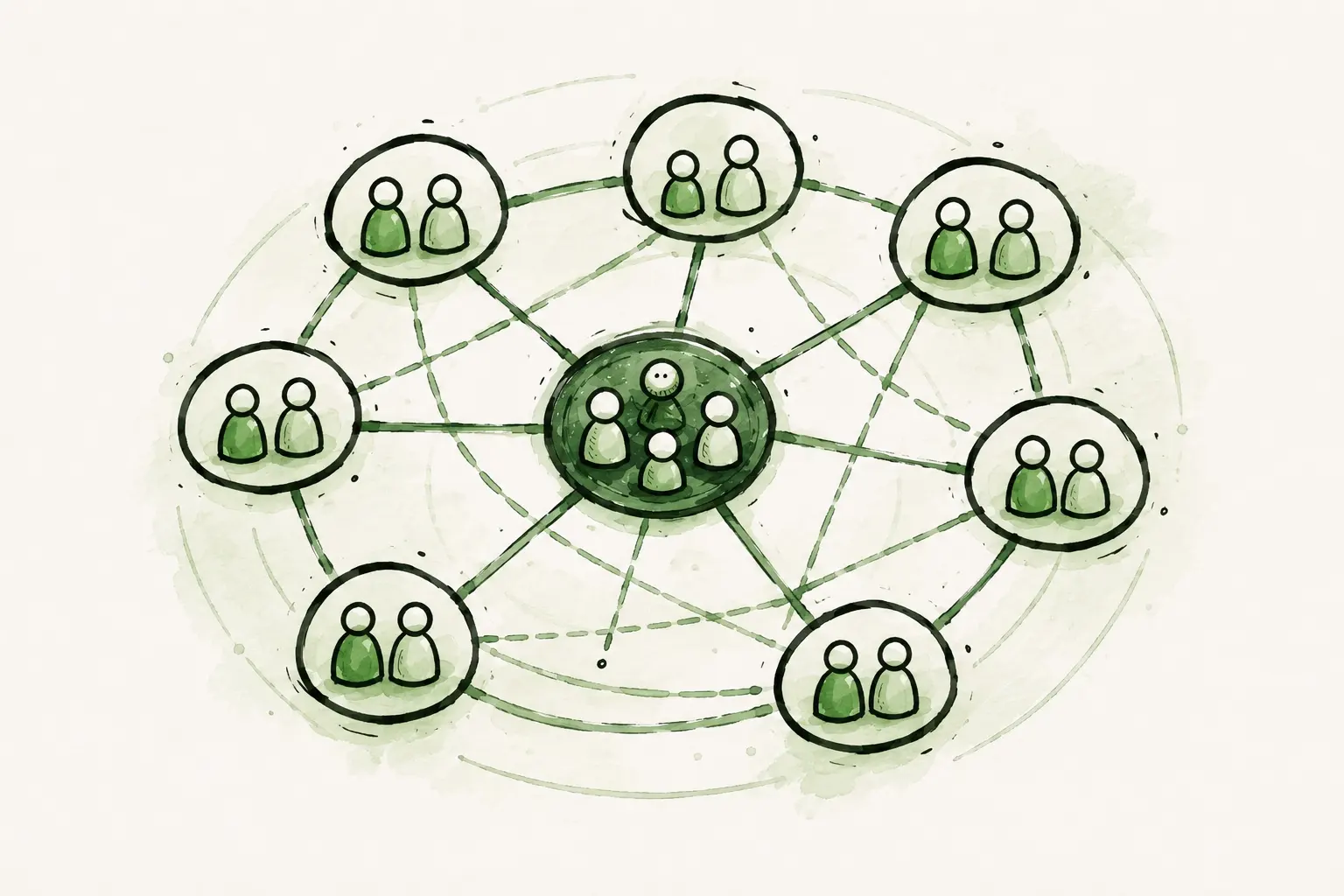
From command-and-control pyramids to center-periphery networks. Understanding the 12 laws of Beta Codex, the Peach Model, and how to build organizations where the periphery leads.
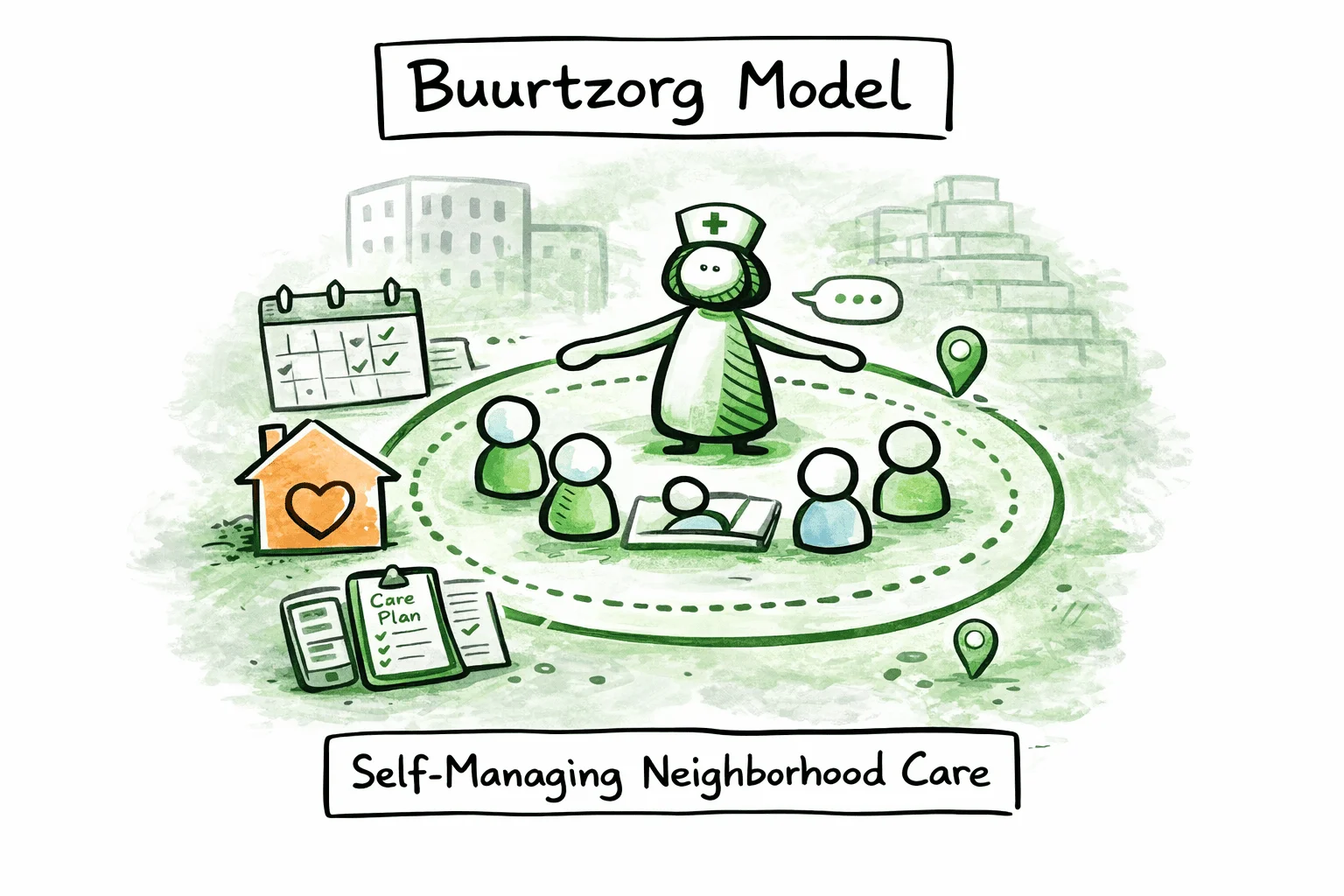
How a Dutch healthcare organization scaled to 10,000+ nurses in 850+ self-managing teams with no middle managers, and what any organization can learn from it.
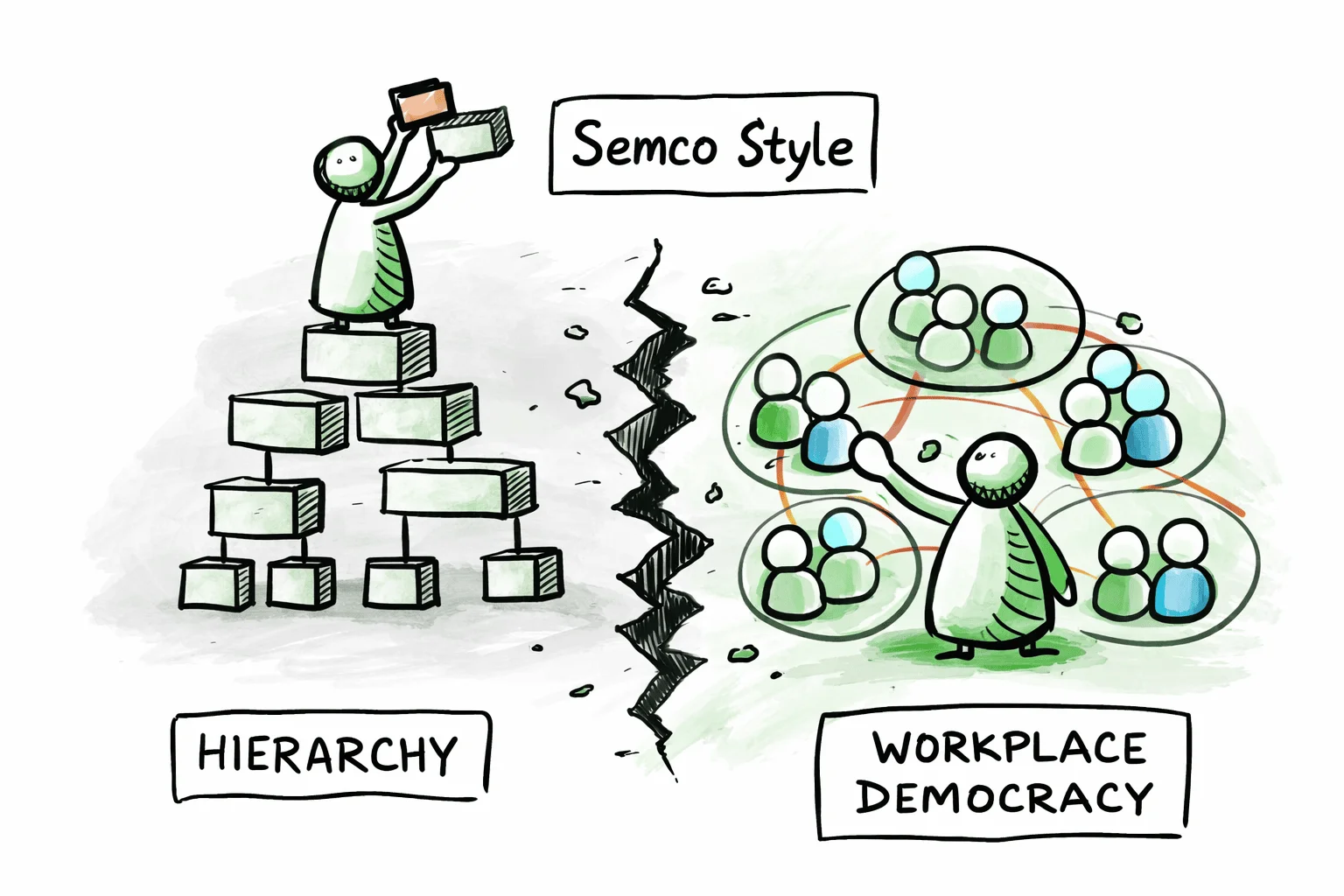
How a Brazilian manufacturer grew from $4 million to $212 million in revenue by letting employees set their own salaries, choose their own hours, and vote on company decisions.
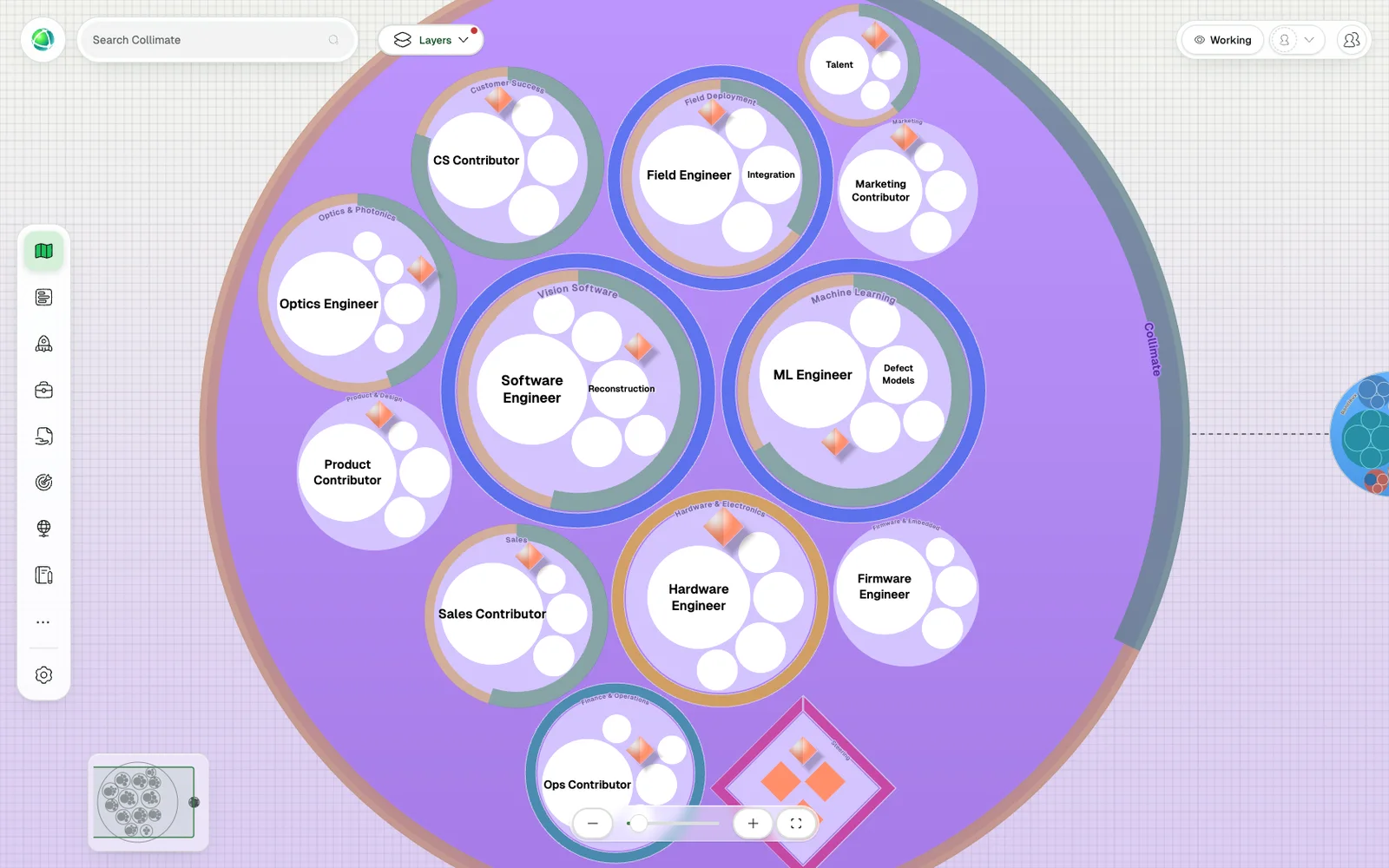
From circles and roles to elections and double-linking. A practitioner's guide to implementing holacracy and sociocracy with the right tools.
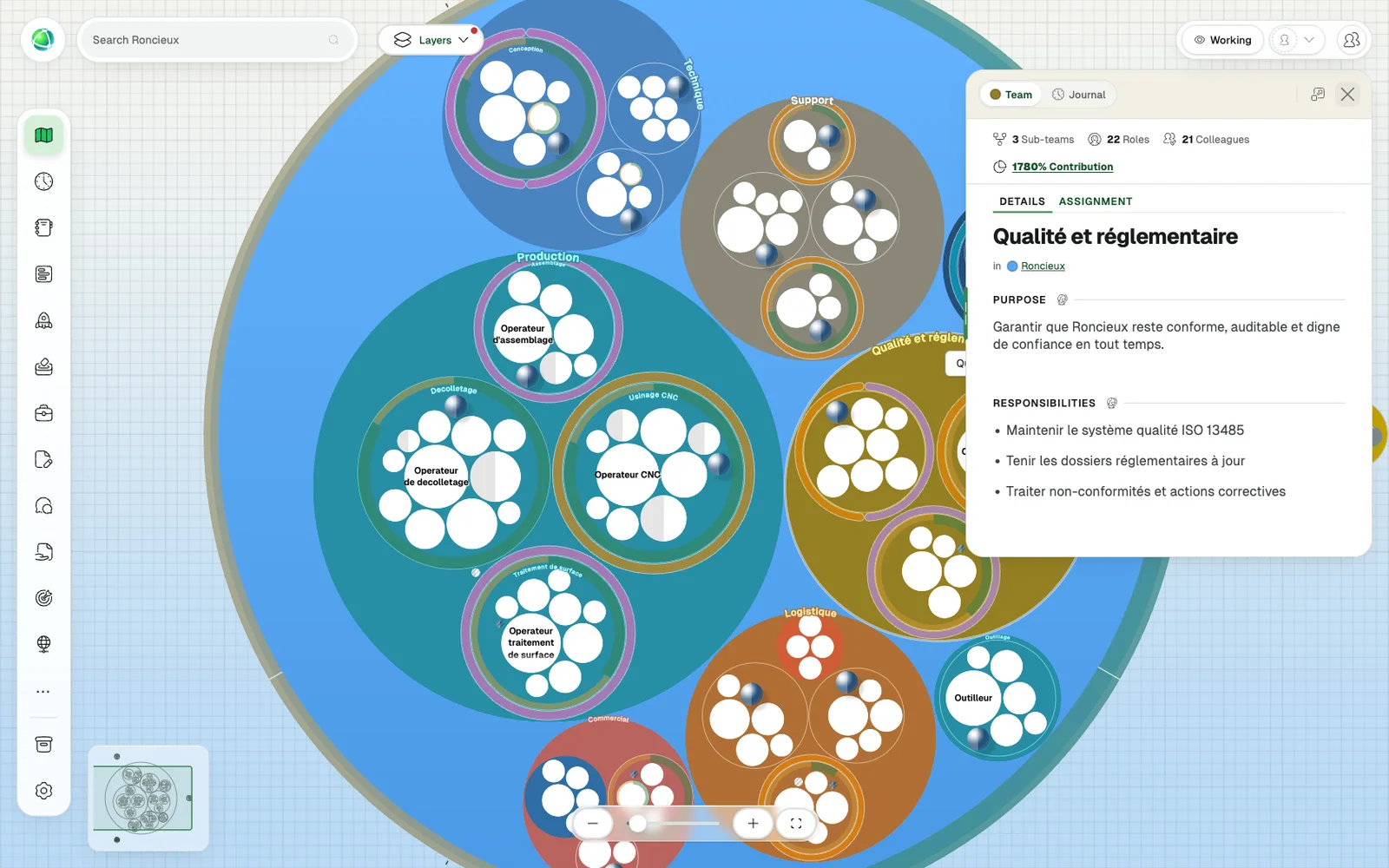
A step-by-step guide to moving from job-title hierarchies to explicit, role-based accountability, with practical advice for every stage of the transition.
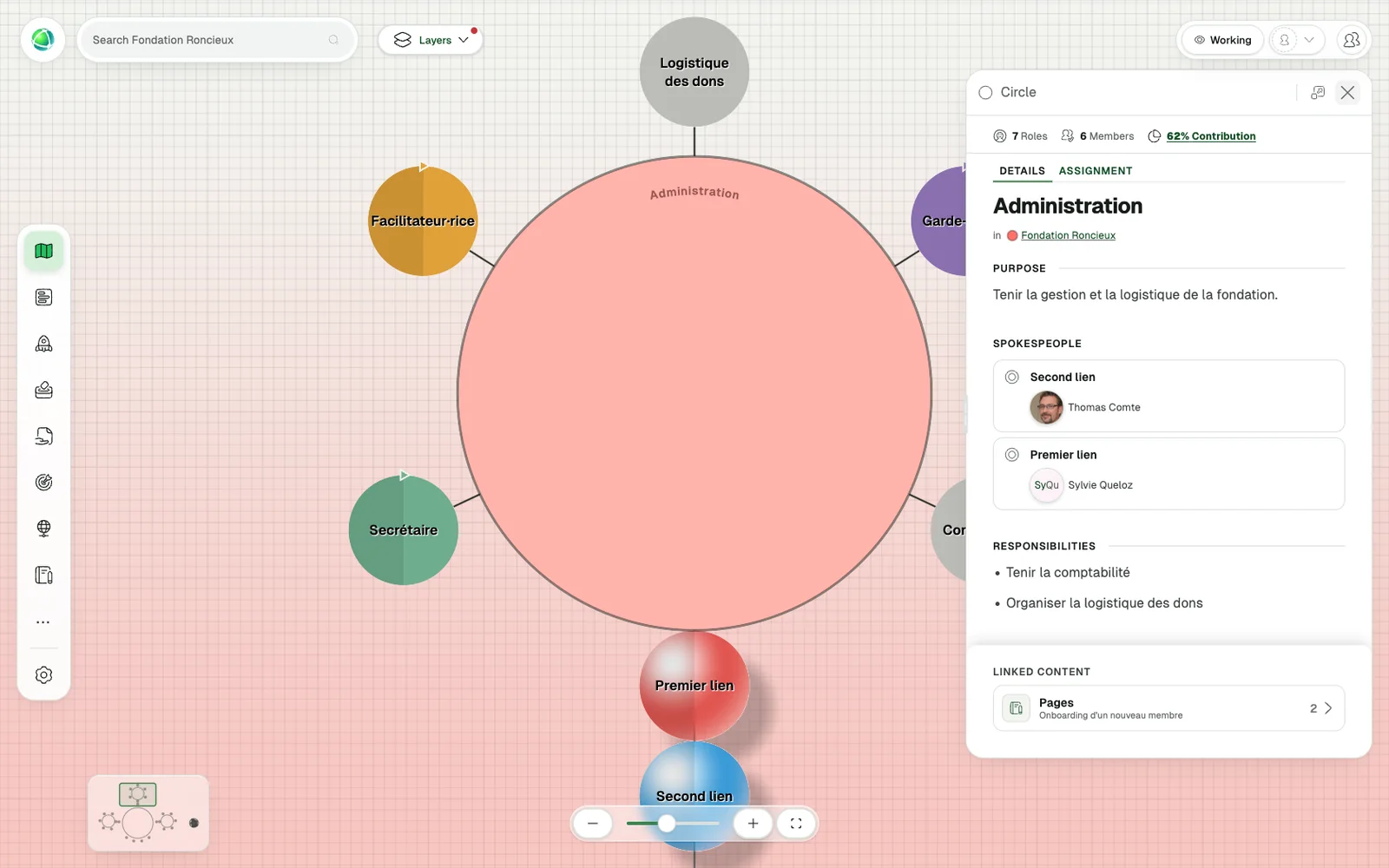
From circles and consent to double-linking and S3 patterns. A practitioner's guide to sociocratic governance, how it differs from holacracy, and how to implement it in your organization.
Most organizations run a mix
Few organizations follow one model to the letter. Map yours as it really is, and see which parts of which model it already uses.