How a Small Charity Stays Organised When Everyone Is a Volunteer
Nathan Evans
When nobody is full-time and everyone wears several hats, a job-title org chart falls apart. Sharing the work as small, clear roles keeps a tiny team steady, even as volunteers come and go.
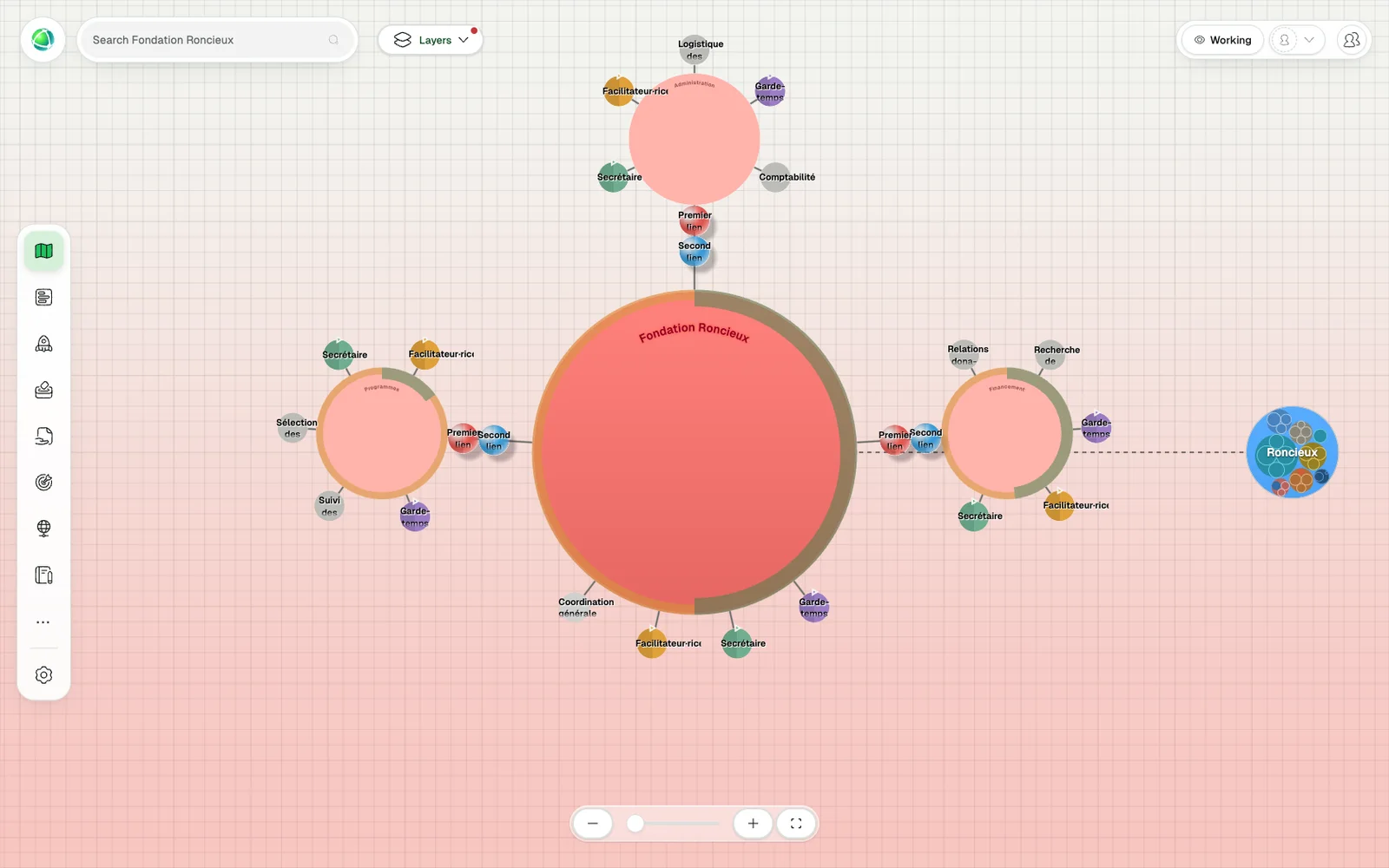
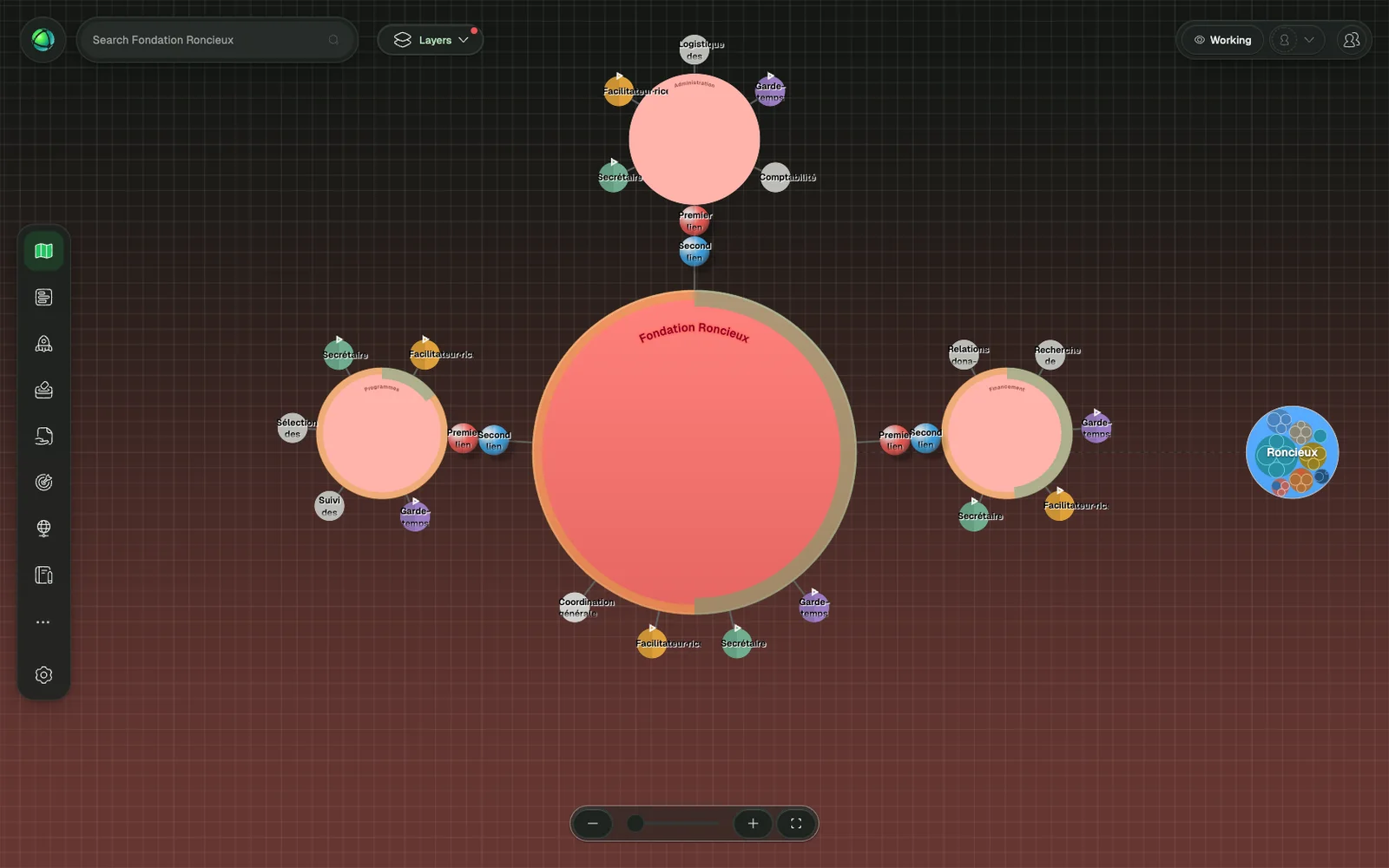
Imagine a small foundation called Fondation Roncieux. Eight people run it. It funds surgical equipment for hospitals that cannot afford it, in places where a working operating theatre is not a given. The cause is serious. The team is tiny, and almost nobody is full-time.
There is a coordinator who gives about three days a week. Everyone else gives a few hours: an evening here, a weekend there, fitted around a day job. That is how most small charities run. The mission is large and the hands are few.
This creates a particular problem, and it has nothing to do with a lack of commitment. It is that the way you would organize a company does not fit a group like this.
Why a normal org chart does not work here
A company org chart assumes full-time people in clear jobs. One person, one box, one title. A small charity is the other way around. One person does a slice of the fundraising, helps choose which hospitals to support, and keeps the books, all inside the same six hours a week.
Give that person a single job title and it misleads. “Treasurer” hides the fact that they also write the donor thank-you letters and sit on the grant committee. And when they step back for a few months, as volunteers do, nobody is quite sure what left with them.
That is the real risk in a small team. Everything rests on one or two people, and little of it is written down, because writing job descriptions feels like overkill for eight people who all know each other.
Organise around roles, not job titles
The fix is a small one. Stop describing people by a title, and start describing the work as roles. A role is one clear responsibility with an owner. A person can hold several. A role can move to someone else without anyone being reorganized.
At Fondation Roncieux, the work is split into a few small circles: one for the programmes they fund, one for raising money, one for running the foundation. Each circle holds a handful of clearly named roles. Choosing which projects to support. Keeping the accounts. Looking after donors. Running the meetings so everyone is heard. Each role belongs to a person, and most people hold two or three.
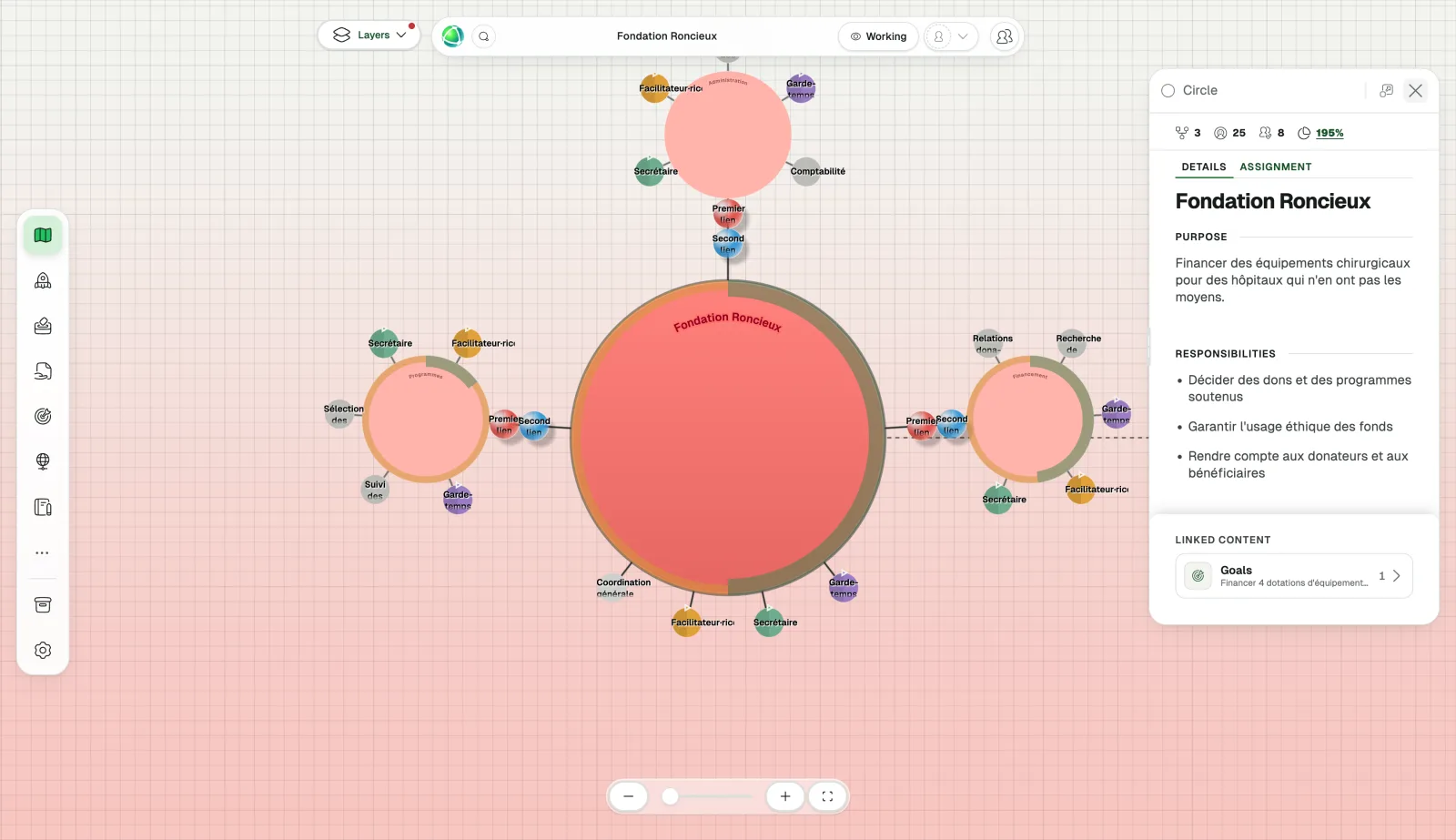
Because the roles are small and named, you can take in the whole thing at a glance: who owns what, where the load sits, and what would go unowned if someone stepped away.
You can explore the map yourself at peerdom.org/fondation-roncieux.
Sharing the load, out in the open
Here is what one member’s page looks like. She is the coordinator, giving 60 percent of a full week, and she holds three roles across three circles: coordinating the foundation, running the meetings in one circle, and connecting another circle to the centre. Her reason for being there is written at the top, in her own words.
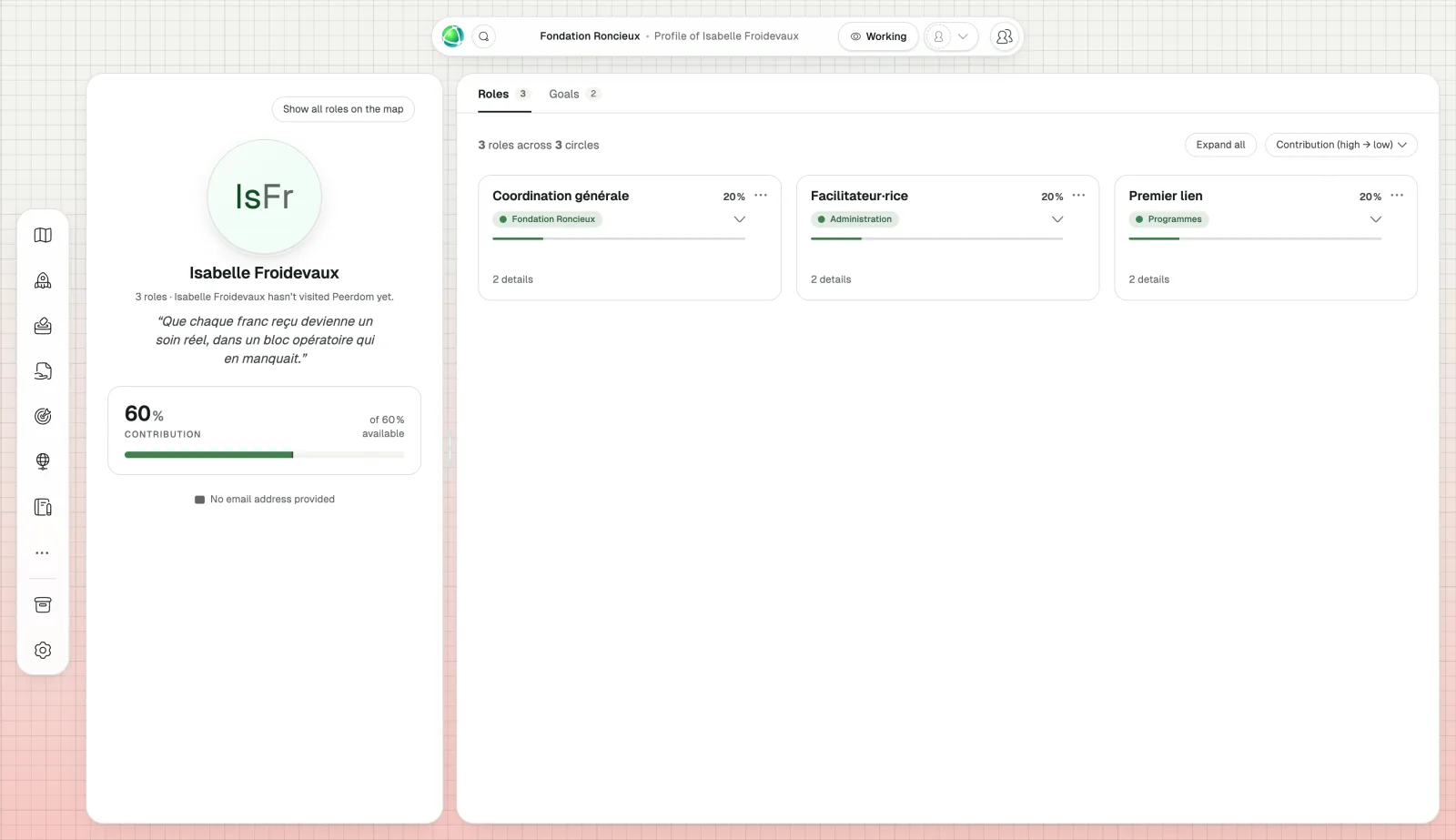
Nobody here is buried. Each role is a slice of a week, not a second job. And because every slice is visible, the group can spot when one person is holding too much and move a role before goodwill runs out. A charity runs on goodwill, and goodwill lasts longer when the load is fair and everyone can see it.
What happens when a volunteer leaves
This is where small teams usually get hurt, and where roles help most. When someone steps back, you are not left with a mysterious bundle of things one person used to handle. You see the exact roles they held, and you hand each one to someone with room. The work is already described, so the next person picks it up without a month of guessing.
Continuity stops depending on one person remembering how things were done. It lives in the roles, which stay put even as the people rotate through them.
What to do if this sounds like your team
- List the work as small roles, not job titles. One clear responsibility each.
- Give every role a single owner, and let people hold several.
- Write a line on what each role is for, so a new volunteer can pick it up cold.
- Keep it somewhere everyone can see, so the load is shared in the open and nothing rests silently on one person.
You do not need to be a big organization to organize well. A tiny team gets more out of it, because it has less slack to absorb the day someone steps away.
Common questions
We are only a handful of people. Isn’t this overkill? The smaller the team, the more it helps. With eight people and no full-timers, losing one person can stall a whole area. Roles make sure the work is described and shared, so nothing depends on a single person’s memory.
What is the difference between a role and a job title? A job title describes a person and where they sit. A role describes one responsibility and who owns it. A person can hold several roles, and a role can pass to someone else without changing anyone’s title. For a team where everyone wears many hats, roles fit and titles do not.
How is this different from just writing job descriptions? Job descriptions tend to be long, written once, and then forgotten. Roles are short, each tied to one responsibility and one owner, and kept visible so the whole team can see who holds what. The aim is not more paperwork. It is a shared picture that stays current.
What is a living org chart? It is a map of your organization that shows roles and responsibilities, not just names and titles, and that the team keeps up to date themselves. For a small charity, it is the difference between “we all just know” and a picture anyone can look at, including a new volunteer on their first day.
Fondation Roncieux is an illustrative example, not a real Peerdom customer. It stands in for the kind of small, mission-driven team that runs on volunteer time, so the pattern is easy to follow.
Keep reading
insights
Fast growth rarely fails with a bang. It fails when a few people end up holding five jobs and no one ever adds it up. Here is how to see the load before it costs you someone good.
insights
An acquisition brings two organizations together, and usually two very different ways of working. Force one onto the other and you lose people. Leave them apart and you never integrate. There is a calmer middle path.
insights
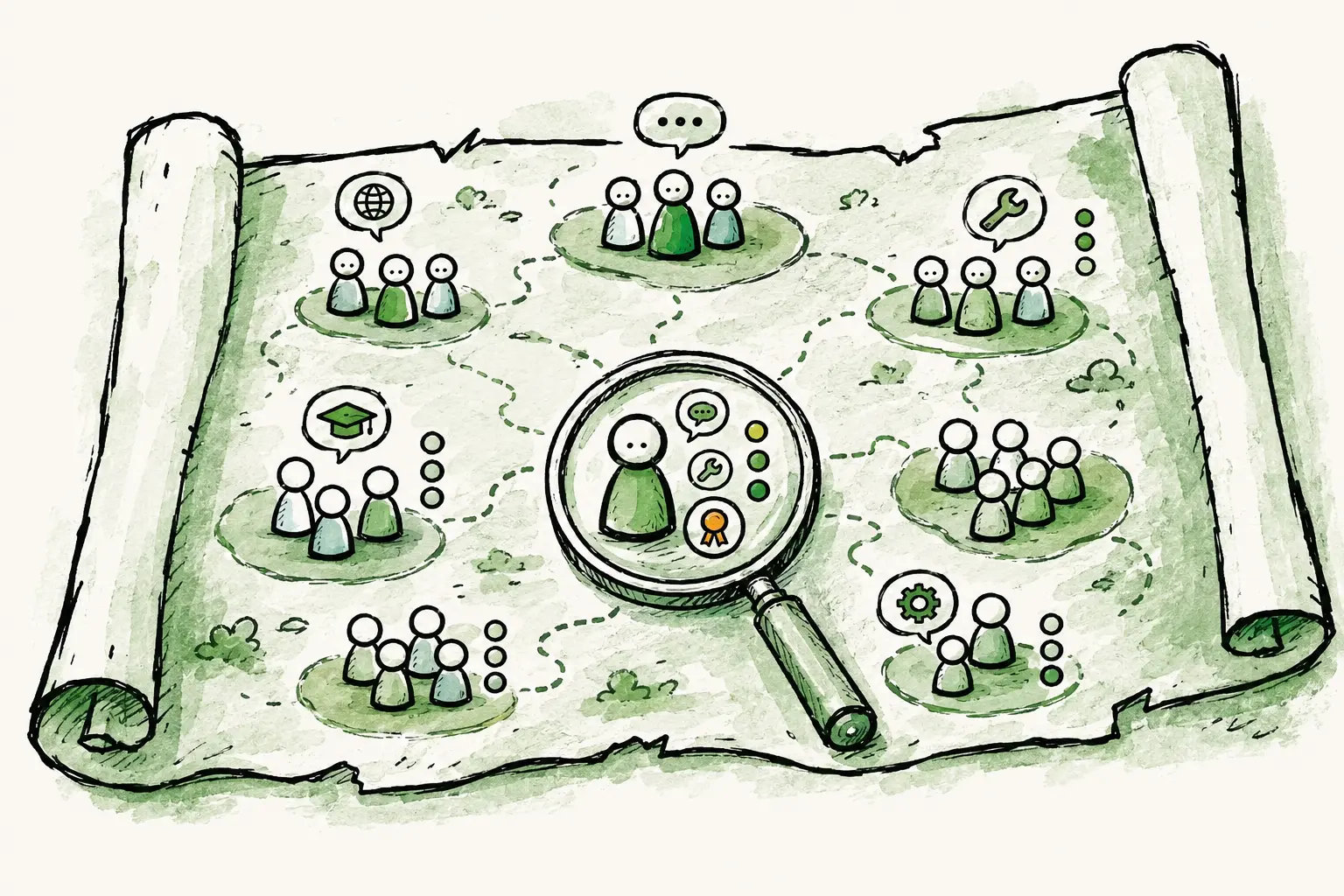
Find the right person for the job by showcasing everyone's skills directly on your org chart.