Your Company Doubled in a Year. The Strain Won't Show on Your Org Chart.
Nathan Evans
Fast growth rarely fails with a bang. It fails when a few people end up holding five jobs and no one ever adds it up. Here is how to see the load before it costs you someone good.

Imagine a company called Collimate. It builds camera systems that check parts on factory lines. Two years ago it had forty people. Today it has close to a hundred and eighty. That is the growth most founders dream about.
It is also the growth that wears a company out from the inside, where nobody is looking.
Nobody at Collimate set out to make life harder. They kept hiring, kept shipping, kept saying yes. Somewhere in those eighteen months, the way the work was shared drifted away from who was actually doing it. From the outside the company looked healthy. Inside, a handful of people were carrying far more than anyone had added up.
This is the most common way fast growth hurts a company. There is no crash. The load piles onto a few people over months, and you often find out only when one of them resigns.
What actually goes wrong when you grow fast
When a company is small, everyone can see everything. You know who does what because you sit two desks away from them. The org chart lives in people’s heads, and it is roughly right.
Growth breaks that. You add people faster than you rewrite who owns what. New hires get pointed at whatever is on fire that week. The people who were there early keep the jobs they had when the company was a third of the size, and take on more besides. No single decision causes it. Work gets added and nothing gets taken away.
A few months in, three things are true at once, and none of them show up on a normal org chart.
One: a few people are carrying far too much
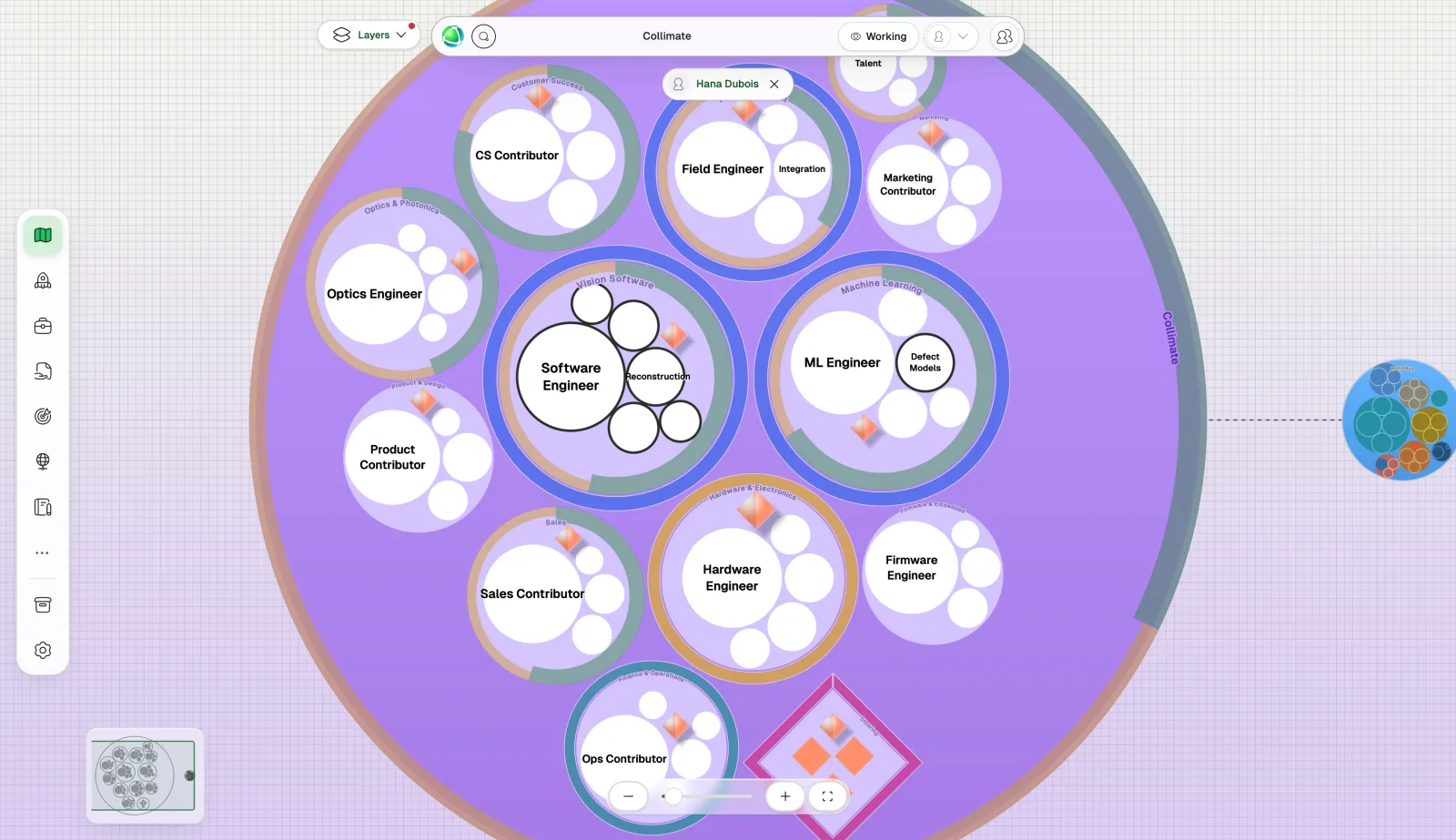
At Collimate, one team lead ended up coaching two teams, because the second team’s lead had not been hired yet. On paper it was temporary. In practice it ran for half a year. An engineer who joined early had picked up five separate responsibilities, one at a time, each one sensible on the day it landed. Together they came to nearly two full-time jobs sitting on one person.
You cannot see this on a chart of boxes and titles. A title says “Engineer.” It does not say “and also owns the data pipeline, the release process, two customer integrations, and is the only one who understands the calibration step.”
Two: the same job has more than one owner
Fast hiring hands the same job out twice. At Collimate, three teams each had someone they called a product owner, and each of the three assumed the call was theirs to make. So decisions got made three times, or not at all.
Two owners feels like a safety net. Usually it is the opposite. When everyone owns something, no one really does.
Three: something important has no owner at all
The same problem from the other side. One team ran for months with no lead, because the hire kept slipping. Everyone assumed someone else had it covered. Nobody did.
Why the usual org chart hides all of this
Most companies keep their structure in a slide or a spreadsheet. It lists names, titles, and who reports to whom. It was drawn once, it was right for about a week, and it answers none of the questions above.
It cannot tell you that one person is at 190 percent. It cannot tell you a job has three owners. And it cannot show you a gap, because a chart only lists what exists, never what is missing.
So the strain stays out of view until you feel it: a key person burns out, a decision keeps failing to get made, a promise to a customer slips through.
How to actually see the strain
The answer is not another reorganization. It is visibility. You need a view of your company that shows the actual work, not just the titles, and that keeps itself current without anyone maintaining it.
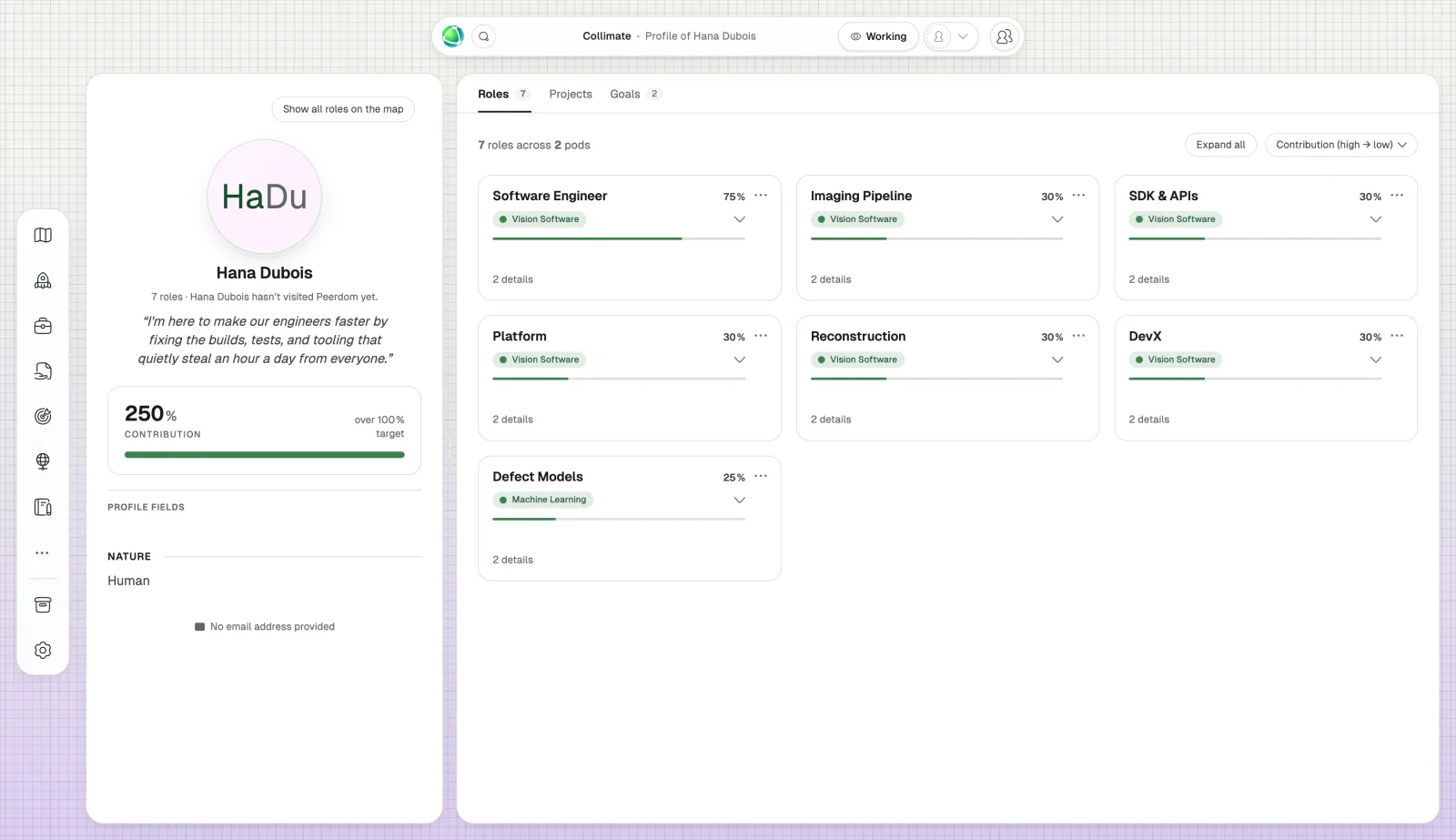
A living map of your organization does three things a slide never will:
- It shows every role a person holds, and how much of their time each one takes. Once you can see that someone adds up to nearly two jobs, you can act on it. The overload stops being a surprise.
- It shows when the same role turns up in several places. Double ownership becomes something you notice, not something you discover in a crisis.
- It shows the gaps. A team with no lead. A responsibility nobody holds. You can only fix what you can see.
On a map like this, Collimate’s trouble spots surface at a glance. The double-booked team lead lights up. The five-role engineer stands out. The team with no lead sits there visibly empty. No survey, no consultant. The situation was already real. It just had nowhere to show up before.
You can explore the full Collimate map yourself at peerdom.org/collimate and click any person to see every role they hold and how much of their week each one takes.
What to do once you can see it
Seeing the strain is most of the work. Acting on it is straightforward:
- Find anyone adding up to more than one full job. They are your flight risk. Hand one of their roles to someone with room.
- Find any job held in more than one place. Settle who owns it, and let the others give it back.
- Find the gaps. Give every important responsibility one clear owner, even a temporary one.
- Keep the map current. The payoff is not the one-time cleanup. It is that next quarter, thirty hires later, you can see the strain coming again while there is still time to move.
Growth is not the problem. Growing without ever checking how the work is spread is the problem. The companies that scale well are rarely the tidiest ones. They are the ones who spot the mess early and deal with it while it is still small.
Common questions
We are growing fast and it feels chaotic. Is that normal? Yes. Chaos during fast growth almost always means the work has been shared out faster than anyone has kept track of. It is fixable, and it starts with making who-does-what visible.
How do I know if someone is overloaded? Add up everything they own, not just their job title. If one person’s responsibilities come to more than one full-time job, they are overloaded, even when no single task looks like too much.
Isn’t this just a reorganization? No. A reorganization shuffles the boxes. This is about seeing the roles people already hold, finding where the load is uneven, and evening it out. Most of the time you restructure nothing. You just see it clearly for the first time.
What is a living org chart? It is a map of your company that shows roles and responsibilities, not only names and titles, and that teams keep up to date themselves. Because it tracks what is actually happening, not a snapshot from last quarter, it surfaces overload, double ownership, and gaps as they happen.
Collimate is an illustrative example, not a real Peerdom customer. It stands in for the kind of fast-growing company we see all the time, so the pattern is easy to follow.
Keep reading
insights
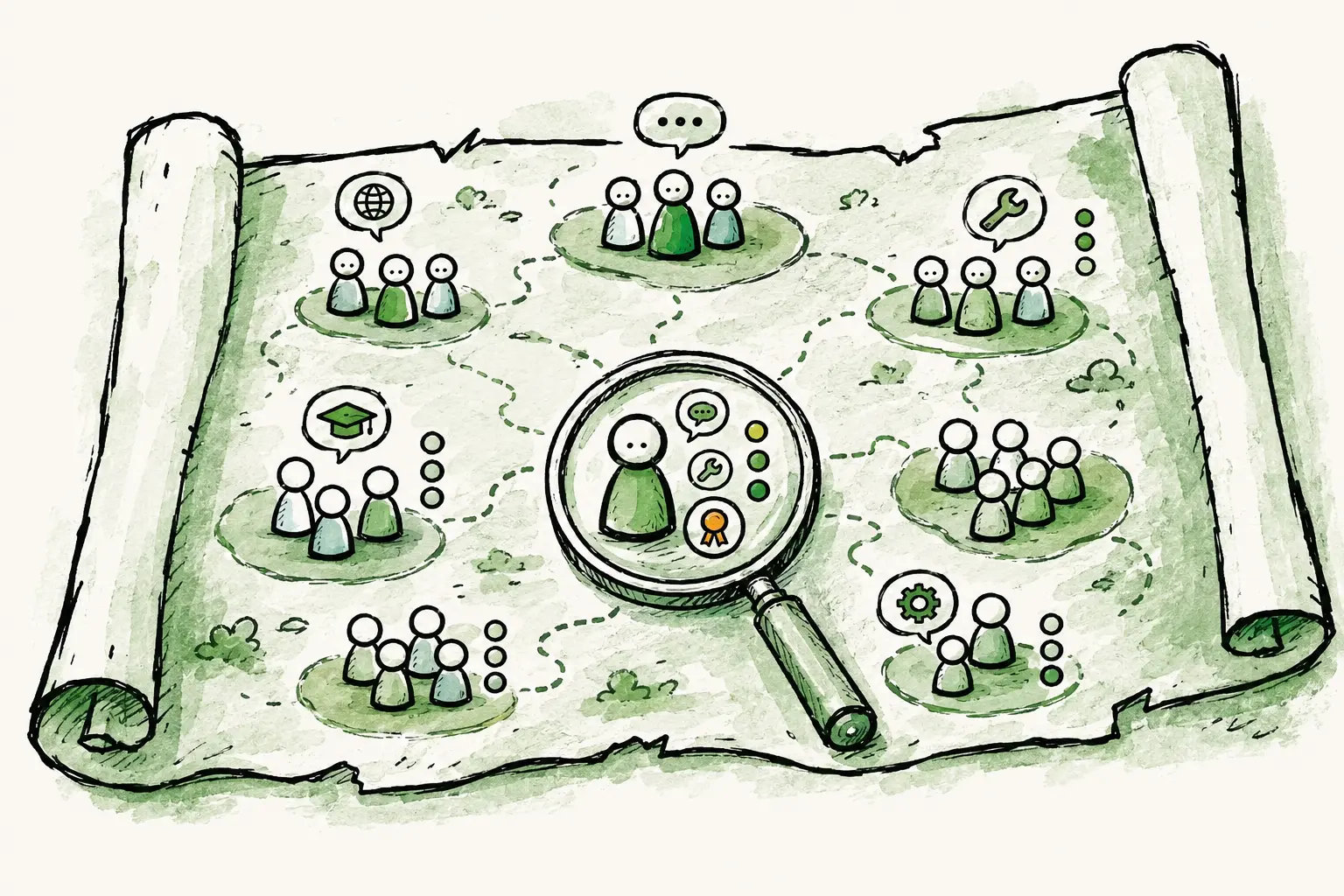
Find the right person for the job by showcasing everyone's skills directly on your org chart.
insights
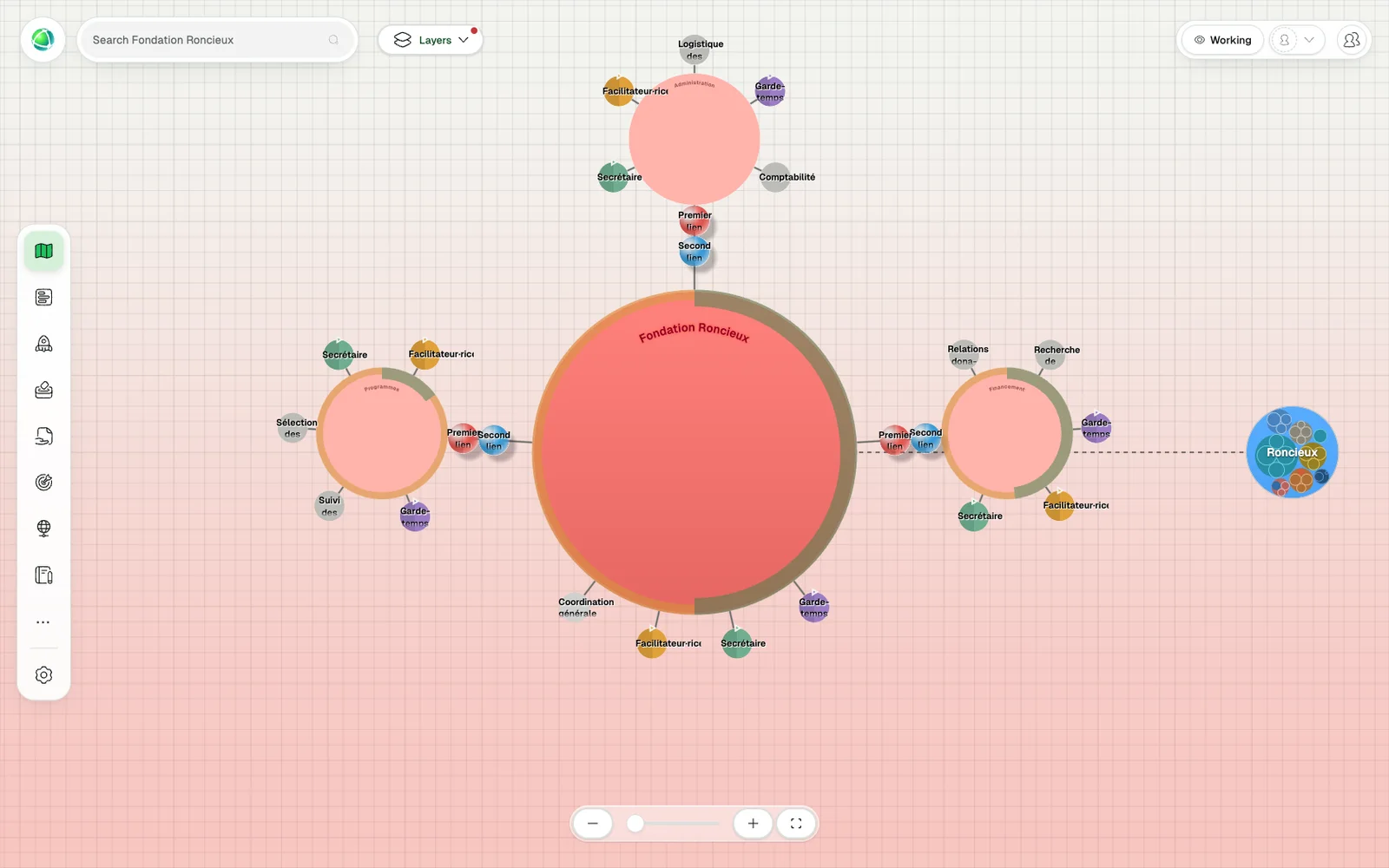
When nobody is full-time and everyone wears several hats, a job-title org chart falls apart. Sharing the work as small, clear roles keeps a tiny team steady, even as volunteers come and go.
insights
Peerdom now publishes your org chart in the Open Knowledge Format (OKF), an open standard backed by Google, so any AI can read and reason about how your organization works. Make your map public and it joins the agentic web.