Organizations with a few thousand people often ask us the same question before they start: does Peerdom scale? It’s a fair question. A map that is a joy with 20 people can turn into a wall of circles with 10,000, and a tool that is fast for one team can slow down when a whole company opens it on Monday morning.
We didn’t want to answer with a promise. So we built a company of 10,000 people and tested the work that matters most at that size: bringing everyone in, opening the map, finding people and roles, and many people editing at the same time.
Meet Halvard Lines
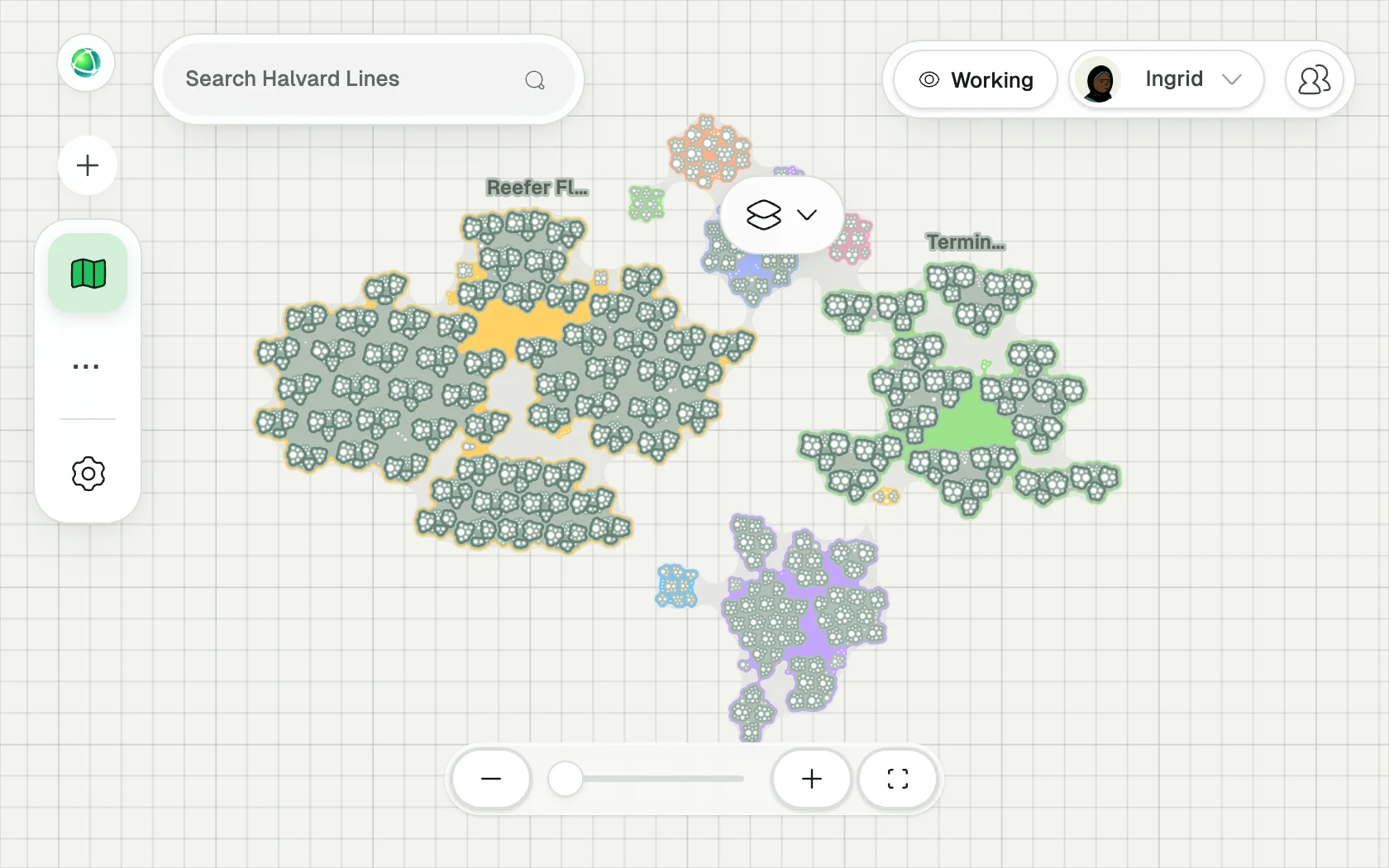
We wanted to test with realistic data without touching anyone’s real organization, so we invented one. Halvard Lines is a fictional container carrier with its head office in Basel, seven hubs around the world and a fleet of 60 vessels. It has 480 teams, 3,440 roles and 10,000 people who hold 7,110 role assignments between them. The names come from all over the world, the way a real crew’s do, and every person has an illustrated face.
The same product at 20, 150 and 10,000 people
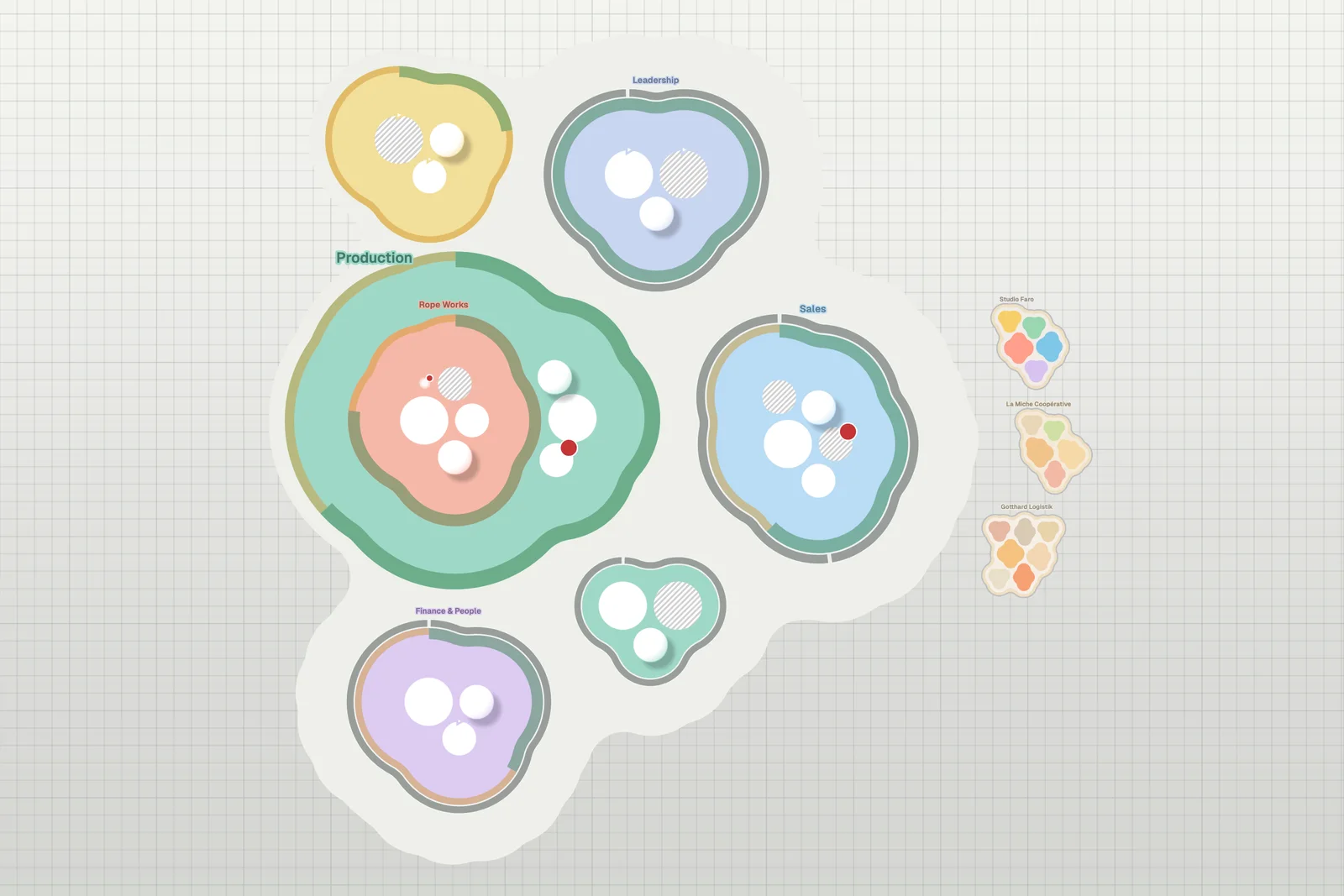
Scale is not only about speed. It’s about whether the map still means something. So we put Halvard Lines next to two smaller fictional companies: Kestrel Orbital, a satellite start-up of 19 people, and Talgarten Kliniken, a private clinic group of 151 people across Zürich and Luzern.
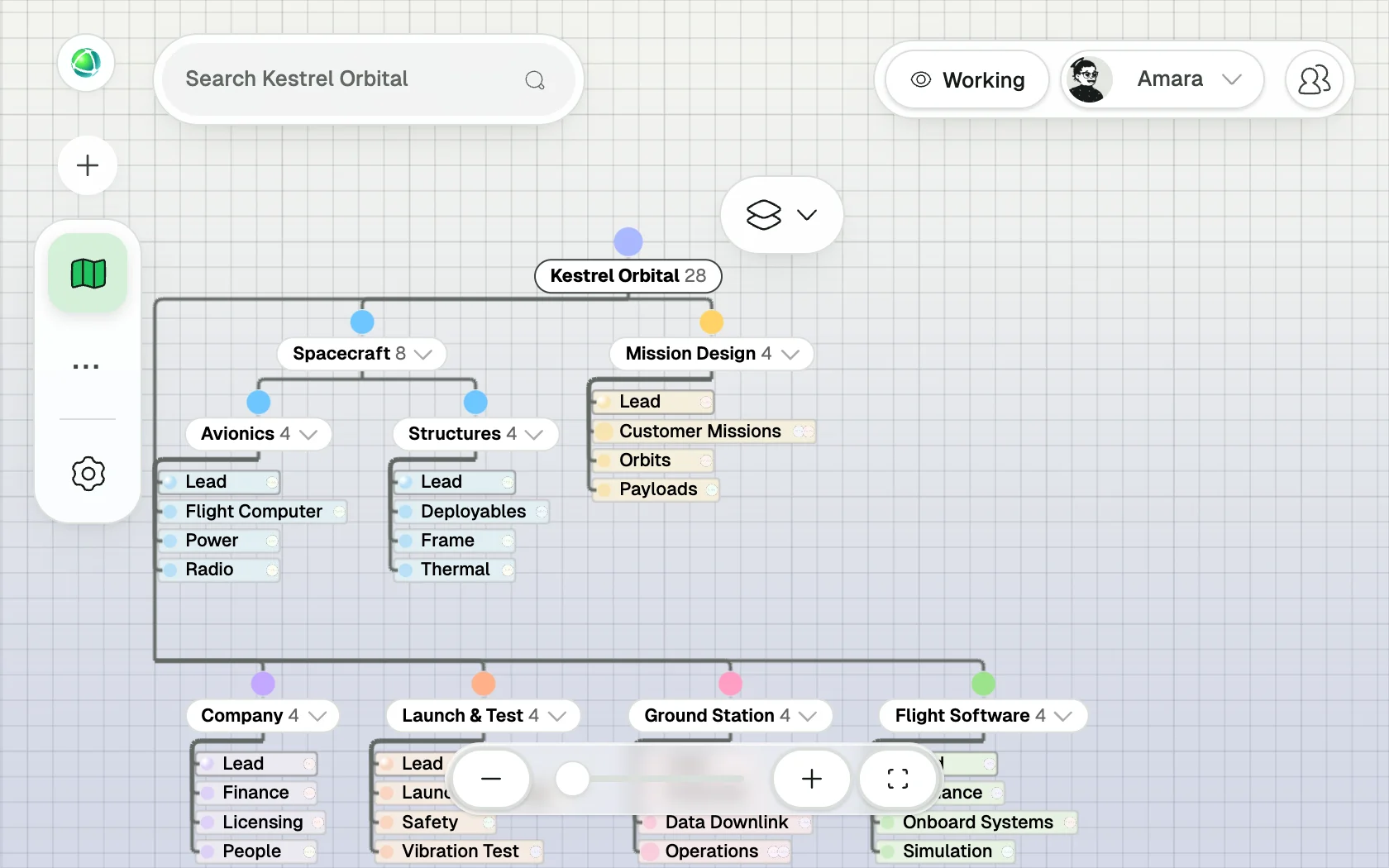
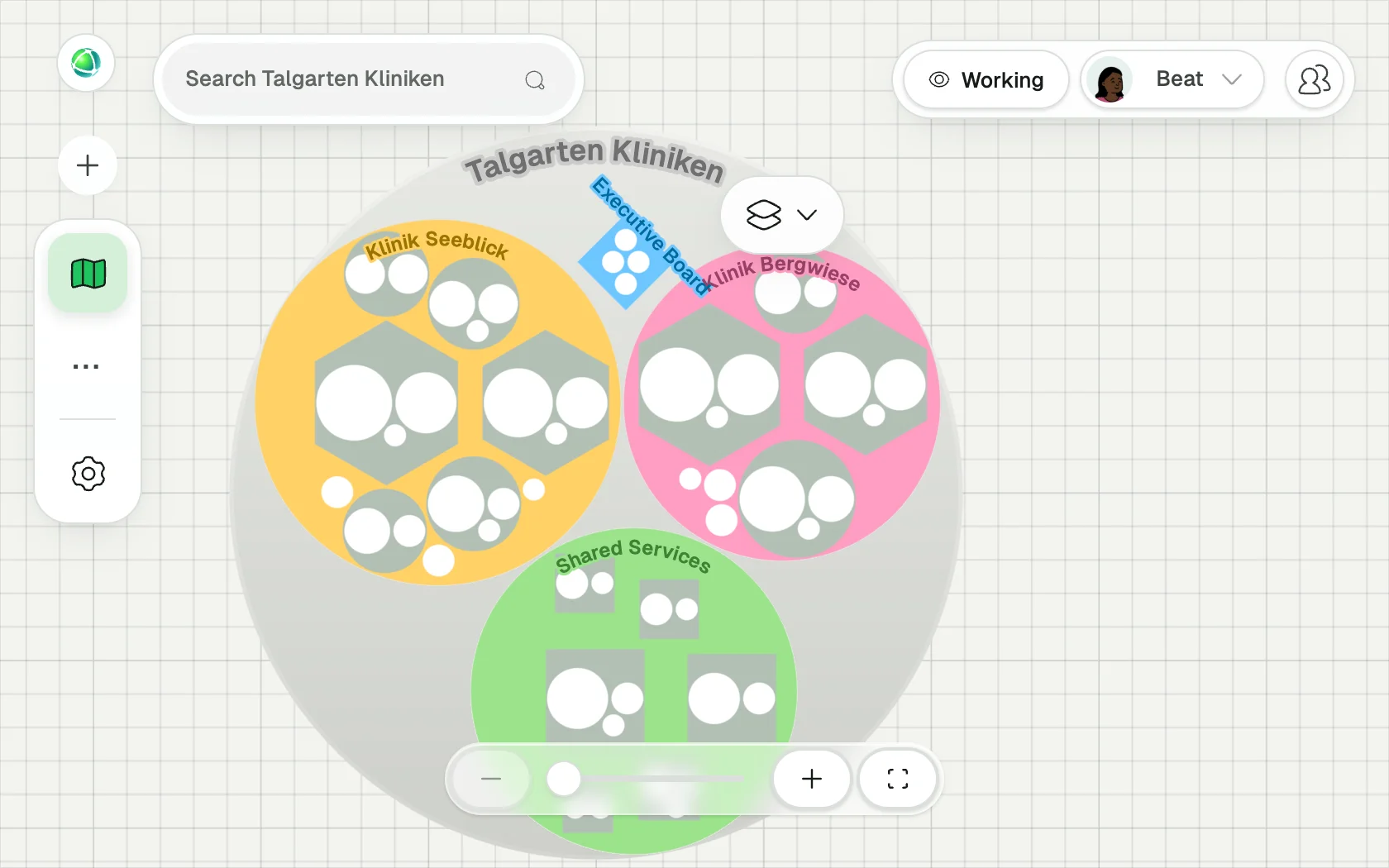
Each company is shown in a different layout, and every map can switch between them: an Org Chart, Nest, where each team can take its own shape, or a Bubble Map. At every size, the map shows the shape of the organization first, and role names and people appear as you zoom in. In a small company the detail is close at hand; at 10,000 people you zoom further into the teams, but the picture stays the same kind of picture. On our home page you can slide from a team of 10 to 10,000 people and switch between layouts.
Bringing 10,000 people in
The first thing a large organization does is bring its people over, usually from a spreadsheet or an HR export. We imported all of Halvard Lines from one file: every team, every role, every person and every assignment. In our test, Peerdom read the file in 4.4 seconds and built the whole organization in another 7.4.
On Peerdom+, Halvard Lines came over in a single import, and each person got an account with the right access, ready to be invited.
Opening the map
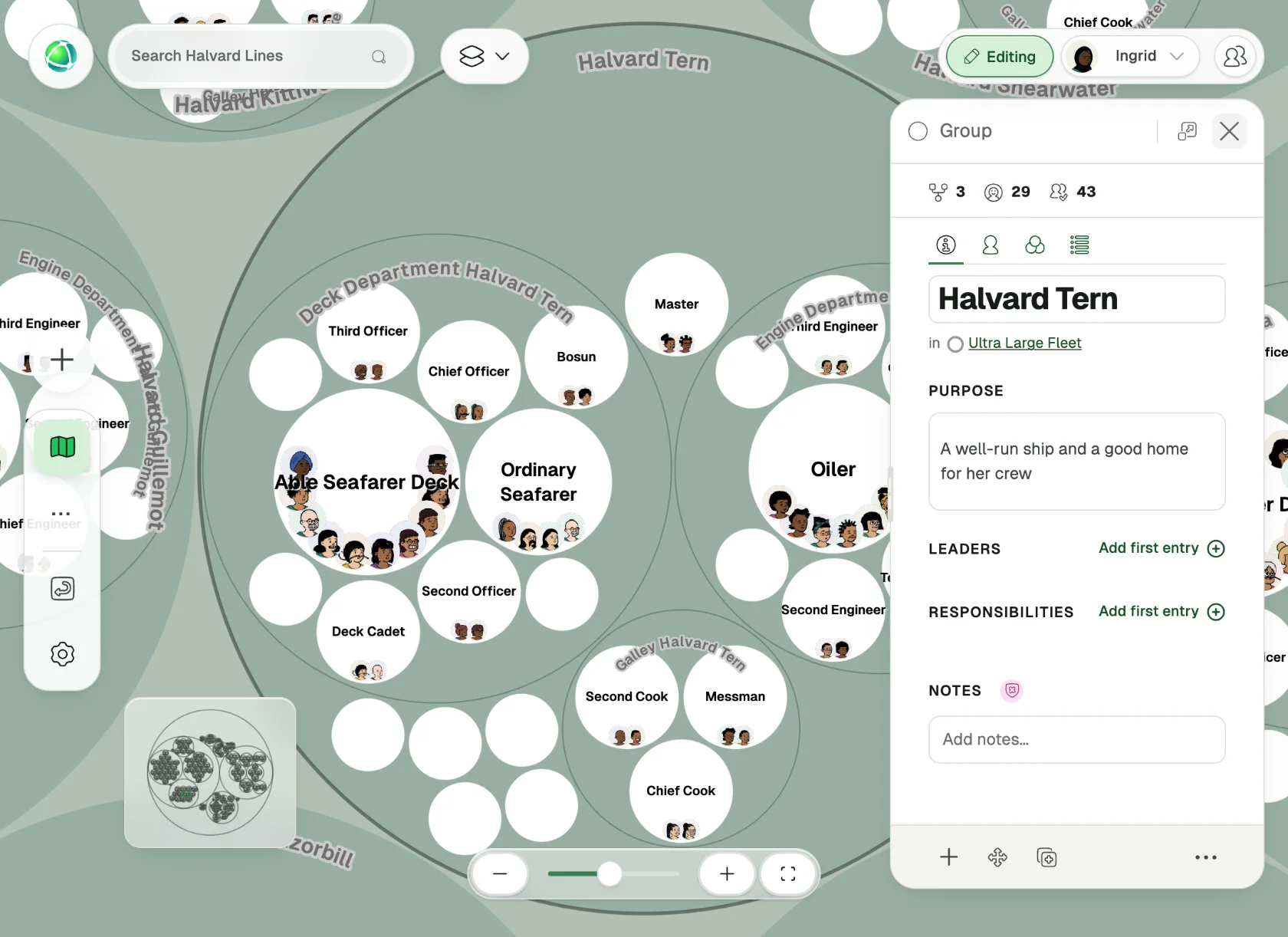
A 10,000-person map holds a lot of faces. Peerdom loads the photos of the people you can actually see, at a size where you can recognize them, and adds more as you zoom in. In our browser tests, opening the Halvard Lines map downloaded about 3.7 MB, and the map was drawn and quiet after about three and a half seconds.
Zoom into one of the vessels, and the roles show their names and the people who hold them.
Finding the right person
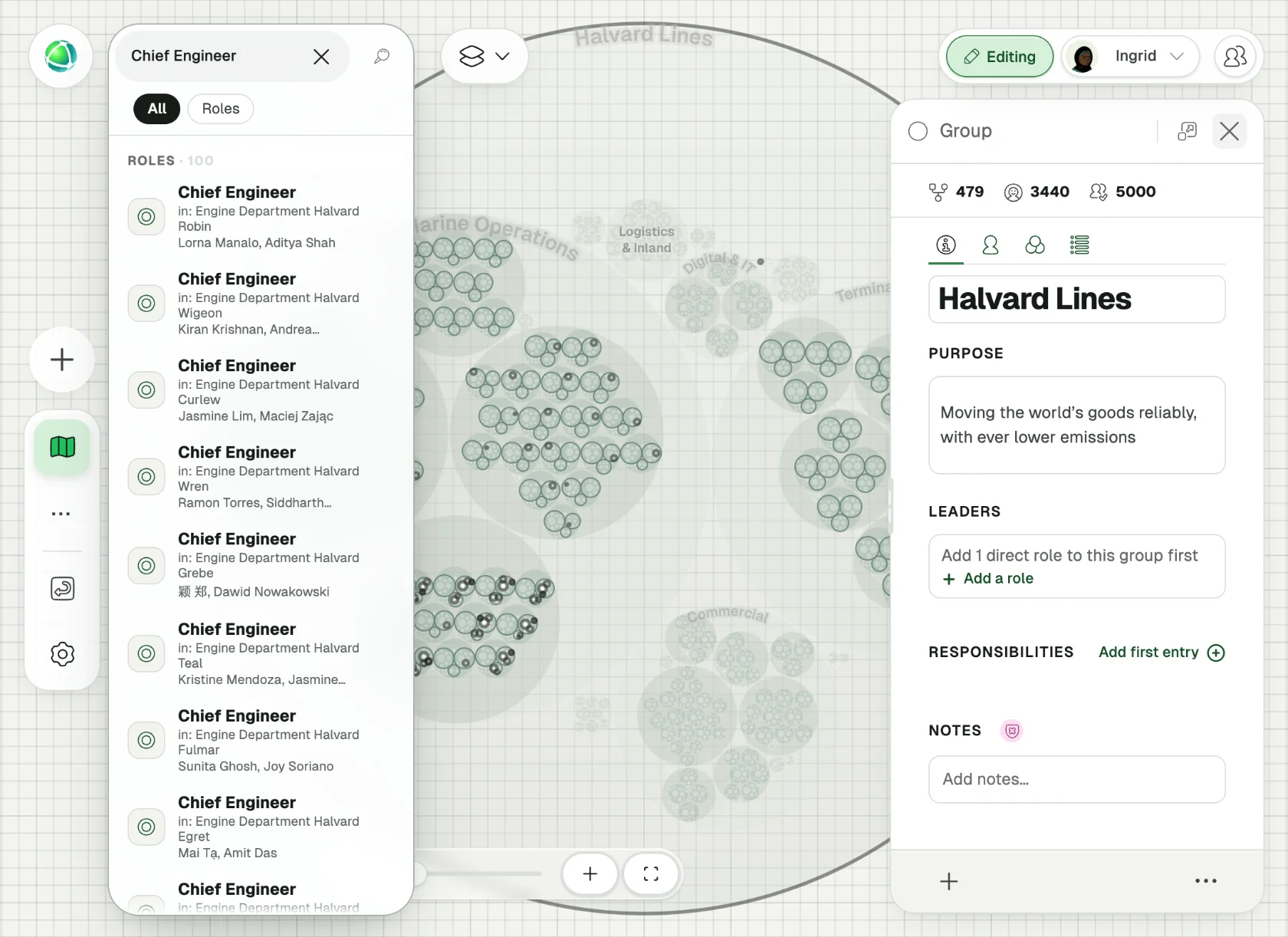
In a company of 10,000, the question is rarely “where is the Engine Department?” It’s “who is Ana Ferreira?” or “who is Chief Engineer on the Halvard Tern?” Search puts the best match first: type a person’s name and they come first, not the 92 roles whose descriptions happen to contain the same letters. Search for a role and each result says which team it belongs to and who holds it, or that no one does yet. That makes vacant roles easy to spot without opening each one.
Many people editing at once
The hardest test is the one nobody sees in a demo: a busy morning. We simulated 30 people online on the Halvard Lines map, ten of them editing every 20 to 60 seconds: renaming roles, filling in fields, assigning people, creating, moving and deleting roles. We ramped up to that load, then held it for half an hour, while two real browsers watched the map.
Across the full run, including the ramp-up, all 495 edits went through without a single error. We checked 254 of the edited fields afterwards and none had lost its change. And 95 out of 100 notifications of a colleague’s change arrived within about a second.
Where your data lives
Peerdom is a Swiss company: the application, its database and your uploaded files are hosted in Switzerland, whether your organization has 20 people or 10,000. Our data processing agreement has the details.
So, does Peerdom scale?
For the work we tested, yes. A 10,000-person company came over from one file in seconds, its map opened in seconds, people found each other and the roles they hold, and a simulated busy morning of 30 colleagues ran for half an hour without an error.
We’re keeping Halvard Lines as our test company. Every time we change how Peerdom loads, draws or saves a map, it can face the same tests again, so the answer stays yes.