Votre organigramme est désormais lisible par l'IA
Bastiaan Van Rooden
Peerdom publie désormais votre organigramme au format Open Knowledge Format (OKF), un standard ouvert soutenu par Google, pour que n'importe quelle IA puisse lire et comprendre le fonctionnement de votre organisation. Rendez votre Carte publique et elle rejoint le web agentique.
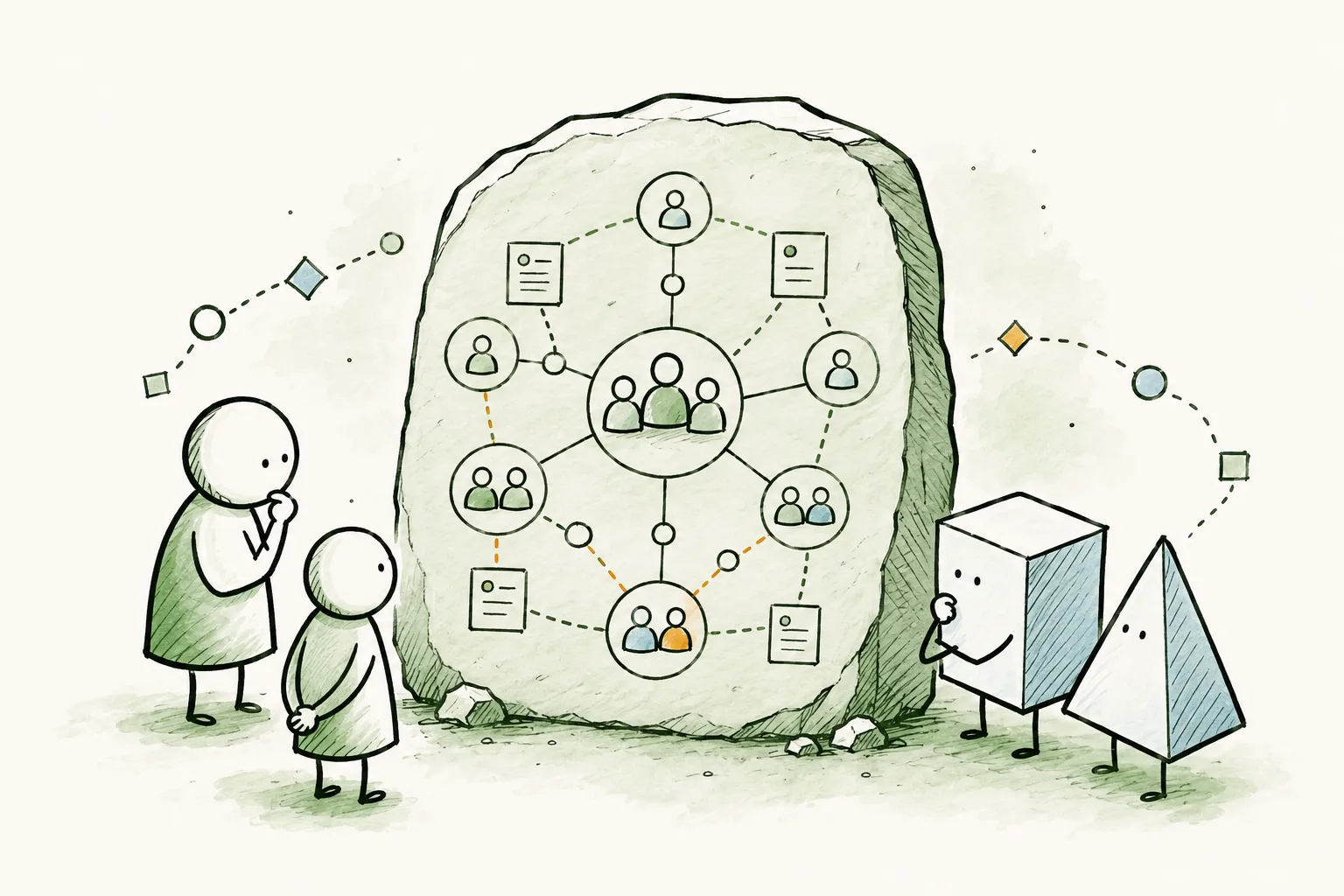
Lâchez un agent IA dans la plupart des entreprises et regardez-le se perdre. Les connaissances dont il a besoin pour se rendre utile - qui fait quoi, quelle équipe porte quel résultat, où se prennent les décisions - sont éparpillées entre un wiki, quelques disques partagés, un organigramme enfoui dans les slides du trimestre dernier et une bonne dose de choses que personne n’a jamais écrites. Alors l’agent devine. Il fait des rapprochements à partir des intitulés, déduit une hiérarchie qui n’existe peut-être pas et vous rend une réponse assurée, bâtie sur du sable.
Ce n’est pas la faute de l’agent. Il est arrivé quelque part sans carte.
Il y a peu, nous avons rendu votre organisation conversationnelle : vous pouvez désormais parler à votre organisation Peerdom en langage courant, avec l’IA de votre choix, et obtenir une réponse nette en quelques secondes. Cela réglait la moitié du problème : faire sortir les réponses de votre propre organisation, pour vous.
Voici l’autre moitié. Il ne s’agit plus de vous posant des questions à votre organisation, mais de n’importe quel agent, où qu’il se trouve, capable de lire votre organisation et de raisonner correctement à son sujet, sans que vous ayez le moindre branchement à faire.
Un langage commun pour la connaissance organisationnelle
Pour qu’un agent se sente chez lui dans une organisation, il faut lui tendre la structure sous une forme qu’il comprend déjà. Ni extraite au forceps, ni devinée : énoncée.
Cette forme a désormais un nom : l’Open Knowledge Format, ou OKF. C’est un standard ouvert, publié par Google et diffusé sous une licence open source permissive, qui décrit la connaissance organisationnelle d’une manière lisible aussi bien par les humains que par les agents IA. La spécification tout entière est volontairement minuscule : un dossier de simples fichiers Markdown, un fichier par « concept », reliés les uns aux autres. Rien qui exige un compte, un SDK ou l’autorisation de qui que ce soit, ni pour produire ni pour lire. Si vous savez lire un fichier texte, vous savez lire un bundle OKF.
Nous aurions pu inventer notre propre format de structure organisationnelle. Nous avons choisi de ne pas le faire. Un format de données ne vaut que par le nombre d’acteurs qui le parlent, et un format tout neuf que personne ne reconnaît n’aide personne. En adoptant un standard derrière lequel se rassemble tout un écosystème, les agents que vos équipes utilisent déjà arrivent déjà rompus à la forme d’une organisation. Nous préférons être un excellent citoyen d’un standard ouvert plutôt que l’unique locuteur d’un standard privé.
Ce que voit un agent
Voici l’avantage discret : Peerdom est déjà un modèle structuré et soigné d’une organisation. La partie difficile de l’OKF - transformer une connaissance éparse et à demi documentée en concepts propres et reliés entre eux - est celle que vous avez déjà faite, chaque fois que vous avez cartographié un cercle ou pourvu un rôle.
La traduction se fait donc naturellement. Vos cercles, vos rôles, les personnes qui les occupent, vos Objectifs et vos Pages deviennent chacun un concept qu’un agent peut lire et suivre :
- Il commence par le sommet et embrasse toute l’organisation d’un coup d’œil.
- Il suit un lien vers un cercle et voit les rôles qu’il contient ainsi que celles et ceux qui les occupent.
- Il lit un rôle et comprend sa raison d’être, ses objectifs et la façon dont il se rattache au reste.
Et il lit tout cela avec vos propres mots : si vous appelez vos cercles « équipes » ou « pods », le bundle dit équipes et pods. L’agent rencontre votre organisation selon vos termes à vous, pas ceux d’un gabarit générique.
Rendez-la publique, et elle fait partie du web agentique
C’est la partie qui nous enthousiasme le plus.
Toute organisation qui rend sa Carte Peerdom publique la partage déjà ouvertement avec le monde. Désormais, une Carte publique n’est plus seulement une page que l’on peut visiter : c’est un bundle lisible par les agents, que tout le web agentique peut comprendre. Aucune intégration, aucune clé, aucune configuration. Dès l’instant où votre Carte est publique, un agent peut la lire, raisonner à partir d’elle et représenter fidèlement votre organisation auprès de qui l’interroge.
Dit simplement : Peerdom est l’endroit où les agents lisent et comprennent le fonctionnement réel de votre organisation.
Pour les organisations qui pratiquent la transparence de façon délibérée - et beaucoup de celles avec qui nous travaillons le font - cela compte vraiment. La manière dont vous avez choisi de vous organiser devient lisible par les outils avec lesquels le reste du monde commence à penser.
Vous gardez la main
La lisibilité n’est une bonne idée que si elle est clairement délimitée. Les contrôles dont vous disposez déjà s’appliquent donc tels quels :
- Le passage au public est un choix qui vous appartient. Rien n’est exposé tant que vous n’avez pas rendu votre Carte publique, et vous pouvez la repasser en privé à tout moment.
- Les personnes ne figurent que si vous le décidez. Un bundle public décrit votre structure ; les personnes n’y apparaissent que si vous avez choisi de les afficher, exactement comme aujourd’hui avec votre Carte publique et vos vues intégrées.
- Le privé reste privé. Si votre organisation n’est pas publique, sa connaissance reste derrière votre porte, et vous pouvez malgré tout la confier à un assistant précis, selon vos conditions, via le serveur MCP et votre propre clé API.
Deux portes d’entrée, un seul principe. L’accès conversationnel, par MCP, est privé et authentifié : parlez à votre organisation. L’accès lisible, par OKF, est ouvert et public : laissez n’importe quel agent la comprendre. C’est vous qui décidez quelles portes sont ouvertes.
Pourquoi l’ouverture, à chaque fois
Nous refaisons toujours le même choix - un standard ouvert plutôt qu’un jardin clos - et il vaut la peine de dire pourquoi, car ce n’est pas un hasard.
Les organisations que sert Peerdom ont tendance à croire que la clarté et l’autonomie valent mieux que le contrôle : que les gens donnent le meilleur d’eux-mêmes lorsqu’ils voient l’ensemble du tableau et peuvent agir en conséquence. Un format fermé, lisible par les seuls outils d’un unique fournisseur, va à rebours de cette conviction. Un format ouvert vous rend le choix : quel agent, quel modèle, quelle infrastructure, et à quelles conditions. Nous préférons bâtir pour ce monde-là et y gagner notre place.
Votre organisation n’est pas seulement quelque chose que vous faites tourner, ni même quelque chose à quoi vous pouvez désormais parler. Elle devient quelque chose que le monde des agents peut réellement comprendre, et cette compréhension part de la structure que vous avez déjà bâtie.
À lire ensuite
insights
Dialoguez avec votre organisation en langage naturel, avec l'IA de votre choix. Découvrez le serveur MCP de Peerdom - indépendant de tout fournisseur, configuré en une minute, et entièrement sous votre contrôle.
insights
Trouvez la bonne personne pour chaque mission en affichant les compétences de chacun·e directement sur votre organigramme.
insights
Les transformations vers une gouvernance partagée échouent quand la structure évolue plus vite que les comportements. Les enseignements de six années passées par Loyco à accompagner des organisations vers une décision distribuée.