IdéeSport's Journey to Organizational Agility
Victoria Bucher
Discover how a Swiss non-profit adopted a role-based organization to drive agility, innovation, and nationwide social impact.

Hier geht’s zur deutschen Version
About IdéeSport
IdéeSport is a Swiss non-profit that promotes health and community engagement through physical activity, offering children, teens, and families a wide range of programs across the country. Since its early days, it has expanded its reach significantly, operating over 180 projects in Swiss communities and serving tens of thousands of people annually; especially those from underrepresented backgrounds.
The journey began in 1999 with a pilot sports hall project in Zurich, laying the groundwork for what would become a national initiative to support youth development through movement. By the early 2000s, IdéeSport had formalized into a foundation and began expanding across the German-, French-, and Italian-speaking parts of Switzerland.
By 2018, IdéeSport had brought energy and movement to hundreds of gymnasiums across the country. But inside the organization, things weren’t moving as fast. Structures and processes had stayed the same, stuck in traditional ways.
Stretched Teams, Stifled Innovation
Despite growing demand for its programs, IdéeSport’s internal systems remained rooted in older working models and structures. The formal job titles on paper didn’t reflect the flexible and collaborative reality of the foundation’s day-to-day work. As a result, innovation slowed, and staff felt constrained by rigid hierarchies.
Daiana Barilone, who joined in 2017, quickly saw the disconnect between what was expected and how people actually worked: “It was hard to think outside of what was defined by the expectations of your fixed job position.”
Lucien Bourquin, who joined IdéeSport in early 2018, was immersed in the organization’s early journey towards agile transformation. He learned that the organization was in the process of transitioning to a more agile, responsive model. He observed:
We wanted to make visible what was already happening. There were so many contributions being made outside one’s original job description.
 Lucien BourquinPartnerships and Organizational DevelopmentIdéeSport
Many staff members were already stepping up in unofficial ways, for instance by mentoring peers, improving processes, and coordinating inter-regional initiatives. But this work often remained invisible, unrecognized, and unsupported, leading to workload imbalances and missed opportunities for innovation.
The Turning Point: Mapping What’s Really Happening
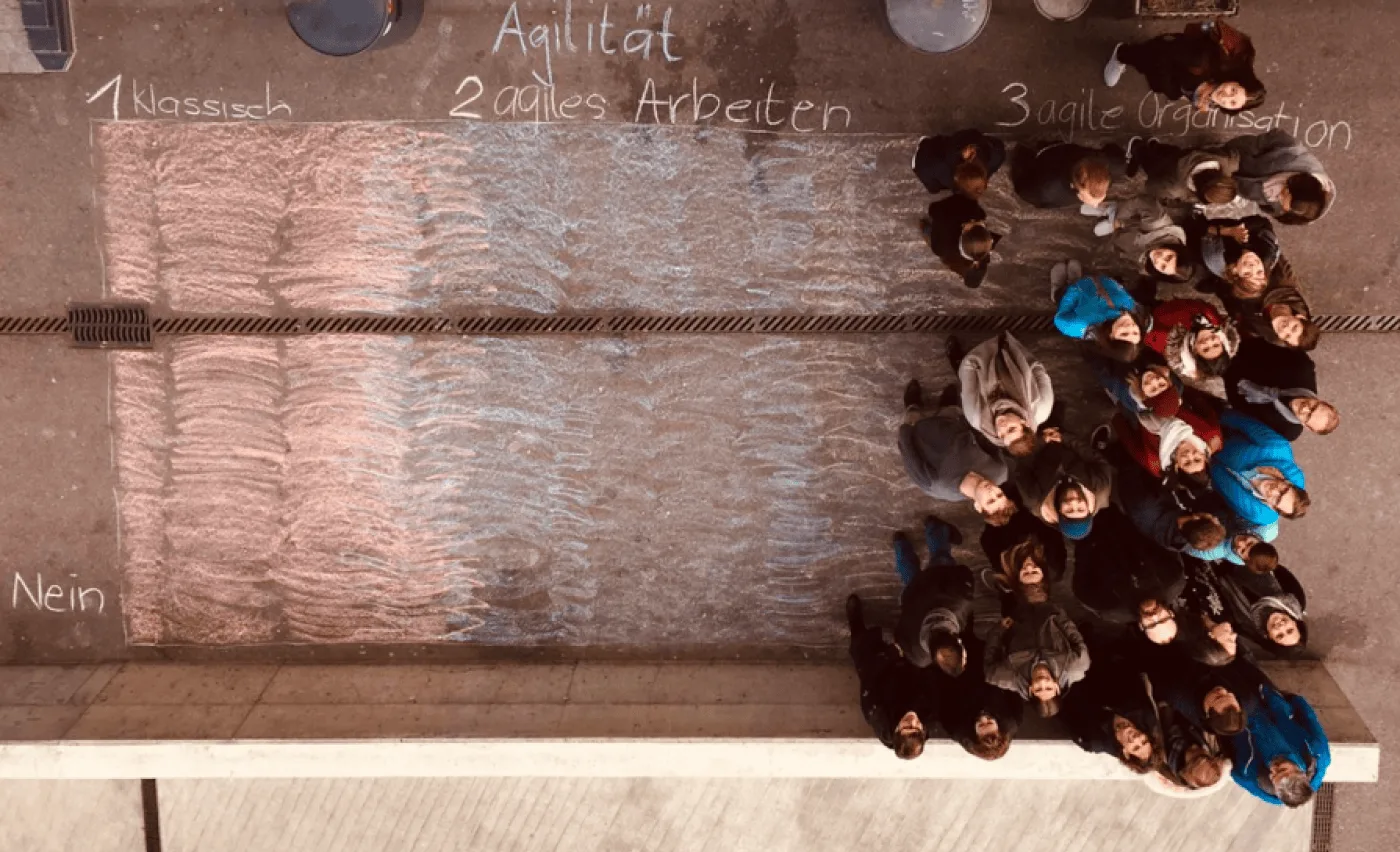
In 2018, an organization-wide kick-off event was held to initiate the transition to agile management. After an introduction, team members were asked to vote for committing to making an agile transformation together. To do so, each member had to physically position themselves on one side of a “for vs. against” grid on the ground. The unanimous vote marked a pivotal moment in IdéeSport’s evolution.
Lucien can still recall the moment vividly:
“Everyone ultimately stood on the ‘yes, we’re for agility’ side. It signaled that all employees were engaged from the start. This is a crucial element of the agile mindset. Taking that step physically and visibly affirmed that we’re all on the same side, pulling the same rope together. It served as a powerful symbolic beginning.”
This gave IdéeSport the needed momentum to launch an agility working group, which included around ten people, an external coach, and an internal transformation champion. From this moment forward, the need to break down decision-making bottlenecks and increase responsiveness was clear. Daiana reflected on the early days of the change process:
It helped us to break out of the box. When we started to think of our job in roles, we could be more fluid, more creative.
 Daiana BariloneProject Management, Course and Training InstructorIdéeSport
Introducing A New Way of Working
By 2020, IdéeSport was ready to formalize its agile practices. Drawing inspiration from global self-management frameworks, the organization has adopted a role-based operating system centered on purpose, not hierarchy. The vision was clear: match energy and ability with responsibility and give people the necessary structure to self-organize.
But there was a practical hurdle. Tracking roles, responsibilities, and decision rights through Word and Excel files was slow and confusing. Files remained disconnected and scattered across the foundation’s hard drives. Teams needed something better: something visual, simple, and inclusive.
Lucien described how, in mid-2024, the internal pilot of Peerdom’s role-based org-chart tool made a significant impact. While testing in a free trial, he received proactive support from the Peerdom team. The centralized, interactive visualization was immediately more intuitive than scattered documents, and the human support from Peerdom was critical in maintaining momentum.
Lea Lehmann, who had recently joined, saw the benefits immediately: “It was helpful to just map what is really happening. It showed us that there is so much more work that we do, things that were just invisible before.”
By late 2024, Peerdom was rolled out across all 50+ members. Documentarians in each circle curated and updated their slice of the map, ensuring that everyone had shared, real-time access to the actual work going on across the organization.

An Org Chart Fit for a Dynamic Team
Today, agility isn’t just a term that applies to their physical programs: it can be found infused in their org chart too. The organization runs on a network of self-managed roles organized into approximately 17 circles. These circles fall into three main categories:
- Operations: drive regional programs and direct implementation
- Services: provide finance, HR, IT support, fundraising and communication
- Coordination: keep everything aligned and learning shared
Each regional circle, German-East, German-West, Romandie, and Ticino, uses the same structure. There are no traditional managers. Instead, in addition to their functional roles (blue), people take on team roles (white). Team roles include a team host, HR rep, or economist. These roles vary in intensity, rotate regularly, and role holders are chosen collectively within each team.
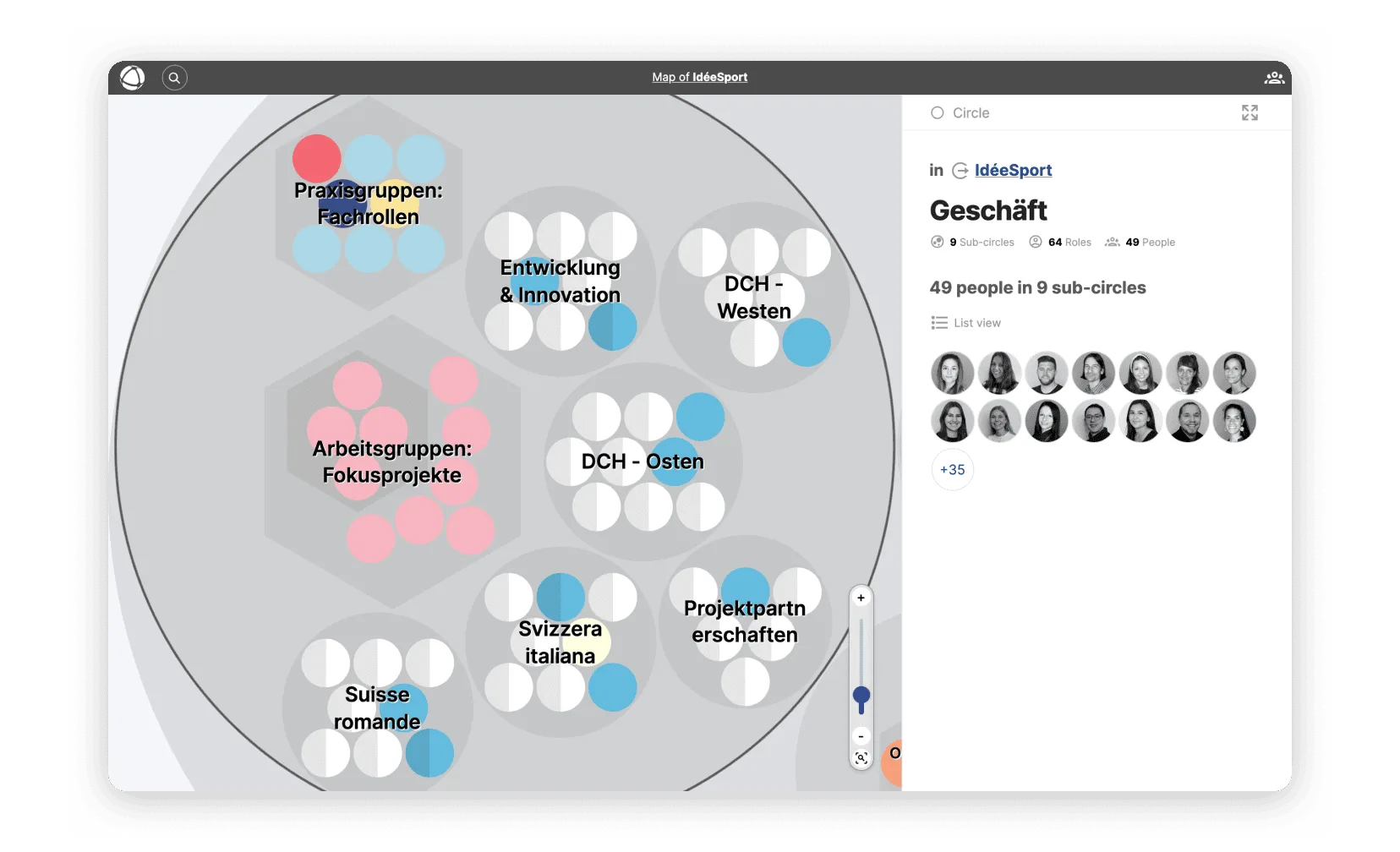
All responsibilities are now visible in real time. Instead of emailing back and forth or digging through outdated files, team members can view who does what with a few clicks. Regular national meetings reinforce alignment, and each team has a documentarian role to keep the map of their circle up-to-date.
Temporary working groups for projects, like relaunching the website or piloting a new youth program, are formed easily and dissolve once their mission is complete. Meanwhile, practice groups bring together peers across regions who hold the same expert role (e.g. MidnightSports specialists). This helps them align, set goals, and share expertise.
IdéeSport’s new structure doesn’t just look different; it functions differently too. Teams move faster, decision-making is distributed, and collaboration is grounded in clarity. As Lea described:
Our Peerdom map shows me at a glance who’s involved in a project and who to contact. It saves me so much time.
 Lea LehmannProject ManagementIdéeSport
More Impact with the Same People
The benefits of agility became especially clear during a budget crisis. Instead of waiting for top-down decisions, all 50 employees helped craft the response. Circles independently generated cost-saving ideas, proposed new revenue streams, and adapted quickly. This was made possible because their new way of working supported decentralized action. Melanie, IdéeSport’s communications lead, reflected on this shift:
Thanks to our agile ways of working, we never stop learning. We’re always developing new mindsets and finding better ways to tackle challenges collectively. It feels evolutionary.
 Melanie MeyerCommunicationsIdéeSport
Today, any team member can propose a project, launch a working group, and bring an idea to life in a matter of days. The result is more innovation, more reach, and more youth served, without additional overhead.
Lucien summed it up: “We can reach more people and promote health more effectively because our agile structure enables us to rapidly implement innovations.”
Lessons from IdéeSport

- Start with visibility. Before changing how work is assigned, look at how it’s actually happening in the shadows.
- Empower the edge. Let the people closest to the work lead the way. Region by region, team by team.
- Innovation comes from clarity. When expectations and roles are clear, people can act with more confidence and creativity.
- You don’t need more people to have more impact. Sometimes, what you need is a new way to unlock potential in your current team.
- Transformations are never “done.” Once you start, the process reveals new layers. With each iteration, agility helps surface and solve what would otherwise stay stuck.
What’s certain is that self-management at IdéeSport means that people’s full talents are now seen and supported. And that, in turn, helps them serve Switzerland’s families and youth with even greater impact.
Image source: Stiftung IdéeSport
Keep reading
insights
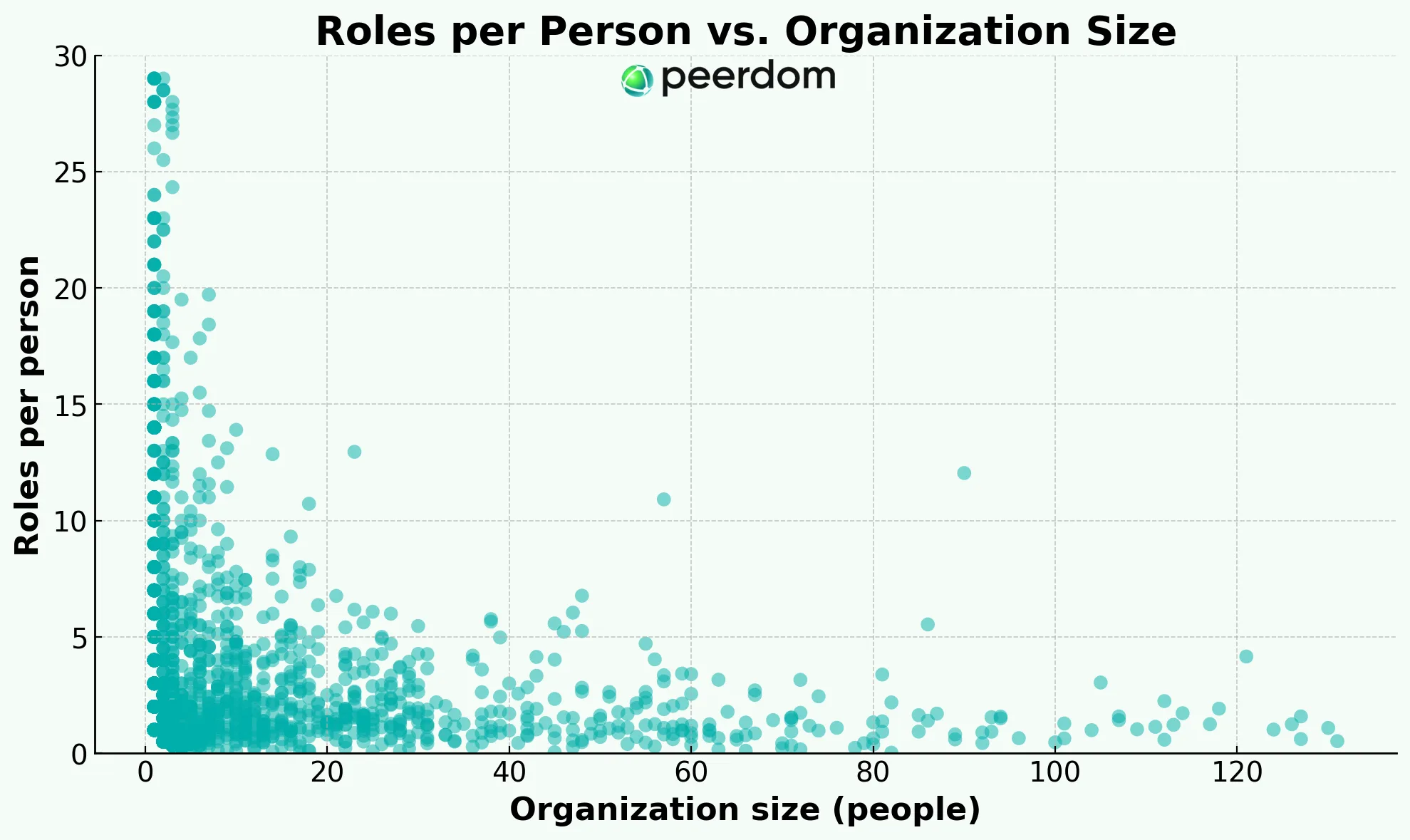
As organizations grow, specialization becomes inevitable. Learn how role clarity and organizational mapping help teams navigate scaling, prevent silos, and keep collaboration alive.
insights
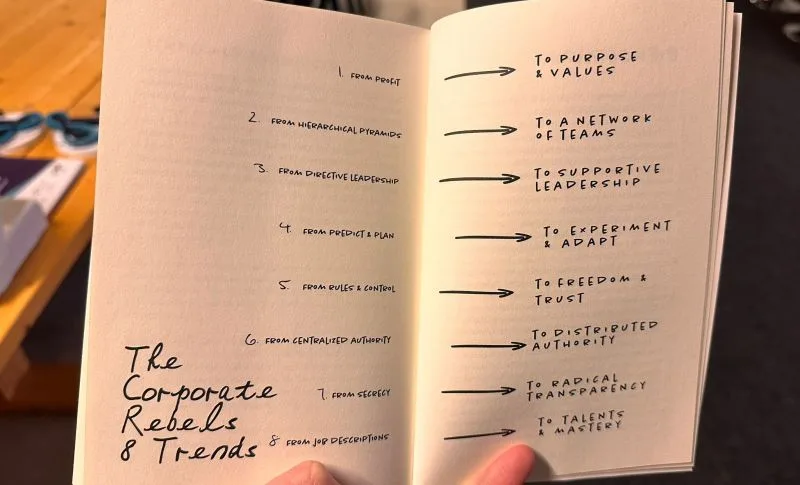
Explore AI-native organizations: how automation, intelligent agents, and adaptive structures reshape New Work. Learn how forward-thinking teams harness AI to boost agility, clarity, and collaboration.

integrations & tools
Automate your org map with Peerdom & Pipedream: build event-driven, low- or no-code workflows across 2,500+ apps. Free your time by keeping your organizational data in sync.